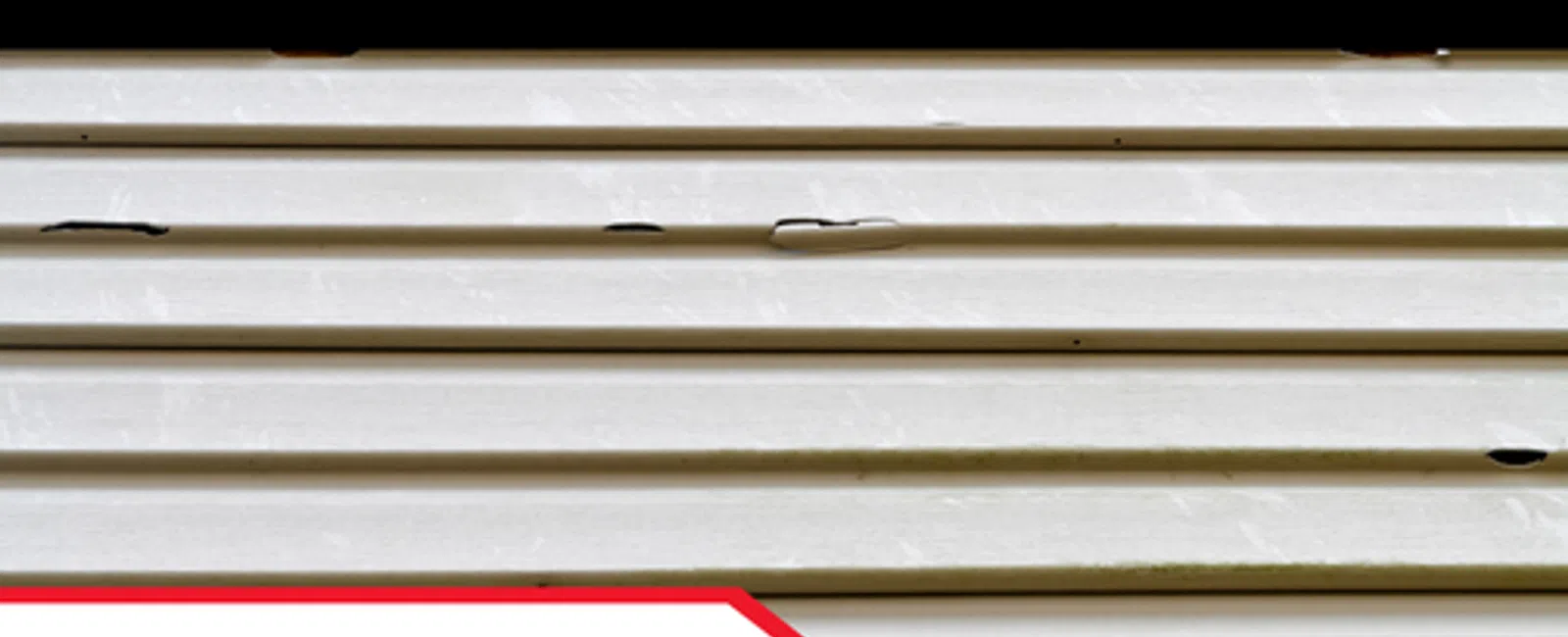
Exterior siding is one of the first building components homebuyers notice, but its importance extends well beyond curb appeal. Siding helps protect exterior wall assemblies from weather, impact, sunlight, and other environmental exposure. During a professional siding inspection, visible cracking, loose materials, gaps, deteriorated trim, damaged flashing, staining, or other conditions can provide useful information about maintenance needs and potential moisture pathways. These observations should be evaluated carefully because the exterior cladding is part of a larger system rather than the home's only defense against rain.
This distinction is particularly important for Southeastern homes. Heavy rainfall, humidity, storms, wind-driven rain, intense sunlight, vegetation growth, and seasonal temperature changes continually expose exterior wall systems to moisture and weather. A small siding defect does not automatically mean water has entered the wall, and a crack or stain should never be treated as automatic proof of concealed structural damage. However, visible exterior siding problems can identify areas that deserve maintenance, closer observation, or evaluation by a qualified siding, moisture, stucco, or building-envelope professional.
Exterior walls typically rely on several layers working together to manage weather. Depending on the home's construction, those layers may include siding or another cladding, flashing, a water-resistive barrier, sheathing, framing, insulation, and interior finishes. Water that gets past the exterior cladding should ideally encounter a properly integrated drainage plane that directs it back toward the exterior rather than allowing it to remain in the wall cavity. U.S. Department of Energy building-science guidance specifically describes this layered approach to exterior wall moisture control.
LunsPro Inspection Group evaluates visible siding and exterior wall conditions as part of comprehensive Residential Home Inspections, Pre-Purchase Home Inspections, and other Southeast Home Inspections. By looking at cladding, trim, wall penetrations, roof-to-wall transitions, windows, doors, grading, and related moisture indicators together, Certified Home Inspectors can give buyers a more useful understanding of the home's exterior than a simple cosmetic review.
Siding Is Only One Layer of the Exterior Wall
One of the most important things homebuyers should understand is that siding is generally not intended to function as a completely waterproof shell by itself. Small joints, transitions, penetrations, and openings can allow some rainwater past many cladding systems. The wall assembly therefore relies on properly installed moisture-management components behind and around the visible exterior finish.
Building-science guidance from the U.S. Department of Energy - Drainage Plane Behind Exterior Wall Cladding explains that water can penetrate exterior cladding and that the drainage plane behind it is intended to direct moisture safely away, providing important context for why siding should be evaluated as one part of a larger moisture-management system. DOE guidance specifically notes that a continuous drainage plane should be located behind exterior cladding and integrated with flashing at openings and penetrations.
This means a visible siding defect has to be interpreted in context. A damaged panel may require straightforward replacement without any concealed damage behind it. In another situation, extensive cracking combined with staining, deteriorated trim, failed flashing, or soft materials may raise greater concern about repeated moisture exposure.
A siding inspection therefore considers not only the appearance of the siding but also where the condition is located, how extensive it appears to be, and whether other signs suggest a broader exterior-wall issue.
Understanding the Drainage Plane and Water-Resistive Barrier
Behind many siding systems is a water-resistive barrier, often called a WRB. Its purpose is to help protect wall cavities from water that passes through the exterior cladding and to direct that moisture downward and outward.
Resources from the U.S. Department of Energy - Water Managed Walls discuss strategies for managing water within exterior wall assemblies, reinforcing why siding condition, flashing, drainage, penetrations, and underlying moisture-control components all matter when evaluating a home's exterior. The guidance explains that exterior cladding systems can admit water through joints and small openings and that a drainage layer behind the cladding provides a secondary means of moisture control.
The U.S. Department of Energy - Water-Resistive Barriers for Exterior Walls provides additional context by explaining how water-resistive layers behind cladding can help divert water away from wall cavities and why those layers should integrate with flashing at windows, doors, roof intersections, and other openings.
Because these materials are normally concealed, a standard visual home inspection cannot confirm their complete installation or condition throughout the home. Inspectors can identify visible exterior conditions that suggest further evaluation may be appropriate, but invasive wall testing is a different type of service.
Common Exterior Siding Problems Inspectors May Observe
Different homes and materials develop different types of deterioration, but several visible conditions frequently deserve attention during an exterior inspection.
These may include:
- Cracking
- Splitting
- Warping
- Buckling
- Loose siding
- Missing sections
- Impact damage
- Deteriorated surfaces
- Open joints
- Staining
- Damaged trim
- Peeling coatings
- Gaps around penetrations
- Previous patches or repairs
- Siding contacting inappropriate surfaces
None of these observations automatically proves that water has entered the wall.
The purpose of the inspection is to document what is visible and determine whether the condition appears consistent with routine maintenance, localized repair, or a concern that warrants more detailed investigation.
Fiber Cement Siding
Fiber cement siding is common on many Southeastern homes and can provide durable exterior protection when properly installed and maintained.
Visible concerns may include:
- Cracked boards
- Chipped edges
- Loose sections
- Damaged corners
- Gaps
- Deteriorated paint
- Improper clearances
- Moisture staining
Impact damage may occur from landscaping equipment, ladders, storms, or other physical contact.
Buyers should also pay attention to areas where siding approaches roofing, patios, decks, soil, or other surfaces because these transitions can be more vulnerable to repeated moisture exposure depending on the installation.
The presence of a cracked board alone does not establish hidden wall damage. The surrounding trim, flashing, staining, and adjacent materials provide important additional context.
Vinyl Siding
Vinyl siding behaves differently because it is designed to expand and contract as temperatures change.
Visible exterior siding problems may include:
- Cracking
- Warping
- Loose panels
- Missing sections
- Impact holes
- Panels that have become disengaged
- Distortion from heat
- Improper attachment
Storms can sometimes loosen siding or expose underlying materials.
Because vinyl siding can conceal much of the wall assembly behind it, a home inspector cannot evaluate every underlying component without removing materials, which is generally beyond the scope of a standard home inspection.
Wood and Engineered Wood Siding
Wood-based claddings require ongoing moisture management and exterior maintenance.
Inspectors may look for:
- Peeling paint
- Splitting
- Swelling
- Rot-like deterioration
- Soft materials
- Open joints
- Damaged trim
- Areas of repeated moisture exposure
Paint and coatings help protect many wood siding products, so widespread coating failure may increase exposure to moisture.
Engineered wood products can have different installation and maintenance requirements from traditional wood. Visible swelling, delamination, edge deterioration, or damage should be evaluated according to the material and surrounding conditions rather than treated identically across all siding types.
Brick Veneer Is Also a Wall-Cladding System
Brick often creates the impression of a massive, waterproof exterior wall, but many modern residential brick walls are veneer systems.
Brick veneer still relies on moisture-management details behind and within the wall assembly. Openings, flashing, drainage features, mortar joints, and transitions all affect performance.
Visible concerns may include:
- Cracked mortar
- Cracked bricks
- Deteriorated joints
- Staining
- Efflorescence
- Missing or obstructed drainage openings
- Separation
- Damaged flashing areas
Not every masonry crack represents structural movement. Some cracks may be localized or relatively minor, while others may warrant further evaluation depending on pattern, location, width, displacement, and related conditions.
Stucco Requires Careful Context
Stucco can provide a durable exterior finish, but cracks, penetrations, flashing details, sealants, and transitions deserve careful attention.
Visible concerns may include:
- Cracks
- Staining
- Bulging
- Deteriorated surfaces
- Damaged sealant
- Gaps at penetrations
- Improper transitions
- Areas of previous patching
A conventional visual home inspection is not the same as a specialized invasive stucco inspection or moisture analysis.
If visible stucco conditions suggest possible concealed moisture concerns, the inspector may recommend evaluation by a qualified stucco or building-envelope specialist. Determining moisture conditions behind the cladding can require specialized methods beyond what can be confirmed visually.
Windows and Doors Are Vulnerable Transitions
Every window and exterior door interrupts the continuity of the wall assembly.
That makes these areas important during a siding inspection.
Guidance from the U.S. Department of Energy - Flashing Around Window and Door Openings explains the importance of properly managing water around wall openings, helping homebuyers understand why inspectors pay close attention to siding, trim, flashing, and transitions around windows and doors. DOE notes that windows and doors interrupt the wall's drainage plane and that properly integrated flashing helps direct water outward rather than into the wall cavity.
Inspectors may observe:
- Cracked sealant
- Gaps around trim
- Deteriorated wood
- Staining
- Missing or damaged flashing
- Loose siding around openings
- Poorly repaired transitions
A small sealant defect may simply require maintenance. Extensive staining or deterioration around several openings may warrant a closer investigation of exterior-wall moisture management.
Wall Penetrations Create Additional Moisture Pathways
Exterior walls frequently contain penetrations for:
- Hose bibs
- Electrical receptacles
- Exterior lights
- HVAC refrigerant lines
- Exhaust vents
- Cable connections
- Utility piping
- Security equipment
Each penetration creates an interruption in the exterior cladding and underlying moisture-control layers.
DOE guidance on water-resistive barriers specifically notes that openings for items such as water spigots, exhaust outlets, HVAC line sets, lighting, and receptacles should be properly sealed as part of the wall's moisture-management system.
During an inspection, visible gaps, missing sealant, damaged siding, or deteriorated materials around penetrations may be documented for repair or further evaluation.
Again, these conditions identify possible moisture pathways; they do not prove concealed water damage.
Roof-to-Wall Intersections Deserve Special Attention
Where a roof meets an exterior wall, two major weather-management systems intersect.
Flashing at these locations helps direct water away from vulnerable joints.
Inspectors may look for visible conditions such as:
- Missing flashing
- Damaged flashing
- Improper siding clearance
- Deteriorated sealants
- Water staining
- Debris accumulation
- Previous repairs
These areas are particularly important during Pre-Purchase Home Inspections because water intrusion at roof-to-wall transitions may affect siding, sheathing, interior walls, or framing.
If visible conditions suggest repeated leakage, further roofing or building-envelope evaluation may be appropriate.
Siding Too Close to Roofing
Certain siding materials should not remain continuously exposed to roof runoff, accumulated debris, or repeated wetting at roof surfaces.
When siding terminates very close to shingles or another roof covering, inspectors may observe deterioration, staining, swelling, or coating failure.
The appropriate clearance varies according to material, installation, and manufacturer requirements, so a general home inspection should avoid treating one measurement as universally applicable to every cladding product.
What matters is whether visible conditions suggest that repeated moisture exposure is affecting the material.
Siding Too Close to Soil or Hardscape
Exterior cladding that extends too close to soil, patios, walkways, driveways, decks, or landscaping can also deserve attention.
Potential concerns include:
- Repeated moisture exposure
- Limited drying
- Pest access
- Concealed deterioration
- Difficulty evaluating the foundation transition
Some materials tolerate moisture exposure better than others, but persistent contact with wet soil or landscaping can increase deterioration risk for moisture-sensitive products.
Homebuyers should consider the condition of the siding along with grading and drainage around the property.
Vegetation Against Exterior Walls
Shrubs, vines, and other landscaping can make a home visually attractive, but dense vegetation against walls may limit inspection access and keep exterior materials damp longer after rainfall or irrigation.
Inspectors may have difficulty seeing:
- Siding
- Foundation transitions
- Wall penetrations
- Trim
- Drainage conditions
Vegetation can also trap debris or interfere with normal drying around some cladding systems.
Southeastern vegetation can grow rapidly because of warm temperatures and abundant rainfall, making routine trimming an important exterior-maintenance consideration.
Staining Is a Clue, Not a Diagnosis
Exterior stains can develop for many reasons.
Possible causes include:
- Rain runoff
- Dirt
- Biological growth
- Rust
- Roof drainage
- Irrigation
- Moisture
- Previous leaks
A stain should therefore be evaluated in context.
Staining below a roof transition combined with deteriorated trim and damaged siding may deserve more attention than isolated surface discoloration with no other visible concerns.
Inspectors should describe what is observed without claiming to know the concealed condition of a wall when it cannot be verified.
Swelling, Softness, and Deterioration
Certain siding and trim materials can swell or deteriorate after repeated moisture exposure.
Visible signs may include:
- Expanded edges
- Soft sections
- Peeling finishes
- Distortion
- Delamination
- Surface deterioration
These observations may justify repair and further investigation of the moisture source.
However, inspectors should avoid assuming that every deteriorated exterior section means interior framing has also been damaged. Concealed conditions require appropriate testing or invasive evaluation to confirm.
Flashing Matters Throughout the Exterior
Flashing is used to manage water at changes in plane, material transitions, openings, and other vulnerable areas.
Important locations may include:
- Windows
- Doors
- Roof-to-wall intersections
- Deck connections
- Penetrations
- Horizontal transitions
DOE building-science guidance emphasizes that water-resistive barriers and flashing need to work together so water that penetrates the outer cladding can be redirected to the exterior.
A siding inspection may identify missing, damaged, or questionable visible flashing details, but much of the flashing assembly may be concealed behind exterior finishes.
Air Barriers and Housewrap Play Different but Related Roles
Some materials behind exterior siding may also contribute to air control as well as moisture management.
The U.S. Department of Energy - Continuous Air Barriers and Housewrap explains that housewrap can function as a drainage plane and may also serve as part of a continuous air barrier when appropriately sealed and integrated with flashing.
This is useful context for buyers because wall performance involves more than siding appearance.
A cladding repair may solve the visible problem, but a more significant wall concern may require understanding how weather-resistive layers, flashing, air control, insulation, and exterior materials work together.
A general home inspection does not constitute a complete building-envelope analysis.
Storm Damage Can Affect Siding Differently
Southeastern storms may expose exterior cladding to:
- Wind
- Wind-driven rain
- Hail
- Falling limbs
- Flying debris
Visible storm-related conditions can include:
- Cracks
- Dents
- Loose panels
- Missing siding
- Impact damage
- Damaged trim
- Open joints
Some storm damage may be obvious immediately, while smaller defects may only become noticeable later.
Homebuyers should ask about available repair records or insurance claims when exterior materials show widespread or inconsistent repairs.
Intense Sun Exposure Can Accelerate Exterior Aging
The Southeast's strong sunlight can affect coatings, sealants, vinyl products, painted surfaces, and other exterior materials over time.
Southern and western exposures may weather differently from shaded elevations.
Inspectors may observe:
- Fading
- Brittle sealants
- Coating deterioration
- Warping
- Uneven aging
Different rates of deterioration on different sides of the home are not necessarily evidence of improper installation. Orientation and weather exposure can influence how materials age.
Exterior Conditions Can Reveal Previous Repairs
One of the useful aspects of a siding inspection is that exterior materials can preserve evidence of earlier work.
Inspectors may notice:
- Mismatched siding
- Different paint colors
- Patch repairs
- New trim beside older siding
- Excessive sealant
- Altered wall penetrations
These observations are not automatically negative.
A repaired area may simply indicate that a previous defect was corrected properly.
However, repeated patching in the same location or repairs combined with staining and deterioration may justify additional questions about the underlying cause.
Deferred Maintenance Can Allow Small Defects to Grow
A loose siding panel or failed section of sealant may initially represent a manageable maintenance issue.
If left uncorrected, weather exposure may increase deterioration around the defect.
Deferred exterior maintenance can affect:
- Cladding
- Trim
- Sheathing
- Coatings
- Flashing
- Sealants
Homebuyers should pay attention not only to individual defects but also to broader maintenance patterns.
A home with widespread peeling coatings, cracked sealants, damaged trim, and multiple temporary repairs may require a more significant exterior maintenance budget than a property with one isolated siding defect.
Infrared Thermal Imaging Can Support Further Investigation
Infrared Inspections may sometimes provide additional information when moisture or thermal concerns are suspected.
An infrared camera measures surface-temperature patterns. Under appropriate conditions, an area affected by moisture may display a thermal pattern different from surrounding dry materials.
However, infrared imaging does not see through walls.
A thermal anomaly can also result from:
- Insulation differences
- HVAC airflow
- Solar exposure
- Framing
- Air leakage
- Material changes
Infrared imaging therefore does not independently confirm moisture or identify its exact source.
Inspectors should interpret thermal findings alongside visual observations, environmental conditions, and moisture measurements where appropriate.
When Specialized Moisture Evaluation May Be Needed
Some siding conditions justify evaluation beyond a standard visual inspection.
Additional investigation may be appropriate when there is:
- Extensive deterioration
- Persistent staining
- Soft materials
- Suspected concealed moisture
- Repeated repair history
- Significant stucco concerns
- Widespread flashing problems
- Interior moisture corresponding with exterior defects
Specialized evaluation may involve:
- Moisture professionals
- Building-envelope consultants
- Siding contractors
- Stucco specialists
- Engineers
These services may use invasive or specialized methods beyond the scope of Residential Home Inspections.
Mold Testing and Indoor Environmental Concerns
Damaged siding itself does not mean a home has mold.
However, long-term water intrusion into wall cavities may create conditions favorable to microbial growth on susceptible materials.
When visible suspect growth, persistent moisture, or related indoor concerns exist, Mold Testing may be appropriate.
Likewise, Indoor Air Quality Testing may sometimes be relevant when occupants or buyers have broader environmental concerns.
These services should be selected according to actual conditions rather than added automatically because an exterior siding defect exists.
What Siding Findings May Look Like in an Inspection Report
A home inspection report may describe conditions such as:
- Cracked siding
- Loose panels
- Missing cladding
- Damaged trim
- Exterior gaps
- Deteriorated sealant
- Staining
- Improperly maintained penetrations
- Suspected moisture-related deterioration
- Siding too close to another surface
The report may recommend:
- Routine repair
- Sealing or maintenance
- Replacement of damaged sections
- Evaluation by a siding contractor
- Further moisture investigation
- Monitoring
The appropriate recommendation depends on the extent and context of the visible condition.
A Pre-Purchase Home Inspection helps buyers identify these concerns before closing so they can better understand potential repair and maintenance responsibilities.
New Construction Can Have Siding Concerns Too
Exterior siding problems are not limited to older homes.
During New Construction Inspections, inspectors may identify:
- Damaged newly installed siding
- Missing flashing
- Gaps
- Incomplete trim
- Poor transitions
- Improper penetrations
- Installation damage
New materials have not experienced decades of weather exposure, but installation quality still matters.
Identifying visible concerns before closing gives buyers an opportunity to have construction-related issues reviewed while the project is still relatively new.
Pre-Listing Inspections Help Sellers Prepare
Exterior conditions are also important for homeowners preparing to sell.
During Pre-Listing Inspections, siding concerns may be identified before a buyer's inspection.
Sellers may then have time to:
- Complete maintenance
- Obtain contractor evaluations
- Repair damaged siding
- Address deteriorated trim
- Gather previous repair documentation
Taking a proactive approach can help clarify the property's condition before negotiations begin.
Georgia Home Inspections
During Georgia Home Inspections, siding conditions can vary substantially by material, home age, and regional exposure.
Atlanta Home Inspections may include fiber cement, brick veneer, vinyl, stucco, wood, and combinations of exterior materials.
Athens Home Inspections frequently involve older properties, renovated homes, and newer residential developments where siding repair history and exterior transitions can vary.
During Savannah Home Inspections, high humidity, heavy rainfall, wind-driven rain, vegetation, and coastal weather can make moisture-management details particularly important.
North Carolina Home Inspections
North Carolina Home Inspections often include homes exposed to heavy rainfall, humid summers, storms, and seasonal temperature changes.
During Charlotte Home Inspections, rapid development means buyers may encounter both newer cladding systems and older neighborhoods with extensive renovation histories.
Raleigh Home Inspections frequently include fiber cement, brick, vinyl, and other exterior finishes across both new and established housing.
Greensboro Home Inspections may involve mature vegetation and older exterior systems where maintenance history deserves additional attention.
South Carolina Home Inspections
During South Carolina Home Inspections, humidity, vegetation growth, heavy rainfall, and warm temperatures can contribute to exterior maintenance demands.
Greenville Home Inspections may involve siding near sloped landscapes, decks, roof transitions, and dense vegetation.
Proper drainage and exterior maintenance remain important regardless of siding material.
Tennessee Home Inspections
Tennessee Home Inspections involve seasonal weather that can expose siding to heat, humidity, rainfall, storms, and temperature variation.
During Chattanooga Home Inspections, sloped properties and heavy rainfall can make wall-to-grade and drainage relationships particularly important.
Nashville Home Inspections may include older neighborhoods, renovations, and rapidly developed newer areas where exterior-wall conditions and installation quality vary considerably.
Florida Home Inspections
Florida Home Inspections require careful consideration of heat, humidity, intense sunlight, tropical rainfall, storms, and wind-driven rain.
During Jacksonville Home Inspections, inspectors may pay particular attention to exterior sealants, wall penetrations, flashing, siding damage, and moisture-related staining because local weather can repeatedly test exterior wall systems.
Coastal exposure can also influence metal components, fasteners, coatings, and other exterior materials depending on the home's location.
Siding Damage Should Be Viewed in Context
A professional siding inspection helps homebuyers understand that exterior cladding serves an important purpose but does not work alone. Siding, flashing, water-resistive barriers, drainage planes, wall penetrations, trim, roof transitions, windows, and doors all contribute to how a wall manages weather. Damage to one visible component may represent a localized maintenance issue, or it may provide a clue that a broader moisture-management concern deserves additional evaluation.
The key is to avoid assuming too much from appearances. Cracks, gaps, staining, loose panels, warped materials, and other exterior siding problems are not automatic proof of concealed water damage or structural failure. A visual inspection can identify observable conditions, but confirming what exists behind siding may require invasive testing, specialized moisture evaluation, stucco assessment, engineering analysis, or examination by a qualified building-envelope or siding professional.
LunsPro Inspection Group provides Southeast Home Inspections, including Georgia Home Inspections, North Carolina Home Inspections, South Carolina Home Inspections, Tennessee Home Inspections, and Florida Home Inspections. Local inspection services include Atlanta Home Inspections, Athens Home Inspections, Savannah Home Inspections, Charlotte Home Inspections, Raleigh Home Inspections, Greensboro Home Inspections, Greenville Home Inspections, Chattanooga Home Inspections, Nashville Home Inspections, and Jacksonville Home Inspections.
Through professional Residential Home Inspections, Pre-Purchase Home Inspections, New Construction Inspections, Pre-Listing Inspections, and Infrared Inspections when relevant, LunsPro Inspection Group helps buyers understand visible exterior conditions before making important real estate decisions. Evaluating siding as part of the home's complete exterior wall and moisture-management system gives buyers a more accurate picture of potential maintenance needs and helps them determine when additional professional evaluation is appropriate.