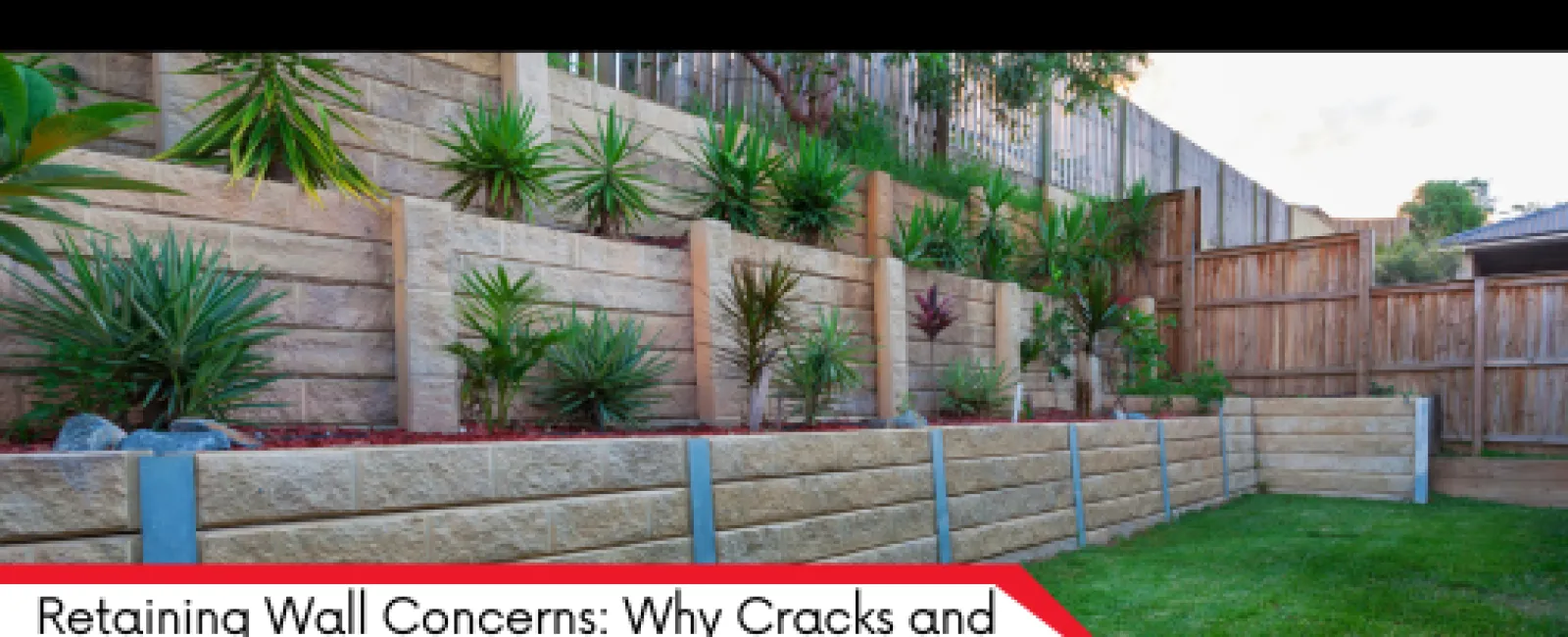
Retaining walls often fade into the background of a property. They hold back soil, support driveways, shape landscapes, and quietly do their job year after year. Because they're so familiar, many homeowners don't give them much thought—until cracks, leaning, or movement become visible. But a retaining wall isn't just decorative. It's a structural system, and when it starts to fail, it can create serious safety concerns and destabilize the surrounding property.
During a recent inspection, a certified inspector with LunsPro Inspection Group identified a retaining wall showing visible cracking, displacement, and outward movement. While these conditions may appear cosmetic at first glance, they often signal deeper structural stress below the surface. Identifying issues like this is a critical part of Residential and Commercial Inspections throughout the Southeast, where soil conditions, elevation changes, and heavy rainfall place constant pressure on retaining walls.
What Retaining Walls Are Designed to Do
Retaining walls are built to manage changes in elevation and hold back soil that would otherwise shift or erode. They're common throughout the Southeast, especially on sloped lots, properties with tiered landscaping, or homes built into hillsides.
Key functions of retaining walls include:
-
Supporting driveways, walkways, and patios
-
Preventing soil erosion on sloped terrain
-
Protecting foundations from lateral soil pressure
-
Creating level areas for landscaping or outdoor use
Because retaining walls resist continuous pressure from soil and moisture, proper design, drainage, and maintenance are essential to their long-term stability.
Warning Signs of Retaining Wall Failure
Not every small crack means immediate failure, but cracks and movement are always signs that a wall is under stress.
Common red flags include:
-
Cracking: Vertical, horizontal, or stair-step cracks that grow over time
-
Leaning or bulging: The wall bows outward due to soil pressure
-
Displacement: Sections of the wall shift, separate, or sink
-
Soil erosion: Washouts or voids forming behind or beneath the wall
-
Pooling water: Poor drainage increasing pressure on the structure
During inspections, these indicators are carefully documented so property owners understand the severity and potential risks.
Why Retaining Walls Fail
Most retaining wall problems trace back to water and soil pressure. In the Southeast, frequent rain, dense soils, and seasonal moisture changes amplify these stresses.
Common causes of failure include:
-
Inadequate drainage: Water trapped behind the wall creates hydrostatic pressure
-
Poor construction: Insufficient reinforcement, footings, or materials
-
Expansive soils: Soil that swells when wet and shrinks when dry
-
Vegetation and tree roots: Roots pushing against or beneath the wall
-
Lack of maintenance: Small cracks or drainage issues left unaddressed
Identifying the underlying cause is crucial to choosing the right repair approach.
The Risks of Ignoring Retaining Wall Problems
A retaining wall showing movement or cracking should never be ignored. What starts as a minor issue can escalate quickly.
Potential risks include:
-
Damage to driveways, patios, sidewalks, and landscaping
-
Soil movement that affects nearby foundations
-
Sudden wall collapse creating safety hazards
-
Accelerated erosion and drainage problems
-
Reduced property value due to visible structural concerns
Addressing problems early is almost always far less expensive than repairing a full collapse.
Retaining Walls on Commercial Properties
Commercial properties often rely on large retaining walls to support parking lots, building perimeters, or terraced landscaping. Failure in these walls can pose increased risk due to higher loads and foot traffic.
Common commercial concerns include:
-
Walls bowing under parking or vehicle loads
-
Drainage systems overwhelmed during heavy rain
-
Older construction methods that no longer meet modern standards
That's why retaining wall observations are an important part of commercial building evaluations.
How Inspectors Evaluate Retaining Walls
During an inspection, retaining walls are evaluated visually and contextually as part of the exterior system.
Inspectors typically assess:
-
Visible cracking, movement, or leaning
-
Drainage features such as weep holes or backfill
-
Soil conditions around the wall
-
Signs of erosion or water accumulation
-
Proximity to structures and potential impact
While inspectors do not perform engineering analysis, they identify conditions that warrant further evaluation by a qualified contractor or structural engineer.
Common Repair and Stabilization Options
The right solution depends on how severe the damage is and what caused it.
Repair options may include:
-
Improving drainage behind the wall to relieve pressure
-
Reinforcing the wall with anchors or tiebacks
-
Rebuilding damaged sections with stronger materials
-
Full replacement for walls that are structurally compromised
Taking action early often prevents the need for major reconstruction.
Preventive Maintenance Tips for Homeowners
Simple maintenance steps can significantly extend the life of a retaining wall:
-
Inspect walls regularly for new cracks or movement
-
Make sure gutters and downspouts don't discharge water behind walls
-
Remove vegetation or tree growth pushing against the structure
-
Keep drainage paths clear and functional
-
Address minor repairs before they grow into larger problems
Combined with regular professional inspections, these steps help protect both safety and property value.
Why Professional Inspections Matter
At LunsPro Inspection Group, inspectors are trained to spot early signs of structural stress that are easy to dismiss but costly to ignore. Inspection reports don't just list issues—they explain why they matter and what steps may be needed next.
Whether you're buying, selling, or maintaining a property, understanding the condition of retaining walls is key to long-term protection.
Retaining Walls Are More Than Landscaping
Retaining walls play a vital role in protecting homes, driveways, and outdoor spaces from soil movement and erosion. Cracks, leaning, or displacement are warning signs that the wall is no longer performing as intended. Left unaddressed, these issues can lead to safety hazards, property damage, and significant expense.
Professional inspections provide the clarity needed to catch retaining wall problems early—before they become emergencies. If your property includes retaining walls, make sure they're evaluated with the same care as the rest of the structure.