When purchasing a newly constructed home, many buyers expect that all components—from structural systems to exterior features—have been built with precision and care. While new construction offers many advantages, it does not eliminate the possibility of issues. In some cases, concerns can arise in areas that homeowners may not immediately think to evaluate closely, such as decks and guardrails.
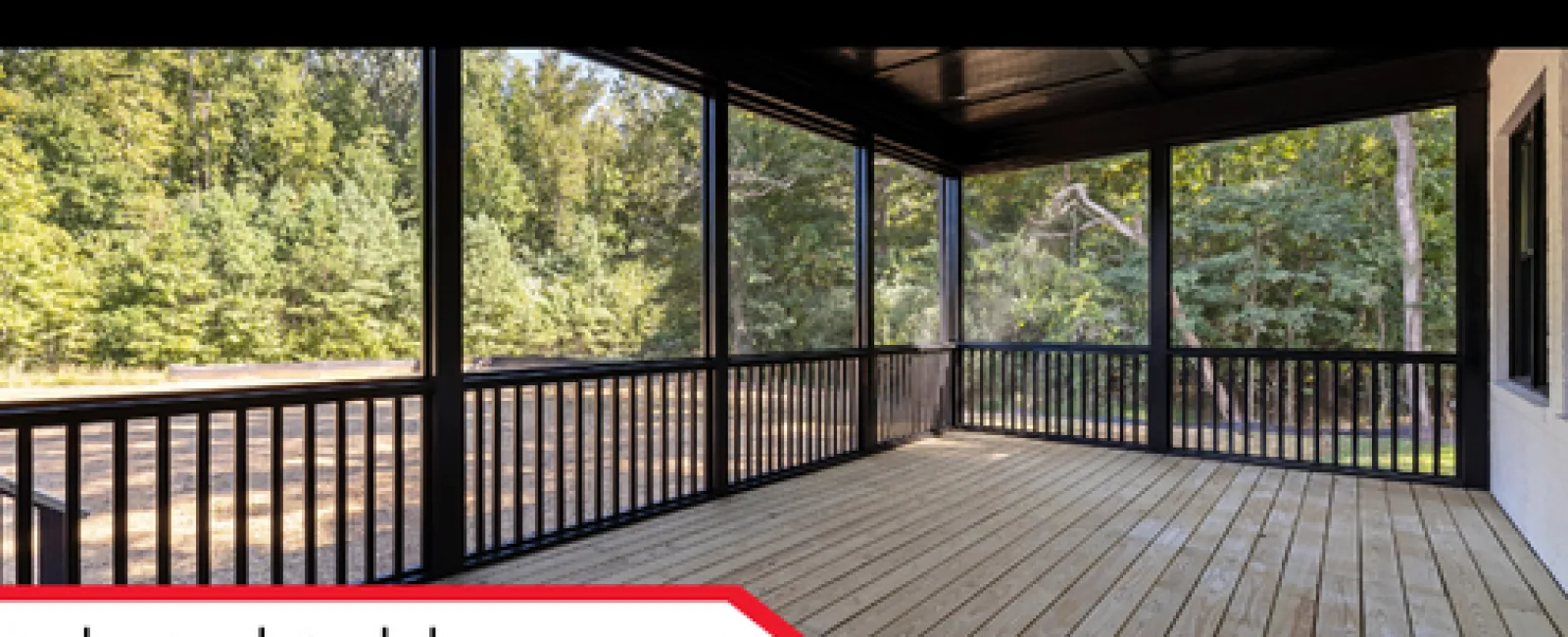
In a recent inspection, Licensed Inspector Matt F. identified a deck in a new construction home that exhibited noticeable movement. The guardrail appeared unstable, and the deck showed signs of lateral movement when pressure was applied. While no additional commentary was provided in the video, the visual observation itself highlights an important consideration: exterior structures must be stable and secure to perform as intended.
For homeowners across the Southeast, inspections conducted by LunsPro Inspection Group provide valuable insight into these types of conditions. Through comprehensive Southeastern Residential and Commercial Inspections, Licensed Inspectors evaluate not only interior systems but also exterior structures like decks to ensure that visible conditions are properly documented.
Understanding the Purpose of a Deck and Guardrail System
Decks are designed to provide outdoor living space while safely supporting people, furniture, and daily use. Guardrails, in particular, serve an important function by helping prevent falls and providing stability along elevated edges.
A properly constructed deck system includes:
- Structural framing to support loads
- Secure connections between components
- Guardrails designed to resist movement
- Stable attachment to the main structure
Each of these elements must work together to ensure the deck performs safely and reliably.
What Lateral Movement Indicates
Lateral movement refers to side-to-side motion within a structure. In the case observed by Licensed Inspector Matt F., the deck exhibited noticeable lateral movement, which may indicate that the structure is not as rigid as intended.
Movement in a deck can be associated with:
- Loose or insufficient connections
- Improper fastening of components
- Inadequate structural support
- Installation inconsistencies
While some minimal movement can occur in certain structures, excessive or noticeable movement is something inspectors document carefully.
Why Guardrail Stability Is Important
Guardrails are designed to provide support and protection, particularly on elevated decks. When a guardrail is wobbly or unstable, it may not perform as intended.
A stable guardrail should:
- Remain firm when pressure is applied
- Be securely attached to the deck structure
- Provide consistent support along its length
Visible instability in a guardrail is an important observation because it directly relates to how the deck is used.
Why New Construction Can Still Have Deck Issues
It is a common assumption that new construction homes are free from defects. However, the construction process involves multiple stages and teams working under time constraints, which can sometimes lead to oversights.
Factors that may contribute to deck issues in new construction include:
- Incomplete fastening of components
- Improper installation techniques
- Rushed construction timelines
- Variability in workmanship
These conditions can result in structures that appear complete but may not perform as expected.
The Importance of Exterior Structure Inspections
Decks are exterior structures that are exposed to environmental conditions and regular use. Because of this, they require careful evaluation during a home inspection.
Licensed Inspectors assess decks by observing:
- Structural stability
- Condition of visible components
- Guardrail attachment and performance
- Overall construction quality
These evaluations help identify visible concerns that may impact the deck's performance.
Why This Matters for Southeastern Homeowners
Homes in the Southeastern United States are often designed to include outdoor living spaces such as decks. These structures are frequently used due to the region's climate and lifestyle.
However, environmental factors such as:
- Humidity
- Rainfall
- Temperature changes
can influence how materials perform over time. A deck that already exhibits movement may be more susceptible to changes as it is exposed to these conditions.
Through Southeastern Residential and Commercial Inspections, Licensed Inspectors consider these regional influences when evaluating exterior structures.
The Role of Licensed Inspectors in Identifying Deck Concerns
Licensed Inspectors are trained to identify visible conditions that may affect the performance of exterior structures. Their role is to document what is observed and provide homeowners with clear information.
During an inspection, Licensed Inspectors:
- Apply light pressure to evaluate stability
- Observe connections and attachment points
- Document any visible movement or irregularities
- Include findings in a detailed report
This process helps homeowners understand the condition of the deck.
What Homeowners Can Learn from This Observation
The situation identified by Licensed Inspector Matt F. offers several important takeaways:
1. New construction does not guarantee stability.
Even newly built structures can have performance concerns.
2. Movement is an important indicator.
Visible lateral movement suggests that components may not be properly secured.
3. Guardrails play a critical role.
Stability in guardrails is essential for safe use of the deck.
4. Inspections provide valuable insight.
Professional evaluations help identify conditions that may not be immediately obvious.
These insights reinforce the importance of evaluating all aspects of a home, including exterior features.
How LunsPro Inspection Group Supports Homeowners
LunsPro Inspection Group provides comprehensive inspection services designed to help homeowners better understand their properties. Their Licensed Inspectors evaluate both interior and exterior components to identify visible conditions.
Through their inspections, homeowners receive:
- Detailed documentation of findings
- Clear descriptions of observed conditions
- Professional insight into structural performance
- Information to support decision-making
This approach ensures that homeowners are informed about all aspects of their property.
A Broader Perspective on Deck Construction
Decks are an extension of the home, and their performance is closely tied to how they are constructed. Proper installation, secure connections, and attention to detail all contribute to a stable structure.
By identifying conditions such as lateral movement or guardrail instability, Licensed Inspectors provide valuable information that helps homeowners better understand their deck.
The observation made by Licensed Inspector Matt F.—a flimsy deck with noticeable movement and an unstable guardrail—serves as a reminder that even new construction homes require careful evaluation. While the structure may appear complete, visible movement highlights the importance of assessing how it performs under use.
For homeowners throughout the Southeast, working with professionals like LunsPro Inspection Group ensures that these types of conditions are identified through thorough Southeastern Residential and Commercial Inspections. Licensed Inspectors provide insight into both interior and exterior components, helping homeowners understand the full condition of their property.
Ultimately, home inspections are about more than identifying issues—they are about providing clarity and confidence. By recognizing the importance of structural stability and relying on professional evaluations, homeowners can make informed decisions and better protect their investment.