
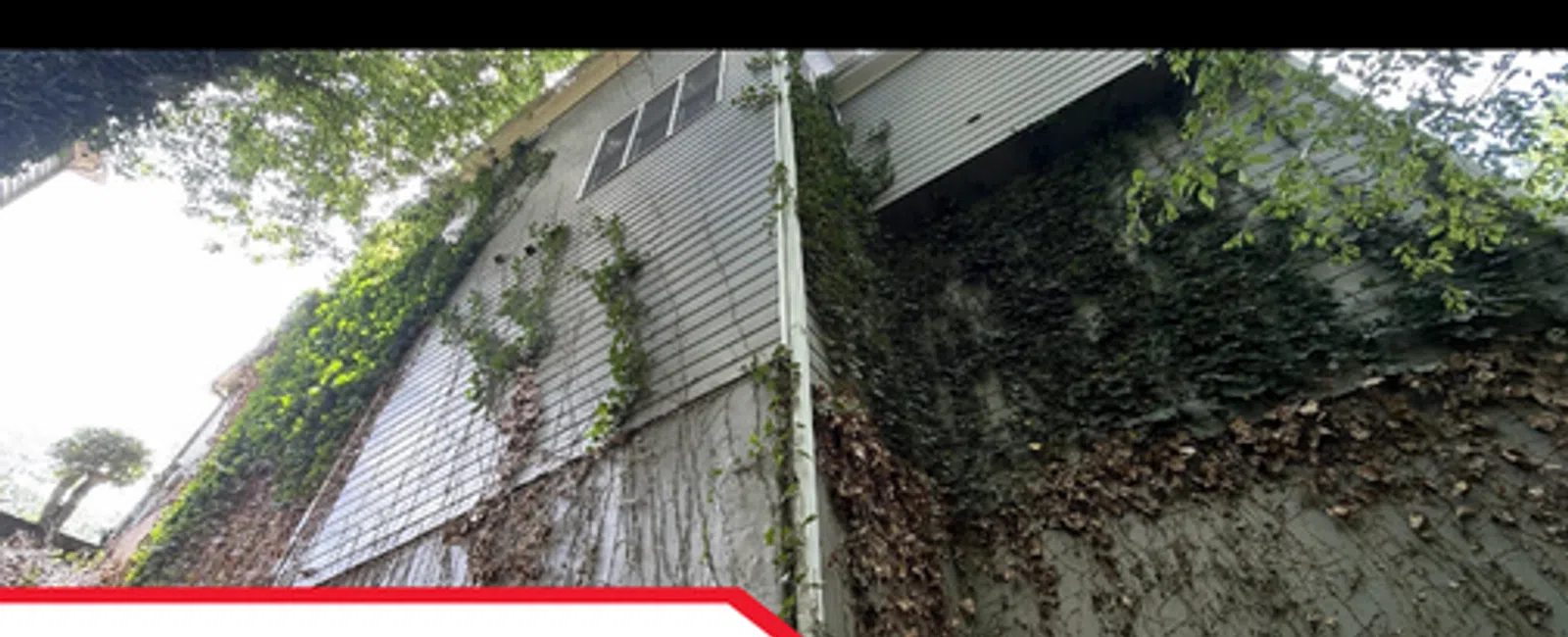
Purchasing a home involves evaluating much more than its appearance, floor plan, and visible finishes. While buyers often focus on kitchens, bathrooms, flooring, and other everyday living spaces, important property conditions can exist in less accessible areas. Crawlspaces, attics, exterior wood components, and foundation walls may reveal evidence of pest activity, moisture concerns, or structural movement that is not immediately apparent during a typical property showing.
Pest-related conditions can also overlap with other building concerns. Carpenter bees may leave visible openings in exterior wood, termites may be discovered near moisture-affected framing, and other insects or wildlife may occupy attic spaces. These observations demonstrate why a general home inspection and a specialized pest inspection can provide complementary information about a property.
Licensed and Certified Inspector Jared W. of LunsPro Inspection Group recently highlighted these connections while inspecting a 1980s home in the Chattanooga, TN, area. His observations included carpenter bee damage, woodpecker activity, active termites, moisture-related conditions, significant horizontal foundation cracking, bats, wasps, and evidence of wood-boring insects.
For homeowners and buyers throughout Nashville, TN; Chattanooga, TN; Atlanta, GA; Charlotte, NC; Raleigh, NC; Greensboro, NC; Greenville, SC; Savannah, GA; and Charleston, SC, understanding the relationship between general home inspections and pest inspections can help provide a more complete picture of a property's visible condition.
Why Pest Inspections Matter During a Home Purchase
A general home inspection and a pest inspection serve related but different purposes.
A general home inspection evaluates visible and accessible building components within the inspection's scope. This can include structural elements, exterior components, roofing, plumbing, electrical systems, and other accessible areas.
A specialized pest inspection focuses more directly on identifying pest activity, evidence of wood-destroying organisms, and conditions relevant to pest concerns.
These services can complement each other because pest activity sometimes occurs alongside visible building deterioration.
For example, an inspector may discover moisture staining in a crawlspace while also observing termite activity nearby. Both conditions deserve attention, but understanding the extent of the pest activity may require specialized evaluation.
This is why Jared emphasized the importance of pairing pest inspections with home inspections.
Carpenter Bees and Exterior Wood Damage
One of Jared's first observations involved extensive carpenter bee damage.
He identified multiple affected areas along an exterior wood component, explaining that carpenter bees had bored into the material.
He also observed damage associated with woodpeckers.
According to Jared, the woodpeckers had located the carpenter bees and pecked into the wood to reach them.
This is an important distinction because not all visible damage necessarily comes directly from the same animal.
Carpenter bees create openings in wood, while woodpecker activity can enlarge or disturb the affected areas.
The resulting damage may become more noticeable than the original insect openings.
Why Carpenter Bee Activity Deserves Attention
Carpenter bee activity can be easy to overlook when homeowners are focused on the overall appearance of a deck, porch, railing, or other exterior wood feature.
Small openings may not initially attract attention.
However, when multiple openings or areas of damaged wood are present, a closer evaluation is appropriate.
The visible damage does not automatically establish the structural condition of the affected component.
That determination depends on the location, extent of deterioration, and function of the material.
A professional inspection can document visible concerns, while a qualified pest professional can evaluate the activity and recommend appropriate management.
How Woodpeckers Can Make Damage More Noticeable
Jared's observation also illustrates how wildlife activity can interact with insect activity.
He identified areas where carpenter bees had bored into wood and woodpeckers had subsequently pecked into the same material.
The important homeowner takeaway is that visible openings or damaged wood may involve more than one source.
A homeowner might assume that all the damage came from insects.
Alternatively, someone might notice the larger openings and attribute everything to birds.
Professional evaluation helps distinguish the observed evidence rather than relying on appearance alone.
Where wood components have been damaged, the material's condition should also be considered separately from the pest activity.
Active Termites in the Crawlspace
Another significant observation involved active termites.
Jared identified termite activity extending upward within the crawlspace area.
He also observed moisture or evidence of previous moisture in the rim joist and floor joists.
These observations were particularly relevant because they involved wood components associated with the home's floor structure.
Termites are wood-destroying insects, and active activity deserves professional attention.
However, observing termites in one location does not establish the full extent of damage throughout the home.
A specialized termite inspection can help evaluate the accessible evidence and determine appropriate next steps.
Why Active and Inactive Termite Evidence Differ
When discussing termites, it is important to distinguish confirmed activity from historical evidence.
Jared specifically described the termites in this inspection as active.
That is different from finding an old, inactive termite tube without observing active insects.
Both types of evidence may be relevant, but they do not communicate the same information.
Professional inspection reporting should accurately describe the activity observed rather than assuming all evidence represents a current infestation.
In this situation, Jared's observation of active termites justified recommending specialized pest evaluation.
Moisture and Wood-Destroying Organisms
Jared also identified moisture-related concerns near the termite activity.
He described moisture or evidence of previous moisture in the rim joist and floor joists.
Additionally, he observed staining near ductwork and suggested there might be a small amount of fungal growth.
These findings illustrate why moisture and pest concerns are often evaluated together.
Moisture-affected wood can create conditions that deserve further attention, particularly when wood-destroying organisms are also present.
However, the presence of moisture does not prove that it caused a particular infestation.
The source of moisture and the extent of any associated damage should be evaluated based on the actual conditions.
Why Moisture Staining Should Be Documented
Visible staining may indicate that moisture has affected a material at some point.
An inspector should consider where the staining appears and whether other evidence is present.
In Jared's inspection, the staining was observed near ductwork, while moisture concerns were also identified around structural wood components.
Those observations should not automatically be assumed to have the same cause.
A professional inspection can identify the affected areas and recommend additional evaluation when necessary.
Similarly, suspected fungal growth should not be presented as a confirmed identification without appropriate testing or specialized assessment.
Rim Joists and Floor Joists Matter
The rim joist and floor joists are important components of a home's floor structure.
When an inspector observes moisture concerns or wood-destroying insects around these areas, the findings deserve careful documentation.
Jared identified both moisture-related conditions and active termite activity in the crawlspace.
These observations make it important to understand the condition of the accessible wood components.
However, visible evidence alone may not establish whether a particular member requires repair or replacement.
That determination may require further evaluation by an appropriately qualified professional.
Homeowners should avoid making assumptions about structural integrity based solely on the presence of insects or staining.
Horizontal Foundation Cracking Is a Separate Concern
Not every important finding during Jared's inspection involved pests.
He also identified significant horizontal cracking in the foundation.
Jared estimated that the crack was greater than one-quarter inch wide and described it as evidence of substantial movement.
He recommended having the condition checked.
Horizontal foundation cracking deserves attention because it may indicate movement or stress affecting the foundation wall.
The exact cause cannot be determined from the transcript alone.
A qualified structural professional may need to evaluate the foundation to determine the significance of the observed movement and whether corrective work is necessary.
Why Crack Width Matters
The width of a visible foundation crack is one detail that can help describe its condition.
In this instance, Jared observed cracking greater than one-quarter inch wide.
That measurement provides useful information, but it does not independently identify the cause or prescribe a repair.
The crack's location, orientation, surrounding conditions, and other factors may be relevant to further evaluation.
Homeowners should avoid assuming that all foundation cracks have the same significance.
Professional assessment is especially important when an inspector observes substantial horizontal cracking and apparent movement.
Bats in the Gable Vents
The inspection also revealed bats in both gable vents.
Gable vents are openings associated with attic ventilation, and Jared's observation showed that wildlife was present in those locations.
The transcript does not establish how long the bats had been there or whether they had entered other portions of the attic.
Those details should not be assumed.
Nevertheless, visible bats in gable vent areas are an important finding for a homeowner or buyer.
Wildlife should not be handled or disturbed without appropriate expertise.
A qualified wildlife professional can evaluate the situation and determine suitable next steps.
Wasps Were Present Too
In addition to bats, Jared observed wasps.
The presence of multiple types of insects and wildlife demonstrates why inspectors must remain attentive when entering attics, crawlspaces, and other less frequently visited areas.
Wasps can present a concern when people approach or disturb them.
For homeowners, attempting to investigate an unfamiliar insect or wildlife situation without proper precautions is not advisable.
The appropriate response is to document the observed activity and obtain professional assistance when needed.
Wood-Boring Insect Damage in Roof Trusses
Another important observation involved wood-boring insect damage in attic trusses.
Jared identified openings in the wood and noted material inside the holes that he interpreted as evidence suggesting recent or potentially active activity.
The transcript appears to refer to frass, which is debris associated with insect activity.
However, visible debris alone does not definitively establish the insect species or confirm current activity.
A specialized pest inspection can help determine the nature of the evidence.
Why Truss Damage Should Be Evaluated
Roof trusses are structural components that support the roof assembly.
When an inspector observes damage to truss materials, the condition deserves attention.
The presence of insect openings does not automatically establish that a truss has lost its required structural capacity.
However, the affected material may warrant further evaluation to determine the extent and significance of the damage.
The pest-related concern and the structural condition should both be considered.
A qualified pest professional can assess the insect evidence, while an appropriate structural professional can evaluate the truss if its integrity is in question.
Multiple Pest Findings Require Different Responses
One of the most useful lessons from Jared's inspection is that not every pest-related observation should be handled the same way.
Carpenter bees, termites, bats, wasps, and other wood-boring insects are different organisms.
They do not necessarily create the same conditions or require identical management approaches.
Similarly, woodpecker damage is not the same as termite damage.
A professional evaluation should identify the specific concern before recommending a response.
This helps homeowners avoid relying on a single generalized solution for several unrelated conditions.
Why Older Homes Benefit From Thorough Inspections
Jared described the property as a home from the 1980s.
The home's age provides context, but it does not establish the cause of any particular condition.
Older homes may have undergone repairs, modifications, maintenance, or changes in occupancy over time.
Some components may be original, while others may have been replaced.
A professional inspection focuses on the present condition of visible and accessible components rather than assuming that every issue is simply the result of age.
The same principle applies to newer homes.
A property should be evaluated based on what is actually observed.
Why Home and Pest Inspections Complement Each Other
A general home inspection may reveal conditions such as foundation cracking, moisture staining, and damaged structural materials.
A pest inspection can provide additional information about termites, carpenter bees, wood-boring insects, and other pest activity.
Together, these evaluations help buyers understand different aspects of the property.
For example, if termite activity is discovered near a floor joist, the pest inspection can focus on the organism and associated evidence.
Further evaluation of the affected wood may then be appropriate to determine whether structural repairs are necessary.
Neither inspection should be treated as a substitute for every specialized assessment.
Instead, the findings can help identify where additional professional attention is needed.
PestNation and Specialized Pest Services
When pest activity is discovered during a home inspection, homeowners may benefit from working with a qualified pest-control professional.
PestNation, LunsPro Inspection Group's sister company, provides professional pest-control services.
Homeowners can learn more about pest-related services through the PestNation website.
This relationship reinforces the distinction between identifying observable concerns during a general home inspection and obtaining specialized pest evaluation or treatment.
A home inspector may document active termites or visible carpenter bee damage, while a pest professional can assess the activity and recommend appropriate management.
The goal is to help homeowners understand the condition rather than assume that every problem has the same solution.
Southeastern Homes and Pest-Related Concerns
Homeowners throughout the Southeast should understand the value of inspecting areas where pest activity and building conditions may overlap.
Properties in Chattanooga, TN, and Nashville, TN, can contain crawlspaces, attic spaces, exterior wood components, and other areas that deserve attention.
The same applies to homes in Atlanta, GA; Charlotte, NC; Raleigh, NC; Greensboro, NC; Greenville, SC; Savannah, GA; and Charleston, SC.
However, the presence of these building features does not mean a property has a pest problem.
Each home is different.
A home in Savannah, GA, should not automatically be assumed to have the same pest activity as a home in Chattanooga, TN.
Professional inspection evaluates the individual property rather than making broad assumptions based on location.
The Value of Clear Inspection Documentation
Finding a condition is only part of the inspection process.
The inspector must also communicate what was observed.
In Jared's inspection, several distinctions were important.
He identified active termites rather than merely historical termite evidence.
He described suspected fungal growth without presenting it as laboratory-confirmed.
He identified visible foundation cracking and recommended additional evaluation rather than assigning a definitive cause.
He also observed signs of wood-boring insect activity without conclusively identifying every insect responsible.
These distinctions help clients understand what is known and what still requires investigation.
Clear reporting provides useful information without overstating the findings.
When Further Professional Evaluation Is Appropriate
A home inspection can identify observable conditions that deserve additional attention.
However, some findings require expertise beyond the general inspection scope.
Active termites may warrant specialized pest evaluation.
Suspected fungal growth may require appropriate moisture investigation or environmental assessment.
Significant horizontal foundation cracking may justify structural evaluation.
Damage to roof trusses may require additional assessment to determine whether structural integrity has been affected.
Bats and wasps may require qualified wildlife or pest professionals.
Recognizing these different needs helps homeowners pursue the appropriate next steps.
LunsPro Inspection Group and Comprehensive Property Awareness
LunsPro Inspection Group provides professional inspection services designed to help buyers and homeowners understand visible and accessible property conditions.
Through Southeastern Residential and Commercial Inspections, experienced Licensed Inspectors evaluate components that may not receive attention during an ordinary property walkthrough.
That includes crawlspaces, attics, foundations, and other accessible areas where moisture, pest evidence, and structural concerns may become visible.
A professional inspection does not guarantee that every concealed condition will be discovered.
It does, however, provide an independent evaluation of observable conditions at the time of inspection.
For homebuyers, that information can be valuable when considering additional evaluations, repairs, and property-related decisions.
Why Buyers Should Consider Both Inspections
Jared's observations illustrate why a home inspection and pest inspection can work together.
The carpenter bee damage and woodpecker activity raised questions about exterior wood conditions.
Active termites and moisture-related observations highlighted concerns within the crawlspace.
Wood-boring insect evidence in the attic deserved specialized attention.
Bats and wasps introduced additional wildlife and pest considerations.
Meanwhile, the significant horizontal foundation cracking represented a separate building concern requiring appropriate evaluation.
These observations demonstrate that a property can contain multiple conditions requiring different types of expertise.
A thorough inspection process helps buyers identify those distinctions rather than treating every issue as part of one general problem.
The most important takeaway from Licensed and Certified Inspector Jared W. is that homeowners should not underestimate what can be found in areas outside the main living space. Carpenter bee damage, woodpecker activity, active termites, moisture concerns, bats, wasps, and evidence of wood-boring insects were all observed during his inspection of a 1980s home in the Chattanooga, TN, area. Significant horizontal foundation cracking was also present, illustrating that pest concerns and building conditions may need to be evaluated separately.
For buyers throughout Nashville, TN; Chattanooga, TN; Atlanta, GA; Charlotte, NC; Raleigh, NC; Greensboro, NC; Greenville, SC; Savannah, GA; and Charleston, SC, the lesson is to approach homeownership with an understanding that visible finishes tell only part of the story. Accessible crawlspaces, attics, exterior wood components, and foundations can reveal important information that may not be apparent during a property showing.
A professional home inspection helps document visible building conditions, while a specialized pest inspection can provide additional information about insect and wildlife activity. When findings overlap, further evaluation may be needed to understand both the pest concern and the condition of affected materials. Homeowners can also explore professional pest services through PestNation, LunsPro's sister company.
Through LunsPro Inspection Group, professional Southeastern Residential and Commercial Inspections help clients make more informed decisions based on observable property conditions. Working with experienced Licensed Inspectors and obtaining appropriate specialized pest evaluations can provide a clearer understanding of a home's current condition. As Jared emphasized, pairing a home inspection with a pest inspection can be valuable because you never know exactly what you might find.