
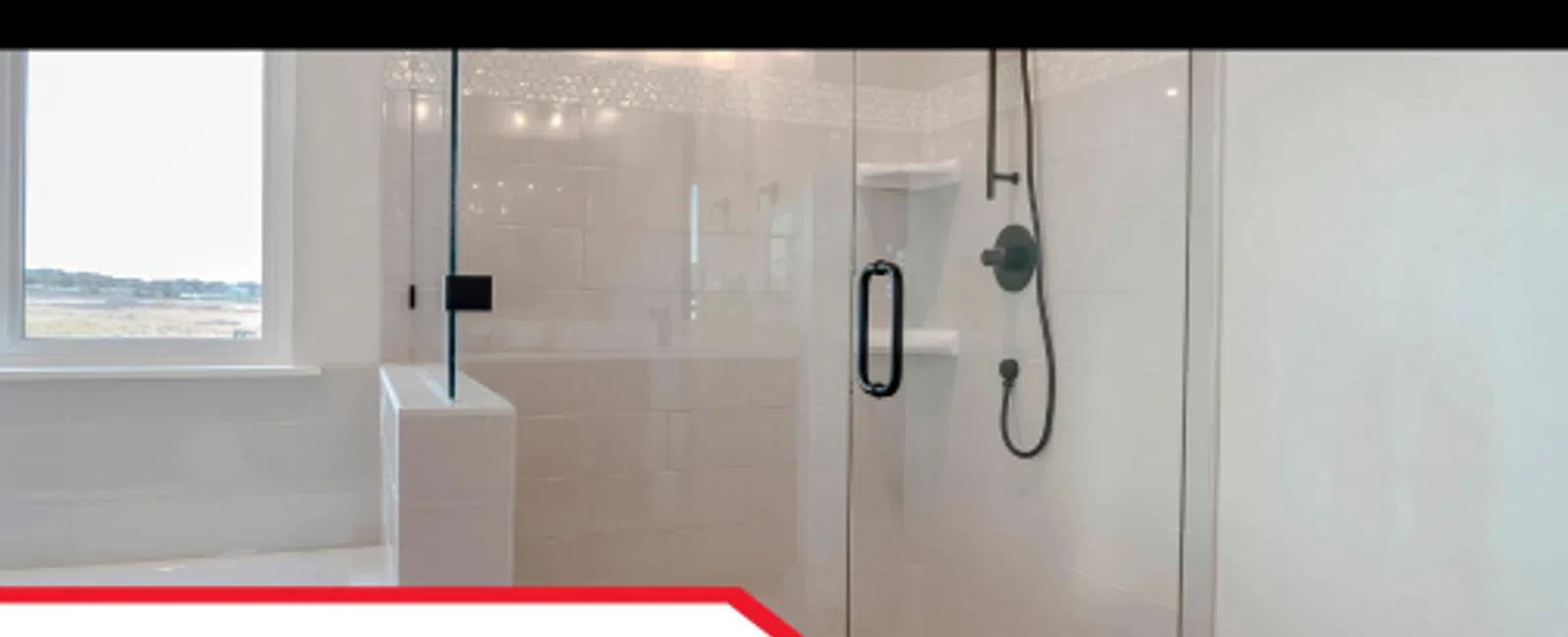
A newly constructed bathroom can create a strong impression during a final walkthrough. The tile is clean, the glass enclosure looks polished, the fixtures are new, and the entire space may appear ready for immediate use. Buyers naturally expect a brand-new shower to perform properly because the materials have not experienced years of wear, repeated use, or aging sealants.
However, appearance alone cannot confirm that a shower enclosure is watertight. The only practical way to evaluate how it manages water is to operate the fixture and observe the surrounding area. During a new construction final inspection in Acworth, Georgia, Licensed Inspector Mike S. found water leaking from the base of the master bathroom shower enclosure. The escaping water had the potential to affect interior finishes and areas below, making it an important item for the builder to address before the homeowner moved in.
This type of finding illustrates why new construction homes still benefit from independent evaluation. LunsPro Inspection Group provides detailed Southeastern Residential and Commercial Inspections designed to help buyers understand the visible and accessible condition of their properties. Its Licensed Inspectors evaluate finished systems under normal operating conditions whenever practical, helping identify concerns that may not be apparent during a visual walkthrough.
Why a Finished Shower Can Still Leak
A shower enclosure is a collection of materials and connections rather than a single component.
Depending on its design, it may include:
- Glass panels
- Framing or support hardware
- Door seals
- Base tracks
- Shower curbs
- Tile transitions
- Sealant joints
- Drainage surfaces
- Connections between the enclosure and surrounding finishes
Each part contributes to how water remains within the shower area.
A leak may occur when one of these transitions does not manage water as intended. Even when every material is new, installation details can still be incomplete, improperly sealed, misaligned, or damaged during construction.
The inspection commentary does not identify the exact installation defect responsible for the leak. It would therefore be inappropriate to state whether the problem involved sealant, alignment, glass hardware, the shower base, or another component. What was clearly observed was water escaping from the base of the enclosure during normal testing.
Why Testing Matters More Than Appearance
A shower enclosure may appear completely finished while it remains dry.
Water testing changes the conditions.
Once the shower is operating, water reaches seams, corners, door edges, glass transitions, and the enclosure base. This gives the inspector an opportunity to observe whether moisture remains within the intended area or escapes onto surrounding finishes.
Without operating the shower, a buyer may not see:
- Water leaking beneath the enclosure
- Moisture escaping at a corner
- Poor drainage near the door
- Water collecting outside the curb
- Dampness developing on nearby surfaces
This is why professional inspections include functional testing where conditions and accessibility allow. The purpose is not simply to confirm that the fixture turns on. It is also to observe how the complete assembly performs while being used.
Why New Construction Is Not Automatically Perfect
New homes do not have the age-related wear found in older properties, but they are still assembled by multiple trades working through a detailed construction schedule.
Bathroom construction may involve:
- Plumbing contractors
- Tile installers
- Glass enclosure installers
- Waterproofing specialists
- Drywall crews
- Painters
- Finish carpenters
- Cleaning crews
Each trade completes a portion of the finished space. If one connection is missed or one material is not integrated correctly, the bathroom may look complete while still containing a functional defect.
This does not mean every new home is poorly built. It means buyers should judge a property by its actual condition rather than by its construction date.
Mike's finding in Acworth is a clear example. The master bathroom looked complete enough for a final inspection, yet the shower enclosure leaked when tested.
Why Water Escaping a Shower Matters
Water is intended to remain within the shower and drain through the plumbing system.
When it escapes the enclosure, nearby materials may be exposed to repeated moisture during normal use.
Depending on the location and duration of leakage, affected materials may include:
- Baseboards
- Painted walls
- Drywall
- Flooring
- Subflooring
- Trim
- Ceilings or finishes below the bathroom
The transcript specifically notes concern about interior finishes and areas below.
A single controlled test during an inspection may reveal the leak early. Daily shower use after move-in could expose the surrounding materials repeatedly until the homeowner notices visible staining, swelling, dampness, or damage.
Early identification is therefore valuable because it gives the builder an opportunity to correct the source before the bathroom enters regular service.
Why Areas Below the Bathroom Matter
Bathrooms located on upper levels require particular attention because water escaping the shower may not remain in the bathroom.
Moisture can move through gaps, floor penetrations, joints, or surrounding materials and affect the ceiling or finishes below.
The visible location of a leak does not always show the complete area affected. Water can travel before it appears elsewhere.
That is why a shower leak should not be treated only as a matter of wiping up water from the bathroom floor. The enclosure should be properly evaluated, the source corrected, and any affected materials reviewed as appropriate.
Why a Final Inspection Is the Right Time to Find It
A new construction final inspection occurs when the home is substantially complete and major systems can generally be operated.
This stage gives inspectors the opportunity to evaluate components that were not available during earlier construction phases.
A shower enclosure, for example, cannot be functionally tested during framing or pre-drywall inspections because the finished assembly has not yet been installed.
At the final stage, inspectors may be able to operate:
- Showers
- Sinks
- Toilets
- Appliances
- Windows
- Doors
- HVAC systems
- Lighting
- Other accessible finished components
The goal is to identify visible deficiencies before the buyer takes possession.
Finding the shower leak before move-in is far more useful than discovering it after the homeowner has unpacked, furnished the home, and begun using the bathroom every day.
Why Builder Walkthroughs May Miss Functional Problems
Builder walkthroughs often emphasize completion and cosmetic items.
Buyers may notice:
- Paint touch-ups
- Flooring scratches
- Cabinet adjustments
- Trim gaps
- Surface imperfections
- Missing hardware
These items matter, but they do not always reveal how systems perform under use.
A shower may be clean, attractive, and visually complete while still leaking at the base.
The builder may not have operated the fixture under the same conditions or observed the exact location where water escaped.
An independent inspection creates another opportunity to test the finished home from the buyer's perspective.
Water Management Is Especially Important in the Southeast
Homes across the Southeast experience extended periods of heat and humidity.
Properties in Atlanta, Charlotte, Raleigh, Greensboro, Greenville, Savannah, Charleston, Nashville, and Chattanooga all face regional conditions that make moisture management an important part of home performance.
A shower leak originates indoors rather than from regional weather, but the surrounding climate can still affect how quickly damp materials dry.
Persistent indoor moisture deserves attention in any climate. In humid Southeastern conditions, homeowners should be especially careful about leaks affecting drywall, trim, subflooring, or enclosed cavities.
The practical lesson is simple: water should remain within the shower, and visible leakage should be corrected before routine use begins.
What Inspectors Look for When Testing Showers
The exact inspection process depends on the bathroom design and accessible conditions, but a functional review may include operating the shower and observing visible areas around the enclosure.
Inspectors may pay attention to:
- The base of the enclosure
- Door edges
- Corners
- Glass transitions
- Surrounding flooring
- Nearby walls and trim
- Drainage behavior
- Visible moisture outside the shower
A standard home inspection is visual and non-invasive. Inspectors generally do not dismantle the enclosure or determine every concealed installation detail.
When leakage is observed, the finding is documented so the buyer and builder can arrange appropriate correction and additional evaluation if necessary.
Why the Exact Cause Should Be Professionally Evaluated
Several different installation details can potentially contribute to water escaping a shower enclosure.
Because the supplied information only establishes that water leaked from the base, the exact cause should not be assumed.
A qualified contractor can evaluate the installed assembly and determine:
- Where water is escaping
- Which component or connection needs correction
- Whether sealant, alignment, drainage, or another detail is involved
- Whether surrounding materials were affected
- What repair is appropriate for the specific enclosure
This separation of roles is important.
The home inspector identifies and documents the visible defect. The appropriate qualified professional determines the repair method.
Why Simply Adding Sealant May Not Be Enough
When homeowners see water near a shower enclosure, the immediate reaction may be to apply more sealant.
That may be appropriate in some situations, but it should not be treated as a universal solution.
If the issue involves alignment, installation sequence, drainage, movement, or another condition, surface sealant alone may not correct the source.
A proper repair should address why the water is escaping rather than merely covering the most visible location.
This is another reason the builder should pay close attention to the finding and arrange evaluation of the complete enclosure.
What Homebuyers Should Take Away From This Finding
Mike S.'s inspection offers several practical lessons.
New bathrooms still need testing
Fresh materials and modern finishes do not confirm proper performance.
Water testing can reveal hidden installation issues
A dry visual inspection cannot show how the enclosure behaves during use.
Small leaks can affect surrounding finishes
Water escaping at the base may reach flooring, trim, subflooring, or areas below.
Final inspections provide valuable timing
Finding a leak before move-in gives the builder an opportunity to correct it before daily use begins.
Independent inspections add another level of review
A builder walkthrough and professional home inspection serve different purposes.
The source should be corrected properly
Repairs should address the actual cause rather than only the visible symptom.
Why New Construction Buyers Need More Than a Punch List
A cosmetic punch list is useful, but it is not the same as a comprehensive final inspection.
A professional inspection may evaluate accessible systems and components involving:
- Roofing
- Structure
- Exterior materials
- Electrical systems
- Plumbing
- HVAC equipment
- Windows and doors
- Attics
- Insulation
- Interior finishes
- Bathrooms and fixtures
The shower leak was one visible plumbing-related condition within a much larger property evaluation.
This broader approach helps buyers understand how the home performs rather than focusing only on appearance.
How LunsPro Inspection Group Supports New Home Buyers
LunsPro Inspection Group provides comprehensive inspection services for buyers throughout the Southeast.
Through detailed Southeastern Residential and Commercial Inspections, its Licensed Inspectors evaluate visible and accessible systems and document conditions observed at the time of inspection.
For new construction buyers, this independent perspective can reveal concerns that are not immediately obvious during a walkthrough.
Whether a home is located near Atlanta, Charlotte, Raleigh, Greensboro, Greenville, Savannah, Charleston, Nashville, or Chattanooga, the same principle applies: new construction should be tested and evaluated rather than assumed to be perfect.
A New Home Should Be Ready for Normal Use
Buyers reasonably expect a finished shower to contain water during normal operation.
When water escapes from the base, the enclosure is not performing as expected and deserves correction.
The goal of documenting the issue is not to create unnecessary alarm. Many construction defects can be repaired.
The value lies in discovering the condition before it becomes part of the homeowner's daily routine and responsibility.
A beautiful new bathroom should not require the homeowner to monitor the floor every time the shower is used.
The shower enclosure leak identified by Licensed Inspector Mike S. demonstrates why functional testing is an important part of a new construction final inspection. The master bathroom appeared complete, but operating the shower revealed water escaping from the base of the enclosure. That visible defect had the potential to affect interior finishes and areas below the bathroom.
Finding the issue before move-in gives the builder an opportunity to determine the source, correct the installation, and review any materials exposed to moisture. It also gives the buyer useful documentation before the property becomes entirely their responsibility.
For homebuyers throughout Atlanta, Charlotte, Raleigh, Greensboro, Greenville, Savannah, Charleston, Nashville, Chattanooga, and surrounding Southeastern communities, LunsPro Inspection Group provides thorough Southeastern Residential and Commercial Inspections performed by knowledgeable Licensed Inspectors.
New construction can offer modern systems, fresh materials, and an exciting start to homeownership, but it should still be evaluated carefully. A finished component is not always a properly functioning component. Testing showers, fixtures, windows, doors, and other accessible systems helps buyers understand the home they are preparing to own and gives builders the chance to address visible concerns before closing.