
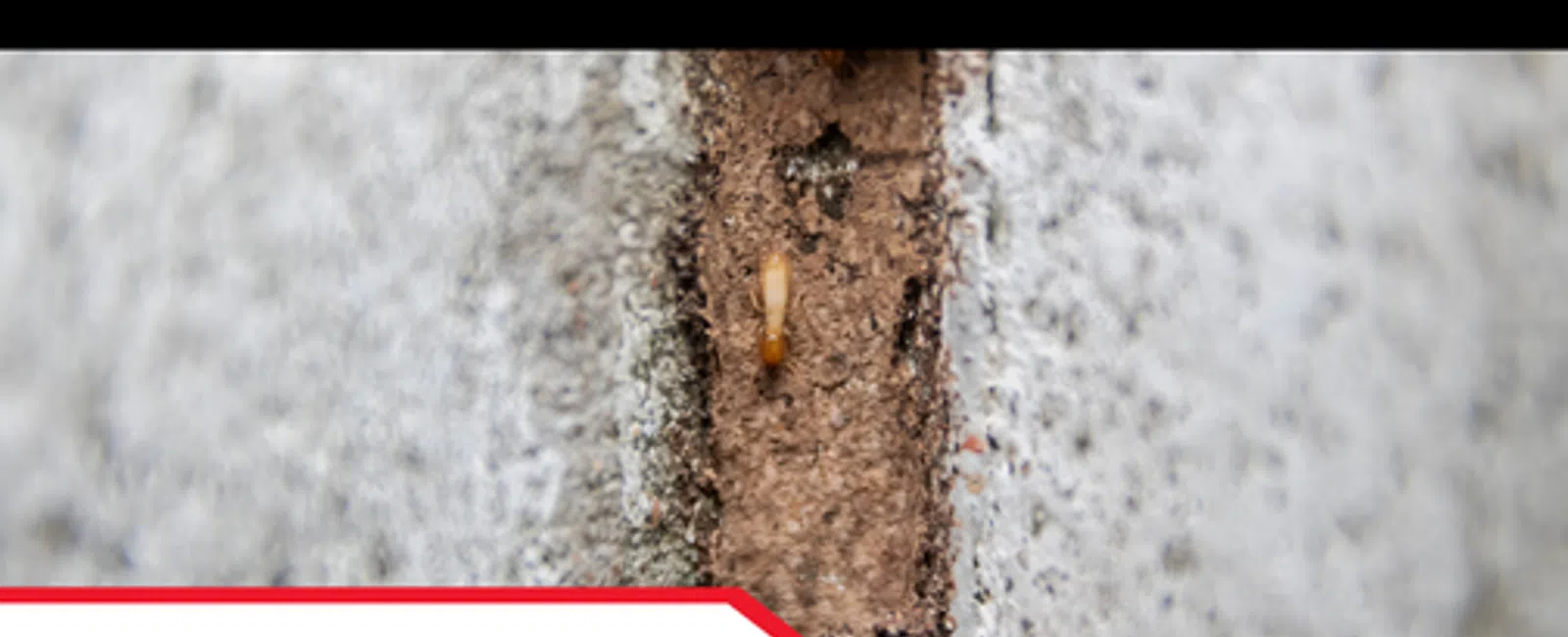
Termite activity is an important concern for homeowners and prospective buyers, particularly when evidence appears in areas that may not receive much attention during an ordinary property walkthrough. Garages, foundation walls, and crawlspaces are examples of locations where visible signs of wood-destroying organisms may be discovered during a professional home inspection. Although the initial evidence may appear limited to one area, determining whether additional activity exists can help homeowners better understand the property's condition.
One important consideration is that evidence of termite activity does not automatically confirm an active infestation. Signs may indicate current or previous activity, and further evaluation may be necessary to determine the difference. This is why professional inspectors document observable conditions and recommend specialized pest evaluations when appropriate rather than making unsupported conclusions about the extent or status of an infestation.
Licensed and Certified Inspector Mike S. of LunsPro Inspection Group recently demonstrated this approach during a residential inspection in Fayetteville, GA. While evaluating the garage, Mike noticed signs of termite activity along a foundation wall. He explained that the crawlspace was located on the opposite side of the wall and planned to inspect that area for additional evidence. Regardless of whether the activity proved active or inactive, Mike recommended that a qualified pest control company evaluate the condition.
For homeowners throughout Atlanta, GA; Savannah, GA; Nashville, TN; Chattanooga, TN; Charlotte, NC; Raleigh, NC; Greensboro, NC; Greenville, SC; and Charleston, SC, the observation reinforces the importance of understanding termite evidence, evaluating accessible areas, and obtaining appropriate professional guidance when concerns arise.
Why Garages Deserve Attention During Home Inspections
Garages serve several purposes in residential properties. Some homeowners primarily use them for parking, while others use them for storage, equipment, or household projects.
Because garages are often considered secondary spaces, buyers may focus more heavily on the finished living areas during a property showing.
However, garage inspections can reveal important information about the condition of a home.
Foundation walls, visible building materials, and connections to adjacent spaces may all provide clues about conditions requiring additional evaluation.
In Mike's inspection, the important observation was evidence of termite activity along the garage foundation wall.
The finding was significant enough to prompt a plan for additional investigation in the adjacent crawlspace.
This illustrates why garages should not be overlooked simply because they are not primary living spaces.
Understanding Termite Activity
Termites are wood-destroying insects that can affect materials containing cellulose.
For homeowners, termite activity is relevant because wood components are used throughout residential construction.
However, the presence of termite evidence does not automatically establish that significant structural damage has occurred.
An inspector may identify signs of activity without being able to determine the full extent of any concealed damage.
That distinction is important.
The purpose of an initial observation is to identify a condition that deserves attention.
A qualified pest professional can then perform a more specialized evaluation to determine what additional action may be necessary.
Why Termite Evidence Can Appear Near Foundations
Foundation areas are important locations to evaluate when termite activity is suspected.
They form part of the boundary between the home's structure and the surrounding environment.
In Mike's inspection, evidence was visible along a garage foundation wall.
The transcript does not specify the exact appearance of that evidence, so it would be inappropriate to describe a particular type of termite tube, damaged wood, or insect activity that was not explicitly identified.
What is known is that Mike recognized signs consistent with termite activity and determined that further evaluation was appropriate.
This demonstrates the value of having an experienced inspector examine accessible foundation areas rather than relying solely on a general visual impression of the garage.
Why the Adjacent Crawlspace Matters
One of the most important details in Mike's commentary was the relationship between the garage foundation wall and the crawlspace.
He explained that the crawlspace was located on the opposite side of the wall.
That relationship provided a logical next area to inspect.
If evidence of termite activity is visible on one side of a foundation wall, examining accessible areas on the other side may provide additional information.
However, it is important not to assume that termites are present throughout the crawlspace simply because evidence was discovered in the garage.
Mike had not yet completed that portion of the evaluation when he recorded his commentary.
His stated plan was to enter the crawlspace, look for further evidence, and determine whether the activity appeared active or inactive.
Active vs. Inactive Termite Activity
One of the most important distinctions in termite evaluation is whether evidence indicates current activity or previous activity.
Active termite activity means there is evidence supporting the presence of termites at the time of evaluation.
Inactive evidence may indicate that termites were present previously, without confirming that they remain active.
These distinctions matter because homeowners need accurate information when considering further evaluation or treatment.
Mike specifically stated that he intended to investigate whether the activity was active or inactive.
He did not claim that the activity had already been confirmed as active.
That careful approach reflects an important inspection principle: observations should be documented accurately, and conclusions should remain within the available evidence.
Why Inactive Evidence Still Deserves Attention
Homeowners may wonder whether inactive termite evidence can simply be ignored.
Mike's recommendation provides a useful answer.
He explained that a qualified pest control company should evaluate the condition regardless of whether the evidence proved active or inactive.
Previous termite activity can remain relevant because it may raise questions about the property's pest history, any prior treatment, and the condition of affected materials.
However, inactive evidence does not automatically establish that termites remain present or that structural damage exists.
The appropriate next step is professional evaluation rather than assumption.
The Difference Between a Home Inspection and Pest Inspection
A general home inspection and a specialized pest inspection have different purposes.
A home inspection evaluates visible and accessible property components within the agreed inspection scope.
During that process, an inspector may encounter evidence of pest activity.
A specialized pest inspection focuses more directly on identifying pest-related conditions and determining whether additional action is appropriate.
Mike's garage observation illustrates how the two services can complement one another.
He recognized evidence of termite activity during the general inspection and planned to examine the adjacent crawlspace.
He also recommended evaluation by a qualified pest control company.
This approach helps ensure that a potentially important concern receives the appropriate level of attention.
Why Inspectors Should Avoid Guessing
Termite evidence can raise immediate questions for a homeowner or buyer.
Is the infestation active?
How long have termites been present?
Have they damaged structural components?
Will treatment be necessary?
These are understandable questions, but they cannot all be answered from a single observation along a garage foundation wall.
Mike did not speculate about how long the evidence had been present or how much damage might exist.
Instead, he identified the visible concern and explained what further evaluation was needed.
That distinction supports reliable inspection reporting.
Professional inspections should provide useful information without presenting assumptions as established facts.
Why a Crawlspace Inspection Can Provide Additional Information
Crawlspaces are among the areas that many homeowners rarely enter.
Depending on the home's construction, these spaces may contain accessible portions of foundation walls, framing, plumbing, and other building components.
When termite evidence is identified near a crawlspace, evaluating the safely accessible area can provide additional context.
For example, an inspector may be able to observe whether similar evidence appears elsewhere.
However, crawlspace access can be limited by clearance, obstructions, environmental conditions, or safety concerns.
A professional inspection should recognize those limitations rather than guarantee that every concealed area can be examined.
In Mike's situation, the crawlspace was the next planned location for further investigation.
Why Homebuyers Should Take Termite Evidence Seriously
A home purchase is a significant financial decision.
Buyers often evaluate a property's appearance, layout, location, and visible maintenance condition.
However, pest-related evidence may not be obvious during a showing.
A professional inspection provides an opportunity to identify conditions that deserve further attention before the transaction proceeds.
When termite evidence is discovered, buyers can use that information to request a specialized evaluation.
The goal is not to assume the worst.
Instead, the goal is to understand what has been observed and determine whether additional information is needed.
Termite Evidence Does Not Automatically Mean Structural Failure
Finding signs of termite activity can be concerning, but homeowners should avoid jumping to conclusions.
Termite evidence does not automatically establish that a foundation is failing or that nearby wood components have lost their structural integrity.
Those conclusions require supporting observations and, when appropriate, additional professional evaluation.
In Mike's inspection, the transcript identifies signs of termite activity along the garage foundation wall.
It does not describe confirmed structural damage.
Therefore, the appropriate educational message is that termite evidence deserves evaluation, not that extensive damage has already occurred.
This distinction helps homeowners respond appropriately without unnecessary speculation.
Why Professional Pest Evaluation Is Important
Mike recommended that a qualified pest control company examine the property regardless of the activity's status.
That recommendation reflects the importance of specialized knowledge.
A pest professional can evaluate accessible evidence, assess the activity, and determine whether treatment or other pest-management measures are appropriate.
The exact recommendations depend on the findings.
Not every property with historical termite evidence requires the same response.
Similarly, the presence of visible evidence in one location does not automatically establish conditions elsewhere.
A qualified evaluation helps homeowners understand the situation more clearly.
How Homeowners Can Respond to Suspected Termite Activity
When signs of termite activity are discovered, the first priority should be obtaining reliable information.
Homeowners should avoid disturbing evidence unnecessarily or assuming that a visible condition identifies the full extent of the problem.
If the concern is identified during a home inspection, the inspector's documentation can provide a useful starting point.
A qualified pest control company can then perform a specialized assessment.
If damaged structural materials are identified, additional evaluation by an appropriate professional may also be necessary.
The goal is to match the response to the actual findings.
Why Foundation Areas Should Be Evaluated Carefully
Foundation walls are important building components, and visible conditions around them can provide valuable information.
During a professional inspection, the inspector evaluates accessible areas for observable concerns within the inspection scope.
When termite evidence appears along a foundation wall, it may be useful to examine adjacent accessible areas for additional signs.
Mike's approach followed that reasoning.
He identified evidence in the garage and planned to continue the evaluation from the crawlspace side.
This does not mean that every foundation concern is pest-related.
Cracking, staining, movement, and other visible conditions may have different explanations.
Each observation should be evaluated according to the evidence present.
Why Southeast Homeowners Should Understand Termite Inspections
Homes throughout the Southeast vary in age, foundation design, construction materials, and maintenance history.
Properties in Fayetteville, GA, and Atlanta, GA, may have different configurations from homes in Savannah, GA, or Chattanooga, TN.
Similarly, homes in Nashville, TN; Charlotte, NC; Raleigh, NC; Greensboro, NC; Greenville, SC; and Charleston, SC, should be evaluated according to their individual characteristics.
A property's location alone does not establish whether termites are present.
Professional inspection is valuable because it focuses on the actual condition of the specific property.
For homes with garages and crawlspaces, evaluating safely accessible areas can help identify evidence that might otherwise go unnoticed.
The Importance of Clear Inspection Reporting
When termite evidence is discovered, communication matters.
An inspection report should distinguish between what was observed and what remains uncertain.
In Mike's inspection, the essential information was straightforward:
- Evidence of termite activity was visible along the garage foundation wall.
- The crawlspace was located on the opposite side of that wall.
- Further inspection was planned to look for additional activity and assess whether the evidence was active or inactive.
- A qualified pest control company was recommended for further evaluation regardless of the activity's status.
These details provide useful information without overstating the findings.
Clear reporting helps homeowners understand the concern and determine appropriate next steps.
How Home and Pest Inspections Work Together
General home inspections and specialized pest evaluations can complement each other during the buying process.
A home inspector may identify observable evidence of termites while examining accessible building components.
A pest professional can then evaluate the evidence more specifically.
If additional building concerns are discovered, other qualified professionals may need to assess the affected materials.
This coordinated approach helps homeowners avoid treating every observation as an isolated problem.
It also reinforces the importance of selecting an inspection scope that matches the property's needs.
What Buyers Should Ask After Termite Evidence Is Found
When an inspector documents termite evidence, buyers may benefit from asking follow-up questions.
They may want to understand whether additional evidence was observed in accessible areas, whether the activity appears active or inactive, and whether a specialized pest inspection has been completed.
They may also wish to review any available pest-treatment documentation or previous inspection records.
However, historical records should not replace an evaluation of current conditions.
A previous treatment does not automatically establish that the property is free of termite activity today.
Likewise, visible historical evidence does not automatically mean a current infestation exists.
The most useful approach is to obtain current, property-specific information.
Why Inspections Matter Beyond Visible Living Spaces
Garages and crawlspaces may not receive the same attention as kitchens, bathrooms, and bedrooms.
Nevertheless, they are important parts of a property's overall condition.
Mike's observation demonstrates how an inspector's attention to these spaces can reveal concerns that a buyer might not notice during an ordinary walkthrough.
The initial finding was located along a garage foundation wall.
The next step involved evaluating the adjacent crawlspace.
That sequence illustrates the importance of following observable evidence while remaining within the inspection's scope and safety limitations.
LunsPro Inspection Group and Professional Property Evaluations
LunsPro Inspection Group provides professional inspection services designed to help homeowners and buyers understand visible and accessible property conditions.
Through Southeastern Residential and Commercial Inspections, experienced Licensed Inspectors evaluate building components and document concerns that may warrant additional attention.
A professional home inspection is not intended to replace every specialized evaluation.
Instead, it helps identify observable conditions and provides information that clients can use when deciding whether further professional assessment is appropriate.
Mike's recommendation for qualified pest control evaluation reflects that approach.
Why Early Identification Is Valuable
The benefit of identifying termite evidence during an inspection is not simply discovering that a problem may exist.
It is giving homeowners and buyers an opportunity to obtain more information.
If termite activity is active, a pest professional can evaluate the situation and recommend appropriate measures.
If the evidence is inactive, the evaluation may still help clarify the property's pest history and whether additional attention is warranted.
Either way, the homeowner gains information that may not have been available from an ordinary walkthrough.
That is a central purpose of professional inspection.
Professional Inspections Support Informed Decisions
Homebuyers should not be expected to identify every possible building or pest-related concern themselves.
Professional inspectors bring a systematic approach to evaluating accessible property conditions.
When an unusual observation appears, the inspector can document it and determine whether additional evaluation is appropriate.
In Fayetteville, GA, Licensed and Certified Inspector Mike S. recognized signs of termite activity along a garage foundation wall and planned to inspect the adjacent crawlspace.
He also recommended that a qualified pest control company assess the condition.
That combination of observation, further investigation, and specialized referral demonstrates a responsible approach to property evaluation.
Discovering termite evidence during a home inspection does not automatically establish the presence of an active infestation or significant structural damage. However, it does provide an important reason to investigate further. During his inspection in Fayetteville, GA, Licensed and Certified Inspector Mike S. of LunsPro Inspection Group identified signs of termite activity along a garage foundation wall and explained that the adjacent crawlspace would be evaluated for additional evidence.
His recommendation was clear: whether the activity proved active or inactive, a qualified pest control company should assess the condition. That approach emphasizes the value of accurate observation and appropriate professional follow-up rather than assumptions about what may be concealed behind or beneath visible surfaces.
For homeowners and buyers throughout Atlanta, GA; Savannah, GA; Nashville, TN; Chattanooga, TN; Charlotte, NC; Raleigh, NC; Greensboro, NC; Greenville, SC; and Charleston, SC, the lesson is that garages, foundation walls, and crawlspaces deserve attention during the inspection process. Even when a home appears well maintained, accessible areas may reveal evidence that warrants additional investigation.
Through LunsPro Inspection Group, professional Southeastern Residential and Commercial Inspections help clients better understand observable property conditions. Experienced Licensed Inspectors recognize the importance of documenting what is visible, acknowledging what remains uncertain, and recommending specialized evaluations when appropriate. When termite evidence is discovered, that careful approach can help homeowners make informed decisions about the next steps needed to understand and protect their property.