Self-storage facilities can appear relatively straightforward compared with office buildings, shopping centers, medical properties, or industrial facilities. Many consist of repetitive rows of storage units, drive aisles, roofs, roll-up doors, and relatively simple building systems. From an investment perspective, however, that apparent simplicity can hide substantial property-condition considerations. A roof defect repeated across several buildings, widespread drainage problems, deteriorated pavement, moisture intrusion, or hundreds of aging doors can translate into meaningful repair and capital costs.
A professional self-storage facility inspection gives buyers and investors a more complete understanding of the physical asset before acquisition. The inspection can document visible conditions involving roofing, foundations, structural components, exterior walls, storage units, electrical equipment, drainage, pavement, and other systems. Climate-controlled facilities introduce additional considerations involving HVAC equipment, insulation, building-envelope performance, condensate management, and indoor moisture conditions. These findings can become an important part of commercial property due diligence, helping stakeholders evaluate immediate repairs, deferred maintenance, future capital expenditures, and ongoing maintenance priorities.
For investors considering self-storage properties in Florida and throughout the Southeast, regional climate conditions add another layer of importance. Heat, humidity, heavy rainfall, wind-driven rain, storms, and intense sun exposure can affect roofs, sealants, exterior finishes, pavement, drainage systems, doors, and climate-control equipment. LunsPro Inspection Group provides Commercial Inspections in the Southeast, including Commercial Inspections in Florida and Commercial Inspections in Jacksonville, to help commercial real estate stakeholders understand observable property conditions before making major acquisition and ownership decisions.
Why Self-Storage Inspections Matter During an Acquisition
A self-storage investment is ultimately tied to the condition and usability of a large number of rentable spaces. Problems affecting an individual unit may be relatively inexpensive to correct. The same problem repeated across 100, 300, or 500 units can have a very different financial impact.
That is one reason systematic commercial property inspections are especially valuable for self-storage assets. Inspectors can evaluate patterns rather than focusing solely on isolated defects. If similar deterioration appears across multiple roofs, exterior wall sections, doors, slabs, or drive aisles, the buyer gains information that may be useful when developing repair budgets or negotiating the transaction.
A property inspection can also help distinguish routine maintenance from potentially significant deferred maintenance. Faded coatings or a damaged door may represent ordinary upkeep. Widespread roof deterioration, recurring water intrusion, substantial pavement failure, or aging climate-control equipment may require a more significant capital response.
The WBDG - Facilities Operations & Maintenance discusses facility management from a lifecycle perspective, including maintenance, operations, and sustaining building performance. This framework is relevant to self-storage investors because acquisition due diligence should consider not only whether a facility is operational today, but also what its observed condition suggests about future maintenance and capital needs.
Roofing Systems Across Multi-Building Facilities
Roofing is one of the most important components of a self-storage facility inspection, particularly when a property contains numerous long, low-rise buildings.
Depending on construction, inspectors may encounter metal roofing, membrane systems, modified bitumen, shingles on administrative structures, or other roof assemblies. Observable concerns may include:
- Corrosion or deteriorated coatings
- Open seams
- Loose or damaged panels
- Damaged flashing
- Deteriorated sealants
- Ponding water
- Debris accumulation
- Improper drainage
- Damaged penetrations
- Evidence of previous repairs
- Interior staining consistent with possible leakage
The scale of the property matters. A localized repair on one building may be manageable, while similar deterioration across multiple buildings could represent a significant future expense.
Commercial roof inspections can therefore contribute directly to acquisition budgeting and long-term capital planning.
How Drone Inspections Can Add Information
Some self-storage properties contain large roof areas that may be difficult or unsafe to observe completely from conventional access points. Drone inspections, when site conditions and regulations permit, can provide additional visual information about large or difficult-to-access roofing areas.
Drone imagery may help document patterns of deterioration, damaged roof surfaces, drainage areas, flashing conditions, or other visible concerns. However, drone inspections do not determine the condition of concealed roof assemblies and do not replace specialized evaluation by a qualified roofing professional when detailed testing, repair design, or remaining-service-life analysis is needed.
Structural Components, Foundations, and Slabs
Self-storage facilities are commonly built using concrete slabs, metal framing, masonry, or combinations of these systems. Observable structural and foundation conditions can provide useful information about how buildings have performed over time.
Inspectors may document:
- Foundation cracking
- Slab cracking
- Differential movement
- Settlement indicators
- Corrosion
- Damaged framing
- Distorted structural components
- Impact damage
- Deteriorated masonry
- Water-related deterioration
Not every crack indicates a serious structural problem. Concrete slabs commonly develop cracks for multiple reasons, including shrinkage and normal movement.
The significance depends on characteristics such as location, pattern, displacement, width, associated movement, and surrounding conditions. When observations suggest potentially significant structural movement or damage, further evaluation by a qualified structural engineer may be appropriate.
Resources from FEMA - Building Science address building performance and methods for reducing risks from natural hazards. This is relevant to self-storage properties in the Southeast because building-envelope, structural, roofing, and site conditions can affect how facilities perform when exposed to severe weather and other hazards.
Exterior Walls and Storage Unit Doors
Exterior walls and doors represent a large portion of the physical asset at many self-storage facilities.
Inspectors may evaluate visible conditions involving:
- Metal wall panels
- Masonry
- Siding or other cladding
- Sealants
- Flashing
- Trim
- Exterior penetrations
- Roll-up doors
- Personnel doors
- Door frames and hardware
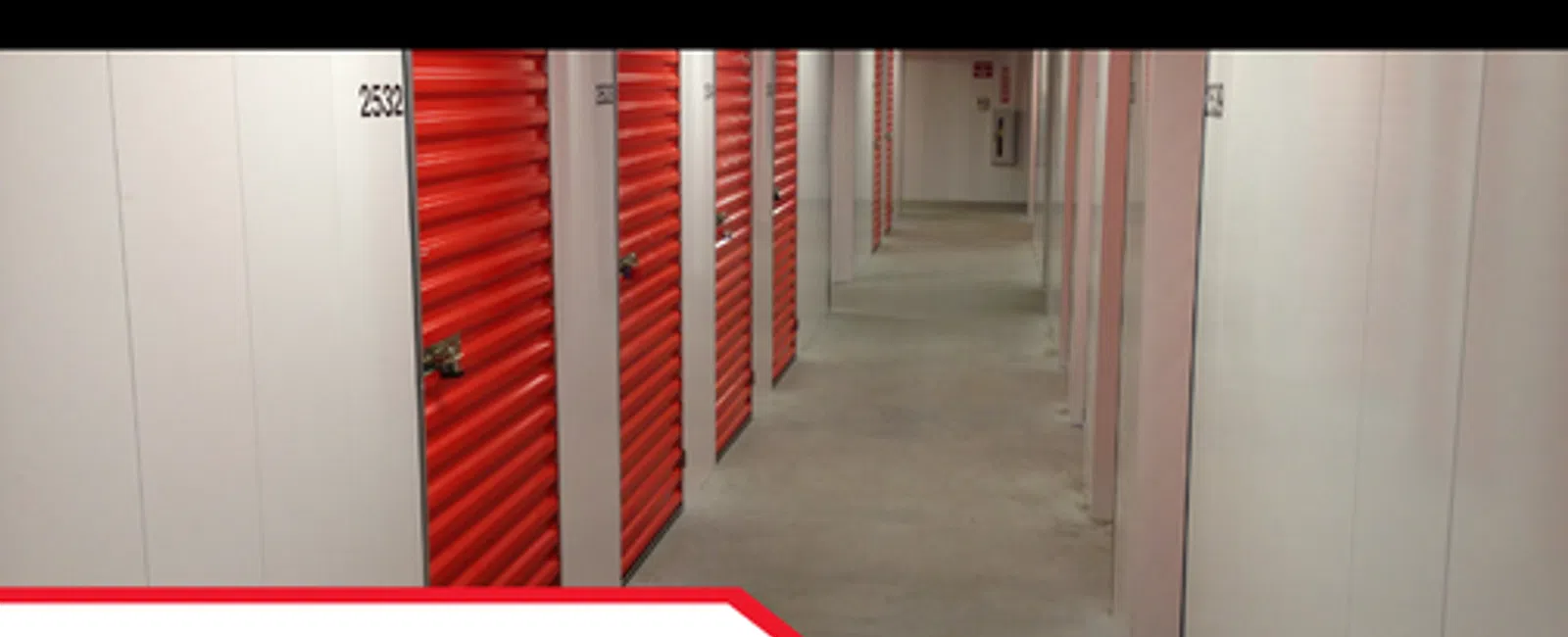
Roll-up storage doors deserve particular attention because they are repeated throughout the property and directly affect unit usability. Damaged tracks, corrosion, deteriorated panels, difficult operation, damaged hardware, or poorly sealed openings can become significant maintenance issues when similar conditions occur across numerous units.
Exterior walls should also be considered as part of the building envelope. Openings, failed sealants, damaged panels, deteriorated transitions, and poorly protected penetrations may create pathways for wind-driven rain or other moisture.
Individual Storage Units and the Importance of Repetition
One distinctive challenge of self-storage inspections is repetition.
A large facility may contain hundreds of similar units. The inspection process must therefore be systematic enough to identify patterns while accounting for limitations such as occupied or locked units, stored contents, tenant access restrictions, and inaccessible areas.
Where units are accessible, observations may include:
- Interior wall and ceiling conditions
- Visible moisture staining
- Slab condition
- Door operation
- Signs of corrosion
- Damaged finishes
- Electrical components where present
- Evidence of water entry
- Other visible deterioration
The condition of accessible units can reveal whether problems appear isolated or widespread.
For example, staining in one unit could reflect a localized leak. Similar staining across multiple adjoining units may indicate a larger roofing, flashing, drainage, or building-envelope concern requiring further investigation.
Traditional Versus Climate-Controlled Self-Storage
Not all self-storage facilities have the same inspection needs.
Traditional non-climate-controlled facilities generally rely more heavily on passive building-envelope performance. Units may open directly to exterior drive aisles, and buildings may contain relatively limited mechanical systems.
Climate-controlled self-storage facilities add another layer of building complexity. They may include conditioned corridors, insulated wall and roof assemblies, centralized or split HVAC equipment, condensate drainage, thermostats, mechanical rooms, and more extensive electrical systems.
An inspection of a climate-controlled facility may therefore place additional emphasis on:
- HVAC equipment condition
- Accessible ductwork
- Condensate drainage
- Insulation
- Interior temperature and moisture observations
- Building-envelope continuity
- Air leakage indicators
- Mechanical maintenance
- Signs of condensation
- Moisture staining
Climate-controlled storage does not mean that humidity or moisture problems are impossible. Mechanical-system operation, air leakage, exterior water intrusion, condensate problems, and building-envelope deficiencies can all influence interior conditions.
HVAC Systems in Climate-Controlled Facilities
HVAC equipment can represent a substantial capital component at larger climate-controlled facilities.
An inspection may document accessible information concerning:
- Equipment condition
- Approximate age where determinable
- Corrosion
- Condensate drainage
- Filters
- Accessible ductwork
- Visible refrigerant-line conditions
- Thermostats
- Exterior condenser units
- Signs of leakage or deferred maintenance
A newer HVAC system is not automatically problem-free, and older equipment is not automatically defective. Installation, maintenance, operating conditions, and visible physical condition all matter.
In Florida, prolonged cooling demand and high humidity can make HVAC and moisture management particularly important considerations for climate-controlled self-storage properties.
Moisture Intrusion Can Affect More Than Stored Contents
Moisture is one of the most important issues to consider in a self-storage acquisition because it can affect both building materials and the environment in which tenants' belongings are stored.
Potential moisture sources include:
- Roof leaks
- Wall penetrations
- Failed flashing
- Poor site drainage
- Plumbing leaks
- HVAC condensate
- Exterior door openings
- Groundwater or slab-related moisture
- Wind-driven rain
Guidance from EPA - Moisture Control Guidance addresses moisture management across roofs, walls, foundations, plumbing, HVAC systems, and site drainage, emphasizing that moisture control is a building-wide issue rather than a concern limited to one component. This is especially relevant to self-storage facilities because water entry may affect multiple adjoining units or recurring sections of a building.
Visible staining does not automatically establish the source or extent of moisture intrusion. Additional evaluation may be appropriate when conditions suggest concealed or ongoing water problems.
Using Infrared Inspections Appropriately
Infrared inspections may provide additional information under appropriate environmental conditions by identifying surface-temperature differences that warrant closer investigation.
Thermal anomalies can sometimes correspond with moisture, insulation deficiencies, air leakage, or other conditions. However, infrared equipment does not see through walls and does not independently establish the cause of an anomaly.
Thermal imaging is best viewed as an additional investigative tool rather than proof of a concealed defect.
Drainage and Grading
A self-storage property's large roof areas and extensive paved surfaces can generate substantial stormwater runoff.
Site observations may include:
- Ponding water
- Erosion
- Poor grading
- Blocked drainage structures
- Damaged gutters or downspouts
- Deteriorated swales
- Settlement
- Water collecting near buildings
Drainage problems can contribute to pavement deterioration, foundation concerns, moisture intrusion, erosion, and difficult access for customers.
Buyers should pay particular attention to relationships between visible drainage patterns and deterioration elsewhere on the property. Repeated water staining near wall bases, pavement settlement near drains, or erosion around building corners may provide clues about how effectively stormwater is being managed.
Parking Lots and Drive Surfaces
Self-storage facilities frequently contain substantial drive lanes and paved circulation areas. These surfaces are not merely cosmetic; they affect customer access, moving-truck circulation, drainage, and overall property usability.
A commercial inspection may identify:
- Cracking
- Potholes
- Settlement
- Failed patches
- Surface deterioration
- Drainage problems
- Damaged curbs
- Uneven transitions
- Erosion
Widespread pavement deterioration can represent a meaningful capital expense. Buyers evaluating a property should consider whether observed conditions indicate routine sealing and repair or potentially more extensive resurfacing or reconstruction.
Electrical Systems
Electrical complexity varies considerably among self-storage properties.
Traditional facilities may have relatively simple lighting and receptacle systems, while larger facilities can contain:
- Exterior lighting
- Interior corridor lighting
- Security equipment
- Access-control systems
- Electrical panels
- HVAC circuits
- Office electrical systems
- Emergency or exit lighting
- Elevator-related electrical equipment in multistory facilities
A general commercial property inspection may document visible conditions involving accessible panels, wiring, fixtures, receptacles, disconnects, and other equipment.
Security and gate systems may be operationally critical to the business, but detailed testing of proprietary access-control equipment may fall outside a standard commercial inspection scope.
Plumbing Where Present
Plumbing may be limited in smaller storage facilities but more extensive in properties with offices, restrooms, maintenance areas, employee spaces, or multistory buildings.
Inspectors may observe accessible:
- Supply piping
- Drain piping
- Fixtures
- Water heaters
- Valves
- Visible leaks
- Corrosion
- Drainage performance
A standard inspection cannot determine the condition of concealed or underground plumbing. Where sewer conditions are a concern, specialized evaluation may be warranted.
Accessibility Observations
Self-storage facilities can contain accessibility-related features involving parking, routes, entrances, doors, offices, restrooms, and storage spaces.
The ADA - 2010 Standards for Accessible Design establish scoping and technical requirements for accessibility in covered facilities and include requirements addressing site elements, accessible routes, doors, and other building components. This provides important context for why accessibility-related conditions can be relevant when evaluating a self-storage property.
A general commercial inspection, however, should not be represented as an ADA compliance audit or accessibility certification. Inspectors may document visible conditions that warrant further review, but determining legal compliance may require a qualified accessibility professional or other appropriate specialist.
Building Codes and Property Condition
Self-storage buildings are also subject to requirements associated with their construction, occupancy, systems, and location. The International Code Council - I-Codes provide model codes addressing areas such as building construction, fire safety, mechanical systems, plumbing, and energy.
These resources provide useful background for understanding why different self-storage configurations may involve different building-system requirements. A multistory climate-controlled building, for example, is substantially different from a row of basic exterior-access storage units.
A self-storage facility inspection is not a formal code-compliance inspection. When suspected code, fire-safety, engineering, or specialized system concerns arise, appropriate professional evaluation may be recommended.
Deferred Maintenance and Capital Planning
One of the most valuable outcomes of commercial property due diligence is a better understanding of accumulated maintenance needs.
At a self-storage property, deferred maintenance may appear as:
- Repeated roof patching
- Corroded doors
- Failed sealants
- Deteriorated pavement
- Damaged gutters
- Unrepaired wall panels
- Aging HVAC equipment
- Drainage problems
- Damaged lighting
- Deteriorated finishes
Individually, some conditions may appear minor. Collectively, they can create a significant repair backlog.
This is where Property Condition Assessments and Building Condition Assessments can become particularly useful for investors. Depending on the requested scope, a structured assessment can help organize observed deficiencies by system and provide a clearer framework for understanding immediate needs and anticipated capital considerations.
Using Inspection Findings in Investment Decisions
Inspection findings can influence several aspects of a self-storage acquisition.
A buyer may use the information to:
- Refine repair budgets
- Prioritize immediate maintenance
- Evaluate future capital expenditures
- Request specialized evaluations
- Review seller maintenance history
- Inform negotiations
- Develop post-closing maintenance plans
The inspection does not determine whether a property is a good or bad investment. Instead, it provides physical-condition information that can be considered alongside occupancy, revenue, market conditions, financing, insurance, zoning, environmental due diligence, and other investment factors.
For lender- or investor-driven transactions, a Property Condition Assessment may also provide a more structured approach to documenting physical deficiencies and anticipated repairs.
Self-Storage Inspections in Florida and Jacksonville
Commercial Inspections in Florida require attention to environmental conditions that can influence long-term property performance. Heat, high humidity, intense rainfall, storm exposure, vegetation, and prolonged cooling demand can affect roofs, exterior walls, sealants, pavement, drainage, and HVAC equipment.
For Commercial Inspections in Jacksonville, these considerations can be particularly relevant for facilities containing large roof areas, extensive exterior-access units, climate-controlled buildings, and substantial paved sites. Buyers should evaluate how effectively the property manages water and whether observable conditions suggest ongoing or accumulated maintenance needs.
LunsPro Inspection Group's Commercial Inspections in the Southeast can incorporate appropriate tools such as drone inspections and infrared inspections when they add meaningful information to the requested inspection scope.
A comprehensive self-storage facility inspection gives commercial buyers and investors a clearer understanding of the physical asset they are considering. Roofing, foundations, slabs, exterior walls, doors, individual units, pavement, drainage, electrical systems, plumbing, HVAC equipment, moisture conditions, accessibility observations, and deferred maintenance all contribute to the property's overall condition. Because many of these components repeat across a self-storage facility, even seemingly modest deficiencies can become important when multiplied across multiple buildings or hundreds of rentable units.
The goal of inspection is not to predict every future repair or guarantee building performance. Rather, professional commercial property inspections document observable conditions and identify areas where maintenance, repair, additional investigation, or specialized evaluation may be appropriate. That information can strengthen commercial property due diligence by helping buyers develop more realistic acquisition budgets, maintenance plans, and capital strategies.
For investors evaluating self-storage assets in Jacksonville, elsewhere in Florida, or across LunsPro's commercial markets in the Southeast, LunsPro Inspection Group provides property-condition information designed to support informed real estate decisions. Depending on the transaction and requested scope, Property Condition Assessments, Building Condition Assessments, commercial roof inspections, drone inspections, and infrared inspections can provide additional context for significant building systems and property conditions.
Ultimately, a self-storage property's value depends on more than occupancy and rental rates. The physical condition of the buildings and site influences operating reliability, customer experience, maintenance demands, and future capital requirements. Incorporating a thorough property evaluation into the acquisition process gives investors a better foundation for understanding what they are buying and planning responsibly for ownership.