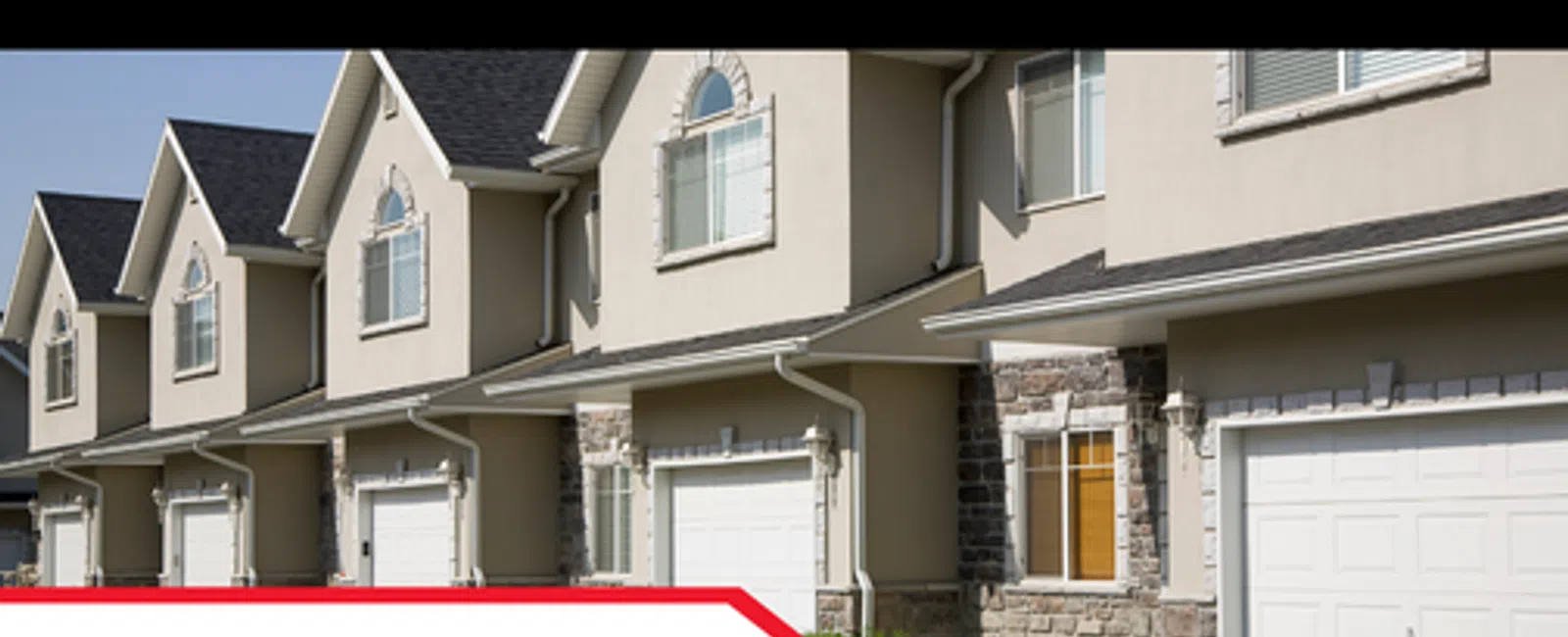
Townhomes are an increasingly familiar part of many Southeast urban and suburban housing markets. Buyers in Atlanta, Charlotte, Raleigh, Nashville, Jacksonville, Greenville, Charleston, Chattanooga, Savannah, Greensboro, and surrounding communities may encounter everything from older attached residences to newly constructed multi-level townhome developments. Although townhomes share many systems with detached houses, attached construction and community ownership structures can introduce additional inspection considerations.
A professional townhome inspection in the Southeast helps buyers understand the visible and accessible condition of the individual property. Inspectors may evaluate roofing, foundations, attics, electrical systems, plumbing, HVAC equipment, interiors, garages, moisture conditions, drainage, and other components within the inspection scope. They may also encounter shared walls, common structures, or exterior components maintained by a homeowners association.
The presence of an HOA does not eliminate the value of a professional inspection. Instead, townhome buyers often need to consider two separate questions: What is the physical condition of the component, and who is responsible for maintaining or repairing it? A home inspector can help answer the first question. Governing documents, association records, and appropriate real estate or legal professionals may be needed to answer the second.
What Does a Townhome Inspection Include?
A residential townhome inspection is generally a visual evaluation of accessible systems and components at the property.
The National Association of Realtors' Consumer Guide to Home Inspections provides broader information about how professional inspections help buyers understand a property's condition and recognize when additional specialist evaluation may be appropriate.
Depending on the townhome's construction, accessibility, ownership arrangement, and inspection scope, an inspector may evaluate:
- Roofing where accessible and within scope
- Exterior walls and finishes
- Windows and doors
- Foundations and visible structural components
- Crawlspaces where present
- Attics and roof spaces
- Electrical systems
- Plumbing
- HVAC equipment
- Interior walls, ceilings, and floors
- Garages
- Drainage and grading
- Visible moisture conditions
The inspection provides information about conditions observed at a particular point in time. It does not reveal every concealed defect or determine every HOA or ownership responsibility.
Why Inspect a Townhome if the HOA Maintains the Exterior?
Buyers sometimes assume that an inspection is less important when an association maintains roofing, siding, landscaping, or other exterior components.
Even when the HOA is responsible for a component, its physical condition may still matter to the buyer.
A deteriorated roof, drainage problem, damaged exterior wall, or evidence of moisture intrusion could potentially affect the townhome's interior or create questions that the buyer may want to investigate further. Knowing about these conditions before purchasing gives the buyer an opportunity to ask informed questions about maintenance history and planned work.
The HUD resources for buying a home provide broader homebuyer guidance emphasizing preparation and due diligence during the purchase process. For townhome buyers, understanding both the unit's physical condition and the community's maintenance structure can be part of that preparation.
Individually Owned Components vs. Common Elements
One of the biggest differences between a detached house and many townhomes is the potential division of maintenance responsibilities.
Depending on the community, an individual owner may or may not be responsible for components such as:
- Roofs
- Exterior walls
- Siding
- Landscaping
- Drainage
- Foundations
- Attics
- Shared structures
- Exterior stairs
- Walkways
- Parking areas
There is no universal rule that applies to every townhome association.
In one development, the association may maintain the entire roof. In another, individual owners may be responsible for portions of the roofing system. Similar variations can occur with exterior walls, windows, doors, foundations, drainage systems, and landscaping.
A home inspector should not provide a legal interpretation of HOA documents. Buyers should review the applicable declarations, bylaws, maintenance agreements, or other governing documents and seek appropriate professional guidance when responsibility is unclear.
Shared Walls Require Additional Attention
Attached walls are one of the defining characteristics of townhome construction.
Shared wall assemblies can influence sound transmission, moisture movement, structural configuration, and fire separation. Much of these assemblies may be concealed behind finished materials, limiting what can be evaluated during a visual inspection.
Where accessible, inspectors may observe conditions involving:
- Shared wall surfaces
- Attic separation
- Garage separation
- Utility penetrations
- Visible gaps or openings
- Damaged materials
- Previous alterations
- Accessible separation components
An opening created for wiring, plumbing, ductwork, or another modification may deserve additional attention if it affects an accessible separation assembly.
Is a Townhome Inspection a Fire-Separation Inspection?
No. A standard home inspection should not be represented as a formal fire-code or fire-separation compliance assessment.
The International Code Council's I-Codes provide model building standards addressing many aspects of residential construction, including provisions relevant to attached buildings and fire-resistant construction. Individual jurisdictions may adopt and modify applicable codes.
During a townhouse inspection, an inspector may identify visible damaged materials, openings, penetrations, or alterations that warrant additional evaluation. However, confirming the complete construction or regulatory compliance of a concealed fire-resistance-rated assembly generally extends beyond the scope of a standard visual inspection.
Where significant concerns exist, further evaluation by an appropriate qualified professional may be recommended.
Roof Inspections for Townhomes
Roof responsibility can be particularly important for townhome buyers to understand.
Even when an HOA maintains the roof, visible roof conditions can still affect the unit below. Depending on accessibility and inspection scope, an inspector may observe:
- Roof-covering deterioration
- Flashing
- Penetrations
- Previous repairs
- Gutters
- Downspouts
- Roof drainage
- Visible evidence of leakage
Roof configuration can also be more complicated when multiple attached units share continuous roofing surfaces.
The physical condition and maintenance responsibility are separate issues. An inspector may document deteriorated roofing or signs of leakage, while the buyer may need to consult association documents to determine who is responsible for repairs.
Exterior Walls, Windows, and Doors
Exterior building-envelope components can also involve a mixture of individual and association responsibilities.
Inspectors may observe siding, masonry, trim, sealants, windows, doors, flashing, and other accessible exterior components for visible deterioration or moisture-related conditions.
Townhomes may have fewer exposed exterior walls than detached homes, but those walls remain important.
Window and door leakage, deteriorated sealants, damaged cladding, or poorly managed roof runoff can allow unwanted water into the building. When visible conditions are present, inspectors may recommend repair or further evaluation based on the apparent concern.
Foundations and Structural Components
Townhomes can be constructed on slabs, crawlspaces, basements, or other foundation configurations depending on the development and location.
Accessible observations may include:
- Foundation walls
- Slabs
- Crawlspace components
- Visible cracking
- Settlement indicators
- Floor conditions
- Accessible framing
- Previous repairs
Cracking does not automatically indicate structural failure.
Inspectors consider the location, pattern, width, displacement, surrounding components, and other visible evidence. An uneven floor also may have multiple possible causes and should not automatically be attributed to foundation movement.
When substantial displacement, unusual cracking, damaged structural components, or other significant concerns are observed, further evaluation by a structural engineer or other qualified professional may be appropriate.
A standard home inspection is not a structural engineering analysis.
Townhome Crawlspaces
Some townhome developments include crawlspaces beneath individual units, while others may have crawlspace areas that extend beneath multiple attached structures.
Where safely accessible, a crawlspace inspection may include visible observations of:
- Foundation walls
- Piers or supports
- Floor framing
- Subflooring
- Plumbing
- Insulation
- Moisture
- Drainage
- Wood deterioration
- Previous repairs
Access can vary significantly. Low clearances, insulation, mechanical equipment, stored materials, or other obstructions may prevent inspection of some areas.
As with exterior components, buyers should determine whether crawlspace maintenance and repair responsibilities belong to the individual owner, association, or another party.
Attics and Shared Roof Spaces
Townhome attic configurations can vary just as much as foundations.
Some units have clearly separated attic areas. Others may have different arrangements depending on building age, construction, renovation history, and community design.
Where accessible, inspectors may observe:
- Insulation
- Ventilation
- Roof framing
- Roof sheathing
- Moisture staining
- Plumbing
- HVAC equipment
- Ductwork
- Exhaust ducts
- Visible alterations
- Accessible separation components
Insulation and ventilation observations can provide useful information about the attic's visible condition, but they should not be confused with a comprehensive energy analysis.
The U.S. Department of Energy's guidance on Home Energy Assessments explains how specialized energy evaluations can examine energy consumption, air leakage, insulation, and efficiency using methods beyond a standard home inspection. A residential inspection may document visible insulation or ventilation conditions but is not an energy audit.
Moisture Can Cross More Than One Building Component
Moisture management deserves particular attention in attached construction because water may travel through or along building assemblies before becoming visible.
Potential moisture sources include:
- Roof leakage
- Plumbing leaks
- Window or door leakage
- Exterior wall penetration
- Poor grading
- Gutter or downspout problems
- Foundation moisture
- HVAC condensate
- Attic condensation
The EPA's Moisture Control Guidance emphasizes controlling water through coordinated attention to roofs, walls, foundations, plumbing, HVAC systems, and site drainage.
In a townhome, an inspector might observe staining on an interior wall without being able to see the entire concealed pathway through which moisture traveled.
Inspectors should document the visible condition and avoid speculation about concealed conditions within neighboring units. Additional investigation may be appropriate when the source cannot be determined from accessible areas.
Drainage Around Attached Homes
Townhome developments can have complex drainage arrangements because multiple units, roofs, landscaped areas, walkways, and parking surfaces may occupy relatively compact sites.
An inspector may observe:
- Exterior grading
- Roof runoff
- Gutters
- Downspouts
- Standing water
- Erosion
- Low areas
- Drainage near foundations
Water originating from one roof section or landscaped area may move across other portions of the property before reaching a drainage system.
Again, responsibility matters. The buyer may own certain drainage components while the association maintains others.
The inspection can identify visible physical conditions, while association documentation can help clarify maintenance responsibilities.
Electrical, Plumbing, and HVAC Systems
Townhomes usually contain many individually accessible mechanical and electrical systems similar to detached houses.
A townhome inspection for buyers may include accessible observations of:
Electrical
Inspectors may evaluate electrical panels, visible wiring, receptacles, switches, fixtures, and other accessible components within the inspection scope.
Plumbing
Visible supply piping, drains, fixtures, water heaters, and evidence of leakage may be evaluated.
HVAC
Inspectors may observe heating and cooling equipment, thermostats, filters, accessible ductwork, registers, and condensate drainage.
Some developments may have shared utilities or building systems. A buyer should not assume every visible system serves only the individual unit or that every system is individually maintained.
Responsibility for shared systems should be verified separately.
Garages and Attached Construction
Townhomes with attached garages create additional inspection considerations.
Inspectors may observe garage doors, openers, electrical components, walls, ceilings, floors, and visible separation materials between the garage and living spaces.
Penetrations, damaged wall or ceiling materials, or alterations can warrant additional attention.
As with shared walls, a standard inspection can document visible conditions but should not be described as a formal fire-safety or code-compliance assessment.
Inspection Findings and HOA Documents Work Together
A physical inspection and HOA document review answer different questions.
The inspection helps buyers understand what is visible at the property.
HOA documentation may help buyers understand:
- Maintenance responsibilities
- Common-element responsibilities
- Planned building repairs
- Recent exterior work
- Available maintenance records
- Responsibility for roofing
- Responsibility for exterior components
For example, an inspector may identify deteriorated exterior siding. The report can describe the physical condition, but it does not determine whether the individual owner or association must pay for repairs.
Similarly, visible roof deterioration may be important even when the association maintains the roof because the buyer may want to ask about maintenance history or planned repairs.
Home inspectors should not provide legal or financial interpretations of HOA governing documents, reserves, assessments, or association obligations.
Townhome Inspections Across Southeast Urban Markets
Attached housing is found throughout LunsPro Inspection Group's residential markets, including Atlanta, Charlotte, Raleigh, Nashville, Jacksonville, Greenville, Charleston, Chattanooga, Savannah, and Greensboro.
These markets should not be treated as though townhome construction is uniform.
A newer multi-level townhome in the Charlotte area may have different systems and inspection priorities from an older attached residence in Atlanta. A Jacksonville or Charleston property may present different moisture and exterior conditions from a townhome in Nashville or Greensboro.
Even properties within the same development can differ because of location, maintenance, previous repairs, orientation, drainage, and owner modifications.
That is why a Southeast townhome inspection should focus on the actual property rather than assumptions about the community or building type.
Townhomes combine many of the familiar components of a detached home with additional questions involving shared walls, attached structures, common elements, ownership boundaries, and association responsibilities. A professional residential townhome inspection can help buyers understand the visible condition of roofing, foundations, attics, electrical systems, plumbing, HVAC equipment, interiors, garages, drainage, moisture-related components, and other accessible areas.
An HOA's involvement does not make that physical information unnecessary. Even when an association maintains a roof, exterior wall, foundation, walkway, or drainage component, its condition may still affect the individual unit. Buyers can use inspection findings alongside governing documents and other available records to better understand both the physical property and questions they may want to raise about maintenance responsibility.
A home inspection also has important limitations. It is not a legal review of HOA documents, a fire-code compliance inspection, structural engineering evaluation, comprehensive energy audit, or destructive investigation. Concealed shared-wall assemblies, inaccessible attic areas, neighboring units, and other hidden components may not be available for evaluation.
For buyers considering townhome inspections in the Southeast, the goal is to understand the property as both an individual home and part of a larger attached structure. LunsPro Inspection Group's residential inspections provide information about visible and accessible conditions so buyers can identify concerns, ask better questions, and determine when additional documentation or specialized professional evaluation may be appropriate.