Buying a home with a private well involves considerations that differ from purchasing a property connected to a public water system. Instead of receiving water from a municipal or community utility, the property relies on its own groundwater source, well equipment, pump, pressure system, piping, and potentially water-treatment equipment. The homeowner is generally responsible for maintaining that system and monitoring the quality of the water it supplies.
For homebuyers, that makes it important to consider both the visible condition of the private well system and appropriate water quality testing. These are related but separate parts of evaluating the property. A residential home inspection may provide information about accessible well equipment, plumbing operation, leaks, corrosion, pressure-related symptoms, and site conditions, while laboratory testing evaluates the water sample for specific contaminants included in the chosen test. Neither service should be treated as a substitute for the other.
LunsPro Inspection Group performs Home Inspections in the Southeast, including residential markets in Georgia, North Carolina, South Carolina, Tennessee, and Florida. Private wells are not equally common throughout these markets, but buyers may encounter them in suburban, exurban, and rural areas beyond municipal water-service networks. Understanding how the well fits into the property's broader water, plumbing, drainage, and wastewater systems can help buyers make more informed decisions.
What Is a Private Residential Well?
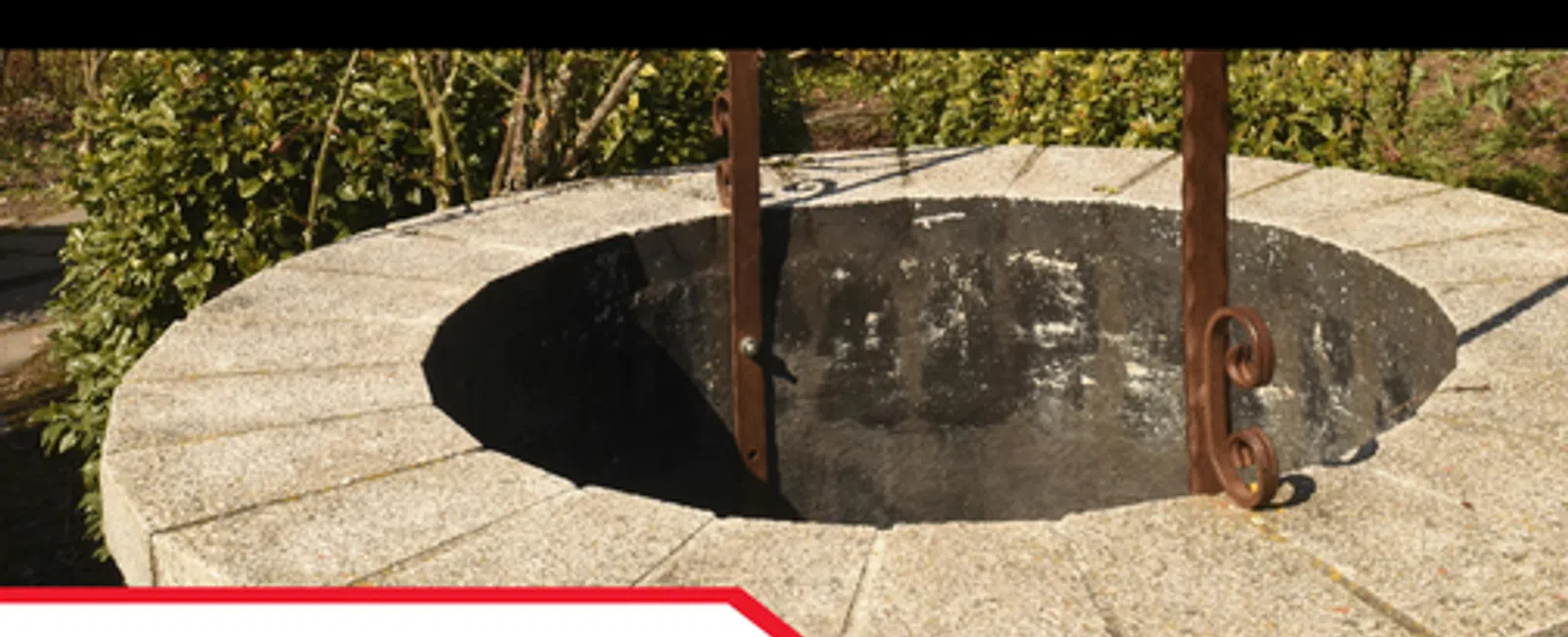
A private well accesses groundwater and supplies it to the house through a pumping and pressure system.
Although designs vary considerably, common components may include:
- Well casing
- Well cap
- Pump
- Pressure tank
- Pressure controls
- Water-supply piping
- Electrical equipment serving the pump
- Water-treatment equipment
- Interior plumbing connections
The EPA's Private Drinking Water Wells guidance explains that private domestic wells are generally not regulated under the federal Safe Drinking Water Act in the same manner as public water systems. EPA emphasizes that private well owners are responsible for the safety of their water and provides resources addressing testing, maintenance, and well protection.
This difference is important when buying a home with a private well. A buyer should not assume that the water has recently undergone the same monitoring associated with a public water utility.
Why Private Well Systems Vary
There is no single configuration for every residential well.
Wells can vary by:
- Age
- Depth
- Construction
- Groundwater source
- Pump type
- Equipment
- Location
- Maintenance history
- Local geology
Some systems have accessible above-ground equipment, while others have pumps and important components underground.
Older properties may also have limited well documentation.
A Southeast private well inspection therefore has to be approached according to the actual property rather than assumptions about how the system was constructed.
What Can a Home Inspector Observe at a Property With a Well?
During a home inspection for a property with a well, the inspector may be able to observe accessible portions of the water-supply system depending on the inspection scope and property conditions.
Potential observations include:
- Visible well casing and cap
- Accessible well equipment
- Pressure tank
- Visible supply piping
- Accessible electrical components
- Water flow at fixtures
- Visible leaks
- Corrosion
- Water staining
- Treatment equipment
- General plumbing operation
These observations can help identify visible concerns, but many critical well components cannot be directly examined during a normal residential property inspection.
The underground well itself, buried piping, submerged pump components, groundwater source, and other concealed elements may require specialized evaluation.
Water Flow Is Not the Same as a Well Performance Test
Turning on plumbing fixtures provides useful information about how water is being delivered to the home at that moment.
It does not necessarily establish:
- Well depth
- Well yield
- Recovery rate
- Long-term water availability
- Pump capacity
- Groundwater conditions
A specialized well-flow, yield, recovery, or pump-performance test is a different service unless specifically included in the inspection scope.
If water pressure appears unusually low, fluctuates substantially, or other performance concerns are observed, a qualified well contractor or plumber may be appropriate for further evaluation.
Why Water Quality Testing Matters
The physical condition of the well system does not tell a buyer whether the water is suitable for drinking.
Water can appear clear and have no unusual taste or odor while still containing substances that require laboratory analysis to identify.
The CDC Guidelines for Testing Well Water recommend regular testing of private well water and explain that testing needs can depend on local conditions and circumstances. CDC guidance identifies several common testing considerations, including total coliform bacteria, nitrates, total dissolved solids, and pH, while also recommending that well owners consult local health or environmental authorities about contaminants of concern in their area.
For a homebuyer, the key point is simple: private well water testing provides information that a visual inspection cannot.
What Does a Well Water Test Include?
There is no single laboratory test that automatically checks for every possible contaminant.
Depending on the selected testing package, property location, lender requirements, health-department guidance, and site history, testing may include substances such as:
- Total coliform bacteria
- E. coli
- Nitrates
- pH
- Lead
- Arsenic
- Other locally relevant contaminants
The CDC's information about potential well-water contaminants explains that well water can potentially be affected by biological, chemical, and other contaminants originating from natural processes or human activities. The appropriate testing strategy can therefore depend on local geology, surrounding land use, well condition, and other property-specific factors.
This does not mean that a private well contains any particular contaminant simply because it is privately owned.
Testing is how buyers obtain actual information.
Buyers Should Understand Exactly What Was Tested
The phrase "the well water was tested" can be misleading if the buyer does not know what the laboratory analyzed.
For example, one test may evaluate bacteria and nitrates, while another may include additional metals or other parameters.
A buyer should review:
- Which contaminants were included
- When the sample was collected
- Who collected it
- Which laboratory performed the analysis
- What the reported results mean
- Whether additional testing is recommended
Older water-quality results may provide useful historical context, but they do not necessarily represent current conditions.
Protecting the Area Around the Well
The well should also be evaluated in the context of the surrounding property.
The EPA's Protect Your Home's Water guidance emphasizes proper well maintenance and protecting the area around a private water source from potential contamination. EPA advises owners to consider nearby activities and conditions that could affect groundwater and to maintain the well and surrounding area appropriately.
During a residential well inspection, visible site observations may include:
- Standing water
- Poor grading
- Surface runoff
- Soil erosion
- Low areas
- Flood-prone conditions
- Damaged well casing
- Poorly protected well components
- Drainage directed toward the well
Good site drainage is therefore relevant not only to the foundation but also to the property's overall water-management strategy.
Why Flooding Around a Well Matters
Flooding can create additional concerns for private wells because floodwater may carry sediment, microorganisms, chemicals, or other contaminants.
A well located in a low-lying area may require additional attention after flooding or significant inundation.
The presence of a well in a low area does not prove contamination, and a standard home inspection cannot determine groundwater quality by visual observation.
When flooding has affected a well, buyers should consult appropriate health authorities and qualified well professionals regarding inspection, disinfection, and testing.
Private Wells and Septic Systems
Properties outside municipal water-service areas may also rely on onsite septic systems.
When a property has both a private well and septic system, the two should be considered as parts of the property's broader water and wastewater strategy.
Relevant information may include:
- Well location
- Septic tank location
- Drainfield location where known
- Site drainage
- Standing water
- Flooding
- Maintenance history
The EPA's Septic Systems and Drinking Water guidance explains that properly sited, designed, installed, and maintained septic systems are important for protecting water resources. EPA also notes that failing septic systems can introduce contaminants into groundwater and surface water, making proper onsite wastewater management relevant where private wells and septic systems coexist.
Specific well-to-septic separation requirements vary according to state and local rules, site conditions, and system design. Buyers should therefore consult the applicable state or local health authority rather than relying on a universal setback number.
A Home Inspection Is Not a Septic Inspection
A standard homebuyer inspection should not be confused with a specialized septic system inspection.
The location and visible condition of certain septic-related components may provide useful context, but evaluating tank condition, drainfield performance, wastewater flow, and concealed septic components requires a different scope.
When a property has both systems, buyers may choose to coordinate:
- Residential home inspection
- Private well evaluation
- Water quality testing
- Septic system inspection
The appropriate combination depends on the property, transaction requirements, and available records.
What Should Buyers Know About the Well Pump?
The pump moves groundwater from the well into the home's water system.
Depending on the well design, the pump may be submerged in the well or located elsewhere in the system.
During a standard inspection, much of the pump may not be accessible.
Observable symptoms that may justify further investigation include:
- Low water pressure
- Fluctuating pressure
- Unusual pump cycling
- Unusual noises
- Visible leakage
- Corrosion
- Damaged equipment
- Deteriorated visible piping
These symptoms do not establish the underlying cause.
A pressure issue could potentially involve the pump, pressure tank, controls, piping, filters, or another component.
A qualified well contractor or plumber can provide more specialized diagnostics.
What Does the Pressure Tank Do?
The pressure tank helps maintain water pressure and reduces the need for the pump to activate every time a small amount of water is used.
Accessible observations may include:
- Corrosion
- Leakage
- Physical damage
- Questionable supports
- Visible piping conditions
Repeated or unusually rapid pump cycling may indicate a condition warranting further evaluation, but determining the exact cause typically requires specialized testing.
A pressure tank inspection within a general home inspection is therefore primarily visual rather than a complete performance analysis.
Water Treatment Equipment Can Provide Useful Clues
Homes supplied by private wells may contain treatment equipment such as:
- Sediment filters
- Water softeners
- Iron filtration
- Activated carbon filters
- Ultraviolet treatment systems
- Other specialized equipment
The presence of treatment equipment can provide useful information about how previous owners managed the water supply.
For example, a softener may have been installed to address hardness, while another treatment system may have been selected for a different water-quality characteristic.
However, treatment equipment should not automatically be interpreted as evidence that the untreated water is unsafe.
Likewise, the presence of a treatment device does not prove that the water is currently safe.
Treatment Systems Need Appropriate Maintenance
Water-treatment equipment must be appropriate for the condition it is intended to address and maintained according to its design.
Depending on the system, maintenance may involve:
- Filter replacement
- Salt replenishment
- UV lamp replacement
- Cleaning
- Media replacement
- Professional servicing
A buyer should consider requesting available equipment records and determining what maintenance will be necessary after taking ownership.
Water quality testing can also help clarify the characteristics of the current water supply rather than relying solely on the presence of treatment equipment.
Private Wells and Interior Plumbing
A private well supplies the water, but the home's interior plumbing still plays an important role in delivery.
During a residential property inspection, inspectors may observe:
- Supply piping
- Fixtures
- Shutoff valves where accessible
- Water heaters
- Visible leaks
- Corrosion
- Water staining
- General fixture flow
Some water concerns may originate in the interior plumbing rather than the well itself.
For example, localized low flow at one fixture may have a different cause from low pressure throughout the house.
Questions Buyers Should Ask About a Private Well
Documentation can help provide context that a single inspection cannot.
Useful questions for the seller or available property records include:
- Approximately how old is the well?
- Are construction or well records available?
- When was the pump last replaced?
- Have major repairs been performed?
- Are previous water-quality test results available?
- Has the well ever had supply or pressure problems?
- What water-treatment equipment is installed?
- How is that equipment maintained?
- Is there a history of flooding around the well?
Documentation may be incomplete, particularly at older rural properties.
Missing records do not automatically indicate a problem, but they can make specialist evaluation more valuable.
Private Wells Across the Southeast
Private wells may be encountered throughout LunsPro's residential markets in Georgia, North Carolina, South Carolina, Tennessee, and Florida, particularly outside established municipal water networks.
Properties in Atlanta-area, Charlotte-area, Raleigh-area, Nashville-area, and Jacksonville-area communities may use public water in more developed locations while some outlying suburban, exurban, or rural properties rely on private wells.
Similar variation can occur around Athens, Savannah, Greensboro, Greenville, Charleston, and Chattanooga.
For this reason, well inspections in the Southeast should remain property-specific.
Local geology, groundwater conditions, development patterns, surrounding land uses, well age, and public infrastructure can vary substantially even within the same broader metropolitan area.
When Should a Well Professional Be Consulted?
Further evaluation by a qualified well contractor may be appropriate when there are:
- Significant pressure problems
- Visible equipment deterioration
- Leaks
- Damaged casing or cap
- Unusual pump operation
- Missing well information
- Concerns about well performance
- Questions about well construction or capacity
A well contractor can perform specialized evaluations that fall outside the standard home inspection.
Likewise, laboratory testing, septic evaluation, plumbing diagnostics, or environmental consultation may be appropriate depending on the specific concern.
Understand the Limits of a Standard Home Inspection
A home inspection with a private well can provide useful information, but buyers should understand its limitations.
Unless specifically included under a broader inspection scope, a standard residential inspection is not necessarily the same as:
- Laboratory water-quality testing
- Comprehensive well inspection
- Well-yield testing
- Recovery testing
- Pump-performance testing
- Well-drilling evaluation
- Septic inspection
- Environmental assessment
- Hydrogeological evaluation
- Specialized plumbing diagnostics
Many well components are concealed underground, and groundwater itself cannot be evaluated visually.
Inspection findings should therefore be used to determine when additional information or specialist expertise is appropriate.
Buying a home with a private well requires understanding more than whether water comes out of the faucet. The well is one component of a larger residential water system that can include the groundwater source, well casing, pump, pressure tank, supply piping, electrical controls, treatment equipment, interior plumbing, site drainage, and, on some properties, an onsite septic system. Evaluating these elements together provides buyers with a more useful picture than focusing on a single piece of equipment.
Water quality testing is an equally important but separate consideration. Clear-looking water does not establish that it is safe, and a visual home inspection cannot identify bacteria, nitrates, metals, or other contaminants that require laboratory analysis. Buyers should understand exactly what their selected water test covers and consider local health guidance, lender requirements, property history, and site-specific conditions when determining whether additional testing is appropriate.
LunsPro Inspection Group provides Home Inspections in the Southeast across its residential service markets in Georgia, North Carolina, South Carolina, Tennessee, and Florida. When a home relies on a private well, inspectors can evaluate accessible components and related property conditions within the agreed inspection scope while helping clients recognize when specialized well, plumbing, septic, moisture, or laboratory evaluation may provide additional information.
A private well inspection for homebuyers should ultimately be approached as part of broader property due diligence. No single inspection or water test answers every possible question about a private water supply. By combining visible property observations, appropriate private well water quality testing, available maintenance records, and specialist evaluation when warranted, homebuyers can make better-informed decisions about the water system serving their future home.