
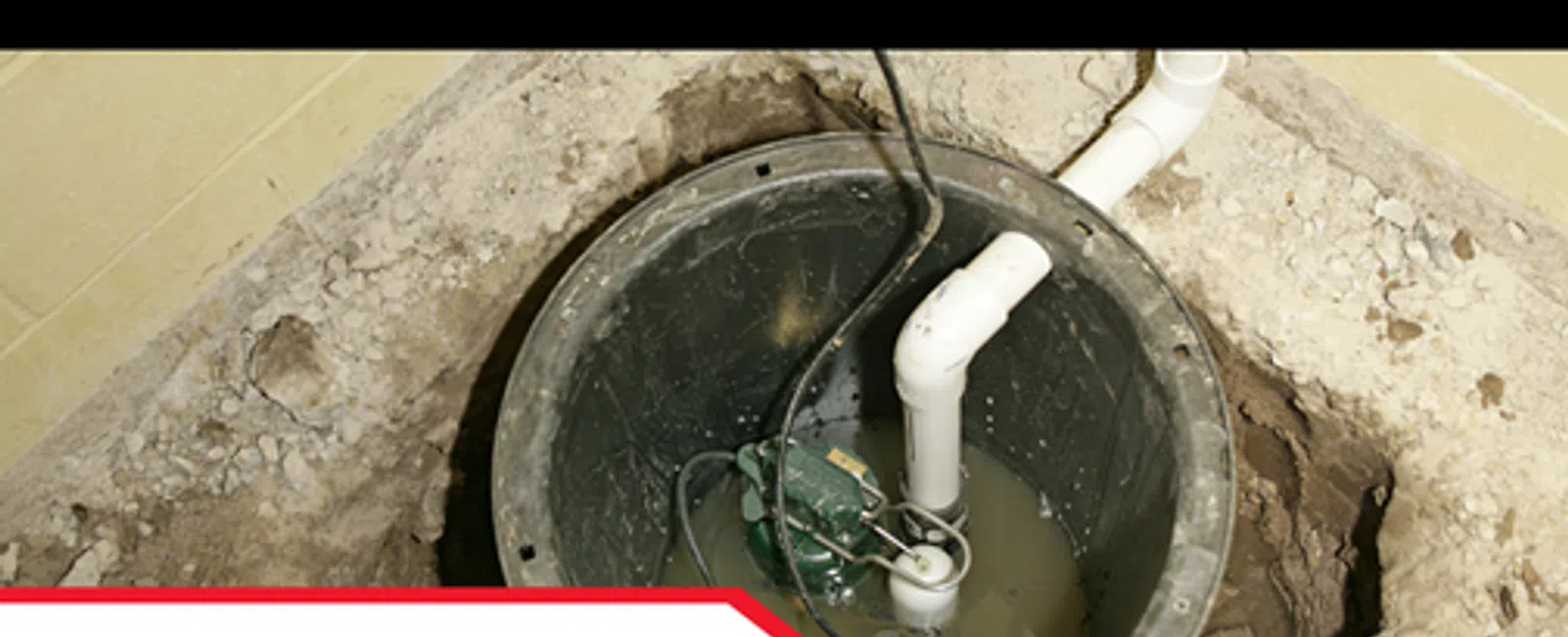
A sump pump can be an important part of a home's moisture-management strategy, particularly in a basement, crawlspace, or other area where groundwater may collect beneath or around the foundation. However, the presence of a sump pump does not automatically mean that a house has a serious water problem, and the pump should not be viewed as the home's only defense against moisture. Effective water management typically depends on several interconnected components, including foundation drainage, exterior grading, gutters and downspouts, surface drainage, below-grade waterproofing or damp-proofing, and, where present, an interior basement drainage system.
For homebuyers, a sump pump inspection is most useful when the pump is evaluated within this broader system. A pump may operate normally during an inspection but still be overwhelmed if roof runoff is discharged beside the foundation, exterior grading directs water toward the house, groundwater rises unusually high, or the discharge pipe returns water to the same soil the pump is trying to drain. Conversely, a home with a sump system may simply have been designed with proactive moisture management appropriate to its site and foundation conditions.
LunsPro Inspection Group evaluates visible drainage and moisture conditions during Home Inspections, Buyer Home Inspections, Residential Property Inspections, and applicable New Construction Inspections throughout its residential markets in the Southeast. Understanding how the sump pump, foundation, grading, roof drainage, and surrounding site work together can help buyers recognize maintenance needs and determine when drainage, waterproofing, plumbing, foundation, or other specialized evaluation may be appropriate.
Water Management Is a System, Not a Single Pump
One of the most important things homebuyers should understand is that foundation moisture control usually involves several layers of protection.
Depending on the home, the overall system may include:
- Exterior grading
- Gutters
- Downspouts
- Downspout extensions
- Surface swales or drains
- Foundation drainage
- Damp-proofing or waterproofing
- Interior perimeter drains
- Sump pits
- Sump pumps
- Vapor-control materials
- Discharge piping
Guidance from the U.S. EPA - Moisture Control Guidance for Building Design, Construction and Maintenance provides useful context because EPA addresses moisture management across site drainage, foundations, walls, roofing, plumbing, and HVAC systems rather than treating water control as a single-component problem. EPA also emphasizes understanding how water moves into and through buildings, reinforcing why a sump pump inspection should consider the conditions that bring water toward the foundation in the first place.
A sump pump can remove water that reaches the collection system, but reducing unnecessary water exposure around the foundation can be equally important.
How a Sump Pump Works
A typical sump system includes a pit installed at a low point in a basement or crawlspace.
Water enters the pit from one or more sources, which may include:
- Foundation drains
- Interior perimeter drains
- Groundwater
- Drainage channels
- Other approved drainage systems
As the water level rises, a float or other activation mechanism starts the pump.
The pump then moves water through discharge piping to an appropriate location outside the house or another approved discharge point.
When the water level falls, the pump shuts off.
Although the basic concept is straightforward, reliable performance depends on several components functioning together.
Why Is the Sump Pit Important?
The sump pit serves as the collection point.
During a sump pump inspection, visible conditions involving the pit may include:
- Water level
- Debris
- Cover condition
- Pump placement
- Incoming drain lines
- Accessible piping
- General cleanliness
A pit that contains water is not automatically defective.
The amount of water present can vary according to recent rainfall, groundwater level, soil conditions, and how frequently the pump operates.
Some pits remain nearly dry for much of the year but become active during periods of heavy rainfall.
Others may cycle more regularly because of persistent groundwater conditions.
Where Are Sump Pumps Commonly Installed?
Sump pumps are commonly associated with basements, but they can also be found in:
- Crawlspaces
- Partial basements
- Split-level foundations
- Other below-grade areas
The reason for installation varies.
A sump system may have been included when the house was built, added later to address moisture, or installed as part of a broader waterproofing or drainage improvement.
The mere presence of the equipment does not establish that the home is defective.
For a buyer, the more useful questions involve why the system is present, how it is configured, and whether there is visible evidence of current or previous moisture problems.
Foundation Drainage
Foundation drainage is designed to help manage water in the soil near below-grade foundation components.
Depending on the construction, drainage may involve perforated piping installed around the footing and surrounded by drainage material.
Water collected by the system may:
- Drain by gravity to an appropriate outlet, or
- Flow toward a sump pit for mechanical removal
Building-science guidance demonstrates why this system is important. The U.S. Department of Energy - Foundations provides broader educational context for treating the foundation as part of a coordinated building system. Related DOE Building Science Education guidance explains that foundation moisture can originate from rain and stormwater runoff, groundwater, water vapor, moist air, and plumbing leaks, illustrating why basement moisture management often requires multiple strategies rather than reliance on one pump.
Because exterior footing drains are buried, a normal home inspection generally cannot determine their complete condition, location, or effectiveness.
Exterior Foundation Drainage
Exterior foundation drains can help reduce water accumulation against below-grade walls.
A typical system may involve:
- Perforated drain piping
- Gravel or other free-draining material
- Filter fabric
- Exterior damp-proofing or waterproofing
- A drainage layer
DOE building-science guidance describes foundation-drain systems as part of a comprehensive approach that also includes properly sloped grading and moisture-control layers at foundation walls.
This reinforces an important point for homebuyers: a sump pump may be receiving water from an exterior drainage system that is performing exactly as intended.
The pump's presence alone should not be interpreted as evidence that the foundation is failing.
Interior Basement Drainage Systems
Some homes have an interior basement drainage system installed near the perimeter of the foundation.
Depending on the design, this system may collect water entering at or near:
- Foundation walls
- Wall-to-floor joints
- Below the slab
- Other vulnerable below-grade areas
Collected water is typically directed toward the sump pit.
Interior drainage systems are often concealed beneath finished flooring or installed along the perimeter, meaning much of the system cannot be directly observed during a standard home inspection.
An inspector may see:
- The sump pit
- Visible drain openings
- Sections of drainage channel
- Signs of prior waterproofing work
but cannot normally verify the entire concealed drainage path.
Groundwater Versus Surface Water
Homebuyers often use the term "water problem" without distinguishing where the water originates.
Two major categories are groundwater and surface water.
Groundwater exists beneath the ground surface. Its level can fluctuate due to:
- Rainfall
- Seasonal conditions
- Soil characteristics
- Nearby waterways
- Local geology
- Regional water-table conditions
Surface water comes from above-ground sources, especially rainfall and runoff.
It may travel across:
- Lawns
- Driveways
- Walkways
- Neighboring lots
- Slopes
toward the foundation.
The distinction matters because correcting a surface-drainage problem may require very different work from managing high groundwater.
Groundwater Around the Foundation
When groundwater rises, it can increase moisture pressure around basement walls and beneath slabs.
Depending on foundation construction and site conditions, a drainage system may collect this water and direct it toward the sump.
High groundwater conditions can be seasonal.
A pump that rarely operates during summer may run frequently during a prolonged wet season.
A standard sump pump inspection provides information about conditions present at the time of inspection but cannot predict the highest groundwater level the property will experience in the future.
Surface Water and Runoff
Surface runoff typically comes from rainfall that does not immediately soak into the ground.
EPA stormwater guidance explains that runoff occurs when rain flows across land or impervious surfaces instead of infiltrating into the soil. EPA also emphasizes a holistic approach to stormwater management rather than relying on one control measure in isolation. The user's listed U.S. EPA - Stormwater Management Practices resource now directs into EPA's current stormwater Best Management Practices materials, including the National Menu of Best Management Practices (BMPs) for Stormwater The resource is relevant because it reinforces the broader principle that effective runoff management comes from coordinated practices rather than one component attempting to handle all water after it has already accumulated.
For a house, that means keeping unnecessary surface runoff away from the foundation whenever practical.
Why Exterior Grading Matters
Grading describes the slope of the ground around the house.
Ideally, the nearby ground should encourage surface water to move away from vulnerable foundation areas rather than toward them.
Potential grading concerns include:
- Soil sloping toward the house
- Settlement beside the foundation
- Low areas
- Erosion
- Depressions that hold water
DOE Building Science Education guidance on grading emphasizes directing stormwater away from the foundation and using swales or drains where site constraints make conventional sloping difficult.
Negative grading can increase the amount of water reaching the foundation even when the sump pump itself is functioning normally.
Poorly Draining Soil
Not all soils drain water at the same rate.
Some soils allow water to infiltrate relatively quickly, while others retain moisture for longer periods.
Poorly draining soil can contribute to:
- Persistent wet areas
- Standing water
- Increased moisture around foundations
- More frequent sump operation
Soil characteristics may also vary significantly across a single property.
A general home inspection can identify visible drainage symptoms but does not include geotechnical testing or detailed soil analysis.
Low Areas Around the Home
Depressions in landscaping can collect water during rain.
Homebuyers may notice:
- Bare soil
- Erosion
- Soft ground
- Standing water
- Water marks on foundation surfaces
These conditions deserve attention because repeatedly concentrating surface water near the house can increase the demands placed on below-grade drainage.
Correcting surface drainage may reduce the amount of water that ultimately reaches the sump system.
Gutters Are Part of Foundation Moisture Management
Gutters collect roof runoff and direct it toward downspouts.
Their condition therefore has a direct relationship to foundation drainage.
Potential problems include:
- Clogged gutters
- Sagging sections
- Missing components
- Leaks
- Improper slope
- Overflow
Roof runoff can represent a substantial amount of water during heavy rainfall.
DOE's Building Science Education resource Foundation Drain Gutters Downspouts explains that if roof water is not directed away, it can rapidly saturate soil surrounding the building. The same guidance treats grading, gutters, downspouts, perimeter drainage, and free-draining materials as coordinated measures for protecting foundations from excessive water exposure.
This is why a homebuyer should not evaluate a sump pump without also looking upward at the roof drainage system.
Downspouts Need Appropriate Discharge
Downspouts carry collected roof runoff toward ground level.
What happens next is just as important.
A downspout that terminates immediately beside the foundation can deposit concentrated roof water into the soil the drainage system is trying to keep dry.
Depending on the property, downspouts may discharge through:
- Extensions
- Splash blocks
- Surface piping
- Underground drainage
- Other approved systems
DOE Building Science Education guidance on Stormwater Gutters Downspouts explains that roof runoff should be directed away from the foundation so it does not rapidly saturate surrounding soil.
The exact appropriate discharge arrangement depends on the site.
Downspout Extensions Can Make a Significant Difference
A downspout extension can help move water farther from the foundation before releasing it.
During Home Inspections, common observations may include:
- Missing extensions
- Disconnected piping
- Damaged extensions
- Discharge beside the foundation
- Underground lines with uncertain routing
A home inspector can report visible conditions but typically cannot determine whether buried downspout piping is intact throughout its entire length.
Where underground drainage appears blocked or damaged, further evaluation may be appropriate.
Surface Drainage Systems
Properties may use additional drainage features to control surface runoff.
Examples include:
- Swales
- Yard drains
- Catch basins
- Channel drains
- French-drain-type systems
- Underground piping
DOE Building Science Education notes that swales can help collect and convey stormwater away from vulnerable areas when incorporated into site drainage.
The effectiveness of these systems depends on slope, maintenance, soil conditions, discharge location, and other site characteristics.
A visually present drain does not automatically mean it is functioning properly.
What Inspectors Look at During a Sump Pump Inspection
When the sump system is accessible, an inspector may evaluate several visible components.
These may include:
- Sump pit
- Pump
- Float or activation mechanism
- Accessible discharge piping
- Electrical connection
- General installation condition
- Visible evidence of leakage
- Discharge arrangement
Inspection methods can vary depending on system design and conditions.
The goal is to evaluate normal accessible operation without disassembling or damaging the equipment.
The Float or Activation Mechanism
Most sump pumps depend on a float or similar device to activate the pump when water reaches a predetermined level.
Potential visible concerns may include:
- A float obstructed by piping
- Restricted movement
- Damaged components
- Improvised installation
An inspector may observe normal activation when conditions permit.
However, successful operation once during an inspection cannot guarantee future reliability.
Mechanical components can fail later, just like any other appliance or pump.
Electrical Connections
Because a sump pump depends on electricity, its accessible electrical connection also deserves attention.
Inspectors may observe:
- Damaged cords
- Questionable connections
- Extension-cord use
- Loose receptacles
- Other visible electrical concerns
A home inspection does not generally perform electrical engineering analysis of the pump or internal motor.
When electrical deficiencies are present, evaluation by a licensed electrician may be appropriate.
Why the Sump Pump Discharge Location Matters
Pumping water out of the basement is only useful if the water is sent somewhere appropriate.
If the discharge pipe terminates too close to the foundation, the pumped water may:
- Saturate soil beside the house.
- Move back toward the foundation drain.
- Return to the sump pit.
- Get pumped out again.
This recirculation can make the pump work harder without meaningfully reducing the site's water load.
A sump pump inspection should therefore consider the visible discharge location whenever it is accessible.
Sump Discharge Should Not Create Other Problems
Discharge routing also needs to account for the surrounding property.
Water should not simply create:
- Erosion
- Standing water
- Icy walking surfaces
- Drainage problems near another structure
- Uncontrolled runoff toward neighboring property
The correct solution depends on local conditions and requirements.
A drainage professional may be needed where the site does not provide an obvious gravity discharge point.
What Can Cause a Sump Pump to Fail?
Sump systems can experience several types of failure.
Potential causes include:
- Power outage
- Mechanical failure
- Obstructed float
- Clogged discharge piping
- Damaged check valve
- Frozen discharge piping in colder conditions
- Improper installation
- Excessive inflow
- End-of-service-life equipment
A pump may also be functioning properly yet simply lack sufficient capacity for unusually severe groundwater conditions.
That is why future performance cannot be guaranteed from a single inspection.
Power Outages and Sump Pumps
Many conventional sump pumps depend entirely on household electrical power.
Unfortunately, severe storms can create the exact combination homeowners would prefer to avoid:
- Heavy rainfall
- Rising groundwater
- Loss of utility power
If power is lost, a standard electric sump pump may stop operating.
This is one reason some homeowners choose a secondary or backup system.
Battery Backup Systems
Battery-powered backup sump pumps can provide an additional layer of protection when the primary pump or household power is unavailable.
A backup system may include:
- A secondary pump
- Battery
- Charger
- Alarm or monitoring components
However, the presence of a battery backup should not be treated as a universal requirement for every house.
Whether it is appropriate can depend on:
- Frequency of sump operation
- History of outages
- Groundwater conditions
- Consequences of pump failure
- Finished basement contents
- Owner risk tolerance
Buyers should evaluate backup needs based on the specific property.
Other Secondary Provisions
Some properties may use other backup strategies or water-management measures.
A drainage or plumbing professional may help homeowners evaluate available options.
The broader objective is redundancy where the consequences of pump failure are significant.
For a rarely used sump in an unfinished crawlspace, the owner's priorities may differ considerably from those for a frequently cycling pump protecting a fully finished basement.
High Groundwater Can Overwhelm a System
A sump system has limited pumping capacity.
Unusually high groundwater may cause:
- Frequent cycling
- Continuous operation
- Rising pit levels
- Moisture intrusion despite pump operation
Frequent operation does not automatically indicate a defective pump.
It may indicate that the drainage system is collecting a substantial quantity of groundwater.
The reason for high inflow may require further investigation.
Clogged Discharge Piping
A pump can run normally while still failing to move water effectively if discharge piping is restricted.
Possible causes may include:
- Debris
- Damage
- Poor routing
- Freezing
- Mechanical failure in associated components
Because portions of the piping may be concealed or buried, a general inspection cannot verify every section.
Unexpected discharge behavior or repeated pump problems may warrant plumbing or drainage evaluation.
Signs of Current or Previous Basement Moisture
Homebuyers should look beyond the sump pit when evaluating below-grade moisture.
Potential indicators include:
- Water stains
- Efflorescence
- Peeling paint
- Damaged drywall
- Deteriorated trim
- Rust or corrosion
- Musty odors
- Water marks
- Damaged flooring
- Visible dampness
- Standing water
These observations do not automatically identify the source.
For example, staining could relate to groundwater, surface drainage, plumbing, HVAC condensation, or a historical event that has already been corrected.
What Is Efflorescence?
Efflorescence is typically a white or light-colored mineral deposit that may appear on concrete or masonry.
It can form when moisture passes through porous material, dissolves salts, and leaves those salts at the surface as the water evaporates.
Efflorescence can therefore provide evidence of moisture movement.
However, its presence does not automatically confirm that the wall is actively leaking during the inspection.
The inspector should evaluate it alongside other site and foundation conditions.
Musty Odors Deserve Context
Musty odors may suggest that moisture has been present, particularly in basements or crawlspaces.
However, odor alone cannot establish:
- The moisture source
- Whether the condition is currently active
- Whether microbial growth is present
- The extent of concealed material damage
A standard home inspection may identify an odor and related visible conditions, but specialized environmental or moisture evaluation may be needed where concerns extend beyond the inspection scope.
A Dry Basement Does Not Prove There Has Never Been Water
One of the most important limitations in evaluating a basement drainage system is timing.
Inspection conditions represent a snapshot.
A basement inspected after several weeks of dry weather may show no visible moisture even if it occasionally experiences leakage during intense storms.
Likewise, groundwater levels may be substantially lower in one season than another.
Homebuyers should consider:
- Recent rainfall
- Seasonal conditions
- Seller disclosures
- Visible staining
- Previous repairs
- Sump configuration
- Drainage conditions
when interpreting what is observed.
Seasonal Drainage Conditions
Drainage performance can change throughout the year.
Factors can include:
- Seasonal rainfall
- Tropical weather
- Extended wet periods
- Soil saturation
- Leaf debris in gutters
- Vegetation growth
- Groundwater fluctuation
Throughout the Southeast, homes in markets such as Atlanta, Athens, Savannah, Charlotte, Raleigh, Greensboro, Greenville, Charleston, Nashville, Chattanooga, and Jacksonville can experience periods of intense rainfall.
Local topography, soil, construction, and foundation type may matter as much as regional climate.
Moisture Meters and Infrared Inspections
When visible staining or suspected moisture is present, inspectors may use supplemental tools where appropriate.
Moisture meters may help compare accessible materials and identify areas with readings different from surrounding surfaces.
Infrared Inspections can sometimes identify surface-temperature anomalies associated with moisture, insulation, air leakage, or other conditions.
However, neither tool provides absolute proof of a concealed water problem.
An infrared anomaly may result from:
- Moisture
- Insulation differences
- Air movement
- HVAC operation
- Material changes
- Sun exposure
Similarly, a moisture-meter reading must be interpreted according to the material and surrounding conditions.
These tools can help identify locations warranting further evaluation, but they do not replace a comprehensive drainage or waterproofing investigation.
Sump Pumps and New Construction
New homes may include sump systems as part of their original foundation design.
During New Construction Inspections, inspectors may observe accessible conditions such as:
- Pump installation
- Pit condition
- Discharge piping
- Electrical connections
- Exterior grading
- Gutter and downspout discharge
- Visible drainage concerns
A new sump pump should not be viewed as evidence that the builder expects the basement to fail.
In many cases, it is simply part of a designed system for controlling groundwater and protecting below-grade areas.
New construction can still have drainage deficiencies, however, especially where grading has settled or roof drainage has not been completed appropriately.
Crawlspace Moisture Requires Similar Thinking
Homes without basements may still have drainage systems and sump pumps in crawlspaces.
The same principles apply.
Water may reach a crawlspace because of:
- Surface runoff
- High groundwater
- Plumbing leakage
- Poor grading
- Short downspouts
- Foundation drainage issues
A sump pump may remove accumulated water but should not automatically be treated as the only moisture-management solution.
The sources of water should also be considered.
Flood Risk Is Different From Routine Foundation Drainage
Basement moisture and flood risk overlap in some circumstances but are not the same subject.
A sump pump is generally intended to manage drainage water reaching the foundation system. It is not a guarantee that the home will remain dry during a major flood.
The FEMA - Flood Maps resource provides a separate framework for understanding mapped flood hazards. FEMA's Flood Map Service Center is the official public source for National Flood Insurance Program flood-hazard information and provides Flood Insurance Rate Maps and related flood products. This is relevant because a standard home inspection evaluates observable property conditions, while mapped flood risk requires separate research using FEMA information and, where appropriate, insurance, survey, elevation, or floodplain professionals.
A home can have a sump pump without being located in a mapped high-risk flood area, and a property can face flood exposure even when a sump system is present.
A Sump Pump Is Not Flood Protection by Itself
FEMA's broader flood-mitigation guidance, including FEMA - Protect Your Home From Flooding reinforces that protecting a property from flooding can require building- and site-specific mitigation strategies rather than dependence on one mechanical device. FEMA's homeowner guidance discusses multiple flood-protection and retrofitting approaches, illustrating why sump-pump operation should not be confused with a guarantee against flooding.
Flood events can exceed the capacity of ordinary foundation drainage systems.
Homebuyers concerned about flood exposure should investigate that risk separately from the sump pump inspection.
Home Inspections Do Not Predict Future Flooding
A standard home inspection does not normally determine:
- Future flood probability
- Future groundwater elevations
- Flood insurance requirements
- Base flood elevations
- Drainage performance during record rainfall
- Future sump-pump reliability
These issues require different data and expertise.
FEMA maps, surveys, local floodplain records, engineering studies, insurance information, and other resources may be appropriate depending on the buyer's concerns.
The Presence of a Sump Pump Is Not Automatically a Red Flag
Some buyers become concerned as soon as they see a sump pit.
That reaction is understandable, but the system should be interpreted in context.
A sump pump may indicate:
- A proactive drainage design
- Naturally high groundwater
- A basement waterproofing improvement
- Seasonal site conditions
- A prior moisture-management upgrade
The useful question is not "Why does this house need a sump pump?"
Instead, buyers should ask:
- Is the system visibly functional?
- Where does the water come from?
- Where does the discharge go?
- Are there signs of repeated moisture problems?
- How does exterior drainage perform?
- Are maintenance records available?
Maintenance History Can Be Useful
When a home has a sump system, buyers may benefit from asking about:
- Pump age
- Prior replacement
- Frequency of operation
- Battery-backup maintenance
- Previous basement water intrusion
- Drainage improvements
- Waterproofing work
Documentation can provide useful context that one inspection cannot.
For example, a recently replaced pump may represent ordinary preventive maintenance rather than evidence of a serious new problem.
When a Drainage Specialist May Be Needed
Further drainage evaluation may be appropriate where inspectors observe:
- Standing water near the foundation
- Persistent negative grading
- Significant erosion
- Poorly functioning yard drains
- Questionable sump discharge
- Repeated interior moisture
A drainage specialist can evaluate water movement across the property and recommend improvements tailored to the site.
When a Waterproofing Professional May Be Appropriate
A basement or foundation waterproofing specialist may be helpful when there is:
- Recurring below-grade leakage
- Extensive staining
- Repeated water entry
- Deteriorated foundation finishes
- Existing interior drainage needing evaluation
- Evidence of previous waterproofing repairs
These professionals may perform invasive investigation or access concealed drainage components that are outside the scope of a standard home inspection.
When a Plumber May Be Needed
A plumber may be appropriate for concerns involving:
- Pump replacement
- Discharge piping
- Check valves
- Electrical or plumbing configuration associated with the system
- Uncertain drain connections
- Other plumbing-related moisture sources
The exact specialist depends on the local market and system configuration.
When Foundation or Engineering Evaluation May Be Needed
Water and structural concerns occasionally overlap.
Further structural or engineering evaluation may be appropriate where moisture observations accompany:
- Significant foundation movement
- Large displaced cracks
- Bowed foundation walls
- Major settlement
- Structural deterioration
A home inspector can document visible conditions, but determining structural capacity, soil pressure, hydrostatic loading, or engineering causes falls outside a standard inspection.
Why Buyers Should Consider the Entire Property
The most informative way to evaluate a basement drainage system is to begin at the roof and work toward the foundation.
Consider this sequence:
Roof runoff reaches the gutters.
Gutters direct it to the downspouts.
Downspouts carry it toward the ground.
Extensions or drainage piping move it away from the house.
Grading continues directing surface runoff away.
Foundation drainage manages water that still reaches below-grade areas.
Interior drainage, where present, collects additional water.
Finally, the sump pump removes water that enters its collection pit.
If the earlier stages perform poorly, the pump may have to handle more water than necessary.
That is why sump-pump condition and exterior drainage should be evaluated together.
Home Inspections Across the Southeast
Drainage challenges vary throughout LunsPro's residential inspection markets.
Properties in Atlanta and Athens may encounter different soil, grading, foundation, and topographic conditions than coastal homes in Savannah or Jacksonville.
Homes in Charlotte, Raleigh, and Greensboro can range from newer slab and crawlspace construction to older homes with basements or partial below-grade areas.
Residential properties in Greenville, Charleston, Chattanooga, and Nashville can likewise have varying combinations of hills, crawlspaces, basements, clay-rich soils, heavy rain, and localized drainage patterns.
LunsPro Inspection Group evaluates the visible conditions of the individual home rather than assuming that one moisture-management solution applies throughout the Southeast.
A sump pump is best understood as one part of a broader foundation drainage and moisture-management strategy. Effective water control may depend on exterior grading, gutters, downspouts, surface drainage, foundation drains, waterproofing or damp-proofing, interior drainage, the sump pit, pump, and discharge piping all working together. Evaluating only whether the pump turns on can miss many of the conditions that determine how much water reaches it.
For homebuyers, this systems-based approach makes a sump pump inspection much more meaningful. A working pump can still be accompanied by negative grading, blocked gutters, short downspouts, poor discharge routing, foundation staining, or inadequate surface drainage. At the same time, the existence of a sump system does not automatically indicate a defective home. In many properties, it is a normal component of responsible groundwater and foundation moisture management.
Visible evidence such as efflorescence, staining, deterioration, water marks, musty odors, or dampness should also be interpreted carefully. These conditions can indicate current or previous moisture exposure, but they do not necessarily reveal the exact source, timing, or extent of the problem. A dry basement during a Buyer Home Inspection likewise cannot establish that water has never entered during a different season or more intense rainfall event.
LunsPro Inspection Group evaluates accessible sump components, drainage conditions, grading, gutters and downspouts, foundations, and related moisture observations during Home Inspections, Residential Property Inspections, Buyer Home Inspections, and applicable New Construction Inspections. Infrared Inspections and moisture-meter observations may provide additional clues when conditions are appropriate, but neither method guarantees detection of concealed water or predicts future system performance.
Homebuyers should also keep routine foundation drainage separate from flood-risk analysis. FEMA flood maps and other flood-risk resources provide information that falls outside the scope of a standard home inspection, while unusually high groundwater, complex drainage, significant foundation movement, or recurring basement water may require specialists with additional expertise.
Ultimately, the best question is not simply whether a house has a sump pump. Buyers should understand how water reaches the property, how the site directs runoff, how roof drainage is managed, where groundwater is collected, where the pump discharges, and what evidence the home provides about past moisture exposure. Looking at the complete basement drainage system helps buyers make better-informed decisions about maintenance, future improvements, backup provisions, and when further professional evaluation may be warranted.