Buyers Trust Us
Realtors Refer Us
Raleigh's Best Inspection Team


Why Choose LunsPro?
See how our standard inspection services stack up to the competition
LunsPro Inspection Group
Our Competitors
Services Offered
LunsPro Inspection Group
Our Competitors

Drone Inspections
Drones used on all inspections
Most home inspectors are not FAA licensed

Infrared Technology
Infrared used on all inspections
Typically additional costs associated

Additional Services In-house
Termite, Radon, Mold, Sewer & More
Most inspectors outsource additional services

Availability
Same day, next day and weekend availability
Most inspectors have limited availability
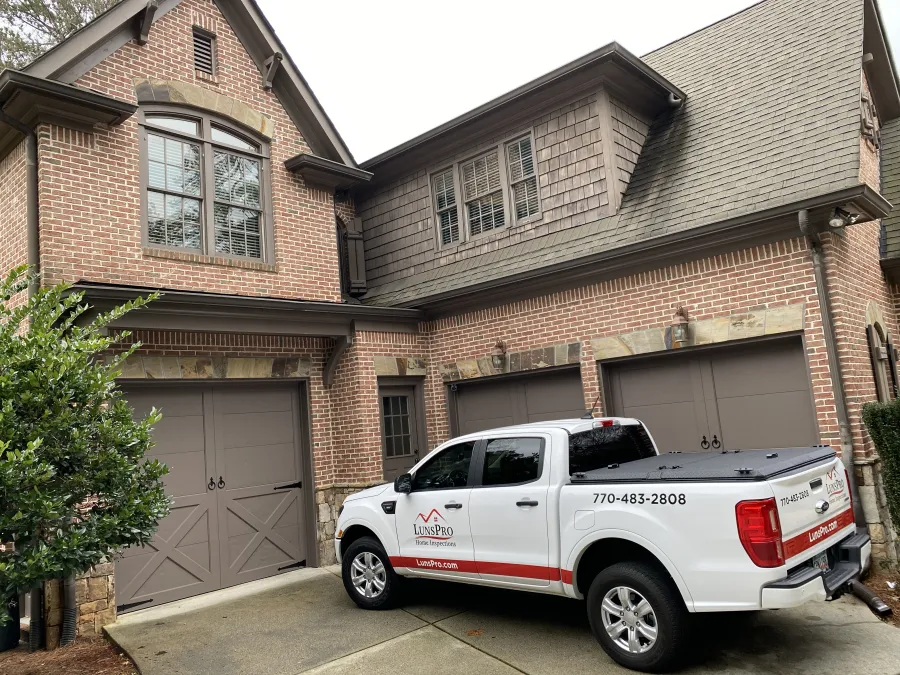
Serving all of Raleigh & Beyond Since 1984
LunsPro's certified inspectors are available 7 days a week to serve Raleigh, NC and surrounding areas in Wake County. We proudly perform property inspections in nearby communities such as Cary, Garner, Knightdale, and Apex.
Our Raleigh-area professional home inspections include a comprehensive structural and mechanical evaluation of resale homes, covering the foundation, interior, exterior, roof, attic, plumbing, electrical, HVAC, water heater, and more. We conduct highly accurate 48-hour radon testing in Raleigh. Additionally, termite, pest, and rodent evaluations are performed by a separate licensed pest inspector. We also offer mold testing, stucco inspection, and sewer line evaluations in the Raleigh area. Our services extend beyond residential properties; we also specialize in new construction and commercial property inspections throughout Raleigh and nearby areas.
Raleigh Area New Construction,
Commercial, Multi-Unit and More!

New Construction
Building a new home in Raleigh? Allow us to perform phase inspections to ensure you are getting the quality of home you are paying for! We typically perform 3 phase inspections - Framing, Pre-Drywall & Final.

Commercial Properties
We have specialized in commercial property inspections in Raleigh for over 20 years. We will customize an inspection quote to fit the property's characteristics and your budget!

Seller's Inspections
Selling your Raleigh home and want a competitive edge? A pre-sale inspection enables the seller to address problems before the home hits the market, which could help prevent a deal falling through caused by issues uncovered during a buyer's inspection.

Multi-Unit Inspections
Buying a duplex, triplex or larger multi-family property in Raleigh? We can help you save money! We offer discounts for multi-unit inspections. Give us a call to learn more!

Pool & Spa
Looking at a Raleigh area home with a pool? Our pool & spa certified inspectors are ready to give you peace of mind.

Winterization Services
During the winter months, homes in Raleigh become vulnerable to damage caused by colder temperatures. Allow us to safeguard your vacant property by having us perform our highly effective winterization services!
Additional services for added peace of mind.
Sewer Scope
Our certified inspectors use sophisticated sewer-line cameras to inspect up to 120 feet of the home's drainpipe, to examine the sewer lines and other underground pipes for any flaws, imperfections, or serious problems.
Termite / Pest / Wood Destroying Insects & Organisms Inspection
Includes inspection for termites, pests, rodents, squirrels, wood-destroying insects and organisms & more. Performed by a licensed pest inspector. This service is important even if the seller is providing a termite warranty because the inspector is looking for much more than just termites.

Mold & Air Quality Testing
Mold is highly prevalent in many homes, particularly those in humid climates such as Raleigh. Exposure to mold can cause a number of health issues for many people. Our mold service utilizes air quality and surface sampling where the results are analyzed by a separate laboratory and additionally, air particle testing is also available!
Radon Testing
Radon is a radioactive gas that is the leading cause of lung cancer among nonsmokers. Although you can't smell it or taste it, radon is naturally occurring and may exist in dangerous levels in your home without you even knowing it. Our service tests for radon for 48 continuous hours using state-of-the-art radon detection equipment.
Certified Inspectors
Our experienced and certified home inspectors are there to provide clarity during the real estate transaction process. Our inspectors go through the most rigorous training program in the state, and all become ASHI & InterNACHI Certified. In addition, all of our inspectors are FAA Certified Drone Pilots.

More Inspection Services
We offer all types of inspections including New Construction phase, Multi-family, Commercial, Pool & Spa, Sewer Scope, Investor, iBuyer, and more.
Live Lead Serve
Our company motto is: Live Lead Serve. We are committed to giving back to our communities and making the world a better place. We consistently partner with Toys 4 Tots in Atlanta, Operation Gratitude, No Longer Bound, KW Red Day, Red Cross, English Bulldog Rescue of Atlanta, Bully Ball, first responders and several other great organizations.
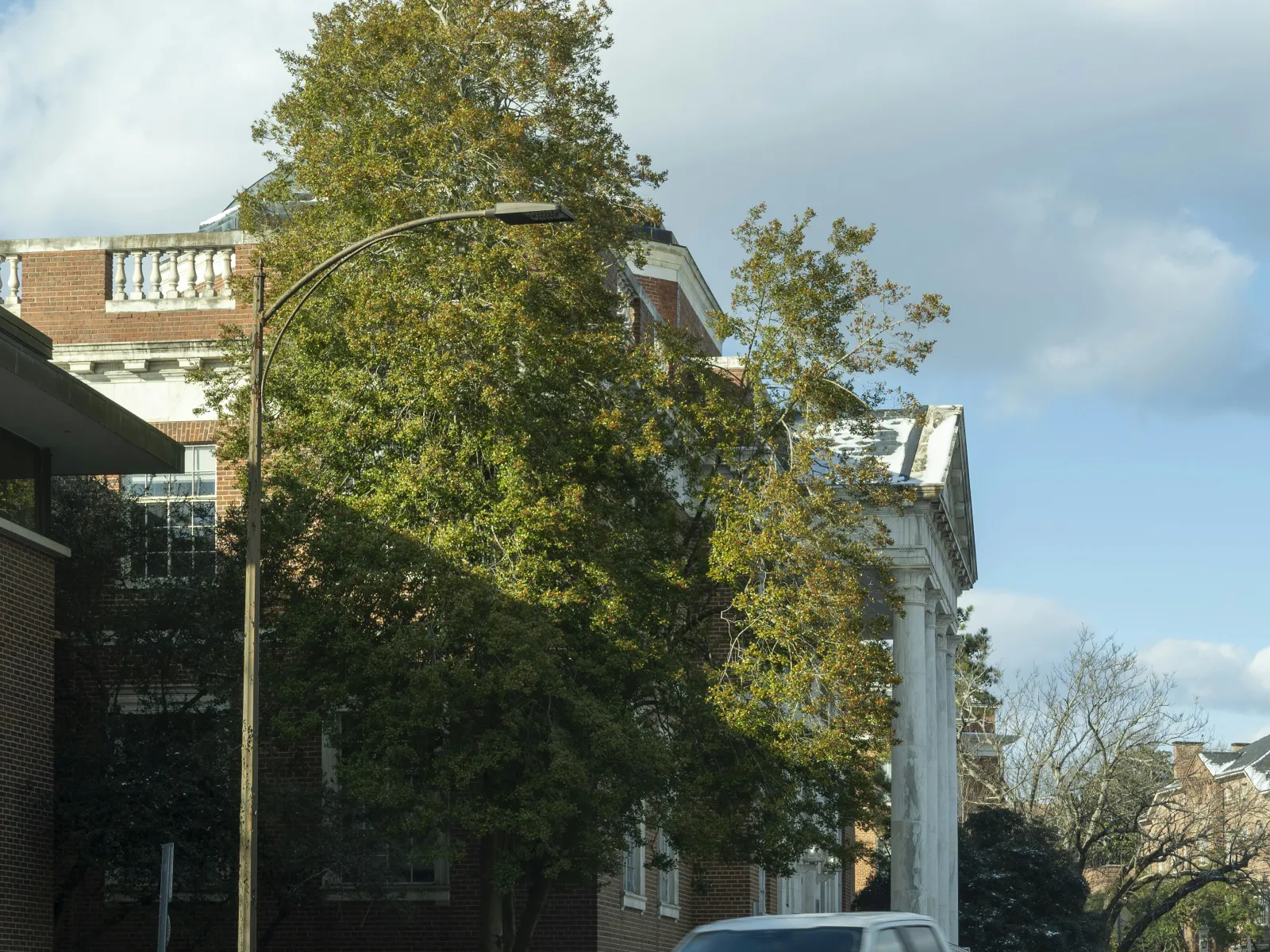
Raleigh History
Raleigh's origins trace back to the late 18th century, though the region itself had long been home to Indigenous peoples, including the Tuscarora and other Native groups who lived throughout the Piedmont. The land that would become Wake County was a mixture of forests, streams, and rolling hills, well-suited for early settlement. In 1771, Wake County was officially formed, named after Margaret Wake Tryon, the wife of colonial governor William Tryon. As the state of North Carolina sought to establish a permanent and centrally located capital after the American Revolution, the legislature selected a tract of land in Wake County to build a city from the ground up. In 1792, Raleigh was formally founded and named after the English explorer Sir Walter Raleigh. Unlike most state capitals, Raleigh was planned specifically to serve as the seat of government, giving it a unique origin among American cities.
During the 19th century, Raleigh's economy grew steadily as government institutions, trade networks, and agricultural commerce shaped the region's development. The city became an important center for political life, but it also evolved as a hub for education and culture. The establishment of the State Capitol building in the 1840s, the continued growth of nearby plantations, and the rise of tobacco and cotton farming supported economic stability throughout Wake County. Following the Civil War, Raleigh—like most Southern cities—underwent significant social and economic changes. The late 19th century saw rapid expansion in manufacturing, publishing, and trade. The founding of North Carolina State University in 1887 further strengthened Raleigh's role as a center for innovation and agricultural research.
Infrastructure played a major role in Raleigh's transformation from a small government town into a major Southern city. Railroads arrived in the mid-1800s, linking Raleigh to Charlotte, Goldsboro, and other key destinations across the state. By the 20th century, Raleigh became a crossroads for several major highways. US-1, US-70, I-40, and I-440 contributed significantly to the city's accessibility and growth. The development of Raleigh-Durham International Airport expanded the region's connectivity, fueling economic opportunity. The creation of the Research Triangle Park in the 1950s—located between Raleigh, Durham, and Chapel Hill—marked one of the most transformative moments in the region's history, drawing major corporations, scientific research institutions, and global talent to the area. This innovation corridor helped position Raleigh as one of the fastest-growing urban centers in the South.
Throughout the 20th and early 21st centuries, Raleigh cultivated a reputation for its strong community identity, diverse population, and commitment to education and innovation. Neighborhoods like Oakwood, Boylan Heights, and Five Points reflect the city's architectural heritage, while expanding suburban communities illustrate its modern growth. Cultural institutions—including museums, performing arts centers, and universities—play a central role in community life. Raleigh's residents enjoy a variety of annual events, music festivals, sporting activities, and community traditions that reflect the city's blend of Southern culture and cosmopolitan energy. The city's parks system and dedication to public green space have also contributed to its appeal, making it a leader in urban livability.
Today, Raleigh stands as one of the most dynamic and desirable places to live on the East Coast. Known for its strong job market, excellent schools, world-class universities, vibrant arts scene, and growing tech sector, the city consistently ranks among the top metropolitan areas in the nation. New residents arrive each year, drawn by Raleigh's balance of affordability, opportunity, and quality of life. Whether in historic neighborhoods near downtown or the expanding suburbs of North Raleigh, residents enjoy modern amenities, diverse dining, and easy access to both natural beauty and major employers. Raleigh's continued growth reflects its unique ability to honor its rich history while embracing innovation and forward-thinking development.
Frequently Asked Questions
Q What areas do you serve for home inspections in Raleigh?
LunsPro Inspection Group serves Raleigh, NC, and nearby communities including Cary, Garner, Knightdale, and Apex.
Q What types of inspections do you offer in Raleigh?
We offer comprehensive home inspections for resale homes, new constructions, and commercial properties in Raleigh. Our inspections cover structural and mechanical components, including foundation, roof, plumbing, electrical, HVAC, and more.
Q Do you provide specialized inspections such as radon testing and termite inspections in Raleigh?
Yes, we offer specialized inspections including radon testing, termite, pest, and rodent evaluations by licensed inspectors, mold testing, stucco inspection, and sewer line evaluation in Raleigh.
Q What is included in your Raleigh area home inspections?
Our Raleigh home inspections include a thorough evaluation of the property's structure and mechanical systems, providing detailed reports on the condition of the foundation, interior, exterior, attic, water heater, and more.
Q How accurate are your radon tests in Raleigh?
Our radon testing in Raleigh consists of an extremely accurate 48-hour test, ensuring reliable results for homeowners and buyers concerned about indoor air quality.
Q Do you conduct home inspections for new construction properties in Raleigh?
Yes, we specialize in new construction inspections in Raleigh, ensuring that newly built homes meet quality standards and adhere to local building codes.
Q How long does a typical home inspection in Raleigh take?
The duration of a home inspection depends on the size and complexity of the property. On average, inspections may take 2 to 3 hours to complete, providing ample time for a thorough assessment.
Q Can I attend the home inspection?
Absolutely! We encourage clients to attend the home inspection. This allows homeowners and buyers to ask questions, gain insights into the property's condition, and receive recommendations from our certified inspectors.
Q What happens after the home inspection?
Following the home inspection, we provide clients with a comprehensive inspection report detailing our findings, including any issues or areas of concern. Our team is available to answer any further questions and provide guidance on the next steps.
Q How do I schedule a home inspection in Raleigh with LunsPro?
You can easily schedule a home inspection by contacting our office via call or text at
833-586-7776, email to [email protected] or schedule online here.