
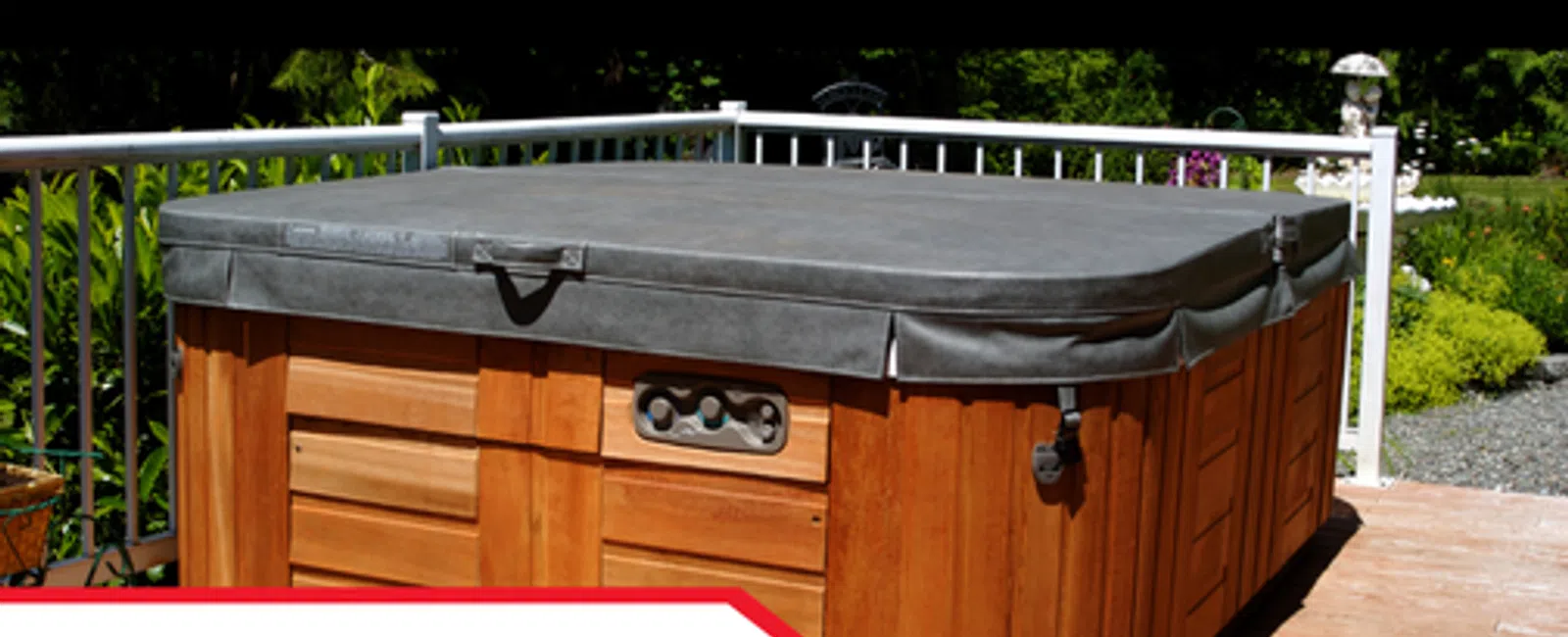
A backyard deck can be a great location for relaxing, entertaining, and enjoying the outdoors. Adding a hot tub may make that space even more appealing, but it also changes what the deck is being asked to support. A hot tub is not simply another piece of outdoor furniture. The tub itself, the water it contains, and the people using it create an additional load that deserves careful consideration before installation.
Licensed and Certified Inspector David L. of LunsPro Inspection Group highlighted this concern while inspecting a 2003 home in McMinnville, Tennessee. A homeowner had installed a Jacuzzi hot tub on an existing deck. David observed supports beneath the area that he described as not professionally installed, and some of those supports were beginning to crack. His concern was straightforward: this was not the type of support he wanted to see beneath a deck carrying the additional load of a hot tub.
The observation provides an important lesson for homeowners throughout Nashville, Chattanooga, Atlanta, Charlotte, Raleigh, Greensboro, Greenville, Savannah, and Charleston. An existing deck should not automatically be assumed capable of supporting a hot tub simply because there is enough physical space to put one there. The supporting structure matters, and professional evaluation can help determine whether modifications or corrections are needed.
Why Hot Tubs Change the Load on a Deck
An ordinary residential deck already supports its own materials as well as people, furniture, grills, planters, and other items placed on it.
A hot tub introduces a different type of load.
The tub has weight even when empty. Once filled, it also contains a substantial quantity of water. People then add additional weight while using it.
All of that load is concentrated within a relatively defined area of the deck.
That is why homeowners should not treat installing a hot tub on an elevated deck the same way they would place a lightweight patio chair or table.
The fact that a deck has supported ordinary household use does not, by itself, establish that it is appropriate for a hot tub.
Existing Decks Were Not Necessarily Designed for Hot Tubs
David's observation involved an existing home built in 2003.
At some point, a homeowner decided to add a Jacuzzi hot tub to the deck.
That sequence matters because an existing deck may have been built for typical deck use rather than for the concentrated additional load associated with a filled hot tub.
Homeowners should therefore avoid making assumptions based solely on the deck's appearance.
A large deck is not automatically a hot-tub-ready deck.
Likewise, thick-looking boards or multiple visible posts do not independently establish whether the structure is appropriate for the intended load.
A qualified professional needs to evaluate the actual construction.
The Supports Underneath Matter
When people imagine a deck, they often focus on the surface.
They notice the decking material, railings, stairs, and available space.
But the structure underneath is what supports those visible surfaces and the loads placed on them.
David specifically focused on the supports beneath the hot tub.
He noted that the support arrangement did not appear professional and pointed out that some of the supporting materials were beginning to crack.
Those are important observable conditions.
Without additional information, it would be inappropriate to calculate the deck's exact capacity or state precisely how the structure should be redesigned. But visibly questionable and cracking supports beneath a hot tub are enough to justify further professional evaluation.
Cracking Supports Should Not Be Ignored
Visible cracking in a supporting component deserves attention.
The presence of a crack does not automatically tell a homeowner everything about the condition of the structure.
Cracks can vary in location, orientation, size, and significance.
That is precisely why a professional evaluation may be needed rather than relying on guesswork.
In this instance, the cracking was occurring in supports associated with a deck carrying a hot tub.
That context makes the observation especially important.
The appropriate response is not to speculate about exactly when or why the support cracked. It is to document the condition and recommend appropriate evaluation.
A DIY Support Is Not a Substitute for Proper Evaluation
Homeowners are often resourceful.
When a deck appears to need additional support, adding another post, block, piece of lumber, or other material underneath may seem like a straightforward solution.
But structural support should not be based on appearance alone.
Adding material beneath a deck does not automatically mean the load is being transferred appropriately.
The location, configuration, condition, and installation of the supporting components all matter.
David's reaction to the supports at the McMinnville home was that they did not represent the type of professional support he wanted to see carrying the hot tub.
That is an important distinction for homeowners considering modifications themselves.
A support that looks substantial is not necessarily the same as a properly designed and installed support.
Don't Wait for Visible Movement
A deck does not need to visibly sag or shift dramatically before homeowners take a questionable support condition seriously.
Waiting for an obvious failure is not an appropriate inspection strategy.
If a hot tub is already present and the supporting structure looks improvised, damaged, cracked, or otherwise questionable, that condition deserves evaluation.
The goal is to understand the structure before a more significant problem develops.
Professional inspection is particularly valuable because homeowners may rarely look underneath their decks.
The hot tub and finished deck surface may look perfectly normal from above while concerns exist underneath.
Why Homeowners Should Look Beneath the Deck
Deck maintenance should include more than cleaning and staining the visible walking surface.
Where safely accessible, homeowners should remain aware of the condition underneath as well.
Supporting components can be easy to forget because they are not part of the space people regularly see.
A homeowner may spend years walking across a deck without paying much attention to what is below it.
That makes a professional home inspection useful.
Licensed Inspectors evaluate accessible structural components rather than limiting the inspection to the attractive finished surfaces.
When a heavy feature such as a hot tub is present, the support underneath becomes particularly relevant.
Hot Tub Placement Should Be Planned
Ideally, the structural question should be considered before a hot tub is installed.
A homeowner may choose a location based on privacy, views, access from the house, or proximity to an outdoor entertainment area.
Those are reasonable considerations.
But structural suitability also needs to be part of the decision.
A deck may have plenty of open space while still requiring evaluation before a hot tub is added.
Planning ahead allows homeowners to determine whether the existing structure is appropriate or whether modifications are needed before the tub is filled and placed into regular use.
Water Adds More Than Homeowners May Expect
One reason hot tubs deserve special consideration is that water adds considerable weight.
A tub that seems manageable while empty becomes a very different load once filled.
Then people enter the tub, increasing the load further.
This is why judging the installation based only on the physical size of the hot tub can be misleading.
The question is not simply, "Does it fit?"
The better question is, "Is the structure supporting it appropriately?"
That requires looking beyond the surface.
Structural Concerns Require the Right Professional
A home inspector can identify visible conditions and recommend further evaluation.
When the concern involves determining whether a deck is structurally adequate for a particular concentrated load, additional evaluation by an appropriately qualified professional may be necessary.
That professional can consider details beyond a general visual inspection and determine what corrections, reinforcement, or other action may be appropriate.
This separation of roles is important.
An inspection identifies observable concerns.
Specialized evaluation determines the appropriate technical solution when needed.
Why Professional Home Inspections Matter
The deck observation in McMinnville is a good example of something a buyer could easily overlook during a showing.
A buyer might see the hot tub and think of it as an attractive feature.
They might imagine relaxing outside after work or entertaining friends.
They may never think to ask what is supporting it.
A professional inspector looks at the property differently.
Instead of evaluating whether a feature is desirable, the inspector considers its visible and accessible condition.
That different perspective can reveal concerns that have nothing to do with aesthetics.
Existing Modifications Deserve Attention
Older and established homes frequently contain modifications made after original construction.
Those changes might include decks, finished spaces, remodeled bathrooms, electrical alterations, plumbing changes, or outdoor features such as hot tubs.
Not every modification is problematic.
Many are professionally planned and properly completed.
But an inspector should evaluate what is actually present rather than assume that a modification was appropriate simply because it has existed for years.
Longevity alone does not establish proper installation.
If visible supports are cracking or appear questionable, their condition deserves attention regardless of how long the hot tub has been there.
Homeowners Should Avoid Structural Guesswork
When homeowners discover a concern beneath a deck, the temptation may be to add another support and consider the problem solved.
That approach can create false confidence.
Structural systems depend on how loads are carried through multiple components.
The correct solution may not be obvious from a quick visual assessment.
For that reason, homeowners should avoid improvised structural repairs when they do not understand the underlying requirements.
Having the area professionally evaluated provides a more reliable basis for determining what should happen next.
Southeastern Homes and Outdoor Living
Decks, porches, patios, and other outdoor living areas are popular throughout the Southeast.
Homes around Nashville and Chattanooga frequently make use of outdoor spaces, as do properties throughout Atlanta, Charlotte, Raleigh, Greensboro, Greenville, Savannah, and Charleston.
Hot tubs can become part of those spaces, especially when homeowners want to create a private outdoor retreat.
But every property is different.
A deck in Atlanta should not be assumed to have the same construction or capacity as one in Nashville, Charlotte, or Chattanooga.
Even two neighboring homes may have completely different deck structures.
The individual structure needs to be evaluated based on what is actually present.
Older Decks Need Current Evaluation
The age of a home can provide useful context, but it does not tell the entire story.
A home built in 2003 may have a deck from the original construction, a replacement deck, later repairs, or modifications made at different times.
The hot tub may also have been added long after the deck was built.
That is why inspectors focus on current observable conditions.
What does the structure look like today?
Are visible supports intact?
Have modifications been made?
Is there cracking or other visible damage?
Those questions are more useful than assuming the structure is acceptable because it has been standing for years.
A Hot Tub Can Hide the Area Beneath It
Large outdoor features can also make inspection more challenging.
A hot tub occupies substantial deck space and can limit visibility of the surface directly underneath it.
That makes accessible areas below and around the installation especially important.
An inspector can only evaluate what can be safely seen and accessed.
Homeowners should understand that concealed conditions may remain unknown.
This is another reason proper planning before installation is valuable.
Structural suitability is easier to address before a large, water-filled feature is already sitting on the deck.
Inspection Findings Should Remain Factual
Structural concerns can sound alarming, particularly when a heavy hot tub is involved.
Professional inspection reporting should still avoid unnecessary exaggeration.
The facts provided by David are enough.
A Jacuzzi hot tub had been installed on the deck of a 2003 home.
The deck was carrying the additional load.
David observed support conditions he did not consider professionally installed.
Some of those supports were beginning to crack.
Those observations justify further evaluation without making unsupported claims about imminent failure or predicting exactly what will happen.
LunsPro Inspection Group Looks Beyond the Surface
LunsPro Inspection Group provides professional inspections designed to help clients understand visible and accessible property conditions.
Through Southeastern Residential and Commercial Inspections, experienced Licensed Inspectors evaluate components that homeowners and buyers may not think to examine themselves.
A hot tub can look like a valuable amenity from above.
Looking underneath may tell a very different story about the installation.
That is why thorough inspection involves more than admiring the finished features of a property.
The supporting components matter too.
What Homeowners Can Take Away From This
If you already have a hot tub installed on an elevated deck, do not assume the structure is appropriate simply because the installation has been there for some time.
Pay attention to visible changes.
If supports appear cracked, damaged, improvised, displaced, or otherwise questionable, have the structure appropriately evaluated.
If you are considering adding a hot tub, structural suitability should be part of the planning process before installation.
Determining whether a deck can appropriately support the intended load is far better than improvising additional supports after the tub is already in place.
The hot tub observed by Licensed and Certified Inspector David L. at the 2003 McMinnville home demonstrates why attractive outdoor features should be evaluated from more than one angle. From above, a Jacuzzi may look like an appealing addition to a deck. Underneath, however, the supporting structure needs to be appropriate for the load it is carrying. In this instance, David observed questionable support conditions and cracking that warranted attention.
For homeowners throughout Nashville, Chattanooga, Atlanta, Charlotte, Raleigh, Greensboro, Greenville, Savannah, and Charleston, the practical lesson is to think about what supports the features you use. A deck may handle ordinary outdoor activities without giving homeowners any obvious reason for concern, but adding a hot tub changes what that structure is being asked to carry. Structural suitability should be evaluated rather than assumed.
Through LunsPro Inspection Group, Licensed Inspectors performing professional Southeastern Residential and Commercial Inspections help buyers and homeowners look beyond finishes and amenities to the visible components supporting them. A thorough inspection cannot determine every concealed condition, but it can identify observable concerns that deserve additional attention.
When it comes to a hot tub on a deck, having enough room is only part of the equation. What is underneath matters. If the visible supports are questionable or beginning to crack, professional evaluation is the appropriate next step before assuming the structure is ready to continue carrying that additional load.