
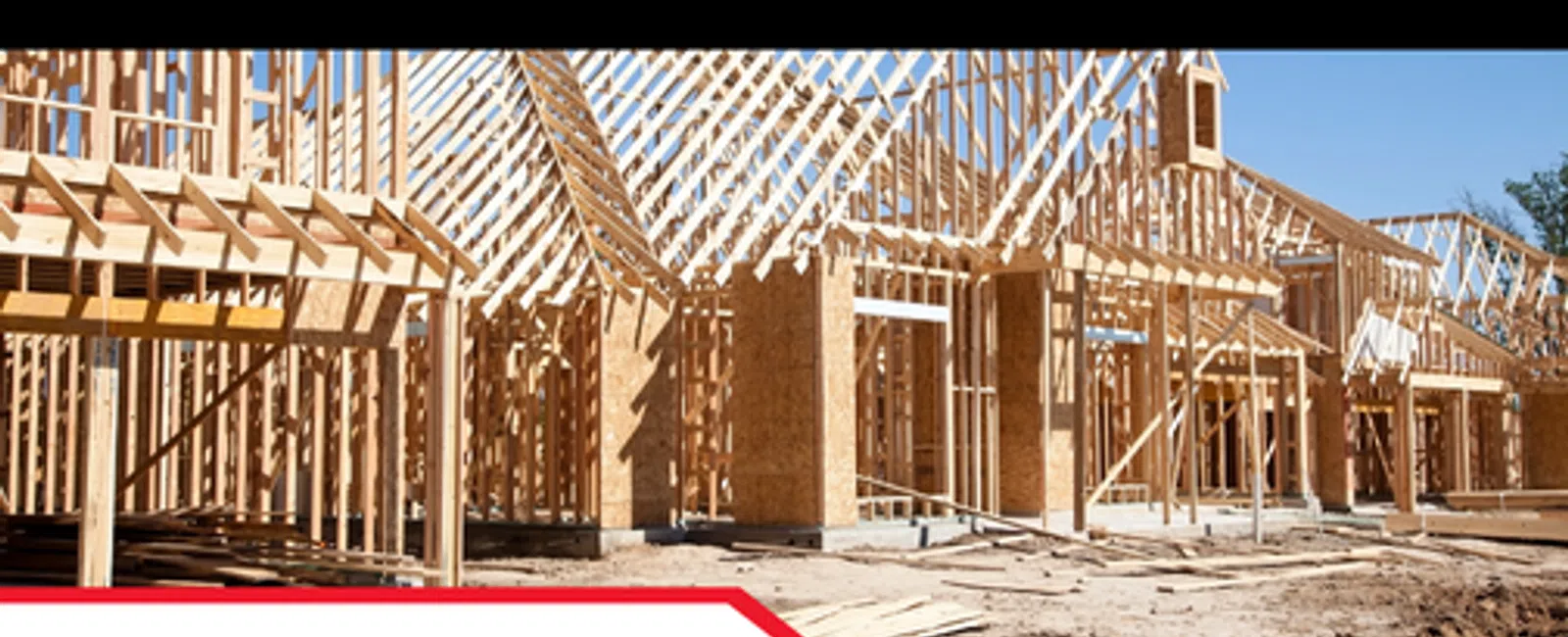
There is a brief but valuable stage during new home construction when many of the components that will eventually disappear behind finished walls are still visible. Framing is exposed, electrical wiring can be seen passing through framing members, and protective details can be observed before drywall covers the assembly. For a homebuyer, this stage provides an opportunity to have visible construction details independently evaluated before access changes dramatically.
Licensed and Certified Inspector Devin P. of LunsPro Inspection Group demonstrated the value of this timing during a new construction pre-drywall inspection. Devin identified two separate concerns in an exposed wall area. First, he pointed out electrical wiring in a location where he indicated a nail guard was needed to protect the wire from a future screw or other fastener. Second, he identified a framing stud that he described as improperly notched. Both conditions were readily visible because the drywall had not yet been installed.
These observations illustrate why pre-drywall inspections can be an important part of the new construction process. Buyers throughout Nashville, Chattanooga, Atlanta, Charlotte, Raleigh, Greensboro, Greenville, Savannah, and Charleston may encounter rapidly growing new construction markets, but a newly built home should still be evaluated based on its actual condition. Licensed Inspectors performing Southeastern Residential and Commercial Inspections provide an additional opportunity to identify visible concerns before construction advances to the next stage.
What Is a Pre-Drywall Inspection?
A pre-drywall inspection occurs after construction has progressed far enough for many building components to be installed but before drywall conceals the wall and ceiling cavities.
Timing is one of the primary reasons this inspection stage is valuable.
Once drywall is installed, many framing and electrical details are no longer directly visible during a standard home inspection. The finished walls may look perfectly normal even though the inspector can no longer see the construction behind them.
Before drywall, however, the inspector has a different view of the building.
Exposed framing allows visible conditions involving studs and other framing components to be observed. Electrical wiring routed through the framing is also more accessible for visual inspection.
The purpose is not to assume mistakes have been made. It is to evaluate what is visible while the opportunity exists.
Why Concealed Components Matter
A completed home contains a tremendous amount of material homeowners never see.
Walls conceal framing.
They also conceal much of the electrical wiring that serves receptacles, switches, lighting, and other equipment throughout the home.
That concealment is normal and necessary. Homes would hardly feel finished if every stud and electrical cable remained exposed.
But it also means there is a point during construction when inspection access is particularly useful.
Once drywall is installed, an inspector cannot simply look through the finished surface to evaluate every concealed detail.
A pre-drywall inspection takes advantage of the construction stage before that access disappears.
Electrical Wiring Needs Protection From Future Fasteners
One of Devin's observations involved electrical wiring passing through the framing.
He explained that protection in the form of a nail guard was needed at the location he identified. He pointed to another nearby location where a protective plate had been installed as an example.
The purpose of this protection is straightforward.
After drywall is installed, people may eventually drive screws or other fasteners into the wall. That can happen when installing shelving, hanging items, making future improvements, or performing other work.
If wiring is located too close to the fastening area without appropriate protection, a screw could potentially contact the electrical conductor.
Devin specifically warned about the potential for a fastener to reach the wire and create an electrical arcing concern.
What Is a Nail Guard?
A nail guard, sometimes seen as a protective metal plate over a framing area, provides a physical barrier where wiring or other components may be vulnerable to future fasteners.
In Devin's demonstration, he pointed directly to an installed nail guard nearby to illustrate what he expected to see at the other location.
This is one of those construction details that may appear small when the wall is open.
Once drywall is installed, however, the homeowner may have no idea that wiring runs through that exact portion of the wall.
That makes proper protection during construction important.
A homeowner should not need to know the route of every concealed electrical conductor simply to hang something on a finished wall.
Why Electrical Protection Is Easier to Evaluate Before Drywall
Imagine evaluating the same wall after construction is complete.
The drywall has been installed, finished, primed, and painted.
The electrical cable is no longer visible.
The opening through the framing is concealed.
And the presence or absence of the protective plate may not be observable during a normal visual inspection.
Before drywall, the situation is completely different.
The inspector can see where the cable passes through the framing and can observe whether visible protective details are present.
This illustrates the unique value of inspection timing.
It is not that an electrical concern automatically becomes worse after drywall. It simply becomes concealed.
Framing Was the Second Concern
Devin's second observation involved the framing itself.
He identified a stud and explained that it had been notched improperly.
A stud is part of the wall framing assembly, and alterations to framing members deserve careful attention.
Open-wall construction makes those alterations relatively easy to see.
After drywall installation, the same stud may be completely concealed.
Again, the supported observation is specific: Devin identified the member as a stud, noted that it was providing support in the area, and stated that it had been improperly notched.
The available information does not provide the dimensions of the notch or enough additional construction detail to make broader claims about the exact corrective method.
That determination should remain with the appropriate construction professionals.
Why Notches in Framing Deserve Attention
Construction frequently requires different building systems to share limited space.
Electrical wiring, plumbing, framing, and other components may all need to pass through or around wall assemblies.
That can sometimes require holes or notches in framing.
The important point is that alterations to framing need to be appropriate for the component and installation.
Removing material changes the framing member from its original form.
That does not mean every hole or notch is automatically improper. Homes routinely contain properly executed openings in framing for building systems.
In Devin's observation, however, he specifically identified the notch as improper.
That made it an appropriate item to document before the wall was closed.
One Area Can Contain Multiple Concerns
The demonstration is particularly useful because Devin found two different concerns in the same general construction area.
One involved electrical protection.
The other involved framing.
This illustrates how interconnected new construction can be.
A wall is not simply "framing" or "electrical."
Multiple systems occupy the same space and have to be installed in a way that allows them to function together appropriately.
A pre-drywall inspection gives the inspector a valuable view of those relationships before finished materials cover them.
New Construction Doesn't Eliminate the Need for Inspection
A common assumption among buyers is that a brand-new home should not need the same level of inspection as an existing property.
New construction is certainly different from an older home.
It has not experienced decades of normal use, previous renovations, or long-term aging.
But "new" describes age.
It does not independently verify every installation detail.
Construction involves many individual materials, workers, trades, and steps. An independent inspection provides another opportunity to observe the property before the buyer takes ownership.
That is not an accusation against the builder.
It is due diligence.
Builders and Independent Inspectors Have Different Roles
A builder is responsible for constructing the home.
Various trades perform specialized portions of the work, while other construction and approval processes may also occur as the project progresses.
An independent home inspector serves the buyer in a different capacity.
The inspector evaluates visible and accessible conditions within the inspection scope and documents relevant observations.
These roles do not have to be viewed as competing with each other.
An inspection can provide additional information that allows items to be evaluated and addressed while construction is still underway.
In Devin's example, the exposed wall made the concerns visible at an especially useful time.
Why Correcting Items Before Drywall Can Make Sense
When an item is identified while the wall is open, access is straightforward.
There is no finished drywall covering the framing.
There is no paint to remove.
The visible electrical and framing components can be evaluated directly by the appropriate professionals.
Once finished materials are installed, access may become more complicated.
This is why the pre-drywall stage represents such a valuable inspection window.
The objective is to identify observable conditions before they become concealed, giving the builder an opportunity to determine and complete the appropriate corrections.
Pre-Drywall Inspection Is Not a Guarantee
No inspection can guarantee that a home will never have a problem.
A pre-drywall inspection is also limited to what is visible and accessible at that point in construction.
Some systems may not yet be fully installed.
Other components may be evaluated more meaningfully at a later construction stage.
That is why buyers should understand pre-drywall inspection as one part of the broader new construction process rather than a substitute for every later inspection.
Its particular strength is visibility.
It provides access to areas that will soon be covered.
Why Later Inspection Stages Still Matter
Finding electrical and framing concerns before drywall does not eliminate the value of evaluating the home again closer to completion.
A finished home contains components and systems that cannot necessarily be evaluated in the same way during the pre-drywall phase.
Finishes have not yet been installed.
Some equipment may not yet be operational.
Certain fixtures and components may still be missing.
Different construction stages therefore provide different types of information.
A pre-drywall inspection focuses on what can be meaningfully observed before the walls close.
A final new construction inspection provides an opportunity to evaluate the home in a much more completed condition.
Homeowners Don't Need to Become Construction Experts
Looking at an unfinished house can be overwhelming.
A buyer may see wood framing, wiring, boxes, pipes, fasteners, and dozens of other materials without knowing what deserves attention.
That is normal.
Homebuyers should not be expected to understand every detail of building construction.
This is one reason working with experienced Licensed Inspectors can be helpful.
An inspector understands what they are looking at and can distinguish between ordinary construction details and observable conditions that deserve additional attention.
Southeastern New Construction Continues to Grow
New construction can be found throughout many Southeastern communities.
Buyers around Nashville and Chattanooga frequently encounter newly constructed homes, as do buyers throughout Atlanta, Charlotte, Raleigh, Greensboro, Greenville, Savannah, and Charleston.
Although construction styles, builders, and individual properties vary, one principle remains consistent: every home should be evaluated based on what is actually present.
A buyer should not assume that a home has a defect simply because it is under construction.
Likewise, they should not assume that every component is correct simply because the home is new.
Inspection replaces assumptions with observations.
Documentation Gives Buyers Something Concrete
When a pre-drywall inspector identifies a concern, documentation becomes valuable.
The report can describe the location and condition observed so that the buyer has a clear record of the inspection findings.
In Devin's example, the observations were specific.
An electrical location needed protective guarding, and a framing stud had an improper notch.
That information is far more useful than simply telling the buyer, "There were a couple of issues in the wall."
Clear reporting helps the buyer understand what was found and communicate those findings to the appropriate parties.
Focus on Facts, Not Alarm
Electrical wiring and framing can sound intimidating to homeowners.
Professional inspection reporting should still remain measured.
The objective is not to make every construction concern sound catastrophic.
In this example, there is no need to claim that the home had a major electrical failure or serious structural damage.
Those conclusions are not supported by the information provided.
Instead, the factual observations are enough.
Devin identified a location where a protective nail guard was needed to reduce the potential for a future fastener to contact the wiring. He also identified an improperly notched framing stud.
Those items deserved attention.
That is the useful information.
LunsPro Inspection Group and New Construction
LunsPro Inspection Group provides professional inspections designed to help buyers better understand visible and accessible property conditions.
New construction inspection is particularly valuable because the condition and accessibility of the home change as construction progresses.
Through professional Southeastern Residential and Commercial Inspections, Licensed Inspectors can evaluate components at appropriate stages and document observable concerns.
The pre-drywall phase offers something that cannot be recreated easily after the home is finished: direct visibility into many areas that will soon be concealed.
That opportunity should not be overlooked.
A finished wall can look clean, smooth, and completely normal while providing no visual information about the framing and wiring behind it. That is precisely why the pre-drywall stage can be so informative. Before those surfaces are covered, an inspector has an opportunity to observe construction details that will become inaccessible during a standard visual inspection after completion.
Licensed and Certified Inspector Devin P. demonstrated this value by identifying two different concerns during a new construction pre-drywall inspection. One involved electrical wiring that needed protective guarding against potential future fastener contact. The other involved a framing stud that Devin identified as improperly notched. Both were visible because the wall remained open.
For buyers throughout Nashville, Chattanooga, Atlanta, Charlotte, Raleigh, Greensboro, Greenville, Savannah, and Charleston, the lesson is straightforward: new construction still deserves independent attention. A professional pre-drywall inspection does not assume the home was built incorrectly. It simply evaluates the visible work at one of the most revealing stages of construction.
Through LunsPro Inspection Group, experienced Licensed Inspectors performing Southeastern Residential and Commercial Inspections can help buyers take advantage of that brief window before the drywall goes up. Once the walls are closed, many construction details disappear from view. Before that happens, a careful inspection can help ensure visible concerns are documented and brought to attention while access is still available.