
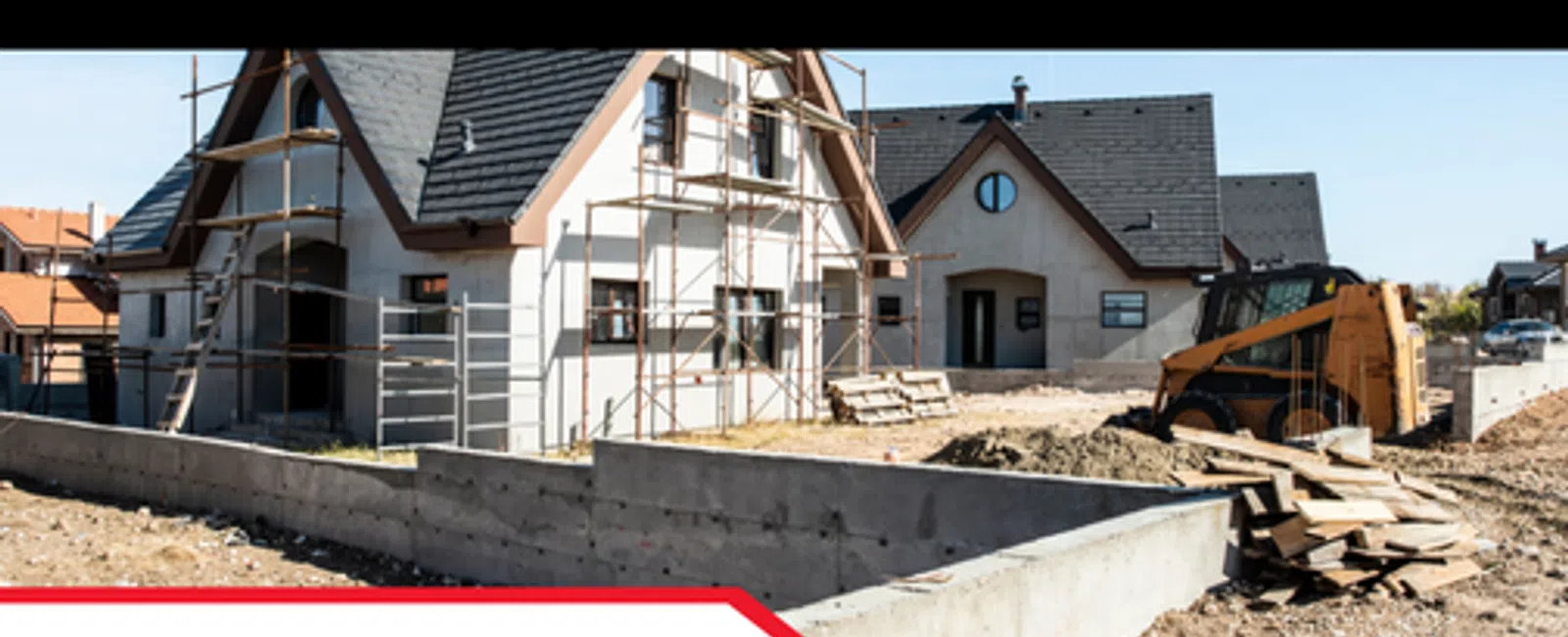
Buying a brand-new home often comes with an understandable expectation: everything should be complete, properly installed, and ready for the homeowner. New materials, fresh finishes, and unused systems can create confidence that the property should have fewer concerns than an older home. While new construction offers many advantages, the age of a home does not establish the condition of every individual component. Installation details can still need adjustment or correction before construction is truly complete.
Licensed and Certified Inspector Devin P. of LunsPro Inspection Group demonstrated how easily one of these details can stand out during a new construction inspection. He noticed that an installed area appeared slightly off. Looking more closely, he determined that the component needed to be flush and securely positioned. The available information does not identify the specific component or establish why it was out of position, so it would be inappropriate to speculate about either. The important lesson is much broader: when something in a new home does not appear properly aligned or secured, it deserves a closer look.
For buyers throughout Nashville, Chattanooga, Atlanta, Charlotte, Raleigh, Greensboro, Greenville, Savannah, and Charleston, this is one of the practical reasons professional new construction inspections can be valuable. Licensed Inspectors performing Southeastern Residential and Commercial Inspections evaluate what is actually present rather than assuming that a new construction label means every detail has already been completed correctly.
New Does Not Automatically Mean Complete
A new home is the result of a complicated construction process.
Numerous materials have to be delivered, positioned, installed, connected, adjusted, and finished. Different trades work on different portions of the property, often according to a larger construction schedule.
By the time a buyer sees the finished house, much of that work has been covered by paint, flooring, trim, cabinetry, fixtures, and other finished materials.
The result may look polished overall while still containing individual details that need attention.
That does not necessarily mean the home was poorly built.
It means construction involves many individual components, and professional inspection provides another opportunity to identify visible conditions before the buyer begins living in the property.
What Does "Flush and Secure" Mean?
In simple terms, a component that should sit flush generally needs to fit appropriately against the surface or assembly where it is installed rather than visibly sitting out of position.
"Secure" relates to whether the component is appropriately held in its intended position.
The exact requirements depend on the component involved.
That distinction is particularly important here because Devin's commentary does not identify exactly what he was examining. We therefore cannot reasonably say what fasteners should have been used, what installation standard applied, or what consequences could result from leaving it as-is.
What we can say is that Devin noticed the installation appeared off and, after examining it more closely, indicated that it needed to be flush and secure.
That is a straightforward inspection observation without adding assumptions that are not supported by the available information.
Why Alignment Can Catch an Inspector's Attention
Professional inspectors spend a significant amount of time visually comparing components and looking at how they have been installed.
An area that sits differently from the materials surrounding it may deserve additional observation.
That does not automatically mean there is a serious defect.
Instead, it provides a reason to look closer.
That is exactly what happened in Devin's observation. He initially noticed that something looked slightly off. That visual clue prompted him to examine the area further.
For homeowners, this illustrates an important inspection principle: small irregularities can be worth investigating even when they are not dramatic.
Secure Installation Is Part of Finished Construction
When an installed component is intended to remain fixed in place, homeowners reasonably expect it to be properly secured.
A new construction inspection provides an opportunity to identify visible components that appear loose, displaced, incomplete, or otherwise in need of adjustment.
Sometimes the required correction may be relatively straightforward.
Other times, an unusual position may require additional evaluation to understand why the component is not sitting as intended.
The inspector does not need to exaggerate the condition to make the observation valuable.
If something needs to be repositioned or secured, documenting that information gives the builder an opportunity to evaluate and address it.
Why Small Details Can Be Overlooked
New homes contain thousands of individual pieces.
Even a relatively simple room contains framing, drywall, trim, flooring, electrical components, fixtures, fasteners, doors, windows, and numerous finishing details.
Multiply that across an entire house and the complexity becomes obvious.
Construction quality control is intended to catch incomplete work, but another inspection can still provide useful information.
An independent inspector approaches the property from a different perspective.
Instead of concentrating on completing construction, the inspector evaluates visible and accessible components as they exist at the time of inspection.
That difference in perspective can help bring small installation details into focus.
A Final Walkthrough and an Inspection Are Different
Buyers should not confuse a builder walkthrough with a professional home inspection.
Both can be valuable, but they serve different purposes.
During a final walkthrough, a buyer may naturally concentrate on visible finishes. They may notice scratched paint, damaged flooring, cabinet adjustments, or other items that affect appearance.
A professional inspection takes a more systematic approach to the property's accessible systems and components.
That difference matters because an installation that appears slightly off may be easy for a buyer to overlook while they are concentrating on dozens of other details.
An inspector is specifically there to observe the property.
Cosmetic Appearance Isn't the Only Consideration
Something sitting out of alignment may initially look like nothing more than a cosmetic issue.
But appearance alone should not be used to determine whether a component is installed appropriately.
The inspector needs to consider what can actually be observed.
In this situation, Devin did not simply say that the area looked imperfect. His observation was that it needed to be flush and secure.
Without knowing the exact component, we should not claim that the condition presented a structural, electrical, moisture, or other specific concern.
Doing so would go beyond the information available.
The useful takeaway is that proper installation includes both appearance and secure positioning where applicable.
New Construction Inspections Are About Details
Some inspection findings are immediately noticeable.
Others require closer observation.
New construction inspections can include both.
A buyer may expect the inspection to uncover only major problems, but smaller construction details can also be useful to document before move-in.
An area that needs adjustment today may be relatively straightforward for the builder to address while construction personnel are still involved with the property.
This is one reason timing can matter.
Identifying visible concerns before the buyer settles into the home gives everyone involved an opportunity to understand what was observed and determine the appropriate next step.
Avoiding Unsupported Assumptions
One of the most important parts of professional inspection reporting is staying within the evidence.
If a component is loose, the inspector can document that it is loose.
If it is visibly out of position, that condition can be described.
If it needs to be secured, that recommendation can be made.
What should be avoided is automatically assigning an unsupported cause.
There is nothing in Devin's commentary that tells us who installed the component, why it became displaced, how long it had been that way, or whether any concealed condition existed behind it.
Professional reporting should not fill those gaps with guesses.
That factual approach gives homeowners reliable information rather than unnecessary speculation.
Why New-Home Buyers Benefit From Another Set of Eyes
A buyer may assume that because a house has just been constructed, there is little reason to inspect it.
But an independent inspection is not based on the assumption that the builder did something wrong.
It is based on evaluating the finished property.
That distinction is important.
A professional inspector can recognize that the home is new while still checking its visible and accessible components.
If everything appears appropriate, that is useful information.
If an individual component needs adjustment, that is useful information too.
The goal is understanding the property, not searching for reasons to criticize it.
Construction Quality Is Made Up of Individual Details
The overall impression of a new home is created by hundreds of smaller installation decisions.
Walls need to align appropriately.
Finished materials need to fit together.
Components intended to be secured should be secure.
Fixtures and finishes should be installed in their intended positions.
One individual adjustment may seem minor compared with the entire home, but construction quality is ultimately the result of all those details working together.
Devin's observation is a good example because it is simple.
Something looked off.
He examined it.
The component needed to be flush and secured.
Not every useful inspection finding needs to be dramatic.
Why Homeowners Should Document Items Before Move-In
When a new construction inspection identifies an item that needs attention, documentation can help communicate the condition clearly.
Instead of relying on a verbal statement such as "something over there looked loose," the inspection report can identify the location and describe what was observed.
That makes it easier for the appropriate party to understand what needs evaluation.
Clear documentation can be especially useful when multiple items are identified throughout a new home.
A buyer may not remember every detail discussed during an inspection walkthrough.
The report creates a reference they can review afterward.
New Construction Across the Southeast
New residential construction continues throughout many Southeastern markets.
Buyers in Nashville and Chattanooga encounter new homes alongside established properties, while growing communities around Atlanta, Charlotte, Raleigh, Greensboro, Greenville, Savannah, and Charleston also contain a broad range of newly constructed housing.
The individual builders, materials, floor plans, and construction methods can vary significantly.
For that reason, inspection should focus on the specific home rather than making assumptions based on a city, neighborhood, builder, or construction year.
A new home in Nashville should be evaluated based on what is present in that property.
The same principle applies in Chattanooga, Atlanta, Charlotte, Raleigh, Greensboro, Greenville, Savannah, or Charleston.
Don't Assume Small Means Unimportant
Homeowners sometimes divide inspection findings into two categories: major problems and things that do not matter.
Real inspection findings can be more nuanced.
An individual item may not represent a major problem but can still deserve correction.
A component that should be flush and secure is a good example.
The observation does not need to be described as catastrophic to justify addressing it.
It simply needs to be accurately documented.
This measured approach helps buyers prioritize factual information without unnecessary alarm.
Professional Inspections Provide an Independent Perspective
The builder knows the construction project.
The buyer knows what they want from their new home.
The inspector brings another perspective: evaluating visible and accessible property conditions.
LunsPro Inspection Group provides professional inspections designed to help clients better understand the property in front of them.
Through Southeastern Residential and Commercial Inspections, experienced Licensed Inspectors can identify conditions that buyers may not notice during an ordinary walkthrough.
Sometimes those findings involve major building systems.
Other times, they involve a small component that simply needs to be put back into the position where it belongs.
Both can be worth knowing before move-in.
Look Closely Before Calling the Home Finished
A newly constructed home can look impressive from the moment a buyer walks through the front door. Fresh paint, new flooring, unused appliances, clean fixtures, and modern finishes naturally create the impression that the project is complete. A professional inspection adds another question: are the visible and accessible components actually installed and positioned as they should be?
Licensed and Certified Inspector Devin P. demonstrated why that closer look matters. He noticed an area that appeared slightly off and determined that the component needed to be flush and secured. The information available does not support claims about the specific component, cause, or potential consequences, and none are necessary to understand the lesson. A visible installation detail needed attention before it could reasonably be considered finished.
For new-home buyers throughout Nashville, Chattanooga, Atlanta, Charlotte, Raleigh, Greensboro, Greenville, Savannah, and Charleston, professional inspection provides an opportunity to identify these details before move-in. New construction should not be approached with the assumption that problems exist, but it should not be assumed perfect simply because it is new either.
Through LunsPro Inspection Group, Licensed Inspectors performing Southeastern Residential and Commercial Inspections evaluate what is actually visible and accessible at the property. Sometimes the most useful observation is remarkably simple: something is a little off, it deserves a closer look, and it needs to be properly positioned and secured. That attention to detail is exactly why a professional inspection can remain valuable even when the home is brand-new.