
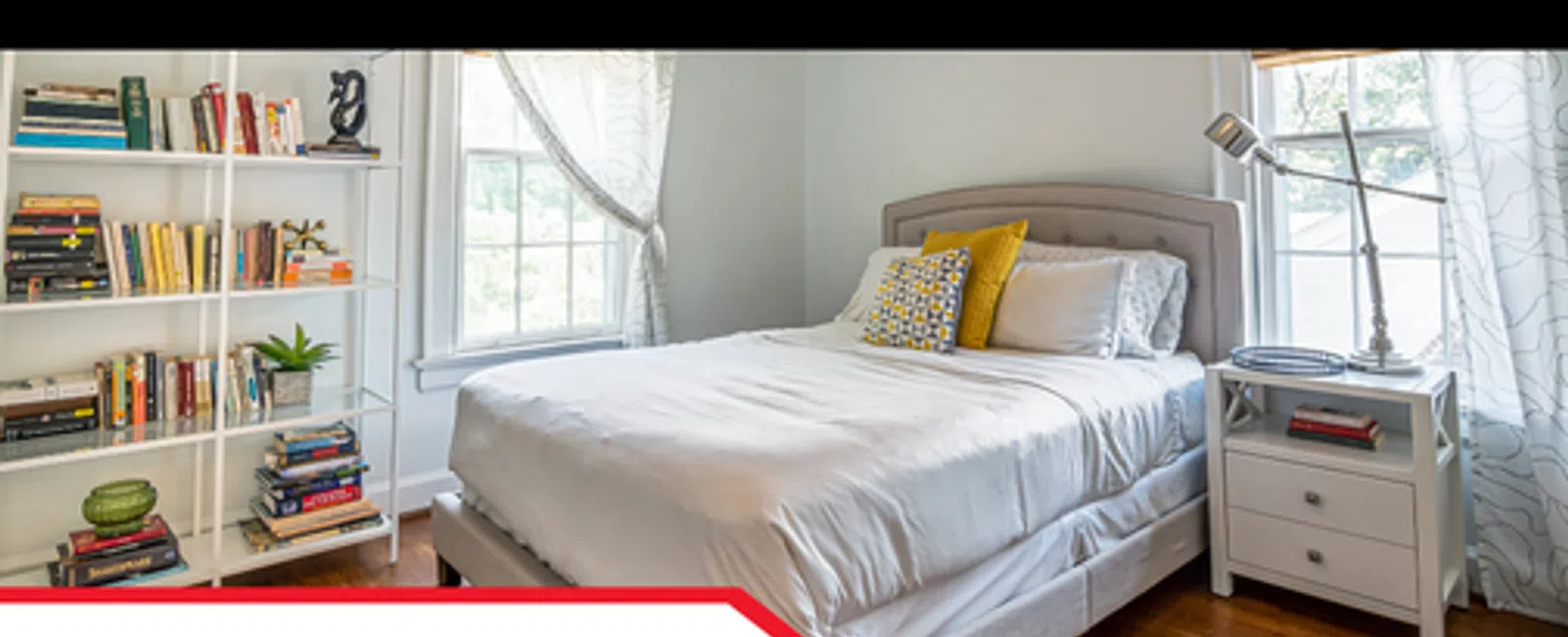
A bedroom may seem like one of the simplest areas of a home to inspect. Unlike a kitchen, mechanical room, or bathroom, it may contain relatively few visible systems. To a homeowner or buyer walking through the property, the room might appear to require little more than a quick look at the walls, flooring, windows, and doors. A professional home inspection, however, involves evaluating details that can reveal functional concerns, installation issues, damage, or components that need additional attention.
Licensed and Certified Inspector Christian M demonstrates this systematic approach by checking several seemingly ordinary components during an inspection. His observations include doors rubbing against one another, outlets being evaluated for proper wiring and secure installation, and windows being checked for functionality. As the inspection continues, accessible areas can also provide an opportunity to take a closer look at exterior components such as roofing and guttering. For homeowners throughout the Southeast, understanding this process helps explain why a professional inspection is much more than a visual walkthrough.
Why Bedrooms Still Require a Detailed Inspection
Bedrooms are used every day, which can make their components feel familiar and straightforward. Doors open and close, windows provide light, and receptacles power lamps, chargers, televisions, and other devices.
But familiarity does not necessarily mean that every component is functioning as intended.
A professional inspection considers how accessible components operate and whether visible conditions indicate a potential concern. Even relatively minor defects can be worth documenting because they may affect usability or contribute to additional damage over time.
Christian M's inspection provides a straightforward example. Two doors were rubbing against one another rather than operating independently as intended. The contact had already begun damaging one of the doors.
At first glance, this might seem minor compared with a roof leak or major electrical defect. However, a home inspection is not limited to identifying only major problems. It also documents visible defects and functional concerns that can help a homeowner better understand the condition of the property.
Doors Should Operate Without Damaging Each Other
Interior doors are among the most frequently used components in a house.
During normal operation, a door should be able to open and close without unnecessarily contacting another door or nearby component. When two doors rub against one another, repeated contact can damage their surfaces and make normal operation more difficult.
As Christian M points out, the condition may require adjustment so the door can close properly.
Several factors can potentially influence how a door operates, but an inspector should avoid assuming the cause without sufficient evidence. The important observation during the inspection is what can actually be seen and demonstrated: the doors are contacting one another, damage is occurring, and adjustment is needed for proper operation.
That distinction is important in professional home inspection reporting.
Licensed Inspectors document observable conditions rather than making unsupported conclusions about what caused them.
Why Small Functional Defects Matter
A door rubbing against another door may not stop someone from purchasing a home. It can still be valuable information.
Home inspections help create a more complete picture of a property, and that picture includes both large and small conditions.
A functional defect can tell a buyer or homeowner that a component requires adjustment, repair, or further attention. Identifying the issue also provides an opportunity to address it before continued use creates additional damage.
This principle applies throughout the house.
A window that does not operate properly, an outlet that is not securely installed, or a door that repeatedly contacts another surface may appear minor when considered individually. Together, these observations help document how well the home's accessible components are functioning at the time of inspection.
Electrical Outlets Are Part of the Room Inspection
Once the doors have been evaluated, Christian M moves on to checking electrical outlets.
Electrical receptacles are common enough that homeowners may rarely think about them unless one stops working. During an inspection, however, accessible outlets can provide useful information about the electrical system.
Christian explains that he checks outlets to help determine whether they are wired properly and properly secured to the walls.
An outlet tester can provide information based on the indicator-light combination displayed by the device. Christian notes that the expected light indication tells him whether the tested receptacle shows the proper wiring condition the tester is designed to identify. A different combination can indicate that the tester has detected another wiring condition.
Testing accessible receptacles is one part of evaluating the electrical components within a home.
Why Outlet Security Matters
An electrical receptacle is not simply supposed to provide power. It should also be appropriately secured.
If a receptacle moves excessively when a plug is inserted or removed, that is a condition worth documenting.
Homeowners interact directly with receptacles, often multiple times every day. Lamps, chargers, computers, televisions, vacuums, and countless other devices rely on them.
Checking their accessible condition therefore contributes to a more complete evaluation of the room.
The goal is not to dismantle walls or perform an invasive electrical investigation. A standard home inspection is primarily visual and non-invasive. Instead, the inspector evaluates accessible components and reports observable concerns within the scope of the inspection.
When an observed electrical condition warrants additional attention, appropriate professional evaluation may be recommended.
Windows Need More Than a Visual Check
Windows are another major component of bedrooms and living spaces.
Christian M explains that he checks windows for functionality. That distinction matters because a window can look fine while still having an operational problem.
Where accessible and appropriate, operating a window can provide information that simply looking at it cannot.
Does it open?
Does it close?
Does its accessible hardware function as expected?
Is there an obvious operational issue?
The answers help the inspector document the condition of the window at the time of inspection.
For homeowners in the Southeast, windows are an important part of the building envelope. While this particular inspection commentary focuses specifically on functionality, evaluating accessible windows throughout a property can help provide a broader understanding of the home's condition.
Room-by-Room Inspection Creates a Systematic Process
Professional inspections benefit from a methodical approach.
Moving through a home systematically reduces the likelihood that accessible components will be overlooked simply because they appear ordinary.
In one room, that process may involve evaluating doors, windows, outlets, walls, ceilings, and other accessible components. The inspector then continues through additional rooms and systems.
This systematic process is one reason professional inspections differ from casual walkthroughs.
A buyer touring a house is understandably thinking about many other things.
Will the furniture fit?
Does the room get enough natural light?
Is the closet large enough?
What color should the walls be?
Where will the bed go?
An inspector approaches the same space from a different perspective. The focus is on visible condition and functionality within the scope of the inspection.
That independent perspective can provide valuable information before a buyer takes ownership.
Accessible Areas Can Reveal Additional Components
Christian's walkthrough also demonstrates another important part of an inspection: using safe, accessible vantage points to examine other parts of the property more closely.
While working through the home, he takes advantage of his position to look more closely at the roof and guttering.
Roofing components are not always equally visible from every location.
The same is true of gutters.
A different vantage point can sometimes provide a better look at accessible or visible areas than can be obtained from ground level alone. Inspectors use appropriate inspection methods based on the property, conditions, accessibility, and safety considerations.
The goal is to gather as much useful visual information as reasonably possible within the inspection's scope.
Why Roofing Deserves a Closer Look
The roof is one of the home's primary exterior protective systems.
Because of its location, homeowners may not regularly observe roof surfaces closely. A roof can look generally acceptable from the driveway while certain areas remain difficult to see.
That is why a professional inspection involves evaluating visible and accessible roof components using appropriate methods.
The exact inspection method can vary. Conditions such as roof design, height, slope, surface condition, weather, accessibility, and safety can affect how an inspector evaluates a particular roof.
Christian's inspection highlights the broader principle: when an accessible location provides an opportunity for a closer look, that perspective can contribute additional information about the property.
Gutters Are Part of the Exterior Picture
Guttering may appear simple, but it is another exterior component worth observing.
Christian specifically notes that he looks at the guttering while evaluating the roof area.
The inspection is focused on observable conditions. Inspectors can document visible concerns rather than assuming that a component is performing perfectly simply because it is present.
This approach is especially relevant across the Southeast, where homes regularly experience rainfall and seasonal weather.
From Atlanta and Savannah to Charlotte, Raleigh, Greensboro, Greenville, Charleston, Nashville, and Chattanooga, exterior components remain an important part of understanding a property's visible condition.
Home Inspections Connect Individual Observations
One of the most important concepts for homeowners to understand is that an inspection is not a collection of unrelated spot checks.
It is a systematic evaluation of many accessible systems and components.
Consider the sequence demonstrated by Christian M.
He identifies doors rubbing together and notes the resulting damage. He checks outlets for wiring indications and secure installation. He checks windows for functionality. From an appropriate location, he also takes a closer look at the roof and guttering.
Each observation contributes another piece of information.
That is how a professional inspection builds a broader picture of a home's condition.
Why Buyers Should Not Rely Only on Their Own Walkthrough
Buyers absolutely should walk through a property and pay attention to its condition.
However, a buyer's walkthrough and a professional home inspection serve different purposes.
Most buyers are not testing accessible electrical receptacles while touring a bedroom. They may open a window, but they are unlikely to methodically check accessible windows throughout the entire property. They might notice that two doors are positioned close together without realizing they are rubbing and causing damage.
Their attention may also be focused on the purchase itself.
A professional inspector is there specifically to examine the home.
LunsPro Inspection Group provides professional inspections designed to give clients more information about the visible and accessible condition of the property.
Newer Homes Still Need Detailed Inspections
The principles demonstrated in a bedroom inspection apply regardless of whether a home is older or relatively new.
A newer property can still have doors requiring adjustment, damaged components, improperly secured fixtures, window functionality concerns, or electrical conditions that warrant attention.
Likewise, an older home should not automatically be assumed to have problems simply because of its age.
Inspection should be based on observed condition.
That is a core value of professional Southeastern Residential and Commercial Inspections: evaluate the property in front of you rather than relying on assumptions.
Southeastern Homes Face Diverse Conditions
The Southeast contains an enormous variety of housing.
An urban home in Atlanta may differ substantially from a coastal property near Savannah or Charleston. Houses throughout Charlotte, Raleigh, and Greensboro span numerous construction periods and styles.
Properties in Greenville likewise range from established homes to newer development, while Nashville and Chattanooga continue to include both existing housing and new construction.
Regardless of location, the fundamental inspection process remains centered on visible and accessible conditions.
Doors should be evaluated.
Accessible electrical components should be checked.
Windows should be considered for functionality.
Exterior components such as roofing and guttering should be observed using appropriate inspection methods.
The details will differ from house to house, which is exactly why an inspection should focus on the individual property.
The Value of Licensed and Certified Inspectors
Professional inspection is as much about the process as it is about individual findings.
Experienced Licensed Inspectors know that ordinary components deserve attention alongside larger systems.
A bedroom door may reveal a functional defect.
A receptacle tester may provide information about an outlet.
A window may reveal an operational concern.
An elevated viewpoint may provide a better opportunity to observe a section of roof or gutter.
None of these observations should be exaggerated. Instead, they should be documented clearly so homeowners and buyers can understand what was observed and determine appropriate next steps.
That balanced approach helps keep inspection reporting useful, factual, and homeowner-friendly.
Inspection Is About Understanding the Whole Home
A thorough inspection does not begin and end with the home's largest or most expensive systems.
The smaller components people interact with every day matter too.
Christian M's inspection demonstrates that principle clearly. A door rubbing another door was already creating visible damage and required adjustment for proper operation. Accessible outlets were checked for proper wiring indications and secure installation. Windows were evaluated for functionality. The inspection process also created an opportunity to look more closely at accessible roof and gutter components.
For Southeastern homeowners, these observations illustrate why a home inspection should be methodical rather than rushed. Whether purchasing in Atlanta, Charlotte, Raleigh, Greensboro, Greenville, Savannah, Charleston, Nashville, or Chattanooga, buyers benefit from understanding that seemingly ordinary rooms still contain components worth evaluating carefully.
A professional inspection cannot guarantee that every concealed or future condition will be identified. It is a visual, non-invasive evaluation of accessible systems and components at a particular point in time. What it can provide is a structured, independent assessment that helps homeowners better understand the property in front of them.
Through LunsPro Inspection Group and its Licensed Inspectors, clients can receive that broader perspective as part of professional Southeastern Residential and Commercial Inspections. From a rubbing bedroom door to outlets, windows, roofing, and guttering, careful attention to the details helps transform a simple walkthrough into a meaningful evaluation of the home.