Termite activity is not always immediately obvious to a homeowner or prospective buyer. Sometimes, an indication can be as subtle as an unusual amount of dirt along a concrete slab or near the base of a wall. What initially appears insignificant may deserve a closer look, particularly when evaluating areas where signs of pest activity can be easy to overlook. That is one reason termite and pest inspections can provide valuable additional information about a property.
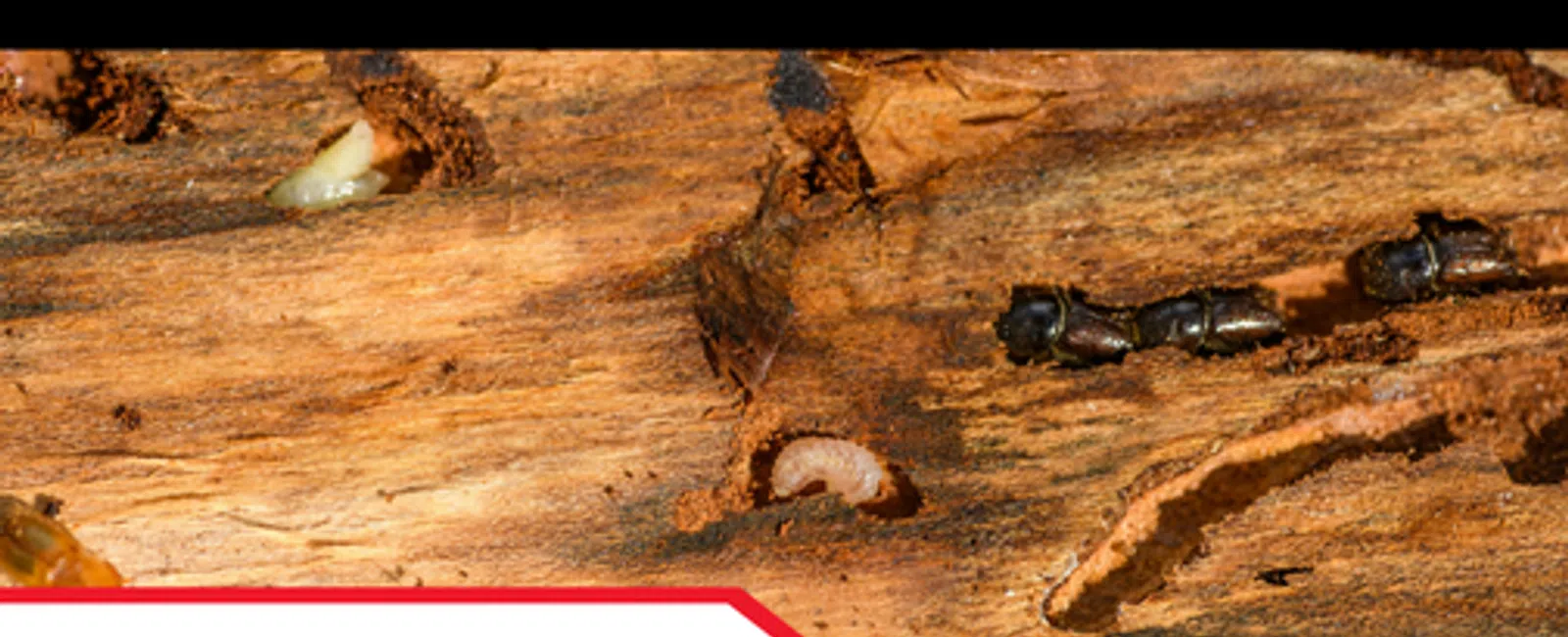
During an inspection, Licensed and Certified Inspector Mike S with LunsPro Inspection Group observed dirt on the concrete slab in a garage. After examining the area more closely, he identified signs of active termite activity and dirt tubes at the base of the wall. The observation illustrates an important lesson for Southeastern homeowners: termite-related conditions may not announce themselves with an obvious problem. Recognizing visible signs and knowing when they warrant further investigation is an important part of understanding a property's condition.
Termite Activity Can Begin With Subtle Signs
When many homeowners imagine termite activity, they picture visibly damaged wood or a major infestation that is impossible to miss. The signs encountered during an inspection can be considerably less dramatic.
In the example described by Mike S, the initial observation was simply dirt on a concrete garage slab.
Rather than dismissing it as ordinary debris, he probed further. That closer evaluation revealed dirt tubes at the base of the wall along with signs of active termite activity.
This illustrates why context matters during an inspection. Dirt in a garage is certainly not automatically evidence of termites. Garages naturally collect soil, dust, leaves, and other debris. However, when an unusual condition is observed in a location where it warrants additional attention, an inspector can examine accessible areas more closely.
The key is not to make assumptions based on a single visual clue. It is to recognize when something deserves further investigation.
What Are Termite Dirt Tubes?
The inspection specifically identified dirt tubes at the base of the garage wall.
These tubes are an important visible condition because they can be associated with termite activity. Their appearance may resemble narrow trails or accumulations of soil-like material extending along a surface.
For homeowners, the important takeaway is that termite evidence does not necessarily resemble an obvious insect infestation. You may not see large numbers of insects moving around the home. Instead, visible evidence may appear along foundations, walls, slabs, or other accessible areas.
That is one reason simply walking through a property may not provide the same information as a dedicated termite or pest inspection.
A prospective buyer might reasonably walk through a garage and pay attention to storage space, parking dimensions, the garage door, or the overall condition of the walls and floor. A trained inspector is looking at the property from another perspective, including conditions that could indicate a need for additional investigation.
Why Garages Deserve Attention
Garages can contain several transitions between different building materials and parts of the structure.
There may be concrete slabs, walls, framing, exterior boundaries, and other accessible areas that can be visually evaluated during an inspection. In this situation, the area at the base of the wall provided visible evidence that warranted attention.
The observation also demonstrates why inspections benefit from being systematic.
An inspector does not only focus on the rooms where people spend most of their time. Garages, attics, crawlspaces, basements, exterior areas, and other accessible portions of the property can contain important information about the home's condition.
A garage floor may seem unremarkable, but even there, details matter.
Termite Inspections Are Different From General Home Inspections
A general home inspection and a termite or pest inspection have related but distinct purposes.
A home inspection broadly evaluates visible and accessible systems and components of a property within the inspection's scope. That can include structural components, roofing, electrical systems, plumbing, HVAC equipment, interior components, exterior areas, and other accessible features.
A termite, pest, and rodent inspection focuses specifically on evidence and conditions associated with those concerns.
Mike S highlights termite, pest, and rodent inspections as ancillary services available through LunsPro Inspection Group. Adding these services can provide homeowners and buyers with information beyond the standard inspection scope.
This can be particularly useful because a house can appear well maintained while still containing evidence of pest activity in an area a buyer may not recognize.
Why Termite Inspections Matter in the Southeast
Homeowners throughout the Southeast should understand that pest conditions are another part of evaluating a property.
Homes in Atlanta, Charlotte, Raleigh, Greensboro, Greenville, Savannah, Charleston, Nashville, and Chattanooga vary enormously in age, design, foundation type, construction materials, and maintenance history. Regardless of those differences, visible evidence of termite activity deserves appropriate attention when discovered.
That applies to older properties as well as newer ones.
Age alone should never be used to determine whether a property does or does not require careful evaluation. A home's outward appearance also cannot confirm the absence of termite activity.
Professional inspections rely on observed conditions rather than assumptions.
That principle is especially important when buying a home. A freshly painted interior, renovated kitchen, clean garage, or attractive exterior does not tell a buyer everything about conditions elsewhere on the property.
What an Inspector Is Looking For
The value of Licensed Inspectors comes partly from knowing that seemingly minor observations may deserve additional attention.
In Mike's example, the process was straightforward:
Dirt was noticed on the concrete garage slab. The area was examined more closely. Additional evidence was identified at the base of the wall, including dirt tubes and signs of active termite activity.
This sequence demonstrates an important inspection mindset.
The goal is not to assume the worst whenever something unusual appears. Nor is it to ignore an observation because it initially looks insignificant.
Instead, inspectors evaluate accessible evidence and document what they find.
That gives homeowners and buyers better information for deciding what should happen next.
Why Buyers Benefit From Pest Inspections
Purchasing a home involves evaluating far more than finishes, floor plans, and location.
Buyers need information about the property itself.
A professional inspection can help document visible and accessible conditions before the transaction progresses further. Ancillary services such as termite, pest, and rodent inspections can expand that information into areas that may require specialized attention.
This is particularly useful because buyers may not know what termite evidence looks like.
Even when they notice something unusual, they may have no reason to associate it with pest activity. Dirt along a garage wall, for example, could easily be swept away without further thought.
Having trained professionals evaluate the property can help put those observations into context.
Inspection Helps Establish the Next Step
Finding termite activity during an inspection is not the end of the process. It provides information that can guide the next step.
When evidence of activity is discovered, the condition can be documented and appropriate pest-control measures can be considered.
This is where the relationship between LunsPro Inspection Group and its sister company, PestNation, can be particularly useful.
LunsPro provides inspection services, including termite, pest, and rodent inspections, while PestNation provides pest-control services that can help address identified pest concerns. The two companies serve different roles within the property-care process, allowing an inspection finding to be followed by appropriate evaluation, remediation, or related services when needed.
For homeowners, the benefit is continuity. A concern identified during the inspection does not simply have to remain a line item on a report. There is a clear path toward determining how it should be addressed.
PestNation and the Next Steps After a Finding
A termite finding should be approached methodically.
The first priority is understanding what has been observed. From there, a qualified pest professional can evaluate the situation and determine appropriate treatment or remediation recommendations.
PestNation, LunsPro's sister company, provides that pest-control expertise.
This connection is especially relevant when active termite activity is observed. Instead of treating visible evidence as merely cosmetic, homeowners can have the underlying pest concern properly addressed.
Repairs may also become part of the process when damage is identified and repair is appropriate. The exact response will depend on the conditions present at the individual property.
Homeowners should avoid assuming that every termite finding requires the same treatment or repair approach. Professional evaluation is important because properties and pest conditions differ.
Inspections Should Be Based on Evidence, Not Assumptions
A fundamental principle of professional inspection is documenting what can actually be observed.
If dirt is present on a garage slab, dirt alone does not prove termite activity.
If closer examination reveals characteristic dirt tubes and evidence of active termite activity, the situation changes.
That distinction is important because responsible inspectors should not overstate findings. Homeowners deserve clear information based on observable conditions.
The same principle applies throughout Southeastern Residential and Commercial Inspections. Whether an inspector is evaluating a residential garage, an electrical panel, a roof, a crawlspace, or another accessible area, observations should be communicated factually.
Clear reporting allows the client to understand what was found without unnecessary alarm.
Don't Overlook Less-Obvious Areas
One lesson homeowners can take from this finding is to pay attention to parts of the property that may not seem especially important during a walkthrough.
Garages are a good example.
So are crawlspaces, attics, utility areas, exterior walls, and other locations that may receive less attention than kitchens, bathrooms, and living rooms.
A buyer may spend significant time examining countertops and appliances while barely glancing at the bottom of a garage wall.
That is understandable. Buyers are imagining themselves living in the house.
Inspectors have a different job. Their attention is focused on the property's accessible systems and conditions.
That difference in perspective is one reason a professional inspection can add meaningful information to a home purchase.
Southeastern Homes Need Property-Specific Evaluation
There is no single inspection checklist that can predict exactly what will be found in every Southeastern home.
A property in Savannah may be very different from one in Chattanooga. Housing in Nashville ranges from older properties to extensive newer development. Atlanta contains homes representing many different decades and construction styles, while buyers throughout Charlotte, Raleigh, Greensboro, Greenville, and Charleston encounter similarly diverse housing.
Every property needs to be evaluated based on its actual conditions.
That includes pest-related evidence.
A home's location, age, appearance, or renovation status should not be used as a substitute for an inspection. What matters is what trained professionals can observe at the property.
A More Complete Approach to Understanding a Home
A general home inspection provides broad information about a property's accessible systems and components. Adding appropriate ancillary inspections can provide additional insight into specialized concerns.
Termite, pest, and rodent inspections are examples of services that can complement a broader home inspection.
For homeowners who want to understand as much as reasonably possible about a property, combining appropriate inspection services can create a more complete picture.
LunsPro Inspection Group and its Licensed Inspectors approach inspections with that broader objective: identify and document visible conditions so clients can make more informed decisions.
When pest activity is identified, sister company PestNation can provide a path toward addressing the pest concern.
Details Can Make a Difference
The termite activity described by Mike S began with an observation that could have been easy to dismiss: dirt on a concrete garage slab. Looking more closely revealed dirt tubes at the base of the wall and signs of active termite activity. It is a simple example of why professional inspection involves more than walking through a home and looking for large, obvious defects.
For buyers and homeowners throughout Atlanta, Charlotte, Raleigh, Greensboro, Greenville, Savannah, Charleston, Nashville, and Chattanooga, the lesson is straightforward. Pay attention to the details, and consider specialized inspections when they are appropriate. A property does not need to look neglected for an important condition to be present.
Through LunsPro Inspection Group, homeowners can incorporate termite, pest, and rodent inspections alongside other Southeastern Residential and Commercial Inspections. When termite or other pest concerns are identified, PestNation, LunsPro's sister company, can help with the pest-control side of the process. Together, professional inspection and appropriate follow-up provide homeowners with clearer information about what was found and what may need attention next.