Buying a brand-new home can create a strong sense of confidence. Everything is new, the finishes are fresh, and major components have not experienced decades of normal wear and tear. A model home may create even greater confidence because it serves as the builder's showcase. Buyers may reasonably expect a property used to represent a new community to be in excellent condition from top to bottom.
However, new construction does not mean that every component is automatically free of defects. Homes are assembled through many stages involving different materials, trades, contractors, and installation processes. Conditions can develop during transportation, construction, installation, or subsequent work. Some are readily visible, while others are located in areas buyers rarely see, such as the attic and roof structure.
During an inspection of a brand-new 2026 model home in the Nashville area, Licensed Inspector David L. observed three roof trusses that were broken or otherwise compromised. The observation provides a useful example of why buyers should not treat a new construction home inspection as unnecessary simply because a property is recently completed.
For buyers throughout Nashville, Chattanooga, Atlanta, Charlotte, Raleigh, Greensboro, Greenville, Savannah, and Charleston, professional inspections can provide an independent look at visible and accessible components before purchasing a home. LunsPro Inspection Group provides Southeastern Residential and Commercial Inspections performed by experienced Licensed Inspectors who evaluate properties at different ages and stages of construction.
What Is a Roof Truss?
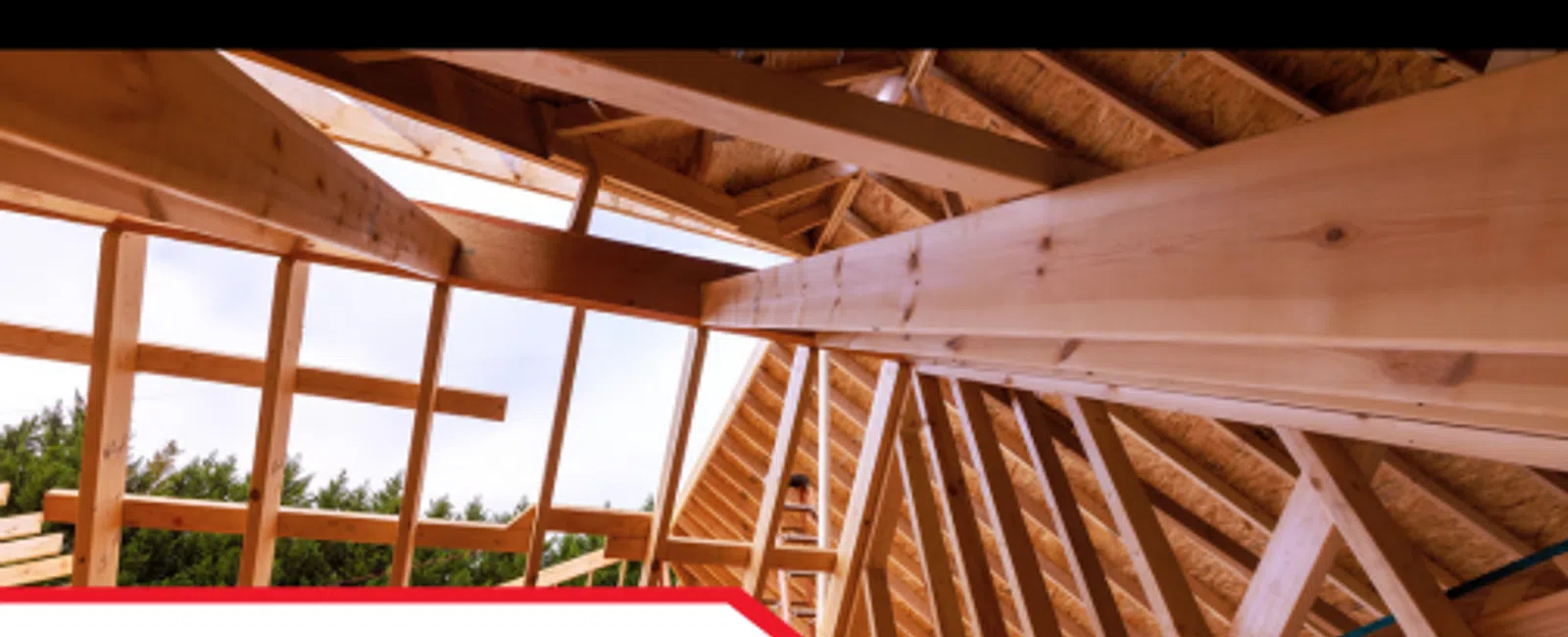
Roof trusses are engineered framing assemblies that help support a home's roof.
A typical truss consists of multiple pieces of lumber arranged in a specific configuration and connected to function together as a complete structural assembly. The individual components work collectively to transfer roof loads to supporting portions of the building.
Unlike a simple decorative component, a roof truss is part of the home's structural system.
This is why visible damage to a truss deserves attention during an inspection.
A truss may appear relatively simple when viewed from an attic, but its configuration is intentional. Individual members, connections, and the overall geometry of the assembly contribute to how loads are transferred.
What Does a Compromised Truss Mean?
David described three trusses in the model home as broken or compromised.
That distinction matters because inspectors should report the conditions they can actually observe rather than assume the precise structural consequences.
Visible truss concerns can take different forms depending on the property. When an inspector observes damage or another condition that appears to affect a structural component, it should be documented so the buyer can understand what was found and determine whether additional professional evaluation or repair is appropriate.
The presence of damage does not tell a homeowner everything about the cause or required correction.
Those determinations may require evaluation by qualified professionals familiar with engineered roof framing.
Why Truss Damage Matters
Roof framing has an important job: supporting the roof system above the home.
Because trusses function as engineered assemblies, damage to individual portions should not simply be treated as a cosmetic imperfection.
An inspector evaluating an attic may look for visible conditions involving roof framing, including broken, damaged, displaced, or altered components.
When these conditions are identified, documentation gives buyers an opportunity to address the issue rather than discovering it after purchasing the property.
This is particularly important because most homeowners rarely enter their attic and closely examine roof framing themselves.
Why New Construction Can Still Have Defects
There is a common misconception that inspections are mainly for older houses.
Older homes certainly have their own inspection considerations, including aging materials, previous repairs, deferred maintenance, and decades of alterations. New homes present a different set of considerations.
Construction involves many steps.
Materials are delivered to the site. Framing is assembled. Mechanical, plumbing, and electrical components are installed. Roofing and exterior materials are completed. Insulation and drywall eventually conceal many parts of the structure.
Throughout that process, mistakes or damage can occur.
A new home may never have been occupied and still contain conditions that deserve correction.
That does not necessarily mean the entire home was poorly constructed. It simply means new construction should be evaluated based on its actual condition rather than assumptions about its age.
Why Model Homes Should Still Be Inspected
Model homes occupy an interesting position in new construction.
They are designed to showcase the builder's work and help prospective buyers visualize what living in the community might be like. Because they are presentation properties, buyers may assume model homes receive additional attention and therefore do not need independent inspections.
The observation from David L. challenges that assumption.
The home was a brand-new 2026 build and a model property, yet three roof trusses were observed to be broken or compromised.
A beautiful presentation does not provide information about every component in the attic.
Likewise, professionally staged rooms, new appliances, clean flooring, and pristine countertops cannot tell a buyer whether structural framing above the ceiling is in the expected condition.
The Importance of Inspecting the Attic
The attic can reveal information that is impossible to gather from the finished rooms below.
Depending on accessibility and the home's configuration, an attic inspection may provide an opportunity to examine visible portions of the roof framing and other components.
Roof trusses are particularly important because much of their structure may eventually become concealed or difficult for the average homeowner to access.
Once buyers move into a home, the attic may become one of the least frequently visited spaces. Unless there is an obvious leak or another problem, years may pass before someone closely examines the framing.
A professional home inspection gives buyers an opportunity to have accessible attic components evaluated before closing.
Why Damaged Trusses Shouldn't Be Improvised
When an engineered structural component has been compromised, homeowners should avoid assuming that any piece of additional lumber or fastening method constitutes an appropriate repair.
Trusses are designed to function as assemblies.
Determining an appropriate correction for a damaged engineered truss may require guidance from the truss manufacturer, an engineer, or another qualified professional depending on the circumstances.
For buyers, the important takeaway is simple: document the damage first and obtain appropriate evaluation when recommended.
The inspection identifies the visible concern. The next step is ensuring that any needed correction is appropriate for that particular structural assembly.
New Construction Inspections Provide an Independent Perspective
A home can pass through multiple stages of construction review and still benefit from an independent home inspection.
The roles are different.
A professional home inspection focuses on the visible and accessible condition of the property at the time of inspection. The buyer receives information about observed conditions that can then be reviewed before moving forward.
This independent perspective can be particularly valuable because buyers may not know what to look for in attics, mechanical spaces, electrical components, exterior assemblies, and other areas beyond the home's finishes.
Look Beyond the Cosmetic Details
New construction buyers naturally spend considerable time evaluating visible finishes.
They may examine:
- Countertops
- Cabinetry
- Flooring
- Paint
- Fixtures
- Appliances
- Doors
- Trim
Those details matter, but they represent only part of the property.
Structural framing, roofing components, electrical systems, plumbing, HVAC equipment, insulation, and other building systems also contribute to the home's performance.
A model home can be visually impressive while still having a condition hidden above the ceiling that deserves attention.
Why Buyers Should Inspect Before Closing
The period before closing provides buyers with an important opportunity to understand the property they are preparing to purchase.
A home inspection can identify visible concerns while there is still time to review the findings and determine appropriate next steps.
For a new construction buyer, this information may be especially useful because defects can otherwise be masked by the simple assumption that everything must be correct because everything is new.
An inspection replaces that assumption with actual observations.
New Construction Across the Southeast
New residential development continues throughout communities across the Southeast, including Nashville, Chattanooga, Atlanta, Charlotte, Raleigh, Greensboro, Greenville, Savannah, and Charleston.
Although building styles and local requirements vary, one principle remains consistent: every property should be evaluated according to its actual condition.
A home being recently constructed does not tell a buyer whether every accessible component was installed correctly or remained undamaged during construction.
That is why new construction inspections can provide valuable information regardless of the home's location or price point.
What Buyers Can Learn From a New Home Inspection
A professional inspection gives buyers a clearer picture of the property beyond what they can see during a walkthrough.
The inspection may evaluate accessible components associated with areas such as the:
- Roof
- Attic and visible framing
- Exterior
- Interior
- Electrical system
- Plumbing system
- HVAC equipment
- Doors and windows
- Other visible and accessible components
The goal is not to declare a new home perfect or imperfect. It is to document observable conditions so the buyer has better information.
How LunsPro Inspection Group Helps New Construction Buyers
LunsPro Inspection Group provides professional inspection services designed to help buyers understand the condition of the properties they are considering.
Through Southeastern Residential and Commercial Inspections, Licensed Inspectors evaluate visible and accessible systems and components and provide clients with documented findings.
For new construction buyers, this independent evaluation can help identify concerns that may not be obvious during a standard walkthrough.
The damaged or compromised trusses observed by Licensed Inspector David L. demonstrate exactly why buyers should look beyond the "new construction" label.
A Model Home Is Still a Home
There is an important distinction between presentation and condition.
A model home may be designed to represent the best features of a community. It may have carefully selected finishes, upgraded fixtures, attractive furniture, and immaculate landscaping.
But it is still a constructed building.
Its structural components were still delivered, assembled, installed, and worked around by multiple trades. Those components deserve the same careful evaluation as those in any other home.
A model home should not receive less scrutiny simply because it looks impressive.
An Inspection Is About Information
Professional inspections should not be viewed as an attempt to find reasons not to purchase a home.
They are about information.
Finding a concern gives buyers an opportunity to understand it. If additional evaluation is recommended, they can seek it. If repairs are needed, they can learn more about those repairs. If components are functioning as expected, that information is valuable as well.
For new construction buyers, having that information before closing can make the transition into homeownership more informed.
A brand-new home can be an exciting purchase, and a model home can make an especially strong first impression. However, neither "brand new" nor "model home" guarantees that every component is free from defects. As the three broken or compromised roof trusses observed by Licensed Inspector David L. demonstrate, important concerns can exist in areas most buyers never see during a normal walkthrough.
That is why buyers should consider the entire property rather than relying on appearance or age. Attics, roof framing, mechanical systems, exterior components, and other accessible areas deserve attention alongside kitchens, flooring, paint, and finishes. When visible structural concerns are identified, they can be documented and appropriately evaluated before the buyer takes ownership.
For buyers throughout Nashville, Chattanooga, Atlanta, Charlotte, Raleigh, Greensboro, Greenville, Savannah, and Charleston, LunsPro Inspection Group provides Southeastern Residential and Commercial Inspections focused on delivering clear, useful information about a property's visible condition. Experienced Licensed Inspectors help buyers look beyond the surface and understand what is actually present.
New construction should inspire confidence, but that confidence is stronger when it is supported by information. Whether you're purchasing a model home or another newly completed property, a professional inspection can provide an important independent look at the home before you make it yours.