
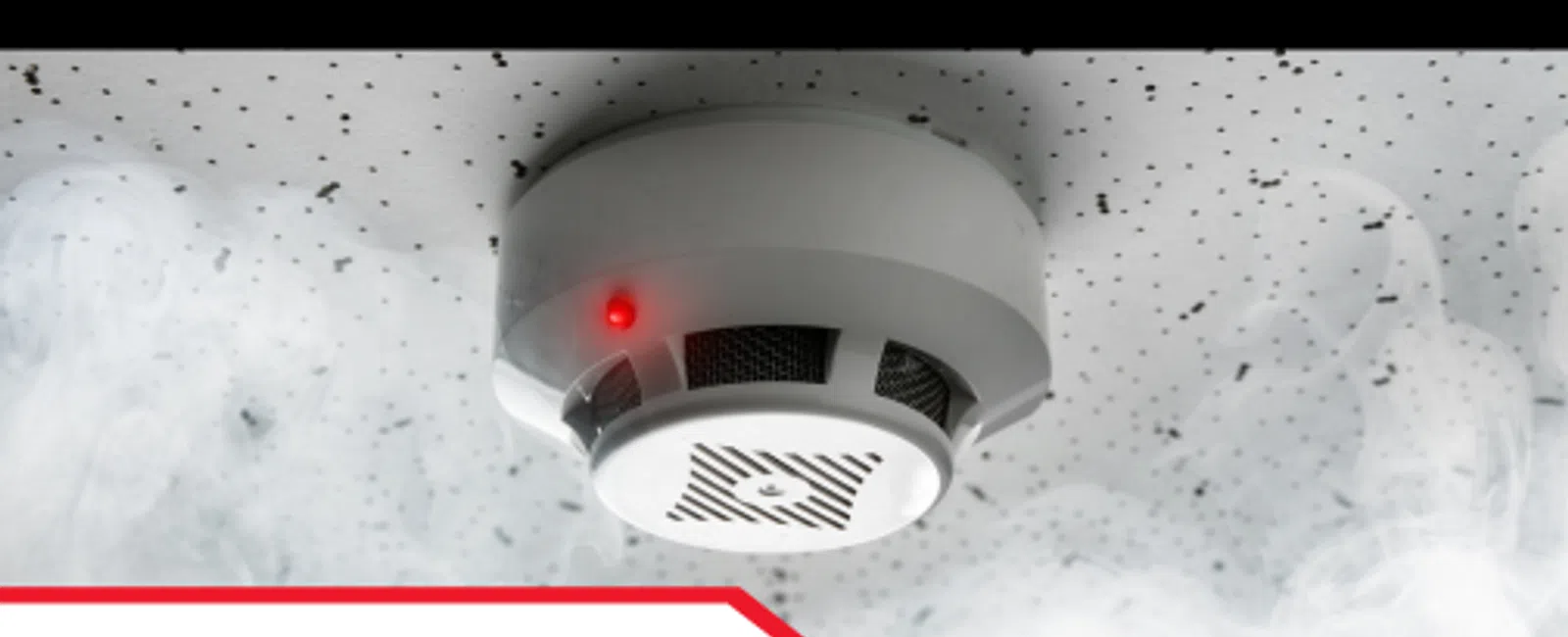
Smoke detectors are among the most important safety devices in any home, yet many homeowners assume that if a detector is present, the job is done. In reality, placement matters just as much as installation. A smoke detector mounted in the wrong location may not respond as intended, especially in homes with vaulted, gabled, or otherwise elevated ceiling designs. That is why even brand-new homes deserve a careful inspection before move-in.
During a new construction final inspection in Tennessee, Licensed Inspector Jared W. identified a smoke detector installed in the wrong location on a vaulted ceiling. The detector had been mounted in an area that created what he described as dead air space, meaning smoke could curl and collect beneath the detector rather than entering it in a way that would allow it to respond effectively. His observation is a strong reminder that a home can be beautifully finished and still contain overlooked safety details.
For buyers in Chattanooga, Nashville, and throughout the Southeast, inspections performed by LunsPro Inspection Group help identify issues that are easy to miss during a walkthrough but important to long-term safety and performance. Through thorough Southeastern Residential and Commercial Inspections, Licensed Inspectors evaluate more than cosmetic finishes. They assess visible conditions that can affect how the home functions, including critical life-safety components like smoke alarms.
A lot of homebuyers approach a new build with the assumption that everything has already been checked, approved, and installed correctly. It is easy to understand why. New homes often look clean, modern, and move-in ready. But construction projects involve many trades, multiple timelines, and a long list of details that have to come together correctly. Even skilled crews can miss something. That is why independent inspections remain valuable, even at the final stage of a brand-new home.
Smoke detectors are a perfect example of a small detail with major consequences. They are not decorative accessories or optional upgrades. They are safety devices designed to alert occupants to smoke conditions early enough to improve response time. When they are placed incorrectly, that purpose can be compromised. Jared's finding illustrates that a home inspection is not just about identifying leaks, structural concerns, or visible defects. It is also about confirming that the systems meant to protect the people inside the home are positioned to do their job.
Smoke Detectors Do More Than "Check a Box"
Most homeowners understand the basic purpose of a smoke detector: it detects smoke and sounds an alarm. But the effectiveness of that alarm depends on how smoke actually behaves in a room. Warm air and smoke do not move randomly. They rise, collect, and circulate based on the shape of the ceiling, nearby walls, and the air patterns within the room. That means a detector can be technically installed and still be in the wrong place for proper performance.
In homes with flat ceilings, placement can be more straightforward. But many homes in Tennessee and across the Southeast feature vaulted ceilings, cathedral ceilings, gables, and tray ceilings. Those architectural details can create areas where air movement behaves differently. If a detector is installed too high in a dead air pocket near the peak, it may not respond the way the homeowner expects. The device itself may work perfectly, but the location can limit its effectiveness.
That is the heart of what Jared W. identified during this new construction inspection. The issue was not the presence of the smoke detector. It was the placement of the smoke detector relative to the shape of the ceiling and the way smoke would move in that space.
What Is Dead Air Space?
Dead air space is an area where air does not circulate the same way it does in the rest of the room. In the context of smoke detectors, this matters because smoke may not travel directly into that pocket. Instead, it can curl around it, stall beneath it, or collect in a nearby area before reaching the detector.
In vaulted or gabled ceilings, dead air space often occurs very close to the peak. When a detector is installed too high in that zone, it may not be in the best path of smoke travel. Jared explained that in the home he inspected, the detector needed to be moved lower on the wall—approximately 12 inches down—so it would be outside that dead air space and in a more effective position.
That is a subtle detail, but it is a critical one. A smoke detector that is technically present but poorly positioned can create a false sense of security. Homeowners may assume the room is protected without realizing the detector is not located where it should be to perform at its best.
Why New Construction Still Needs Inspection
One of the most valuable parts of Jared's message is that this was found during a new construction final. That matters because it challenges a very common assumption: if a home is new, it must be right.
New homes absolutely deserve independent inspections. Builders, project managers, electricians, drywall crews, HVAC installers, painters, and trim teams may all work in the same home over a compressed timeline. A smoke detector can be mounted late in the process, and if someone is focused on getting the house to the finish line, placement details can be missed. It does not necessarily mean someone was careless; it means construction is complex, and independent verification matters.
This is especially true in fast-growing markets like Chattanooga and Nashville, where new construction has become a major part of the housing inventory. Buyers are often moving quickly, builders are managing multiple projects, and homes can go from framing to closing on tight schedules. In that environment, a final inspection is one of the best opportunities to catch overlooked items before the buyer takes possession.
Why Ceiling Shape Changes the Rules
Ceiling shape is not just an aesthetic choice. It changes how heat, smoke, and air move through a room. A standard ceiling may allow for straightforward smoke detector placement, but vaulted and cathedral ceilings require more attention to geometry.
In a vaulted room, the highest point of the ceiling may seem like the most logical place for a detector because smoke rises. But the highest point can also be where air movement becomes less predictable. If smoke curls and pools below that point rather than entering it, the detector may be less effective than one placed slightly lower and outside the dead air zone.
This is why professional inspectors look beyond "is it there?" and ask "is it installed where it should be?" That distinction is important. A house can have all the right components on paper and still need correction because one of those components is not positioned correctly.
Why This Matters for Families
Jared made a direct point in his commentary: something as simple as detector placement can put a family in danger. That is not an exaggeration. Smoke alarms are intended to provide early warning. If that early warning is delayed because the detector is not positioned effectively, occupants may lose valuable response time.
For families with children, older adults, or anyone who sleeps deeply, early notification becomes even more important. That is why home inspections should not be viewed only as a way to negotiate repairs or generate a punch list. They are also a way to evaluate whether the home is ready to protect the people living inside it.
A buyer may never think to question the location of a smoke detector in a vaulted room. Most people would not. That is exactly why an inspection matters. A Licensed Inspector brings a trained eye to details that a typical buyer is not expected to know.
The Broader Lesson: Small Safety Details Matter
This inspection also reinforces a broader lesson about homeownership and real estate: small details can carry big consequences. It is easy to focus on dramatic findings—foundation cracks, roof leaks, electrical defects—but life-safety details deserve just as much attention.
Examples of small but important inspection items include:
- Smoke detector placement
- Missing handrails
- Improperly installed guardrails
- Inaccessible shutoffs
- Missing GFCI protection where applicable
- Incomplete dryer vent connections
- Inadequate attic access clearances
Each of these may seem minor compared to a structural defect, but they affect how the home functions and how safely it supports the people inside it.
Why Chattanooga and Nashville Buyers Should Pay Attention
The Tennessee market includes a wide mix of housing stock, from historic homes and flips to fast-moving new construction communities. In Chattanooga, buyers may encounter homes with unique rooflines, custom ceiling designs, and a blend of older neighborhoods and modern builds. In Nashville, continued growth has brought a large volume of infill development, townhomes, and newly built single-family homes, many of which feature vaulted ceilings and modern layouts.
That matters because ceiling shape and detector placement are not theoretical issues in these markets. They show up in real homes, in real transactions, and in rooms where homeowners may assume everything was already done correctly. An independent inspection adds another layer of review before move-in and can help buyers catch details that otherwise blend into the finish work.
For buyers relocating into the area, this is even more valuable. Someone moving from another region may not know what construction trends are common in Tennessee or what details deserve extra attention in a newly built home. Working with Licensed Inspectors who understand Southeastern homes gives buyers better context and clearer information.
How Licensed Inspectors Evaluate More Than Appearance
A home inspection is not just a walkthrough with a flashlight. It is a structured evaluation of accessible systems and visible conditions, performed by someone trained to understand how homes are assembled and how components should function together.
In a case like this, a Licensed Inspector is not simply checking whether a smoke detector exists. They are looking at:
- The shape of the ceiling
- The detector's position relative to the peak
- Whether the location creates dead air space
- Whether the detector appears placed where it can function effectively
- Whether the installation aligns with best-practice safety expectations based on the visible conditions
That level of evaluation is what gives an inspection its value. It is not just a checklist. It is professional judgment applied to real-world conditions.
Why Buyers Should Not Skip the Final Inspection
A final inspection on a new build can feel optional when the house looks polished and the closing date is near. But this is often the most important time to bring in an independent inspector. By this stage, the home is largely complete, systems are in place, finishes are visible, and overlooked items can still be addressed before move-in.
For new construction buyers, a final inspection can help identify:
- Safety device placement concerns
- Roofing and flashing issues
- Plumbing leaks or incomplete connections
- HVAC airflow or temperature concerns
- Electrical defects
- Cosmetic and workmanship issues
- Missing insulation, underlayment, or support components depending on visibility
It is one of the last opportunities to evaluate the home as a finished product before the buyer assumes responsibility for it.
What Homeowners Can Take Away From Jared's Inspection
There are a few practical takeaways from this smoke detector finding:
1. New homes still need independent inspections.
A new build can still have installation mistakes, oversights, or safety issues.
2. Smoke detector placement matters.
The issue is not just whether a detector is installed, but whether it is installed where it can function effectively.
3. Vaulted ceilings require extra attention.
Architectural details can change how smoke moves and where detectors should be located.
4. Small corrections can have big safety value.
Jared's observation was not about tearing apart a system. It was about moving a detector to a better position so it can do its job.
5. A trained eye sees what buyers may miss.
Most homeowners would not walk into a vaulted room and evaluate smoke alarm placement. That is why professional inspections matter.
How LunsPro Inspection Group Helps Tennessee Buyers
LunsPro Inspection Group works with buyers, homeowners, and agents throughout the Southeast to provide clear, thorough property evaluations that go beyond surface-level observations. Through detailed Southeastern Residential and Commercial Inspections, their Licensed Inspectors help clients understand how a home is performing—not just how it looks.
That includes evaluating visible life-safety items, roofing systems, plumbing components, structural conditions, HVAC performance, electrical systems, and more. In markets like Chattanooga and Nashville, where both new construction and fast-paced transactions are common, that independent perspective can be especially valuable.
A polished home can still contain important issues. A brand-new house can still need corrections. And a smoke detector that looks perfectly fine can still be in the wrong place. That is why buyers bring in professionals who know how to look deeper.
The smoke detector issue identified by Licensed Inspector Jared W. is a strong example of why home inspections remain essential, even for brand-new homes. The detector was present, but it was installed in the wrong location for the shape of the ceiling, creating a dead air space that could limit its effectiveness. That kind of detail is easy to miss during a final walkthrough, but it matters because it directly affects how the home protects the people living in it.
For buyers in Chattanooga, Nashville, and throughout the Southeast, inspections performed by LunsPro Inspection Group provide more than a list of defects. They provide context, clarity, and an independent evaluation of how the home is actually put together. Through comprehensive Southeastern Residential and Commercial Inspections, Licensed Inspectors help homeowners understand both the visible condition of the property and the smaller safety details that can make a meaningful difference.
Ultimately, a good home inspection is about peace of mind—but it is also about performance. A smoke detector is only useful if it is placed where it can work the way it is intended to. Jared's finding is a reminder that even simple corrections can have serious value, and that a careful inspection is one of the best ways to make sure a home is truly ready for the family moving into it.