
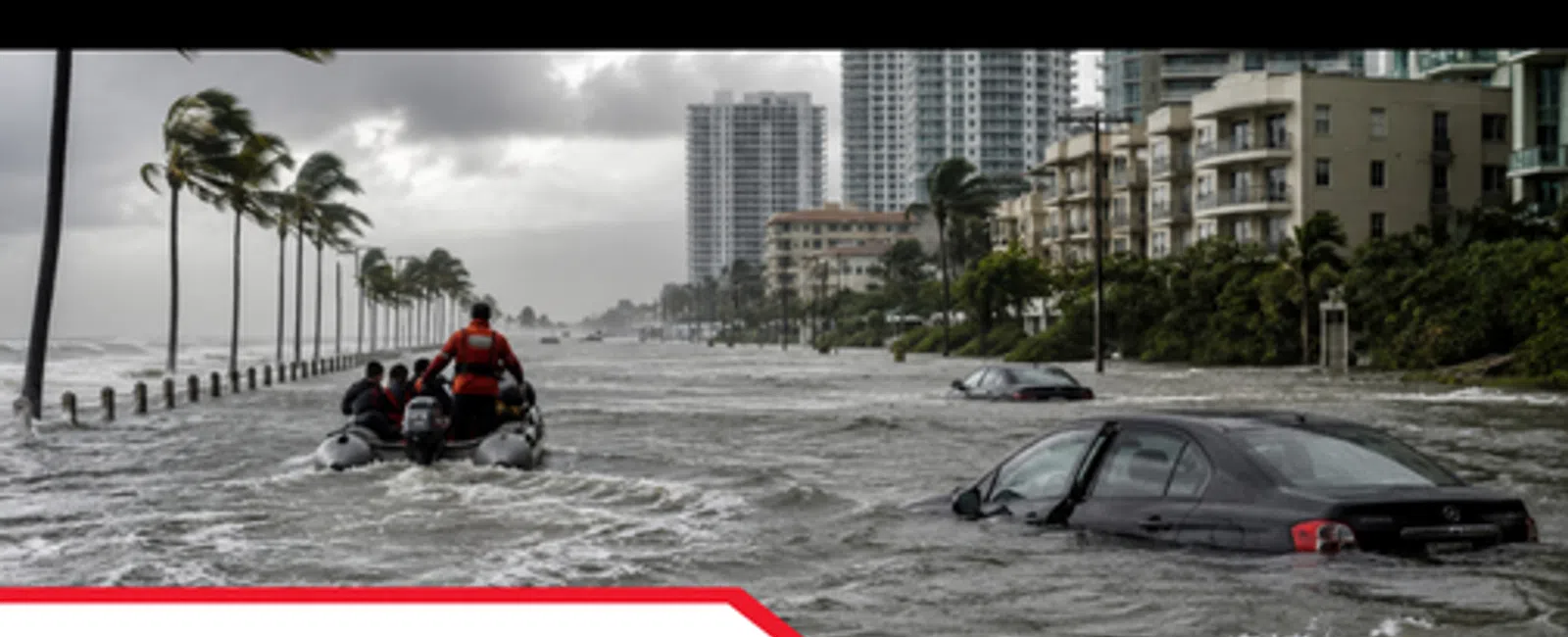
Flooding and stormwater accumulation can create significant property-condition considerations for commercial buildings. Water may affect foundations, exterior walls, flooring, electrical equipment, mechanical systems, and other components. Even properties outside mapped high-risk flood zones can experience drainage problems, localized water accumulation, or moisture intrusion during periods of heavy rainfall.
For commercial buyers, investors, owners, lenders, and property managers, evaluating a building in an area potentially exposed to flooding requires more than reviewing its location. A professional commercial property inspection can help identify visible drainage deficiencies, previous water damage, deterioration, and building-system conditions that may warrant further investigation. However, a commercial property inspection is not a formal flood-risk assessment, floodplain determination, elevation certification, or insurance evaluation.
Understanding the distinction between mapped flood hazards and observable property condition is essential. Flood maps provide information about potential hazards, while an inspection documents accessible physical conditions at a particular point in time. Together with property records, maintenance documentation, and specialized evaluations when appropriate, these resources can support more informed commercial property due diligence.
Why Flood Exposure Matters in Commercial Property Due Diligence
Commercial buildings can experience water-related damage through several pathways.
Floodwater may enter lower building levels, while heavy rainfall can overwhelm site drainage or create localized ponding. Roof drainage deficiencies, deteriorated exterior materials, and poorly managed runoff can also contribute to moisture intrusion.
Potential concerns include:
- Damage to interior finishes
- Moisture exposure affecting building materials
- Corrosion of mechanical or electrical components
- Foundation-related moisture conditions
- Erosion around exterior structures
- Deterioration of pavement and drainage systems
- Deferred maintenance following previous water intrusion
A commercial flood risk inspection is sometimes used as a search term for evaluating buildings in flood-prone areas. However, a general commercial property inspection does not calculate flood probability or determine whether a building meets flood-related regulatory or insurance requirements.
Its purpose is to document visible physical conditions that may be relevant to the property's maintenance and due-diligence needs.
Understanding Flood Maps and Property-Specific Conditions
Flood maps are important resources for commercial property research, but they serve a different purpose from physical inspections.
The Federal Emergency Management Agency's flood map resources explain how flood hazard information is developed and used to identify areas with varying levels of mapped flood exposure.
Buyers can also consult the FEMA Flood Map Service Center to locate official flood hazard information for a particular property.
These resources may help identify mapped flood zones and provide context for additional due-diligence questions.
However, flood maps do not guarantee whether an individual property will or will not experience flooding.
A building outside a mapped high-risk area may still encounter localized stormwater accumulation, while properties within mapped hazard areas may differ substantially in elevation, construction, drainage, and physical condition.
What Additional Information Should Buyers Review?
Depending on the transaction, buyers may consider:
- Official flood maps
- Property location
- Available elevation information
- Historical flooding disclosures
- Previous water intrusion
- Drainage modifications
- Prior repair records
- Site grading
- Available insurance-related repair documentation
An inspector cannot establish a complete flooding history through visual observations alone.
Flood-zone classification, insurance requirements, and elevation certification should be addressed through the appropriate official resources and qualified professionals.
Site Drainage and Stormwater Accumulation
Site drainage is one of the most relevant physical considerations when evaluating commercial buildings exposed to heavy rainfall.
A commercial building drainage inspection may involve visible observations of how water appears to move across the property and away from structures.
Depending on accessibility and scope, inspectors may evaluate:
- Site grading
- Parking lot drainage
- Storm drains
- Roof runoff discharge
- Downspouts
- Surface ponding
- Low-lying areas
- Erosion
- Retaining walls
- Drainage structures
The EPA's stormwater management guidance provides broader context regarding runoff management and practices intended to address stormwater impacts.
Commercial properties often contain extensive paved surfaces that influence runoff patterns. Parking lots, driveways, sidewalks, and loading areas may direct water toward drainage structures or, where deficiencies exist, allow water to accumulate near buildings.
Can Poor Drainage Affect Properties Outside Flood Zones?
Yes. Localized drainage deficiencies can occur regardless of mapped flood-zone classification.
For example, damaged drainage structures, poorly sloped pavement, blocked surface drains, or grading that directs runoff toward the building may contribute to unwanted water accumulation.
Visible ponding does not automatically establish a major drainage failure. Its significance depends on location, duration, surrounding conditions, and other available evidence.
A general commercial drainage assessment does not replace civil engineering, stormwater modeling, or specialized drainage design.
Foundations and Visible Structural Conditions
Water accumulation near a commercial building may influence foundation and surrounding soil conditions.
During a property inspection, accessible observations may include:
- Foundation walls
- Slabs
- Visible cracking
- Displacement
- Settlement indicators
- Moisture staining
- Erosion
- Accessible framing
- Previous repairs
The FEMA Building Science program provides broader information about how buildings can be affected by natural hazards and how building practices contribute to resilience.
For commercial due diligence, visible foundation conditions should be evaluated within the limitations of the inspection.
A crack or stain does not automatically indicate structural instability or previous flood damage.
Cracking can develop for different reasons, and determining structural significance may require additional evaluation by a qualified structural engineer.
Similarly, evidence of erosion near a foundation may justify further investigation without establishing that foundation movement has occurred.
Building Envelope and Water Intrusion
The building envelope helps protect interior spaces from exterior weather conditions.
A commercial water intrusion inspection may include observations of:
- Exterior walls
- Windows
- Doors
- Sealants
- Roof coverings
- Flashing
- Penetrations
- Lower-level building materials
- Visible water staining
- Previous repairs
Roof leakage and surface flooding are different moisture pathways, but both can affect interior materials.
The EPA's moisture control guidance for buildings emphasizes the importance of managing water through building-envelope design, construction, drainage, and maintenance.
Why Previous Water Damage Deserves Attention
Recurring water intrusion may affect ceilings, walls, insulation, flooring, and other moisture-sensitive materials.
An inspector may identify staining, damaged finishes, deteriorated materials, or evidence of previous repairs.
However, these observations do not necessarily establish whether the original moisture source remains active.
A previously repaired area may be performing appropriately, while recurring staining may indicate a condition requiring further investigation.
The inspection should document visible evidence without assuming that every stain resulted from flooding.
Mechanical and Electrical Equipment in Lower Areas
The location of building equipment can be relevant when evaluating a flood-prone commercial property.
Commercial buildings may contain important systems in basements, ground-level mechanical rooms, exterior equipment areas, or other relatively low locations.
These systems may include:
- Main electrical equipment
- Electrical distribution panels
- HVAC units
- Plumbing equipment
- Water heaters
- Pumps
- Mechanical controls
If water enters these areas, equipment may be exposed to moisture or physical damage.
A commercial inspector may document visible corrosion, staining, deterioration, equipment placement, or evidence of previous repairs.
However, equipment location alone does not establish that a building violates flood-related requirements.
A standard inspection does not certify flood protection, determine regulatory compliance, or evaluate whether equipment meets applicable elevation requirements.
Where concerns exist, further review by qualified electrical, mechanical, engineering, or floodplain professionals may be appropriate.
Previous Flood Damage and Repair Documentation
Commercial buyers may benefit from reviewing available records related to previous water intrusion or flooding.
Useful documentation may include:
- Prior water intrusion reports
- Flood-related repair records
- Replaced building materials
- Insurance-related repairs where disclosed
- Drainage improvements
- Mechanical equipment replacement
- Electrical repairs
- Previous remediation work
Documentation can help explain why certain materials or systems differ from surrounding components.
For example, newer flooring in a lower-level space does not independently establish previous flooding. It may reflect remodeling, routine replacement, or another reason.
Similarly, a replaced HVAC unit does not automatically indicate flood-related damage.
A physical inspection provides current observable information, while historical documentation may help clarify previous events.
Moisture, Staining, and Suspected Microbial Growth
Water exposure may contribute to deterioration of certain building materials when moisture remains unresolved.
Visible observations may include:
- Water staining
- Swollen or deteriorated finishes
- Damaged ceiling materials
- Flooring deterioration
- Corrosion
- Suspected microbial growth
These findings should be described carefully.
Visible staining is evidence of discoloration, not automatic proof of active leakage or mold contamination.
Likewise, suspected microbial growth should not be identified as a particular mold species based solely on appearance.
A standard commercial inspection does not necessarily include mold sampling, laboratory analysis, indoor-air-quality testing, or environmental assessment.
Where significant moisture or suspected microbial conditions are observed, specialized evaluation may be recommended.
How Flood-Related Findings Affect Commercial Due Diligence
Physical observations associated with drainage, moisture, or previous water exposure can help buyers organize property-related concerns.
Depending on the findings, a commercial property inspection may support several planning activities.
Immediate Repair Planning
Active leakage, significant drainage obstructions, damaged electrical components, or deteriorated materials may require prompt attention.
Deferred Maintenance Identification
Deteriorated sealants, damaged drainage structures, neglected roof maintenance, or recurring water intrusion may indicate postponed maintenance.
Capital Expenditure Considerations
Major repairs involving roofing, building envelopes, pavement, drainage, or mechanical equipment may create future capital needs.
Specialist Evaluations
Qualified professionals may be needed to evaluate structural concerns, drainage performance, electrical equipment, waterproofing, or previous water damage.
Cost-to-Cure Planning
When substantial deficiencies are identified, contractor estimates or Cost-to-Cure Assessments may help stakeholders understand potential repair expenditures.
Property Condition Assessments
Depending on the transaction, findings may be incorporated into a Property Condition Assessment, Building Condition Assessment, or Investor & Lender Package.
These services provide information about physical property condition. They do not replace formal flood-risk modeling, elevation certification, insurance evaluation, environmental assessment, or engineering.
What Does a Commercial Flood Risk Inspection Actually Determine?
The phrase commercial flood risk inspection can be misleading if it suggests that a general building inspector determines future flooding probability.
A commercial property inspection may identify visible conditions associated with water intrusion, drainage, moisture damage, and previous repairs.
It may also document apparent site characteristics that deserve additional investigation.
However, it does not determine:
- Official flood-zone classification
- Future flooding probability
- Flood insurance eligibility
- Insurance premiums
- Required flood coverage
- Certified building elevation
- Floodplain regulatory compliance
- Engineering adequacy of flood-protection measures
These questions require separate information, official determinations, or appropriately qualified professionals.
For commercial buyers, the most effective approach is to consider physical inspection findings alongside flood maps, property history, available elevation information, and specialized evaluations when appropriate.
Commercial Property Inspections in Southeast Markets
Commercial properties throughout the Southeast can experience varying combinations of heavy rainfall, stormwater accumulation, drainage challenges, and moisture-related conditions.
However, flood exposure differs substantially among individual properties.
LunsPro Inspection Group provides commercial inspection services in Georgia, Florida, and North Carolina, including Savannah, Jacksonville, Atlanta, Charlotte, Raleigh, and Greensboro.
A commercial property near a coastal area in Savannah or Jacksonville may present different drainage and moisture considerations from a building in Atlanta, Charlotte, or Raleigh.
Even within the same city, elevation, grading, surrounding development, drainage infrastructure, and construction characteristics can vary significantly.
For this reason, commercial property flood concerns should be evaluated according to the individual property rather than assumptions based solely on its city or region.
Making Informed Decisions About Flood-Prone Commercial Properties
Evaluating commercial buildings in areas potentially exposed to flooding requires a clear distinction between mapped hazards and current physical property condition. Flood maps and official flood information can help buyers understand broader exposure considerations, while a commercial property inspection documents visible building and site conditions at the time of evaluation.
Drainage deficiencies, foundation moisture, roof leakage, deteriorated exterior materials, and water-damaged components may warrant additional attention. However, visible symptoms do not automatically establish previous flooding, structural instability, active mold contamination, or future flood probability.
For commercial buyers, investors, lenders, owners, and property managers, combining inspection findings with property records, maintenance documentation, flood information, and specialist evaluations can provide a more complete due-diligence picture.
LunsPro Inspection Group supports commercial property evaluations throughout Georgia, Florida, and North Carolina through commercial inspections, Property Condition Assessments, Building Condition Assessments, Cost-to-Cure Assessments, and Investor & Lender Packages. These services can help stakeholders understand observable property conditions and potential maintenance needs while recognizing that formal flood-risk assessments, floodplain determinations, insurance evaluations, elevation certifications, and engineering studies remain separate professional services.