
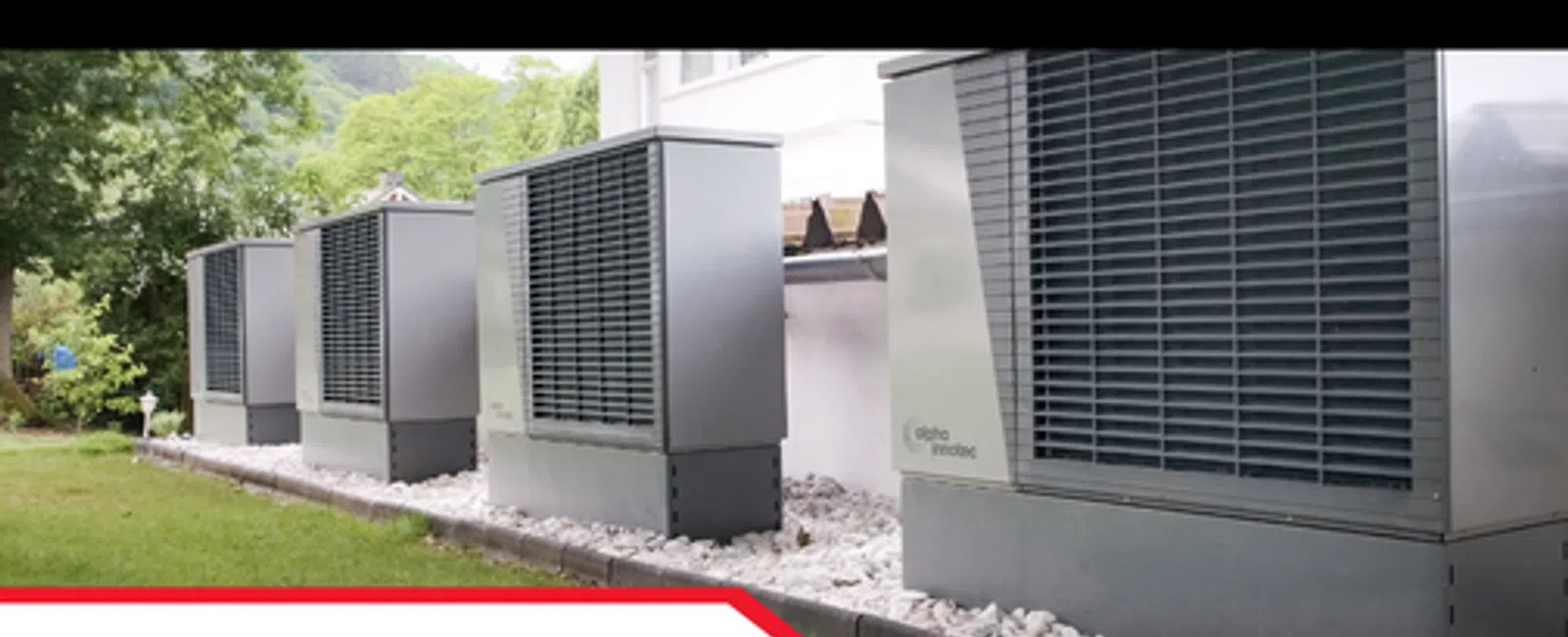
Heating, ventilation, and air-conditioning systems can be a significant consideration when purchasing commercial real estate. Depending on the property, HVAC equipment may serve offices, retail spaces, warehouses, restaurants, medical facilities, multifamily common areas, or other specialized environments. A building may have one primary system or numerous pieces of equipment installed at different times.
For commercial buyers and investors, understanding commercial property HVAC condition can provide useful information for due diligence, maintenance planning, and potential capital expenditures. HVAC equipment that appears operational during an inspection may still have maintenance needs, while older equipment is not automatically in need of immediate replacement. Age is most useful when considered alongside physical condition, service history, repairs, operation, and the requirements of the property.
A commercial HVAC inspection performed as part of a broader property inspection provides a snapshot of visible and accessible conditions. It should not be confused with detailed mechanical diagnostics, HVAC engineering, load calculations, energy audits, indoor-air-quality testing, or equipment certification.
Why HVAC Condition Matters in Commercial Due Diligence
HVAC systems can affect occupant comfort, building operations, moisture management, energy use, and maintenance budgets.
The U.S. Department of Energy's heating and cooling guidance provides general information about heating and cooling equipment, efficiency, and maintaining comfortable indoor conditions. Commercial systems can be considerably more complex than typical residential equipment, but the basic principle remains: HVAC performance depends on more than one component.
For a commercial buyer, HVAC due diligence can help answer several practical questions:
- What equipment is present?
- What visible condition is it in?
- Is it operating when conditions permit testing?
- Are there signs of leakage or corrosion?
- Does maintenance appear current?
- Are there visible repairs or modifications?
- Should an HVAC specialist perform further evaluation?
These questions can help buyers distinguish routine maintenance needs from conditions that may require additional investigation.
Commercial HVAC Configurations Vary Widely
There is no single type of commercial HVAC system.
Equipment varies according to building size, age, occupancy, climate, construction, and intended use. Buyers may encounter:
- Rooftop packaged units
- Split systems
- Heat pumps
- Boilers
- Chillers
- Air handlers
- Exhaust systems
- Ductwork
- Building controls
- Specialized equipment associated with a property's use
A small commercial building may use equipment similar to residential systems. A large office, retail center, or institutional property may contain numerous rooftop units or a more centralized mechanical system.
This variation is one reason inspection scope matters. A general commercial HVAC system inspection can document visible conditions, but specialized systems may require evaluation by commercial HVAC contractors, engineers, controls specialists, or other qualified professionals.
Equipment Age Is Only One Part of the Picture
Buyers naturally want to know how old major HVAC equipment is because eventual replacement can represent a substantial expense.
Where equipment labels are accessible and legible, inspectors may be able to document manufacturer information and approximate age. That information can help establish context, but age alone should not determine whether equipment needs immediate replacement.
A commercial inspector may also consider:
- Visible physical condition
- Corrosion
- Damage
- Previous repairs
- Maintenance condition
- Unusual sounds
- Accessible components
- Evidence of leakage
- Equipment labeling
- Apparent alterations
Two HVAC units of similar age may be in very different condition depending on their maintenance history, operating environment, usage, and previous repairs.
Similarly, newer equipment is not automatically free from deficiencies.
A balanced HVAC inspection for commercial property therefore considers age as one data point rather than a prediction of failure.
Rooftop HVAC Units Need More Than Mechanical Attention
Packaged rooftop units are common on many retail, office, restaurant, and other commercial buildings.
Because these units sit directly on the roof, HVAC condition and roof condition can become closely connected.
A rooftop HVAC inspection may include visible observations of:
- Equipment cabinets
- Corrosion
- Physical damage
- Accessible components
- Roof curbs
- Flashing
- Electrical connections where visible
- Condensate drainage
- Service access
- Evidence of previous repairs
Roof penetrations and equipment curbs deserve particular attention.
Deteriorated flashing, damaged curbs, improperly managed condensate, or modifications around rooftop equipment may contribute to roof maintenance concerns. Likewise, roofing work performed around existing mechanical equipment may create visible conditions that deserve further investigation.
The commercial inspector's role is to identify these relationships without attempting to perform specialized HVAC diagnostics or roofing engineering.
Condensate Drainage Can Affect More Than the HVAC System
Air-conditioning systems remove moisture from indoor air, producing condensate that must be managed appropriately.
Visible condensate-related conditions can include:
- Blocked drains
- Damaged drain lines
- Leakage
- Improper discharge
- Standing water
- Corrosion
- Water staining
- Moisture around equipment
A condensate issue can begin as an HVAC maintenance concern and eventually affect ceilings, walls, roof surfaces, insulation, or other building materials.
The EPA's guidance on heating, ventilation, and air conditioning discusses the relationship among HVAC operation, ventilation, moisture, and indoor environmental conditions.
For property buyers, this connection is important. An HVAC observation may need to be considered alongside broader moisture and building-envelope findings rather than as an isolated mechanical issue.
Ductwork and Air Distribution Systems
Where accessible, commercial inspectors may observe portions of the air-distribution system.
Potential observations include:
- Ductwork condition
- Damaged insulation
- Registers
- Diffusers
- Air handlers
- Disconnected components
- Visible deterioration
- Moisture
- Visible debris or contamination
- Alterations
Much of a commercial duct system may be concealed above ceilings, behind finishes, or in inaccessible mechanical spaces.
Visible contamination or staining also should not be used to make unsupported conclusions about indoor air quality.
A standard property inspection does not determine contaminant concentrations, ventilation rates throughout the building, or the complete cleanliness of concealed ductwork.
HVAC, Ventilation, and Indoor Air Quality
HVAC systems can influence ventilation, temperature, humidity, filtration, and air movement within a building.
The EPA Building Air Quality Guide for building owners and facility managers provides broader guidance on building operation, HVAC maintenance, ventilation, moisture, and indoor environmental conditions.
During a commercial inspection, visible HVAC conditions may help identify issues deserving attention. An inspector might note damaged ductwork, standing water near equipment, deteriorated filters, or apparent maintenance deficiencies.
Those observations do not constitute comprehensive indoor-air-quality testing.
When concerns involve contaminants, occupant health complaints, ventilation performance, microbial growth, or other specialized environmental questions, an indoor-air-quality professional, industrial hygienist, mechanical engineer, or other appropriate specialist may be needed.
What Can Operational Testing Tell a Buyer?
When equipment is accessible, conditions are appropriate, and the inspection scope permits, an inspector may operate HVAC systems using normal controls.
This can provide useful information about whether the equipment responds at the time of inspection.
It is still only a snapshot.
Short-term operation cannot guarantee future performance. It may not reproduce the conditions of peak summer or winter demand, full occupancy, or extended daily operation.
A unit that produces conditioned air during an inspection has demonstrated some functionality at that moment. That does not establish its exact capacity, efficiency, remaining service life, or ability to satisfy every future tenant configuration.
Detailed performance testing and load analysis require specialized evaluation.
Maintenance Records Add Valuable Context
Physical inspection tells buyers what can be observed today. Maintenance documentation can help explain how the equipment reached its current condition.
When available, buyers may benefit from reviewing:
- Preventive maintenance records
- Service history
- Equipment replacement dates
- Major repair records
- Warranty information
- Maintenance agreements
For example, records may identify a compressor replacement that is not obvious from exterior observation or establish when a rooftop unit was installed.
The WBDG guidance on facilities operations and maintenance emphasizes the importance of organized maintenance and facility management throughout a building's service life.
Records are valuable, but they do not replace inspection. A recently serviced unit can still have an observable deficiency, just as a property with incomplete records may have equipment that appears well maintained.
The strongest due diligence combines documentation with current physical observations.
Tenant Improvements Can Affect HVAC Systems
Multi-tenant commercial properties create additional HVAC considerations.
Over time, suites may be divided, combined, renovated, or converted to new uses. These changes can lead to:
- Added ductwork
- Relocated diffusers
- New exhaust systems
- Additional HVAC equipment
- Modified controls
- New roof penetrations
- Changed occupancy patterns
A system originally configured for conventional retail space, for example, may later serve a tenant with substantially different operational needs.
Visible alterations do not automatically indicate a deficiency. They do, however, provide context that may justify further mechanical evaluation.
A commercial property inspection does not determine whether an HVAC design is properly sized for every current or proposed use.
Energy Efficiency and Equipment Upgrades
Energy use can become part of the acquisition discussion when buyers encounter aging or inefficient building systems.
The U.S. Department of Energy Federal Energy Management Program's information on energy-efficient products and technologies provides broader context for evaluating energy-efficient equipment and potential building upgrades.
Efficiency considerations can be useful when planning future improvements, but a standard commercial inspection is not an energy audit.
Inspectors generally do not calculate projected energy savings, compare detailed equipment-efficiency scenarios, or prescribe specific replacement systems.
If energy performance is an important acquisition objective, buyers may benefit from a dedicated energy assessment or mechanical engineering analysis.
Common Commercial HVAC Problems Inspectors May Observe
The phrase commercial HVAC problems can include many different conditions, ranging from routine maintenance needs to significant equipment concerns.
Examples may include:
- Corrosion
- Damaged cabinets
- Missing or damaged components
- Condensate leakage
- Water staining
- Deteriorated insulation
- Damaged ductwork
- Unusual noise
- Equipment that does not respond to controls
- Questionable modifications
- Apparent deferred maintenance
Not every deficiency requires equipment replacement.
Some findings may require maintenance or relatively limited repairs. Others may justify a more detailed HVAC contractor evaluation before the buyer can understand the scope of work.
When Should a Commercial HVAC Contractor Be Called?
Further evaluation may be appropriate when an inspection identifies conditions such as:
- Equipment that does not operate
- Significant corrosion
- Active or apparent leakage
- Unusual sounds
- Poor temperature response
- Damaged ductwork
- Questionable modifications
- Significant deferred maintenance
- Equipment facing a major repair or replacement decision
A qualified commercial HVAC contractor can perform testing and diagnostics beyond the scope of a general inspection.
Mechanical engineers may also be needed when questions involve system design, capacity, ventilation calculations, load analysis, or significant changes in building use.
This distinction is especially important for buyers planning renovations or tenant changes.
HVAC Findings and Capital Planning
HVAC findings can influence commercial due diligence even when the equipment is currently operating.
Inspection observations may help buyers organize needs into categories such as:
Immediate Repairs
Active leakage, damaged components, non-operating equipment, or other deficiencies that may require prompt evaluation.
Deferred Maintenance
Corrosion, neglected servicing, deteriorated insulation, condensate concerns, or other conditions indicating maintenance has been postponed.
Specialist Evaluations
Commercial HVAC contractors, electricians, roofers, controls specialists, or engineers may be appropriate depending on the observed conditions.
Replacement Planning
Equipment age, physical condition, maintenance history, repairs, and specialist findings can collectively inform future replacement planning.
Capital Expenditure and Cost-to-Cure Considerations
When HVAC deficiencies could represent significant expenditures, buyers may obtain property-specific contractor estimates or incorporate findings into a Cost-to-Cure Assessment.
A general commercial inspector should not provide precise replacement costs without adequate property-specific information.
Commercial HVAC Inspections in Georgia, Florida, and North Carolina
HVAC inspection priorities vary by property type and market.
LunsPro Inspection Group provides commercial inspection services in Georgia, Florida, and North Carolina, including markets such as Atlanta, Athens, Savannah, Jacksonville, Charlotte, Raleigh, and Greensboro.
A large retail property in Atlanta may contain numerous rooftop units. A Jacksonville building may present different corrosion, condensate, or moisture-management considerations. An office property in Charlotte or Raleigh may use a different mechanical configuration entirely.
Even buildings of similar size can have substantially different systems because of age, construction, renovations, tenant improvements, occupancy, and previous equipment replacements.
For that reason, commercial HVAC inspections should be based on the actual building and its equipment rather than assumptions about a particular property type.
HVAC systems can represent an important operational, maintenance, and capital consideration in commercial real estate. Buyers may encounter rooftop packaged units, split systems, heat pumps, boilers, chillers, air handlers, exhaust systems, extensive ductwork, and building controls, sometimes within the same property.
A commercial property inspection can help document visible HVAC condition, corrosion, leakage, maintenance concerns, equipment operation, condensate management, accessible ductwork, rooftop conditions, and apparent alterations. Combined with maintenance records and specialist evaluations when needed, those findings can give buyers a clearer picture of the building's mechanical condition.
The limits of the inspection are equally important. A general commercial HVAC inspection does not replace specialized diagnostics, mechanical engineering, load calculations, indoor-air-quality assessments, energy audits, or equipment certification. Short-term operation also cannot guarantee future performance or determine exact remaining service life.
For commercial buyers in Georgia, Florida, and North Carolina, the goal of HVAC due diligence is not to predict exactly when equipment will fail. It is to understand what is installed, what condition is visible today, what maintenance appears necessary, and where further professional evaluation may be appropriate. That information can support better repair planning, capital budgeting, Cost-to-Cure considerations, and overall commercial property decision-making.