
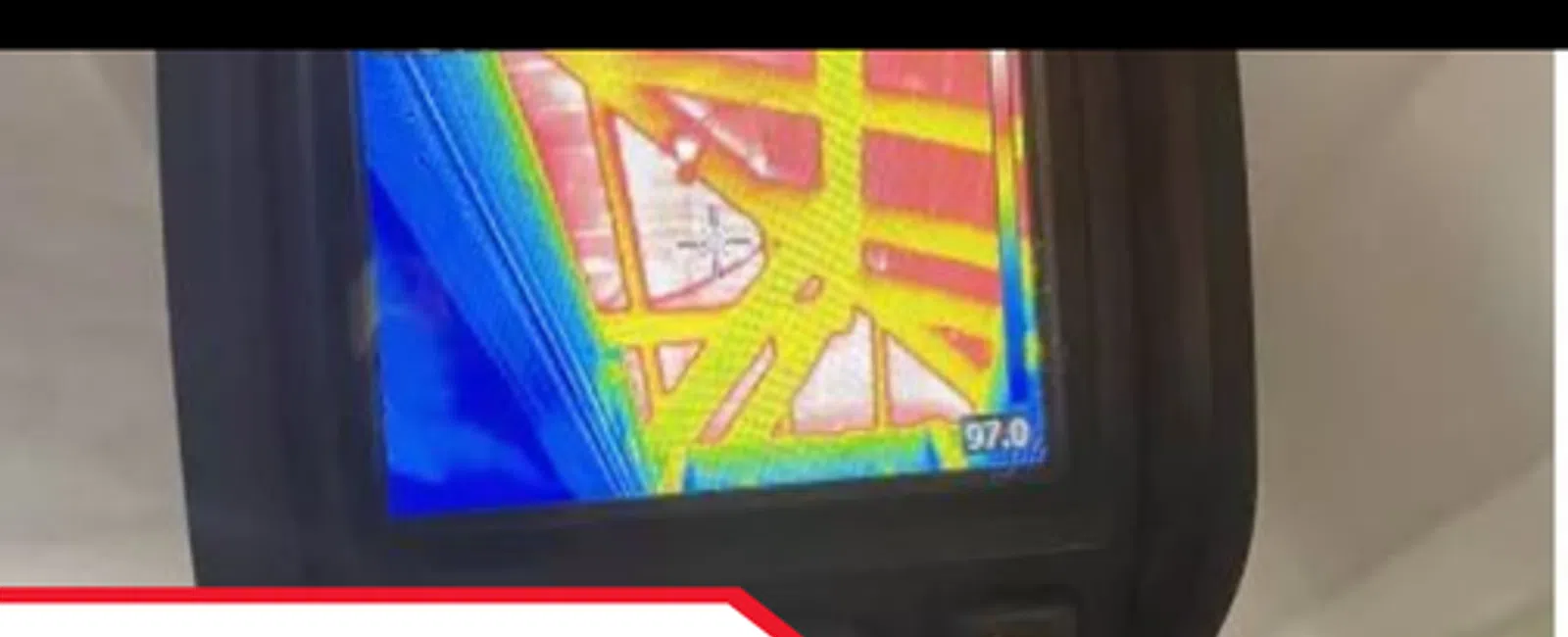
Some conditions in a home are easy to see during a professional inspection. A water stain on a ceiling, damaged insulation in an attic, or visible deterioration around a window may immediately draw attention. Other conditions can be less obvious because the first indication is not something the inspector can see with the naked eye. Instead, it may appear as a difference in surface temperature.
An infrared home inspection uses thermal imaging to help identify these temperature patterns. An infrared camera can highlight areas that are warmer or cooler than surrounding surfaces, giving the inspector additional information that may warrant closer investigation. Depending on the circumstances, unusual patterns can be associated with moisture, insulation differences, air movement, HVAC operation, or certain electrical conditions.
Infrared technology has important limitations, however. Thermal cameras do not literally see through walls, ceilings, or floors. They measure surface-temperature differences. Those patterns must then be interpreted in the context of the home, environmental conditions, visual observations, and other supporting information. Used appropriately, home inspection thermal imaging can supplement a professional inspection rather than replace it.
How Does Infrared Thermal Imaging Work?
Everything around us has a temperature, and surfaces emit infrared energy that changes with temperature.
An infrared camera detects this energy and converts temperature differences into a visual image. Warmer and cooler areas appear as different colors or shades depending on the camera settings.
The U.S. Department of Energy's guidance on thermographic inspections explains how infrared scanning can be used to identify thermal irregularities and how appropriate temperature differences are important when evaluating building conditions.
This means an infrared camera home inspection does not create an X-ray-like image of what is inside a wall.
If an inspector scans a ceiling and sees a cooler area, the camera is detecting a surface-temperature difference at that location. It does not directly show a leaking pipe, wet insulation, missing insulation, or another concealed component.
The thermal pattern is evidence that the area may deserve further investigation.
Can Thermal Cameras See Through Walls?
No. This is one of the most important misconceptions about infrared inspections.
A thermal camera reads the temperature of visible surfaces. It cannot look through drywall and produce an image of pipes, wiring, framing, insulation, or moisture hidden behind the wall.
Conditions behind a surface may sometimes influence its temperature, creating a pattern that can be detected by the camera. However, several different conditions can produce similar thermal patterns.
Professional interpretation is therefore essential.
An inspector should consider the thermal image together with the location, building materials, HVAC operation, weather, visual observations, and other available information before determining the appropriate next step.
Environmental Conditions Affect Thermal Images
A meaningful thermal imaging inspection depends heavily on conditions at the time of inspection.
Factors that can influence surface temperatures include:
- Indoor temperature
- Outdoor temperature
- HVAC operation
- Sun exposure
- Building materials
- Air movement
- Moisture
- Time of day
- Recent rainfall
- Recent weather conditions
For example, direct afternoon sunlight can heat an exterior wall or roof and influence temperatures inside the building. HVAC operation may create temperature differences around supply registers or ductwork. Recent rain may change moisture and temperature patterns in building materials.
The greater the useful temperature difference between spaces or surfaces, the easier certain thermal patterns may be to interpret. When temperature differences are limited, some conditions may not produce a meaningful thermal signature.
Can Infrared Detect Moisture?
Infrared imaging can sometimes identify temperature patterns that are consistent with moisture, but it does not directly confirm that moisture is present.
Wet and dry materials can behave differently thermally. Evaporation can also cool a surface under certain conditions. As a result, moisture may sometimes create a cooler or otherwise unusual thermal pattern compared with surrounding materials.
Potential areas where these patterns may appear include:
- Ceilings
- Walls
- Areas around windows
- Plumbing locations
- Roof-leak locations
- HVAC equipment
- Bathrooms
- Areas below plumbing fixtures
However, a cooler area on a thermal image is not automatically a leak.
Insulation differences, air movement, HVAC effects, shading, building materials, or other factors may create similar patterns.
That is why an infrared moisture inspection should use thermal imaging as a screening and investigative tool rather than a standalone moisture test.
Thermal Findings Should Be Verified
When a suspicious thermal pattern is identified, the next step is often to investigate the area using additional information.
Depending on the circumstances, an inspector may use:
- Visual inspection
- A moisture meter
- Surrounding building conditions
- Plumbing observations
- Roof observations
- HVAC observations
The EPA's Moisture Control Guidance emphasizes the importance of identifying and controlling moisture sources involving roofs, walls, foundations, plumbing, HVAC systems, and drainage.
Infrared imaging can help direct attention to an area, but determining whether moisture is actually present and identifying its source may require supporting measurements or further evaluation.
Likewise, thermal imaging does not diagnose mold. Suspected microbial growth requires appropriate assessment when warranted.
Thermal Imaging Can Help Evaluate Insulation Patterns
Insulation affects how heat moves through walls, ceilings, and attics.
Under suitable conditions, thermal imaging for insulation may reveal patterns consistent with:
- Missing insulation
- Displaced insulation
- Uneven insulation
- Thermal bridging
- Air leakage
- Differences between insulated areas
For example, an area of ceiling with significantly different thermal characteristics from surrounding areas may warrant further investigation of attic insulation where access is available.
The Building Science Education resources provide broader technical information about insulation, air movement, moisture management, and building-envelope performance.
As with moisture observations, thermal patterns do not independently prove what is behind the surface.
An unusual wall or ceiling temperature may result from insulation, framing, sunlight, ductwork, air movement, moisture, or another condition. When possible, visual verification from an attic or other accessible area can provide valuable supporting information.
Can Infrared Find Air Leaks?
Thermal imaging can sometimes help identify patterns associated with unwanted air movement.
Areas commonly investigated may include:
- Windows
- Exterior doors
- Attic accesses
- Exterior penetrations
- Wall-to-ceiling transitions
- Other building-envelope transitions
The U.S. Department of Energy's air-sealing guidance discusses common locations where uncontrolled air leakage can affect a home's energy performance and comfort.
If outdoor and indoor temperatures differ sufficiently, incoming air may influence the temperature of nearby surfaces. This can sometimes produce a recognizable pattern on a thermal image.
However, an infrared inspection is not the same as a comprehensive air-leakage assessment.
Blower-door testing and other specialized diagnostic procedures can create controlled pressure differences and provide more detailed information about building air leakage.
Infrared Imaging and HVAC Systems
Thermal imaging can provide useful supplemental observations when evaluating heating and cooling systems.
An inspector may use an infrared camera to look at temperature patterns involving:
- Supply registers
- Return areas
- Ceilings near ductwork
- HVAC equipment
- Condensate-related areas
- Rooms with uneven heating or cooling
For example, temperature patterns at supply registers may help confirm that conditioned air is reaching different areas of the home during the inspection.
Unusual patterns near ductwork may also provide clues that deserve additional investigation.
However, thermal imaging does not measure airflow volume, refrigerant charge, static pressure, system capacity, or overall HVAC efficiency.
An unusual thermal pattern may justify evaluation by a qualified HVAC professional, but an infrared scan does not replace specialized mechanical diagnostics.
Can Infrared Detect Duct Leakage?
Thermal imaging may sometimes identify patterns that suggest conditioned air is affecting surfaces near ductwork.
That information can be useful, particularly where ducts run through attics or other unconditioned spaces.
However, a thermal image alone cannot confirm the exact location, extent, or cause of duct leakage.
Specialized duct testing may be necessary when a more detailed evaluation is needed.
This distinction helps prevent thermal imaging from being treated as more definitive than it actually is.
Electrical Components and Unusual Heat Patterns
Electrical components can generate heat during normal operation.
When accessible electrical equipment is under load, thermal imaging may sometimes identify components or connections that appear unusually warm relative to surrounding components.
That does not mean every warm electrical component is defective.
Electrical loads, equipment design, surrounding temperatures, and operating conditions can all influence the thermal image. Some components are expected to operate warmer than others.
When an inspector observes an unusual heat pattern in accessible electrical equipment, the appropriate response may be to recommend further evaluation by a licensed electrician.
An infrared home inspection does not replace electrical testing, specialized diagnostics, or professional electrical repair.
Infrared Imaging and Home Energy Assessments
Thermal imaging can provide useful energy-related information, particularly when evaluating insulation patterns and possible air leakage.
However, an infrared-enhanced home inspection should not be confused with a comprehensive energy assessment.
The U.S. Department of Energy's home energy assessment guidance explains how professional energy assessments may use specialized tools and procedures to evaluate a home's energy use and identify efficiency opportunities.
A standard home inspection has a different objective.
Its purpose is to evaluate visible and accessible property conditions for the client. Thermal imaging expands the inspector's observational capabilities, but it does not turn the inspection into an energy audit.
What Are the Limitations of Thermal Imaging?
Understanding the limitations of infrared technology is just as important as understanding its benefits.
Infrared Cameras Measure Surface Temperatures
The camera does not see directly inside walls, ceilings, floors, or equipment.
It shows the temperature pattern of the visible surface.
Temperature Differences May Be Insufficient
Some conditions are easier to identify when indoor and outdoor temperatures differ significantly.
If temperatures are similar, an insulation deficiency or air-leakage pattern may be difficult or impossible to distinguish.
Solar Heating Can Affect Results
Sunlight can heat roofs, walls, windows, and other materials.
These effects can persist even after direct sunlight has moved away from the surface.
HVAC Operation Changes Thermal Patterns
Heating and cooling systems can create temperature differences throughout a home.
Recent HVAC operation can therefore influence what appears on the camera.
Furniture and Finishes Can Limit Visibility
Cabinets, furniture, stored belongings, wall coverings, and other finishes can block surfaces from view.
The camera cannot evaluate a surface it cannot see.
Inaccessible Areas Remain Inaccessible
Infrared technology does not eliminate physical access limitations.
If a space or surface cannot be safely viewed, thermal imaging may not provide useful information about it.
Similar Patterns Can Have Different Causes
A cool area on a wall could relate to moisture, insulation, air movement, ductwork, shading, or construction details.
This creates the potential for false positives or ambiguous findings if images are interpreted without appropriate context.
Thermal Imaging Is Not a Guarantee
Not every concealed condition produces a detectable temperature difference.
An infrared scan cannot guarantee that a home is free from hidden leaks, insulation deficiencies, electrical problems, or other concealed conditions.
For these reasons, a thermal inspection is best viewed as a diagnostic aid used alongside visual inspection, moisture measurements, system operation, and professional judgment.
Why Thermal Imaging Can Be Useful in Southeast Homes
Homes across the Southeast experience conditions that can make thermal imaging a useful supplemental inspection tool.
Hot summers, substantial cooling demands, humidity, heavy rainfall, attic heat, and seasonal temperature changes can create opportunities to evaluate temperature patterns related to HVAC operation, insulation, building envelopes, plumbing, and moisture.
That does not mean every Southeastern home has moisture problems, insulation deficiencies, air leakage, or HVAC concerns.
Rather, an infrared inspection for homebuyers can provide another source of information when conditions are appropriate.
LunsPro Inspection Group provides residential inspection services throughout markets in Georgia, North Carolina, South Carolina, Tennessee, and Florida, including Atlanta, Athens, Savannah, Charlotte, Raleigh, Greensboro, Greenville, Charleston, Nashville, Chattanooga, and Jacksonville.
Homes across these markets vary substantially in age, construction, insulation, roofing, HVAC design, and building-envelope configuration. Thermal imaging findings should therefore be interpreted according to the individual property rather than regional assumptions.
Infrared thermal imaging gives inspectors another way to observe a home, but it is important to understand what the technology actually does. A thermal camera detects surface-temperature differences. It does not see through walls or directly identify concealed leaks, mold, missing insulation, electrical defects, or other hidden conditions.
When used during a professional infrared home inspection, unusual temperature patterns can help direct attention toward areas that deserve closer investigation. Those patterns may be associated with moisture, insulation differences, air movement, HVAC operation, or electrical conditions, but supporting evidence is necessary before determining their significance.
Environmental conditions also matter. Weather, sunlight, HVAC operation, building materials, air movement, and temperature differences can all influence what appears on the camera. Some concealed conditions may produce no useful thermal signature at all.
For homeowners and homebuyers throughout Georgia, North Carolina, South Carolina, Tennessee, and Florida, thermal imaging home inspection technology can be a valuable supplement to traditional visual inspection when used appropriately. Its greatest benefit is not the ability to provide a definitive answer from a colorful image. It is the ability to identify temperature anomalies, investigate them with additional methods when appropriate, and give the inspector another tool for understanding the condition of the home.