
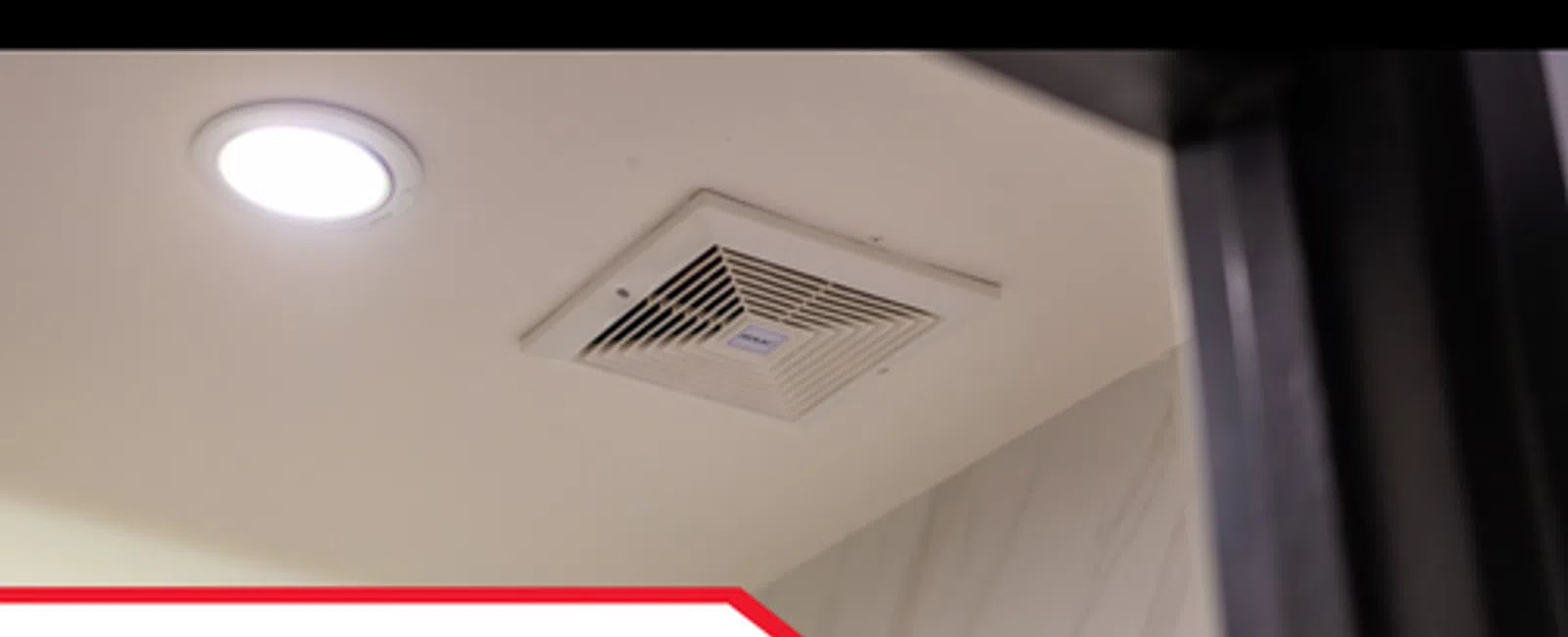
Bathrooms routinely generate some of the highest concentrations of moisture inside a home. Hot showers and baths release water vapor into the air, and without an effective way to remove that humid air, moisture can linger on ceilings, walls, windows, cabinets, trim, and other surfaces. Over time, repeated moisture exposure can contribute to staining, peeling finishes, deterioration, and conditions that support microbial growth. That is why a bathroom ventilation inspection is an important part of evaluating a home's interior and moisture-management systems.
Bathroom ventilation deserves particular attention during Home Inspections in the Southeast. Homes in warm, humid climates already contend with significant outdoor moisture, long cooling seasons, and frequent air-conditioning use. In Florida, those factors make controlling moisture generated inside the home especially important. During Home Inspections in Florida and Home Inspections in Jacksonville, inspectors may encounter everything from older bathrooms without dedicated exhaust fans to newer systems with disconnected, damaged, or improperly terminated ductwork.
LunsPro Inspection Group evaluates visible and accessible bathroom ventilation components as part of a comprehensive home inspection. The objective is not simply to determine whether a fan makes noise when switched on. Inspectors look for observable bathroom exhaust fan problems, signs of excessive indoor moisture, and accessible duct or termination conditions that may affect how effectively humid bathroom air is moved out of the home.
Why Bathrooms Need Effective Moisture Management
Every shower introduces moisture into the indoor environment. Some of that moisture leaves through an open door or other ventilation, but relying on incidental air movement alone may not adequately control the concentrated humidity generated in a bathroom.
An exhaust fan is intended to capture moisture-laden air near its source and move it to an appropriate exterior location. When the system works as intended, it helps reduce the amount of water vapor that remains inside the bathroom or migrates into adjoining areas.
The U.S. Department of Energy - Whole-House Ventilation Whole-House Ventilation explains several approaches to mechanical ventilation and why controlled ventilation matters in modern homes. Although a bathroom exhaust fan serves a more localized purpose than a whole-house ventilation system, the same underlying principle applies: intentionally moving indoor air is an important part of managing moisture and indoor environmental conditions.
Bathroom ventilation therefore needs to be considered as part of the home's broader moisture-management strategy rather than simply as an optional convenience.
What Happens When Bathroom Ventilation Is Inadequate?
When humid bathroom air is not effectively exhausted, moisture may remain in the room long after a shower has ended.
Homeowners may notice:
- Persistent condensation on mirrors or windows
- Water droplets on ceilings and walls
- Peeling or bubbling paint
- Staining around ceilings or vents
- Swollen or deteriorated trim
- Musty odors
- Discoloration on surfaces
- Deteriorated drywall or finishes
- Visible microbial-like growth
These symptoms do not automatically establish that the exhaust fan is the sole cause. Plumbing leaks, roof leaks, HVAC conditions, exterior moisture intrusion, and other sources can produce similar evidence. A home inspection looks at the overall pattern and attempts to identify observable conditions that warrant attention.
Guidance from the EPA - Moisture Control Guidance for Building Design, Construction and Maintenance EPA Moisture Control Guidance emphasizes controlling moisture sources and managing water vapor as part of protecting building materials and indoor environments. That is directly relevant to bathrooms because they are predictable sources of recurring indoor humidity.
Missing Bathroom Exhaust Fans
One of the most straightforward observations during bathroom ventilation inspections is the absence of a dedicated exhaust fan.
Whether a bathroom requires a particular ventilation configuration can depend on factors such as the home's age, applicable requirements at the time of construction, renovations, and available natural ventilation. A general home inspection is not a comprehensive code-compliance inspection, so an inspector should not automatically characterize every bathroom without a fan as a code violation.
From a practical moisture-management standpoint, however, a bathroom without effective mechanical ventilation may warrant attention, particularly when condensation, staining, deterioration, or other moisture-related conditions are present.
This can be especially relevant in humid Southeastern climates, where drying conditions may already be challenging during portions of the year.
Inoperative Bathroom Exhaust Fans
An exhaust fan cannot perform its intended function if it does not operate.
During a normal home inspection, an inspector can typically operate accessible normal controls and observe whether the fan activates. An inoperative fan may result from numerous conditions, including an electrical problem, failed motor, damaged switch, or another component issue.
The inspector generally does not dismantle the fan or perform electrical diagnostics to determine the exact cause.
An inoperative fan is therefore documented as an observable condition, with repair or further evaluation recommended when appropriate.
Weak Airflow Can Reduce Ventilation Effectiveness
A bathroom exhaust fan may run but still perform poorly.
Weak airflow can potentially result from:
- A dirty fan grille
- Aging equipment
- Restricted ductwork
- Excessive duct length
- Multiple bends
- Damaged ducting
- Poor connections
- Obstructions
- Improper termination
During a bathroom ventilation inspection, an inspector may use reasonable visual or functional observations to determine whether the fan appears to operate. The inspection is generally not equivalent to specialized airflow testing, commissioning, or mechanical-system diagnostics.
Resources from ENERGY STAR - Ventilating Fans ENERGY STAR Ventilating Fans provide useful information about residential ventilation fan performance and efficiency. These considerations are relevant because simply having an exhaust fan installed does not necessarily mean the system is moving bathroom air effectively.
Improper Exhaust Duct Installation
The fan itself is only one part of the system.
An effective exhaust fan ventilation system also needs a pathway to carry moisture-laden air away from the bathroom. That usually means ductwork connecting the fan housing to an appropriate exterior termination.
Duct conditions can affect performance. Excessive bends, restrictions, damaged sections, loose connections, or other installation problems may interfere with airflow.
Where accessible, inspectors may observe the duct from an attic or other unfinished space. However, concealed sections behind ceilings and walls generally cannot be inspected during a standard visual home inspection.
This distinction is important. An inspector can report visible installation concerns without claiming to know the condition of every concealed section of ductwork.
Disconnected Bathroom Exhaust Ducts
A disconnected duct can create a particularly important moisture-management problem.
The fan may sound completely normal from inside the bathroom while humid air is actually being discharged somewhere else inside the structure.
For example, an accessible attic inspection might reveal that a duct has separated from the fan housing or exterior termination. Moist bathroom air could then be released directly into the attic.
Depending on conditions, repeated moisture discharge into an attic can contribute to elevated moisture, condensation, staining, deterioration, or microbial growth conditions.
This demonstrates why bathroom ventilation should not always be evaluated solely from the bathroom itself.
Why Exhausting Into the Attic Is a Concern
Bathroom exhaust should be directed appropriately rather than intentionally discharged into an attic or similar interior building space.
Attics contain wood framing, roof sheathing, insulation, fasteners, and other materials that can be affected by repeated moisture exposure. During cooler conditions, warm humid bathroom air may also encounter colder surfaces and condense.
That can create moisture patterns that appear unrelated to the bathroom until the exhaust configuration is examined.
During attic inspections, an inspector may find:
- Exhaust ducts terminating in the attic
- Disconnected ducts
- Moisture staining near duct terminations
- Damaged insulation
- Condensation-related evidence
- Deterioration around roof sheathing
These observations can help connect what appears to be an attic moisture issue with a possible source elsewhere in the home.
Damaged or Deteriorated Ductwork
Exhaust ducts can become damaged over time.
Flexible ducting may become crushed, kinked, torn, displaced, or disconnected. Other duct materials can develop loose joints or damaged connections.
A damaged duct may still move some air, making the problem less obvious from inside the bathroom.
This is another reason accessible attic areas can provide valuable information during a home inspection. The fan, duct, and termination should be thought of as a system. A functional motor does not guarantee that moisture is reaching the exterior.
Condensation Can Be an Important Clue
Visible condensation provides useful information about moisture conditions.
After a hot shower, temporary condensation on a mirror is not unusual. Concern increases when substantial moisture remains on ceilings, walls, windows, or other surfaces for prolonged periods or when recurring condensation has begun to affect finishes.
Repeated wetting and drying can contribute to:
- Paint deterioration
- Drywall damage
- Staining
- Swelling of wood-based materials
- Corrosion of certain components
- Deterioration around windows and trim
During moisture inspections, visible staining or deterioration may prompt additional observations or moisture measurements when appropriate. However, a moisture meter reading represents conditions at a particular place and time. It cannot reconstruct the complete history of moisture exposure by itself.
Bathroom Moisture and Microbial Growth
Moisture is a key factor in microbial growth.
The EPA - A Brief Guide to Mold, Moisture and Your Home EPA Mold and Moisture Guide explains the relationship between moisture control and mold prevention, emphasizing the importance of addressing moisture sources. This is relevant to bathrooms because recurring condensation and inadequate ventilation can create damp conditions on building materials.
However, visible discoloration should not automatically be identified as a specific type of mold based solely on appearance.
A general home inspection may identify visible microbial-like growth or moisture conditions, but specialized mold evaluation or testing is a separate service when appropriate.
The more important inspection question is often: Why is this area staying wet?
Bathroom ventilation may be one part of that answer.
High Outdoor Humidity Changes the Equation in Florida
Bathroom ventilation matters throughout the country, but the Southeast presents distinctive moisture-management challenges.
Florida's warm, humid climate means homes often operate air-conditioning systems for extended portions of the year. Indoor spaces are therefore influenced by the interaction among outdoor humidity, air conditioning, air leakage, ventilation, and moisture generated by occupants.
During Home Inspections in Florida, an inspector may consider bathroom moisture observations alongside:
- HVAC operation
- Attic conditions
- Insulation
- Exterior moisture
- Plumbing
- Building-envelope conditions
For Home Inspections in Jacksonville, heavy rainfall and humid weather make moisture management an especially relevant part of evaluating a property.
A bathroom fan cannot solve every humidity problem in a home. Its role is more specific: removing concentrated moisture generated in the bathroom before that moisture spreads or accumulates on surfaces.
Ventilation and Air Conditioning Serve Different Purposes
Homeowners sometimes assume that air conditioning eliminates the need for bathroom exhaust ventilation.
The systems perform different functions.
An air-conditioning system conditions indoor air throughout the home and can remove moisture as part of the cooling process. A bathroom exhaust fan provides localized source ventilation intended to remove humid air directly from a moisture-producing room.
Building-science information from the U.S. Department of Energy Building Science Education - Ventilation Building Science Education Ventilation provides broader context for understanding how ventilation works within residential buildings.
For homebuyers, the practical point is that a well-functioning HVAC system does not necessarily compensate for a disconnected or ineffective bathroom exhaust system.
Moisture Staining Does Not Always Mean a Roof Leak
Bathroom ceiling stains can sometimes be misinterpreted.
A stain near an exterior wall or ceiling may result from several possible sources, including:
- Plumbing leakage
- Roof leakage
- Condensation
- Exhaust duct problems
- Exterior moisture intrusion
Similarly, attic staining above a bathroom is not automatically proof that the roof is leaking.
A home inspector looks for patterns and related evidence. If the roof covering appears intact but an exhaust duct terminates beside stained roof sheathing, the ventilation system becomes an important part of the investigation.
Still, inspectors should avoid making definitive claims when the source cannot be established through visible and accessible evidence.
Bathroom Ventilation Problems in Newer Homes
New construction is not immune to ventilation defects.
Potential issues can include:
- Ducts never connected
- Loose connections
- Crushed flexible ducting
- Poor exterior terminations
- Fans that do not operate
- Construction debris affecting components
This is why home inspections remain valuable even when a property is relatively new.
A component's age does not confirm installation quality or proper operation.
Bathroom Ventilation Problems in Older Homes
Older homes present different considerations.
A bathroom may have originally been designed around a window rather than mechanical exhaust, or ventilation equipment may have been added during later renovations.
Over decades, modifications may create unusual configurations.
Inspectors may encounter:
- Older fans
- Replacement fans
- Abandoned ducts
- Added ductwork
- Interior terminations
- Damaged exterior vents
- Multiple renovation layers
These conditions require context rather than assumptions based simply on the home's age.
Exterior Exhaust Terminations Matter Too
Where visible and accessible, the exterior termination can provide additional information about the system.
An exterior vent may be damaged, obstructed, deteriorated, or improperly configured. Screens, louvers, covers, or other components may also become restricted by debris or deterioration.
The inspector's ability to observe these components depends on accessibility and safety.
High roof terminations or concealed duct routes may not be directly observable during a standard inspection.
What Home Inspectors Can Evaluate
A standard bathroom ventilation inspection may include several practical observations.
Depending on accessibility and inspection scope, an inspector may:
- Operate the exhaust fan using normal controls
- Observe whether the fan runs
- Look for visible moisture staining
- Observe bathroom ceilings and walls
- Inspect accessible exhaust ductwork
- Look for disconnected ducts
- Observe accessible exterior terminations
- Examine accessible attic areas
- Document visible condensation or deterioration
An inspector may also use moisture-detection equipment when appropriate.
These observations can identify many meaningful home inspection defects, but there are limitations.
What a Visual Home Inspection Cannot Determine
A general home inspection cannot reveal every ventilation condition.
Inspectors generally cannot see ductwork concealed behind finished ceilings or walls. They also cannot guarantee future fan performance or determine the exact airflow throughout an inaccessible duct system without specialized testing.
Similarly, a standard inspection does not automatically include:
- Destructive investigation
- Comprehensive mold testing
- HVAC engineering
- Indoor air quality analysis
- Building-envelope testing
- Formal ventilation commissioning
When conditions warrant, the inspector may recommend additional evaluation by an appropriately qualified professional.
Why Buyers Should Pay Attention to Small Ventilation Findings
A defective exhaust fan may seem minor compared with a roof, foundation, or HVAC system.
But the cost of the fan itself is not always the main issue.
The more important question is whether ineffective ventilation has contributed to moisture conditions elsewhere.
For example, a relatively simple disconnected duct may have discharged moisture into an attic for years. The inspection may therefore need to consider the duct, insulation, roof sheathing, framing, and visible moisture conditions around the discharge area.
This illustrates an important principle of residential inspections: seemingly small defects can provide clues about larger building-performance issues.
Using the Inspection Report After Closing
When a report identifies bathroom exhaust fan problems, buyers should read both the defect description and any related observations.
A report might document:
- An inoperative fan
- Weak apparent airflow
- A disconnected duct
- An attic termination
- Visible condensation
- Moisture staining
- Damaged ductwork
The appropriate response depends on the condition.
Some issues may require straightforward repair. Others may justify further investigation to determine whether surrounding materials have been affected.
Homeowners should also view ventilation as part of routine moisture management rather than something that matters only during the transaction.
Bathroom ventilation plays a small but important role in how a home manages moisture. Functional bathroom exhaust fans help remove concentrated humid air before it can remain on surfaces or migrate into attics and other areas. When fans are missing, inoperative, poorly ducted, disconnected, or exhausted into inappropriate locations, recurring moisture can contribute to staining, finish deterioration, condensation, and conditions conducive to microbial growth.
For homeowners across the Southeast, these concerns deserve additional attention because outdoor humidity, heavy rainfall, long cooling seasons, and frequent air-conditioning use already create a demanding moisture environment. During Home Inspections in the Southeast, and particularly Home Inspections in Florida and Home Inspections in Jacksonville, ventilation findings can provide useful context about how effectively the property manages everyday indoor moisture.
LunsPro Inspection Group evaluates accessible ventilation components alongside other building systems during comprehensive home inspections. Combining bathroom ventilation inspections, moisture inspections, and attic inspections can sometimes reveal relationships that would be easy to overlook if each area were considered independently. A stain in an attic, for example, may require consideration of roofing, plumbing, condensation, and bathroom exhaust routing before its likely source can be understood.
Ultimately, a bathroom ventilation inspection is not about treating every weak or damaged fan as a major property defect. It is about recognizing that repeated moisture exposure can affect building materials over time. By documenting visible bathroom exhaust fan problems, moisture conditions, and accessible duct configurations, a professional home inspection can give buyers a clearer understanding of the home's current condition and help homeowners prioritize appropriate repairs, maintenance, or further evaluation.