
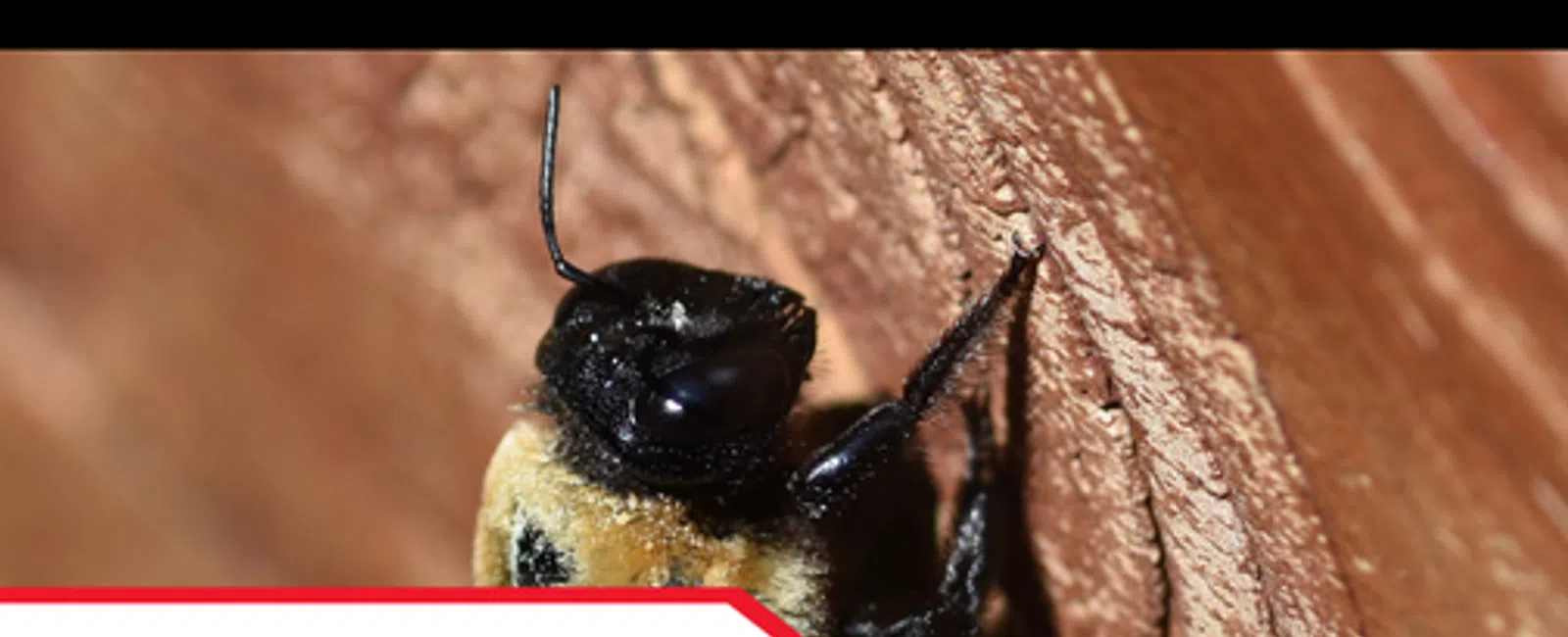
A small, round hole in a fence post or deck component may not attract much attention during a normal walk around the property. It can look like a minor imperfection in the wood, especially when there are no insects visibly flying nearby. However, that opening may indicate carpenter bee activity occurring inside the wood. In some situations, homeowners may even hear activity from within the component before seeing a bee emerge.
Licensed and Certified Inspector Jared West of LunsPro Inspection Group demonstrated this during an inspection in the Chattanooga, Tennessee area. A hole was visible in a wooden fence post, and when the post was moved, carpenter bees could actually be heard inside. Multiple bees eventually emerged from the opening. Jared explained an important distinction: carpenter bees do not eat the wood they enter. Instead, they excavate the wood to create nesting areas, somewhat similarly to how carpenter ants excavate wood rather than consume it.
For homeowners throughout the Southeast, recognizing these signs can make it easier to identify possible pest activity around decks, fences, and other wooden components. Professional Southeastern Residential and Commercial Inspections performed by Licensed Inspectors can also bring attention to visible conditions homeowners or buyers may not notice during a routine walkthrough.
What Are Carpenter Bees Doing Inside Wood?
The most important point to understand is that carpenter bees are not eating the wood.
Instead, they excavate it.
A carpenter bee can create an opening in a wooden component and continue excavating inside to establish a nesting area. This means the amount of activity occurring inside the wood may not be obvious from the exterior.
From the surface, a homeowner might see only a relatively small opening.
Inside, however, there may be an excavated nesting area.
That difference between what is visible outside and what may be happening inside is what makes carpenter bee activity easy to underestimate.
During Jared's Chattanooga inspection, the exterior clue was a hole in the fence post. The activity became much more obvious once the post was moved and the bees could be heard responding from inside.
Listen as Well as Look
Homeowners usually think of pest activity as something they need to see.
Jared's observation provides another useful clue: sometimes pest activity can be heard.
When he moved the affected fence post, multiple carpenter bees could be heard from inside the wood. Shortly afterward, bees began emerging from the opening.
For homeowners, that means unusual buzzing or insect sounds coming from within a wooden component should not automatically be ignored simply because no insects are immediately visible.
If you are standing near a:
- Wooden fence post
- Deck
- Wooden railing
- Other exposed wood component
and hear buzzing from within the material, take note of the area.
Then look for visible openings that could indicate where the insects are entering.
Look for Holes in Wooden Components
One of the clearest observations in Jared's video was the hole in the fence post.
Homeowners inspecting their exterior spaces can pay attention to openings in wood, particularly when they are accompanied by bee activity or sounds from within the material.
Decks and fences deserve particular attention because they contain numerous exposed wooden components.
A homeowner may walk across the same deck every day without closely examining individual posts, rails, or framing members.
Similarly, a fence may receive little attention until it needs cleaning, painting, staining, or repair.
Regularly looking at these areas can help homeowners become familiar with their normal condition. When a new hole appears, it is more likely to stand out.
Why Decks Deserve Attention
Decks are an important area to monitor because they often contain a substantial amount of exposed wood.
Jared specifically mentioned that homeowners may encounter carpenter bee activity around decking, including structural framing.
The concern is not simply whether bees are flying around the deck.
Homeowners should pay attention to the wood itself.
Look at accessible:
- Posts
- Framing
- Rail components
- Other exposed wooden elements
If an opening is visible and buzzing can be heard from within the wood, there may be activity inside even when no bees are immediately visible.
This is another example of why exterior home maintenance should include more than washing surfaces and checking paint.
Physical changes to wood can provide useful clues about pest activity.
Fence Posts Can Hide Activity Too
The Chattanooga example occurred in a fence post rather than a deck.
That is worth emphasizing because homeowners may be more likely to pay attention to the house itself than to fencing around the property.
Fence posts are exposed to outdoor conditions year-round.
When a carpenter bee creates a nesting opening, much of the activity can remain concealed within the post.
In Jared's example, the bees were not initially visible in large numbers.
The sound coming from inside revealed how much activity was actually present.
When several bees began emerging, it became clear that the small exterior opening was associated with more activity than might have been assumed at first glance.
Carpenter Bees and Carpenter Ants: A Useful Similarity
Jared compared the behavior of carpenter bees to carpenter ants in one specific way: both excavate wood rather than eating it.
That distinction helps homeowners understand what they are observing.
When people hear that an insect is living in wood, they may assume that the insect is consuming the material.
Carpenter bee activity works differently.
The bee removes or excavates wood to establish a nesting area.
For the homeowner, however, the practical takeaway remains the same: visible holes and evidence of activity in wooden components deserve attention.
The objective is not to diagnose the extent of the activity based solely on one hole. It is to recognize that the opening may lead to an excavated area inside the material.
Why Visible Activity May Be Misleading
Seeing only one bee does not necessarily tell you everything happening inside the wood.
Likewise, seeing no bees at a particular moment does not prove the opening is inactive.
Jared initially demonstrated this by listening.
Once the fence post was disturbed, the insects inside became audible. Then individual bees emerged from the opening.
This is why homeowners should evaluate multiple clues together:
- Is there an opening in the wood?
- Can activity be heard inside?
- Have bees been observed entering or leaving?
- Is the area part of a deck, fence, or another wooden component?
Taken together, those observations can provide a stronger reason to seek professional evaluation.
Pest Activity Can Be Part of the Bigger Inspection Picture
A home inspection involves looking at much more than pests.
Licensed Inspectors evaluate visible and accessible components throughout the property within the scope of the inspection. That broader perspective can bring attention to unusual conditions encountered while examining decks, fences, exterior components, and other areas.
The carpenter bee activity Jared observed is a good example.
The finding was not hidden behind finished drywall or buried underground. It was located in an exterior wooden fence post.
Yet a buyer walking through the property might never think to stop, examine the hole, move the post, or listen for activity inside.
Professional inspection provides a more deliberate look at the property.
Why Southeastern Homeowners Should Check Exterior Wood
Homes throughout the Southeast commonly include outdoor wooden features.
Depending on the property, that can mean decks, porches, fences, railings, posts, and other exterior components.
Homeowners in Nashville and Chattanooga, as well as those in Atlanta, Charlotte, Raleigh, Greensboro, Greenville, Savannah, and Charleston, can benefit from periodically looking over these areas rather than waiting until a repair becomes obvious.
The goal is not to assume every hole is caused by carpenter bees.
Instead, homeowners should become familiar with the condition of their property and investigate changes when they appear.
A new opening accompanied by buzzing or visible bee activity provides much more useful information than the opening alone.
Don't Ignore the Structure Around the Nest
Jared specifically noted that an excavated nest could be inside the structural framing of a deck or within a fence post.
That is an important consideration.
The pest itself is only part of the observation.
The other part is the material being excavated.
When activity involves a component that serves a structural or safety-related purpose, homeowners should avoid making assumptions about its condition based only on the visible exterior.
An opening may be small while the excavation continues internally.
A professional can help determine what additional evaluation is appropriate based on where the activity is located and what component is affected.
What Should Homeowners Do When They Find Activity?
If you notice a suspicious opening in exterior wood, begin by observing the area without unnecessarily disturbing the insects.
Pay attention to whether bees are entering or leaving and whether buzzing appears to originate from inside the component.
If carpenter bee activity is suspected, professional pest evaluation can help identify the activity and determine an appropriate response.
If the affected material is part of a deck or another important building component, the condition of the wood itself may also deserve further evaluation.
The two concerns should not be confused.
One question is how to address the pest activity.
The other is whether the affected wood requires repair or additional assessment.
From Inspection Finding to Pest Control
A home inspection can bring attention to visible pest-related conditions, but controlling an active pest problem is a separate step.
That's where LunsPro's sister company, PestNation, can help. When homeowners discover carpenter bees or other unwanted pest activity, a pest professional can evaluate what is happening and recommend an appropriate approach based on the conditions present.
The connection between inspection and pest management is straightforward: first understand what is happening at the property, then involve the appropriate professional when treatment or pest management is needed.
This approach helps homeowners avoid guessing at the source or extent of pest activity.
Don't Rely Only on What You Can See
Carpenter bee activity illustrates a broader lesson that applies to homeownership.
Not everything happening in a building component is visible from the surface.
The fence post Jared examined showed a hole, but the sound coming from inside provided another important clue. When the bees began emerging, the activity became unmistakable.
The same principle is one reason professional home inspections can be valuable.
Inspectors pay attention to observable clues and consider what those clues may indicate about the accessible components around them.
They do not need to exaggerate a finding to make it useful.
Sometimes a hole, a sound, and a few emerging bees provide exactly the information a homeowner needs to know that further attention is warranted.
Professional Inspections Help Identify the Unexpected
Most homeowners are familiar with obvious inspection concerns such as roof damage, plumbing leaks, electrical defects, or HVAC problems.
Pest activity can be less predictable.
A buyer may not expect an inspector to stop at a fence post and discover multiple carpenter bees inside it.
But homes are made up of interconnected systems, components, and exterior features, and a thorough inspection requires paying attention to the property as it exists on the day of the inspection.
LunsPro Inspection Group provides Southeastern Residential and Commercial Inspections designed to give clients clearer information about visible and accessible property conditions.
Whether an inspector finds an issue with a deck, an exterior component, moisture, electrical equipment, or signs of pest activity, the objective is the same: document what is observed and help the client understand what deserves additional attention.
Carpenter bees provide a good example of why small exterior clues should not automatically be dismissed. A single hole in a fence post or deck component may be the only obvious sign from the outside, while buzzing from within the wood can indicate activity that is otherwise concealed. As Licensed and Certified Inspector Jared West demonstrated in Chattanooga, sometimes listening to a wooden component can reveal just as much as looking at it.
For Southeastern homeowners in Nashville, Chattanooga, Atlanta, Charlotte, Raleigh, Greensboro, Greenville, Savannah, and Charleston, routinely paying attention to decks, fences, and other exposed wooden features can help identify changes earlier. If you see holes, hear buzzing inside the wood, or observe bees entering and leaving, professional evaluation can help determine the appropriate next step.
A home inspection is ultimately about understanding the property more clearly. LunsPro Inspection Group and its Licensed Inspectors help clients identify visible concerns throughout the home and property, while specialists such as sister company PestNation can step in when pest-specific evaluation or control is needed. That combination helps homeowners move from simply noticing something unusual to understanding what should happen next.