
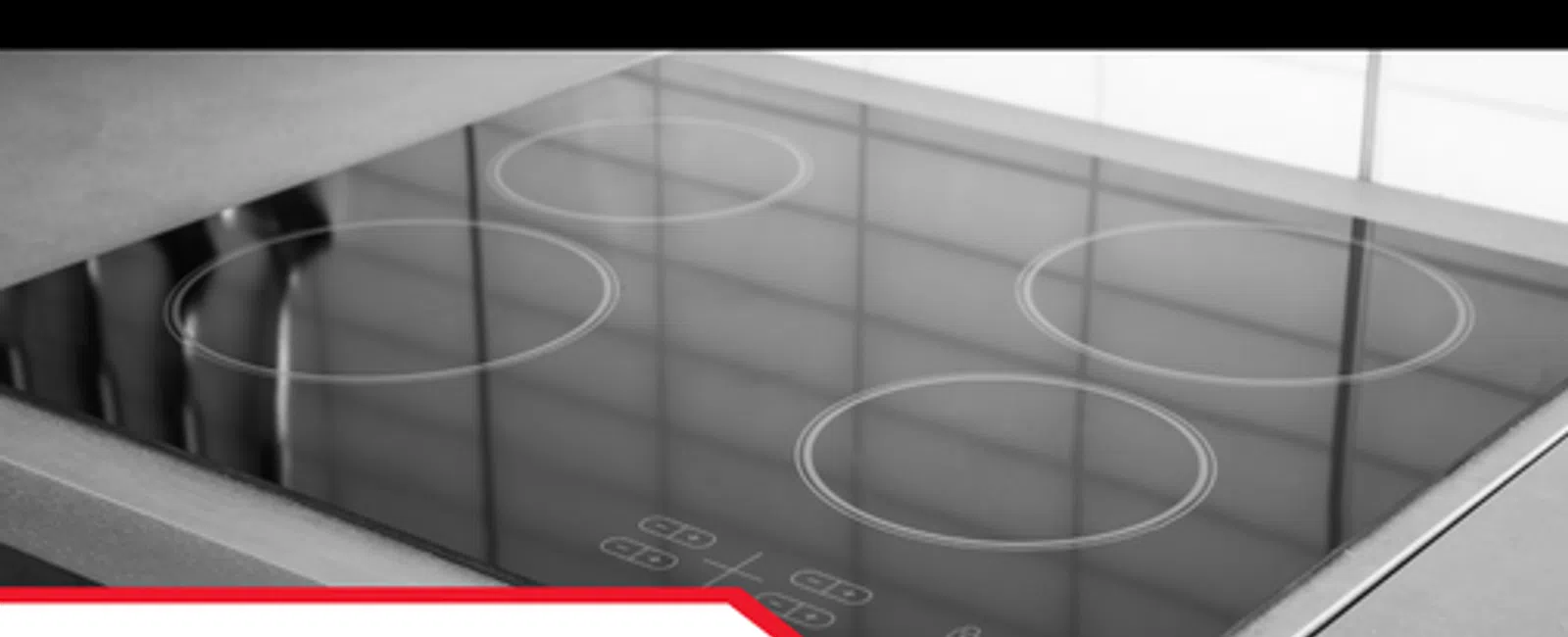
Kitchen appliances have changed considerably over the years, and induction cooktops are one feature homeowners may encounter in newer or updated kitchens. At first glance, an induction cooking surface can resemble a conventional smooth-top electric range. The way it operates, however, is different. Instead of relying on a traditional exposed heating element, induction cooking depends on magnetic interaction between the cooktop and compatible cookware.
Licensed and Certified Inspector Devin Pope of LunsPro Inspection Group demonstrated this difference while examining an induction cooktop. With the control set to its highest level and appropriate material placed on the surface, heating began extremely quickly. Devin also pointed out an important detail for homeowners unfamiliar with induction: the cooktop needs appropriate cookware material to operate as intended. That means testing an induction appliance is not necessarily as simple as turning on a conventional burner and waiting for it to heat.
For homeowners throughout Nashville, Chattanooga, Atlanta, Charlotte, Raleigh, Greensboro, Greenville, Savannah, and Charleston, understanding basic appliance differences can make it easier to use and maintain the features found in a home. It also illustrates why Licensed Inspectors need to recognize different types of installed equipment when performing Southeastern Residential and Commercial Inspections.
What Makes an Induction Cooktop Different?
Induction cooking relies on magnetism.
As Devin explained during his demonstration, appropriate material needs to be placed on the cooking surface for the system to work. This is an important distinction from conventional electric cooking appliances.
With a traditional electric cooking element, the element itself produces heat that is then transferred to the cookware.
Induction technology interacts with compatible cookware differently. The cookware becomes an essential part of the heating process.
For homeowners, the practical takeaway is simple: not every pot or pan is necessarily appropriate for every induction cooktop.
If someone moves into a home with an induction appliance and tries cookware that is not compatible, they may initially assume the appliance is malfunctioning.
The problem could instead be the cookware.
Compatible Cookware Matters
Devin specifically emphasized that an appropriate material has to be present on the cooktop.
That makes cookware compatibility one of the first things homeowners need to understand.
Because induction relies on magnetic interaction, cookware needs to have suitable magnetic properties.
A simple homeowner-friendly way to think about it is that the cooktop and cookware need to work together.
If the appropriate cookware is not present, the induction system may not operate as expected.
Homeowners purchasing cookware for an induction kitchen should therefore confirm that the product is designed or rated for induction use rather than assuming every pan will work.
Why Testing an Induction Cooktop Can Look Different
Appliance operation is one area where familiarity with different equipment matters.
If an inspector encounters a conventional electric range, the method used to observe operation may be familiar to most homeowners.
An induction cooktop is different because compatible cookware may be necessary to demonstrate heating.
In Devin's demonstration, there were no traditional pots available, so he used appropriate material to demonstrate how the induction surface responded.
Once placed on the cooktop, heating began rapidly.
The demonstration provided a simple visual explanation of how quickly induction can respond when the proper material is present.
Rapid Heating Is One of the Most Noticeable Features
The speed of the demonstration immediately stood out.
After Devin placed the material on the cooktop, the water began moving toward a boil very quickly. He described the response as nearly instantaneous.
He also measured a temperature of approximately 135 degrees during the demonstration.
The important educational point is not to treat that individual measurement as a universal performance specification for every induction appliance.
Different cooktops, cookware, settings, quantities of water, and testing conditions can produce different results.
Instead, Devin's demonstration illustrates the rapid response that can occur with induction technology.
Why Homeowners Should Understand Their Appliances
Appliances are easy to take for granted.
Most homeowners know how to turn on a stove, adjust an oven, start a dishwasher, or operate a microwave. But when a home contains unfamiliar technology, assumptions can create confusion.
Induction cooktops are a good example.
Someone accustomed to gas or traditional electric cooking may not immediately understand why a particular pan does not work.
Learning the basic operating principle helps eliminate that confusion.
If you purchase a home with an induction cooktop, it is useful to determine:
- Which cookware is compatible
- How the controls operate
- What indicators appear during use
- How the cooking zones respond
- What manufacturer instructions apply to the appliance
The manufacturer's documentation should remain the primary reference for the specific model installed in the home.
Induction and Traditional Electric Cooking Aren't the Same
Smooth glass surfaces can make induction and conventional electric cooktops appear similar.
Their operating methods should not be confused.
A conventional smooth-top electric range typically uses heating elements beneath the glass surface. Those elements heat the cooking surface, which transfers heat to the cookware.
An induction system depends on compatible cookware and magnetic interaction.
That distinction matters when homeowners are trying to determine whether an appliance is operating correctly.
Simply looking at the surface may not tell you which type of system is installed.
Understanding the appliance before using or evaluating it can prevent unnecessary confusion.
Appliance Operation Is Part of Understanding a Home
When buyers tour a property, appliances may receive relatively little attention.
People often focus on the kitchen's appearance:
Is the countertop attractive?
Are the cabinets updated?
Is there enough storage?
Does the kitchen have the layout they want?
Those questions are understandable, but the equipment installed in the kitchen also contributes to how the home functions.
An induction cooktop may require a homeowner to use different cookware than they already own.
That is useful information to discover before moving in.
Why Inspectors Need to Recognize Different Technologies
Homes contain a constantly evolving range of systems and appliances.
A Licensed Inspector may encounter older electric ranges in one property, gas appliances in another, and induction equipment in the next.
Understanding those differences helps an inspector approach the equipment appropriately.
The objective of a home inspection is not to provide an exhaustive engineering analysis of every appliance.
Rather, inspectors evaluate visible and accessible components within the scope of the inspection and communicate relevant observations to their clients.
Recognizing that an induction cooktop requires compatible cookware is part of understanding how that appliance operates.
Newer Features Still Need Attention
Modern technology does not eliminate the need for inspection.
A kitchen can contain newer equipment and still deserve the same systematic attention as any other part of the home.
Likewise, an unfamiliar appliance should not automatically be treated as defective simply because it behaves differently from older technology.
This is where knowledge matters.
An inspector should understand what is being evaluated before reaching conclusions about its operation.
The same principle applies throughout the property.
Modern HVAC controls, electrical components, appliances, plumbing fixtures, and other systems can operate differently from older versions.
Professional inspection requires adapting to what is actually installed.
Induction Cooktops Across Southeastern Homes
Housing throughout the Southeast includes a broad mixture of ages and styles.
In Nashville and Chattanooga, homeowners may encounter everything from older houses with traditional appliances to renovated kitchens with modern cooking equipment. Similar variety exists throughout Atlanta, Charlotte, Raleigh, Greensboro, Greenville, Savannah, and Charleston.
Renovations can also introduce newer technology into older homes.
A property's construction date therefore does not necessarily tell you what kind of appliances will be installed.
An older home could have a recently remodeled kitchen containing an induction cooktop, while a newer home might contain a more traditional electric range.
Each property should be evaluated based on what is actually present.
Don't Assume Unfamiliar Means Defective
One of the most practical lessons homeowners can take from induction technology is the importance of understanding how a system is supposed to work.
Imagine turning on an induction cooking zone and seeing no expected heating response because the wrong cookware is being used.
Without knowing how induction works, a homeowner could reasonably think the cooktop is broken.
Once cookware compatibility is understood, the situation becomes easier to evaluate.
This principle extends beyond kitchen appliances.
Before deciding that a component is malfunctioning, it is useful to understand its intended operation.
Manufacturer Instructions Still Matter
While an inspector can explain general operating characteristics, every appliance model can have its own controls and requirements.
Homeowners should review manufacturer instructions for their specific induction cooktop.
Those instructions can provide information about:
- Compatible cookware
- Cooking-zone operation
- Control settings
- Cleaning
- Maintenance
- Safety features
- Warning indicators
The manufacturer's instructions are particularly important when an appliance includes features that are unfamiliar to the homeowner.
General knowledge is useful, but model-specific guidance should take priority.
A Home Inspection Is More Than Looking for Defects
Home inspections are often associated exclusively with finding things that are wrong.
Finding defects is certainly important, but an inspection can also help clients better understand the systems and components present in a property.
Devin's induction cooktop demonstration is a good example.
The primary takeaway was educational: this cooking technology works through magnetic interaction with compatible material and can begin heating very quickly.
Understanding that characteristic helps homeowners know what they are looking at and how it differs from more familiar equipment.
Kitchens Contain Multiple Systems
The cooktop is only one component in a modern kitchen.
A kitchen can bring together electrical systems, plumbing, appliances, cabinetry, ventilation, countertops, flooring, and other components within a relatively small space.
That makes the kitchen an important part of a home inspection.
Depending on the property and inspection scope, inspectors may encounter:
- Cooking appliances
- Refrigerators
- Dishwashers
- Plumbing fixtures
- Electrical receptacles
- Ventilation equipment
- Cabinetry
- Flooring and finishes
Each contributes to how the kitchen functions.
Understanding the installed cooking equipment is therefore part of understanding the room as a whole.
Why Professional Inspection Still Adds Value
Buyers often spend considerable time looking at a home's finishes before making an offer.
They may know exactly what kind of countertops are installed but have no idea how the cooktop works.
A professional inspection provides a different perspective.
LunsPro Inspection Group and its Licensed Inspectors evaluate visible and accessible systems and components rather than focusing solely on appearance.
Through Southeastern Residential and Commercial Inspections, clients receive information that can help them better understand the property they are considering.
Sometimes that information involves a defect requiring attention.
Other times, it involves recognizing and understanding equipment that operates differently from what the homeowner has used before.
Both can be useful.
Understanding the Home You Own
Homeownership becomes easier when people understand the systems they use every day.
An induction cooktop may initially seem unfamiliar, but its basic operating principle is straightforward: compatible cookware is necessary because the technology relies on magnetic interaction.
As Devin's demonstration showed, once appropriate material is placed on the cooking surface, heating can happen very quickly.
Homeowners should still remember that one demonstration does not establish a universal heating time or temperature for every induction cooktop. Appliance model, cookware, settings, and other conditions all matter.
The larger lesson is about understanding the equipment installed in the home.
For homeowners and buyers throughout Nashville, Chattanooga, Atlanta, Charlotte, Raleigh, Greensboro, Greenville, Savannah, and Charleston, modern kitchens can include technology that operates differently from the appliances they grew up using. Recognizing those differences makes it easier to use the equipment correctly and avoid mistaking normal operation for a problem.
Licensed and Certified Inspector Devin Pope's demonstration also highlights the educational side of professional home inspections. LunsPro Inspection Group and its Licensed Inspectors do more than look at the appearance of a property. Through detailed Southeastern Residential and Commercial Inspections, they help clients better understand visible and accessible systems and components throughout the property.
Whether the inspection uncovers an important defect or simply introduces a homeowner to unfamiliar technology, better information creates a clearer picture of the property. An induction cooktop is just one example of how today's homes continue to evolve and why understanding what is installed can be just as important as knowing how it looks.