
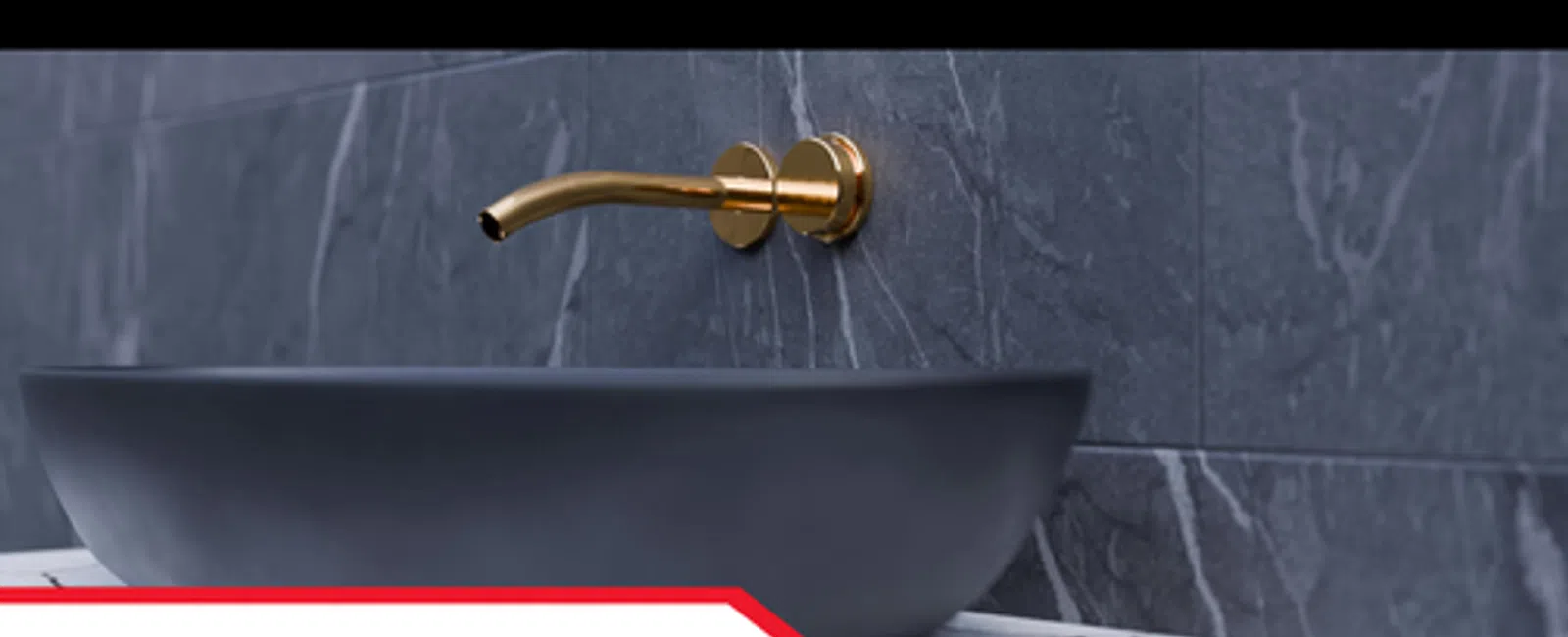
Not every bathroom sink looks like the traditional bowl homeowners are accustomed to seeing. Modern, custom, and less common designs can use very different shapes to move water toward a drain. Some may be integrated directly into a countertop, while others use a relatively flat surface that directs water toward a drain located toward the rear. These fixtures can immediately stand out during a home inspection simply because they function differently from the familiar basin found in most bathrooms.
Licensed and Certified Inspector Andres of LunsPro Inspection Group encountered an unusual bathroom sink with a broad, relatively flat surface and drainage toward the back. From the visible configuration, water flows across the surface rather than collecting in a deep conventional bowl. The design is certainly uncommon compared with a traditional bathroom sink, but appearance alone does not establish whether a plumbing fixture has a defect. What matters during an inspection is how the accessible fixture functions and how effectively it manages the water being supplied to it.
For homeowners throughout Nashville, Chattanooga, Atlanta, Charlotte, Raleigh, Greensboro, Greenville, Savannah, and Charleston, unusual fixtures are another reason to evaluate a home based on its actual components rather than assumptions. During Southeastern Residential and Commercial Inspections, experienced Licensed Inspectors may encounter everything from familiar plumbing fixtures to custom configurations that require a closer look to understand how they operate.
Not Every Bathroom Sink Uses a Traditional Bowl
When most people picture a bathroom sink, they imagine a round, oval, or rectangular basin with the drain located near the center or rear of the bowl.
That arrangement is common because the shape naturally directs water toward the drain.
But it is not the only possible design.
The fixture Andres encountered uses a much flatter surface. Instead of water dropping into a pronounced basin, it moves across the surface toward the rear drainage area.
That can look unusual to someone seeing it for the first time.
The important distinction is between an unfamiliar design and an observable defect.
Something should not automatically be reported as defective simply because it looks different from a standard installation.
Function Matters More Than Familiarity
Home inspectors encounter a wide variety of building components.
Sometimes a component immediately looks unusual because the inspector does not see that particular style every day.
The appropriate response is to evaluate what can actually be observed.
For a sink, basic questions include whether water can be supplied and whether it moves toward the intended drainage point without an obvious problem.
The visible fixture in Andres's inspection clearly uses a different approach than a conventional basin.
That difference is interesting, but it does not by itself establish a plumbing problem.
This principle applies throughout a home inspection: unusual does not automatically mean defective.
Why Flat Sink Designs Stand Out
A conventional basin uses its depth and shape to contain water.
A flatter design has far less visible depth, so the slope and geometry of the surface become especially noticeable.
When the faucet is operated, the homeowner can observe how water moves across the fixture toward the drain.
That makes the sink's drainage pattern part of its visual appeal as well as its function.
For homeowners accustomed to traditional sinks, the first reaction may be to wonder where the water goes.
In the fixture shown by Andres, drainage occurs toward the back.
That configuration creates a very different appearance while still serving the basic purpose of moving water away from the fixture.
Inspectors Should Avoid Judging by Appearance Alone
Professional home inspections depend on observable evidence.
If an inspector sees an unconventional sink, the fact that it is unconventional should not become the basis for an unsupported conclusion.
Instead, the inspector can look at its visible and accessible condition and operation.
This evidence-based approach is important throughout the work performed by LunsPro Inspection Group.
A home may contain unusual architecture, custom plumbing fixtures, uncommon appliances, or materials that differ from what is typically installed in surrounding homes.
Licensed Inspectors need to distinguish between a design choice and an actual observable concern.
That keeps inspection reporting factual and useful.
Water Management Is the Important Question
Regardless of how a sink looks, water still needs to be managed.
A bathroom sink receives water from the faucet and needs a drainage path that moves that water away.
For a conventional basin, the process is easy to visualize because gravity moves water toward the low point surrounding the drain.
With a flatter fixture, homeowners can watch how the surface itself directs water.
If someone purchases a home containing an unfamiliar sink, observing its operation can help them understand the design.
Does the water travel toward the intended drain?
Does it remain where expected during normal operation?
Are there obvious visible concerns associated with its use?
Those practical observations are more meaningful than simply deciding that the sink looks strange.
Unusual Fixtures Can Be Easy to Misunderstand
Imagine touring a house and seeing this type of sink without operating it.
At first glance, someone might wonder whether the basin is missing entirely.
Another person might assume the fixture is incomplete.
Once water is turned on, however, the design becomes easier to understand.
This demonstrates why inspectors operate accessible fixtures rather than relying entirely on visual appearance.
Function can provide information that a static visual inspection cannot.
That is particularly useful in bathrooms, where plumbing fixtures are designed to interact with water during normal use.
Why Bathroom Fixtures Receive Attention During Inspections
Bathrooms combine several important systems within a relatively small area.
There is plumbing, electrical equipment, ventilation, cabinetry, flooring, walls, fixtures, and numerous water-related connections.
The sink is only one part of that environment.
During a home inspection, accessible bathroom components can provide information about the condition and function of the space.
A bathroom may contain a standard sink, a vessel basin, an integrated countertop fixture, or something far less common like the flat configuration Andres encountered.
Whatever the design, the fixture should be evaluated based on what is actually installed.
The Faucet and Sink Need to Work Together
Sink design is also connected to faucet placement.
Water needs to land where the fixture is designed to receive it.
In an unconventional sink, the relationship between the faucet and drainage surface may be more visually noticeable because there is no deep basin beneath the water stream.
That does not automatically make the design problematic.
It simply means the components function as part of a complete arrangement.
For homeowners, watching how water behaves during normal faucet operation is one of the easiest ways to understand an unfamiliar fixture.
What About the Plumbing Behind the Sink?
The second image associated with this fixture provides a useful reminder that the finished bathroom surface is only part of a plumbing installation.
Behind or beneath the visible fixture are supply and drainage components that allow it to function.
Most homeowners interact only with the finished side.
They see the faucet, countertop, and drainage opening.
But plumbing continues beyond those visible surfaces.
This is another reason professional inspection looks beyond appearance whenever accessible areas allow it.
A stylish fixture still depends on plumbing connections and drainage components that homeowners rarely see during everyday use.
Custom Features Deserve the Same Objective Evaluation
Custom home features can create challenges for buyers because they do not always have an obvious point of comparison.
A standard sink looks familiar.
A flat sink draining toward the rear may not.
The same can happen with custom showers, specialty windows, unusual doors, built-in furniture, or other architectural features.
A professional inspection should remain objective in each situation.
The question is not whether the inspector personally prefers the design.
The question is what can be determined about its visible condition and function.
That distinction helps buyers receive useful property information rather than subjective commentary.
Uncommon Does Not Mean Unsafe
Homeowners should also avoid assuming that an unusual fixture is unsafe simply because they have never encountered one before.
There is nothing in the provided observation that establishes this sink as unsafe.
Likewise, the images alone do not establish that the fixture leaks, drains improperly, or has another specific defect.
The supported observation is straightforward: the sink has an uncommon, relatively flat configuration that directs water toward drainage at the back.
Anything beyond that would require additional evidence.
Maintaining that distinction is especially important in professional inspection content.
When an Unusual Sink Could Deserve More Attention
While an unusual design is not automatically a problem, observable functional concerns should still be documented if they occur.
For any bathroom sink, homeowners can pay attention to things such as water not draining as intended, visible leakage, or physical damage to the fixture.
Those would be separate observations from the sink's unusual design.
This distinction keeps the assessment focused.
A homeowner should not be concerned because a sink is different.
They should pay attention if an actual functional or physical concern is observed.
Bathrooms Can Reveal Interesting Renovation Choices
Homes change over time.
Owners remodel bathrooms, replace countertops, update plumbing fixtures, and choose finishes based on personal preferences.
That means buyers can encounter a wide range of configurations, especially in renovated properties.
Some designs become common.
Others remain unusual.
For an inspector, the variety is part of the job.
A home inspection does not exist to determine whether a renovation matches current design trends. Instead, the inspection focuses on the visible and accessible condition of installed components.
The unusual sink encountered by Andres is a perfect example of a feature that is interesting without automatically being defective.
What Southeastern Homeowners Should Remember
Homes throughout the Southeast contain tremendous architectural variety.
Properties in Nashville and Chattanooga can include older homes, renovated properties, and newer construction. The same variety exists throughout Atlanta, Charlotte, Raleigh, Greensboro, Greenville, Savannah, and Charleston.
Renovations add another layer of diversity.
A house built decades ago may contain a recently remodeled bathroom with contemporary or custom plumbing fixtures.
That is why construction year alone cannot tell buyers exactly what they will find inside a property.
Each home needs to be evaluated based on its existing condition and installed components.
Why Homebuyers Benefit From Professional Inspections
During a showing, homebuyers are often evaluating whether they like the property.
They are considering room sizes, layout, finishes, storage, location, and overall appearance.
They may notice an unusual sink because it looks interesting, but they are unlikely to spend much time considering how it operates.
A professional home inspection provides a different perspective.
Licensed Inspectors systematically examine visible and accessible components rather than focusing only on aesthetics.
That means unusual features can be observed in the context of function and condition.
Sometimes an inspector identifies a defect.
Other times, the inspection simply helps the buyer understand an unfamiliar component.
Both outcomes can provide useful information.
Why Detailed Inspection Reporting Matters
An inspection report should distinguish clearly between observation and conclusion.
If a sink is unusual, the report can describe the fixture.
If an actual problem is observed, that condition can be documented separately.
This prevents unnecessary confusion.
For example, describing a sink as having a flat surface and rear drainage is factual.
Claiming that the design will leak, clog, or cause water damage without evidence would not be appropriate.
Professional inspection reporting depends on staying within what can reasonably be supported by the observed condition.
LunsPro Inspection Group Looks Beyond the Ordinary
Every property is different.
Some homes contain familiar components that inspectors see regularly. Others include custom details that require a closer look.
Through professional Southeastern Residential and Commercial Inspections, LunsPro Inspection Group evaluates properties based on the components that are actually present.
That approach is important because homebuyers deserve information about their specific property, not assumptions based on what is typical.
An uncommon sink is a simple example.
The inspector recognizes that the design is different, observes how it functions, and avoids labeling it as defective without evidence.
That is the kind of measured approach professional inspections should provide.
Understanding Your Home Is Part of Ownership
Homeowners do not need to become experts in every unusual fixture they encounter.
They do benefit from understanding how the components in their home are intended to function.
If a bathroom contains an unfamiliar sink, operate it and observe how the water moves.
Learn where it drains.
Understand how the fixture differs from a traditional basin.
Keep an eye out for changes in its operation over time.
Familiarity makes it easier to recognize when something actually changes.
The unusual bathroom sink observed by Licensed and Certified Inspector Andres B provides a good example of why home inspections should focus on evidence rather than familiarity. The fixture uses a relatively flat surface and directs water toward drainage at the rear, creating a configuration that looks very different from the conventional bathroom basin most homeowners expect.
Different does not automatically mean defective. What matters is the observable condition and function of the fixture. If an unconventional sink manages water as intended and no other concern is observed, its unusual appearance may simply be part of the home's design. If an actual functional issue is identified, that condition can then be documented separately and addressed appropriately.
For homeowners throughout Nashville, Chattanooga, Atlanta, Charlotte, Raleigh, Greensboro, Greenville, Savannah, and Charleston, professional inspection can provide useful context for both ordinary and unusual components. LunsPro Inspection Group and its Licensed Inspectors approach Southeastern Residential and Commercial Inspections by evaluating what is actually present rather than making assumptions based on appearance alone.
Sometimes an inspection reveals a serious defect. Sometimes it uncovers a small maintenance concern. And every once in a while, it simply introduces everyone to a sink design they may not have seen before. In each situation, careful observation and factual reporting help homeowners better understand the property in front of them.