
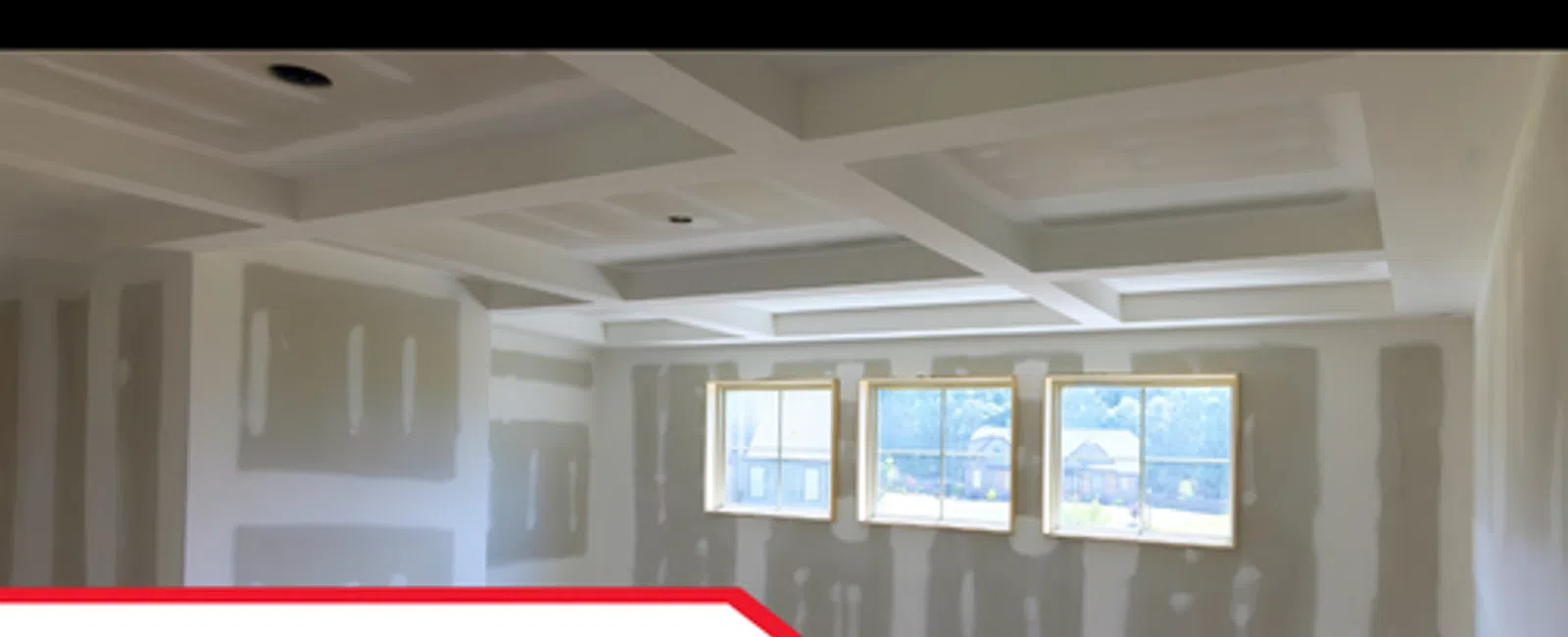
Building a new home gives buyers an opportunity that does not exist with most completed properties: there is a period when much of the home's construction is still visible before drywall and other finishes cover it. Framing, subflooring, portions of the exterior weather-management system, and other construction details can be easier to observe during this stage. Once the project moves forward, many of these components become concealed or considerably more difficult to evaluate.
Licensed and Certified Inspector Jared West of LunsPro Inspection Group recently highlighted the value of this stage while performing a pre-drywall inspection in the Chattanooga, Tennessee area. Among the conditions he observed were a knee wall that was approximately one inch out of alignment over less than four feet, areas of squeaky and uneven subflooring, loose or damaged gasket plates on the gable walls, house wrap that needed proper integration with headwall flashing, and window flashing that still needed to be taped.
None of these observations means every new construction home will have the same concerns. Instead, they illustrate why an independent inspection before drywall can provide useful information while construction is still underway. For new-home buyers throughout Chattanooga, Nashville, Atlanta, Charlotte, Raleigh, Greensboro, Greenville, Savannah, and Charleston, understanding the purpose of this inspection stage can help them make more informed decisions during the building process.
What Is a Pre-Drywall Inspection?
A pre-drywall inspection takes place during construction before drywall and many interior finishes are installed.
Timing is important.
The home needs to be far enough along that the inspector has meaningful components to evaluate, but not so far along that drywall has concealed areas that should be observed.
At this stage, portions of the framing and subfloor may still be exposed. Exterior construction details may also remain visible or accessible.
The inspection provides a snapshot of the home's observable condition at a critical point in construction.
It is not a guarantee that the home will never have defects, nor does it replace the builder's own quality-control procedures or other required inspections. It provides another professional set of eyes focused on the property before construction advances.
Why Visibility Matters
Once drywall is installed, a home begins to look much closer to the finished product.
That is exciting for buyers, but it also changes what can be seen.
Wall framing becomes concealed. Connections and other construction details may no longer be readily observable. Flooring finishes eventually cover the subfloor, while trim and other materials hide additional areas.
Pre-drywall inspection takes advantage of the period before those layers are installed.
That can make certain construction details much easier to identify and document.
For Licensed Inspectors, accessibility matters. An inspector cannot report on a component that is completely concealed in the same way they can evaluate something visible before finishes are installed.
Framing Alignment Deserves Attention
One of Jared's observations involved a knee wall at the top of the stairs.
He measured the wall at approximately one inch out of alignment in less than four feet and indicated that it needed to be straightened.
This is a good example of why framing deserves attention before drywall.
Once finished wall materials are installed, framing alignment can influence the appearance and fit of the finished surfaces.
A visible alignment issue during construction provides an opportunity for the builder to evaluate and correct the condition before additional layers are added.
The key is early identification.
Correcting an observable construction detail is generally more straightforward when the component is still exposed than after drywall, paint, trim, and other finishes have been installed around it.
Squeaky Subfloors Can Provide a Clue
Jared also encountered areas of squeaky flooring.
He attributed the observed squeaking to subflooring that was not secured correctly.
At the pre-drywall stage, this condition can be particularly useful to identify because the finished flooring has not yet hidden the subfloor.
A squeak may seem like a minor annoyance, especially in an unfinished home. But if the cause involves how the subfloor is secured, identifying it during construction gives the builder an opportunity to address the condition before finished flooring is installed.
Once carpet, hardwood, tile, or another finish is added, access may become more complicated.
That makes walking and observing the subfloor an important part of this stage of inspection.
Uneven Subflooring Can Affect Finished Flooring
Squeaking was not the only flooring concern.
Jared also observed areas of unlevel subflooring.
He noted that the condition could create problems depending on the type of finished flooring that would eventually be installed.
That is an important practical consideration.
The subfloor serves as the base for the finished floor. If portions are visibly uneven, the condition should be evaluated before another material is installed over it.
Different flooring materials can respond differently to the surface beneath them, so it would be inappropriate to predict exactly what would happen without knowing the final flooring system and the extent of the condition.
What can be said is that an uneven substrate deserves attention before the next stage of construction.
Why Fixing the Base First Matters
- New construction involves layers.
- Framing supports other components.
- Subflooring supports finished flooring.
- Exterior weather-management materials work together with flashing.
- Drywall covers framing.
Because later construction depends on earlier work, an unresolved issue can become harder to address as additional layers are installed.
That is one of the central reasons a pre-drywall inspection can be valuable.
The objective is not simply to create a list of imperfections.
It is to identify observable conditions at a point when the builder still has relatively direct access to many of the affected components.
Loose or Damaged Gasket Plates
Jared also found a number of loose or damaged gasket plates on both gable walls at either end of the home.
The important takeaway for homeowners is not that they need to become experts in every individual construction component.
Instead, it demonstrates the level of detail that may be visible before the walls and other finishes are completed.
A buyer walking through an unfinished house may see an overwhelming collection of framing, fasteners, wiring, pipes, and construction materials.
A professional inspector approaches the same space systematically.
Components are evaluated based on their visible condition and intended installation.
When something appears loose, damaged, incomplete, or improperly positioned, it can be documented for correction or further evaluation.
House Wrap and Flashing Need to Work Together
Exterior water management was another area Jared highlighted.
At the roof-to-wall area, he observed that the house wrap needed to be installed behind the headwall flashing.
This is an important concept because exterior water management does not depend on a single material.
House wrap and flashing need to be integrated appropriately so water is directed where it belongs.
Simply having both materials present does not necessarily mean the installation is complete.
How those materials overlap and connect matters.
Jared's observation demonstrates why inspectors look at installation details rather than simply checking whether house wrap or flashing exists.
Why Headwall Flashing Matters
The area where a roof meets a wall is an important transition.
Different building surfaces meet there, and the materials need to work together to manage water.
Jared specifically noted the relationship between the house wrap and the headwall flashing at this location.
The inspection did not need to wait for visible interior water damage to recognize that the installation needed attention.
That is one of the advantages of inspecting during construction.
An incomplete or improper detail can sometimes be identified before it has an opportunity to contribute to a moisture problem.
Window Flashing Is Another Detail to Check
Jared also identified flashing at the tops of windows that needed to be taped.
Windows are another area where multiple construction materials come together.
The window unit, surrounding wall materials, house wrap, and flashing details need to be integrated appropriately.
At the pre-drywall stage, some of these details may still be readily visible.
Once exterior and interior finishes are complete, portions of the installation can become harder to evaluate.
Finding incomplete flashing details while construction is underway provides an opportunity for correction before the home is finished.
Moisture Management Begins During Construction
Homeowners often think about moisture intrusion only after seeing a stain on a ceiling or wall.
But moisture management begins much earlier.
The way exterior materials are installed during construction contributes to how water is directed around the building.
House wrap and flashing are examples of components designed to work as part of that broader system.
If an inspector observes an installation detail that needs correction, addressing it during construction is preferable to simply waiting to see whether water intrusion becomes visible later.
A pre-drywall inspection therefore has a preventive value: it identifies observable construction concerns while they can still be addressed as part of the building process.
New Construction Does Not Mean Perfect Construction
A newly built home can be well constructed and still contain individual items that need correction.
Construction involves numerous materials, trades, schedules, and installation steps.
Small details can be missed.
Materials can be damaged.
Components can be left incomplete.
Alignment can need adjustment.
None of this means buyers should assume something is wrong with every new home.
It means "new" should not be treated as a substitute for inspection.
The appropriate question is not simply, "When was this house built?"
It is, "What is the condition of the home being built?"
Why Independent Inspection Adds Another Perspective
Builders have their own processes, personnel, subcontractors, and quality-control procedures.
A buyer's independent inspector serves a different role.
The inspector evaluates visible and accessible conditions for the client within the scope of the inspection.
That independent perspective can be especially useful at important construction milestones.
During the pre-drywall stage, LunsPro Inspection Group can document visible items before many of them disappear behind finished surfaces.
The resulting information gives buyers a clearer understanding of what was observed and which items may need attention.
Pre-Drywall Is One Part of a Multi-Phase Approach
Jared also highlighted that LunsPro Inspection Group offers multi-phase inspections for new construction.
The pre-drywall inspection is one important stage, but it is not the only opportunity to evaluate a new home.
The process can include a final construction inspection and an 11-month home warranty inspection.
Each serves a different purpose.
Pre-Drywall Inspection
This stage focuses on conditions visible before drywall and major finishes conceal them.
Final Construction Inspection
The final inspection evaluates the home much closer to completion, when systems and finished components can be observed in their completed state.
11-Month Warranty Inspection
An 11-month inspection provides another opportunity to evaluate the home after it has been occupied and used, typically while the homeowner is approaching the end of the first year.
A concern that could not be observed at pre-drywall may become apparent later, while some early construction issues are best identified before the drywall goes up.
The stages complement one another rather than replacing each other.
New Construction Throughout the Southeast
New residential construction is common throughout the Southeast.
Buyers in Nashville and Chattanooga are seeing homes built alongside established neighborhoods and expanding communities. New construction is also a major part of housing markets in Atlanta, Charlotte, Raleigh, Greensboro, Greenville, Savannah, and Charleston.
Although construction methods, designs, and individual properties vary, the underlying inspection principle remains consistent.
Every home should be evaluated based on what is actually present.
A buyer should not assume a particular property is defect-free because it is new, just as an inspector should not assume defects exist simply because construction is still underway.
Inspection provides evidence rather than assumptions.
Why Buyers Should Pay Attention to Construction Milestones
A new construction buyer has something an existing-home buyer usually does not: the ability to see the home at different stages of completion.
Those stages can be valuable.
Once a wall is closed, the opportunity to observe the framing behind it changes.
Once flooring is installed, the subfloor is no longer directly visible.
Once exterior assemblies are completed, certain flashing and weather-management details may become less accessible.
Scheduling inspections around meaningful construction milestones allows the buyer to make better use of those opportunities.
A Thorough Report Creates a Record
Documentation is another important benefit of professional inspection.
When an inspector identifies a knee wall that is out of alignment, an uneven section of subfloor, loose components, or incomplete flashing details, those findings can be recorded in the inspection report.
That gives the buyer something more useful than a verbal recollection from a construction walkthrough.
Clear descriptions and supporting photographs can help communicate what was observed and where it was located.
The builder can then evaluate the documented items and determine the appropriate correction.
The Goal Is Correction, Not Perfection
Homeowners should approach pre-drywall inspections with realistic expectations.
Construction is still underway.
Some work may intentionally be incomplete because the project has not yet reached that stage.
The purpose of the inspection is not to criticize an unfinished home for being unfinished.
Instead, it is to identify visible conditions that appear damaged, improperly installed, out of alignment, unsecured, or otherwise in need of attention based on the construction stage.
That distinction helps keep the process productive.
The objective is to give the builder an opportunity to address appropriate items before work continues.
What Jared's Findings Teach New-Home Buyers
The conditions identified by Licensed and Certified Inspector Jared West cover several different parts of the construction process.
There was a framing alignment concern.
There were squeaky and uneven areas of subflooring.
There were loose or damaged gasket plates.
There were house wrap and headwall flashing details requiring attention.
There was window flashing that needed to be taped.
No single observation represents every new home.
Together, however, they demonstrate how much can be visible during a pre-drywall inspection and why a systematic review at this stage can be useful.
A new home can look very different once drywall, flooring, trim, paint, and other finishes are installed. By that point, many of the components that were exposed during construction are no longer readily visible. A pre-drywall inspection takes advantage of that temporary window, allowing Licensed Inspectors to evaluate observable framing, subflooring, and construction details before they are covered.
For buyers throughout Nashville, Chattanooga, Atlanta, Charlotte, Raleigh, Greensboro, Greenville, Savannah, and Charleston, that additional perspective can be valuable when building a home. The goal is not to assume the builder has done something wrong. It is to independently evaluate the property at a stage when certain conditions are easier to identify and correct.
LunsPro Inspection Group provides professional Southeastern Residential and Commercial Inspections, including inspection options for different phases of new construction. As Jared explained, those phases can include pre-drywall, final construction, and 11-month warranty inspections. Each stage offers a different opportunity to understand the condition of the home.
Once the drywall goes up, the house may begin to feel finished. Before that happens, however, there is a valuable opportunity to look at what will soon be hidden. A professional pre-drywall inspection helps make the most of that opportunity by documenting visible conditions while the builder still has direct access to many of the components that may need attention.