
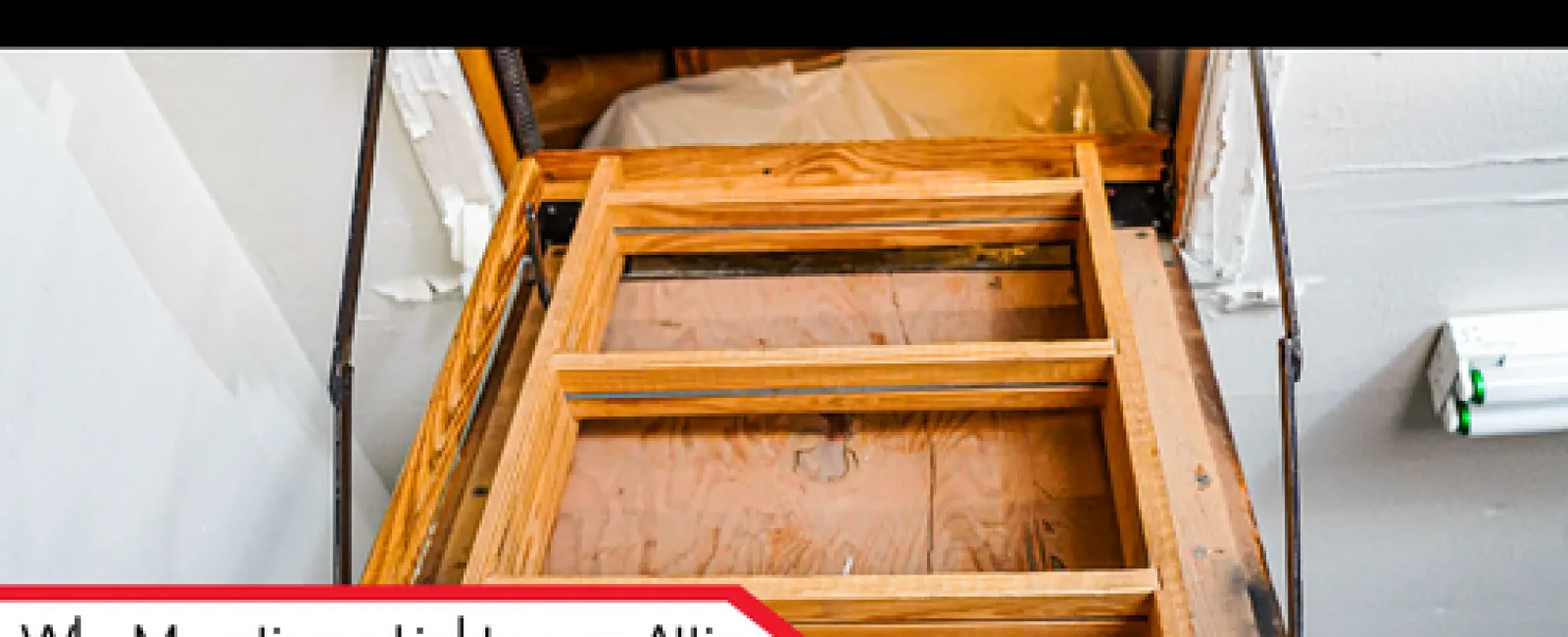
When homeowners think about electrical safety, they often focus on breaker panels, outlets, or visible wiring. However, some of the most overlooked concerns are found in areas that are rarely accessed—such as the attic. During a recent inspection, Licensed Inspector Devin P. of LunsPro Inspection Group identified an unusual installation: a light fixture attached directly to an attic access panel. While this may seem convenient at first glance, it raises important functional and safety considerations.
Attics serve as utility spaces for insulation, structural components, ductwork, and electrical runs. Access points to these areas are designed to be movable and unobstructed. When a permanent electrical component, such as a light fixture, is mounted onto a surface that must be lifted or removed, it introduces complications. For Southeastern homeowners in particular—where attics frequently house HVAC equipment due to regional climate demands—safe and practical access is essential.
An attic access panel is designed for entry. It may be a simple framed opening with a removable hatch or a pull-down ladder system. Regardless of the type, its primary purpose is to allow safe passage into the attic space. It is not designed to support electrical fixtures, wiring tension, or repetitive movement while connected to a powered device.
When a light fixture is installed directly onto an attic access panel, several issues emerge. First, every time the panel is opened, the electrical wiring connected to the fixture must either flex, disconnect, or remain under strain. Electrical wiring is not intended to be repeatedly stressed in this manner. Over time, movement can loosen connections, damage insulation, or create unsafe conditions.
Licensed Inspector Devin P. noted that attaching a light to a movable surface requires the electrical wiring to move whenever the panel is opened. From a practical inspection standpoint, this is not ideal. Electrical components should be securely fastened to stable framing members or junction boxes—not to panels designed for removal or rotation.
Another consideration is serviceability. If the light fixture needs repair or replacement, access becomes more complicated. A homeowner or electrician must manage both the panel's movement and the wiring simultaneously. This creates unnecessary complexity in what should be a straightforward task.
In Southeastern homes, attic access is particularly important because these spaces often contain mechanical systems. HVAC air handlers are frequently installed in attics across the Southeast due to slab foundations and design preferences. When technicians need to access these systems for maintenance or emergency repairs, the entry point must be unobstructed and safe. A mounted light fixture adds weight and wiring complications to a surface that should remain simple and functional.
Additionally, from an inspection perspective, any installation that deviates from standard building practices warrants attention. Electrical fixtures are typically mounted to properly secured electrical boxes attached to framing members. This ensures stability, protects wiring connections, and reduces the risk of strain. Mounting a fixture to an attic hatch does not align with the intended purpose of that component.
While this setup may not immediately fail or cause visible damage, professional inspections are about identifying conditions that could lead to issues over time. Repeated movement of wired components increases the potential for loose connections. Loose electrical connections can generate heat. Heat within concealed spaces, especially near insulation commonly found in attics, is a risk factor that should not be overlooked.
Another important aspect is code compliance. While exact code interpretations depend on jurisdiction, general electrical standards emphasize securing fixtures to permanent structural elements and protecting wiring from physical damage. A movable panel inherently introduces physical stress to wiring. Even if the installation appears functional, it may not meet best practice standards for long-term reliability.
Southeastern climates also add another layer of consideration. Attics in this region can reach extreme temperatures during summer months. Heat expansion and contraction already stress building materials and electrical components. Introducing additional mechanical movement from an attic hatch increases wear on the system. Over time, this combination of heat and motion may degrade wiring insulation faster than expected.
Homeowners sometimes install attic lights for convenience. Proper attic lighting is beneficial. It improves visibility during storage access, maintenance tasks, or inspections. However, the fixture should be mounted to a stable framing member near the access opening—not directly on the hatch itself. This allows the light to remain stationary while the access panel operates independently.
Licensed Inspector Devin P. emphasizes that inspectors are not there to dictate design preferences but to evaluate safety and functionality. In this case, the concern is not about aesthetics or creativity. It is about ensuring that electrical systems are installed in a manner consistent with their intended use.
During Southeastern Residential and Commercial Inspections, inspectors assess attic spaces for structural integrity, insulation performance, ventilation, and electrical safety. Attic access points are part of that evaluation. Any modification that alters their operation or introduces electrical strain is documented and explained to the homeowner.
For homeowners, the takeaway is straightforward: movable components and electrical fixtures should remain separate. An attic hatch is a mechanical access point. A light fixture is an electrical device requiring stable support and secure wiring connections. Combining the two functions may create avoidable risks.
If you discover a similar installation in your home, the recommended course of action is to consult a licensed electrician. Relocating the fixture to a fixed ceiling joist or nearby framing member is typically a simple solution. The goal is to eliminate wiring movement and restore the attic access to its intended function.
This type of issue also underscores the value of professional inspections. Many homeowners may not think twice about a light mounted to an access panel. It may appear functional and convenient. However, a trained inspector evaluates how systems interact—not just whether they currently operate.
LunsPro Inspection Group routinely identifies installation details that homeowners might overlook. These observations are not about minor imperfections; they are about long-term performance and safety. Electrical systems, even seemingly small components like attic lights, deserve careful consideration.
For Southeastern homeowners, proactive maintenance is especially important. The region's humidity, heat, and storm activity already place stress on homes. Ensuring that electrical installations are secure and properly supported helps reduce cumulative wear over time.
It is also worth noting that attic work is often performed during renovations or DIY projects. Homeowners may add lighting to improve visibility without considering the structural implications of where the fixture is mounted. While the intent is practical, execution matters. Attic access panels are not designed to bear additional loads or support wiring connections.
By separating electrical fixtures from movable components, homeowners preserve both functionality and safety. A properly mounted attic light improves usability without compromising access or stressing wiring.
Ultimately, inspections are about clarity. When Licensed Inspector Devin P. highlights an attic access panel with a mounted light fixture, the message is educational. Electrical components should be installed in stable, permanent locations. Access panels should remain free to operate without pulling on live wiring.
Homeownership in the Southeast comes with unique environmental demands, but fundamental installation principles remain consistent. Secure electrical connections, stable mounting points, and clear access pathways contribute to a safer home.
LunsPro Inspection Group encourages homeowners to view inspections as opportunities to learn about their property. Small details—like where a light fixture is mounted—can have broader implications over time. Southeastern Residential and Commercial Inspections are designed to identify these conditions and provide practical guidance.
In conclusion, mounting a light fixture to an attic access panel may appear convenient, but it introduces avoidable electrical and functional concerns. Wiring should not be repeatedly stressed due to panel movement, and access points should remain unobstructed. Separating these systems ensures safer operation and easier maintenance.
For Southeastern homeowners, regular inspections provide insight into both major systems and subtle installation details. By addressing issues early and relying on professional evaluation, homeowners can maintain safe, efficient, and well-functioning properties for years to come.