
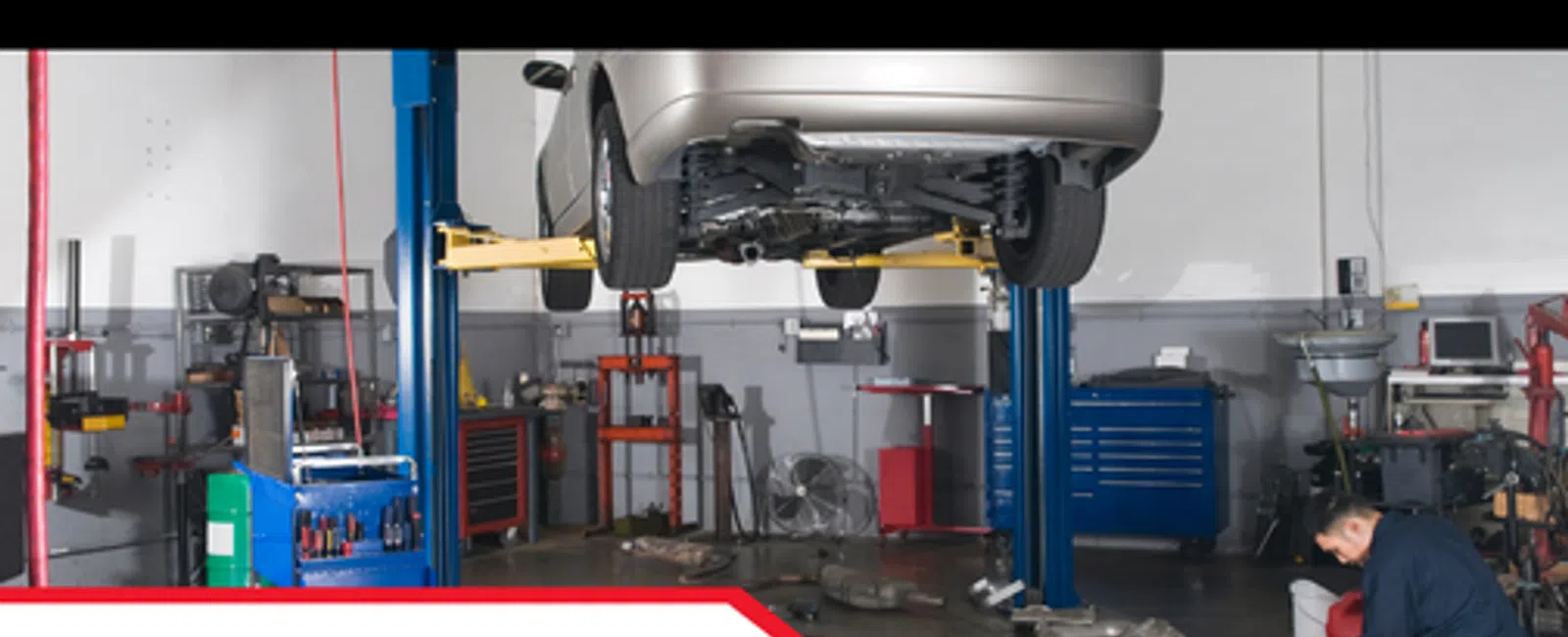
Auto repair and service facilities present a different set of property-condition considerations than many conventional office, retail, or warehouse buildings. These properties often combine heavy vehicle traffic, large service-bay doors, vehicle lifts, compressors, electrical equipment, floor drains, chemical-storage areas, paved work zones, and specialized ventilation needs within one commercial site. Because of that combination, an auto repair shop inspection should evaluate the building as a working commercial asset while recognizing that certain equipment, environmental conditions, and regulatory issues require separate specialized reviews.
For buyers, investors, operators, and property managers, the goal of a commercial building inspection is not to certify that an automotive facility complies with every OSHA, EPA, fire-code, environmental, or operational requirement. Instead, the inspection documents visible and accessible building conditions that may affect repair costs, maintenance planning, future renovations, and the suitability of the property for continued automotive use. Findings involving roofs, slabs, electrical systems, drainage, service bays, ventilation, pavement, or deferred maintenance can influence both the acquisition decision and the capital budget required after closing.
LunsPro Inspection Group provides Commercial Property Inspections and Property Condition Assessments throughout its commercial service areas in Georgia, North Carolina, and Florida. Whether buyers are scheduling Atlanta Commercial Inspections, Savannah Commercial Inspections, Charlotte Commercial Inspections, Raleigh Commercial Inspections, Greensboro Commercial Inspections, or Jacksonville Commercial Inspections, understanding how an automotive property's major building systems have responded to intensive use can strengthen the Commercial Due Diligence process.
Why Auto Repair Facilities Require Additional Attention
Automotive service buildings are often used more intensively than ordinary commercial spaces.
Daily operations may involve:
- Repeated vehicle movement
- Heavy equipment
- Vehicle lifts
- Air compressors
- Battery chargers
- Welding equipment
- Power tools
- Lubricants and fluids
- Floor drains
- Large overhead doors
- High electrical loads
- Extended operating hours
These conditions can accelerate wear on building components.
Concrete slabs may experience more concentrated loads. Overhead doors can cycle many times per day. Electrical systems may support equipment that was never contemplated when the building was originally constructed. Parking and service areas may experience continual traffic from cars, trucks, tow vehicles, and delivery vehicles.
A useful auto repair shop inspection therefore looks at the property through the lens of both building condition and operational history.
The Roof Still Matters in an Automotive Facility
Even when much of a buyer's attention is focused on service bays and equipment, the roof remains one of the most important building systems.
Automotive facilities may have roof penetrations associated with:
- Exhaust systems
- HVAC equipment
- Plumbing vents
- Electrical conduits
- Other mechanical components
Each penetration represents a location where flashing, sealants, curbs, or related roof details may require maintenance.
Inspectors may observe:
- Deteriorated roof coverings
- Damaged flashing
- Failed sealants
- Ponding water
- Blocked drainage
- Previous repairs
- Moisture staining below roof areas
- Deteriorated roof edges
An aging commercial roof can represent a substantial future capital expense, making its condition particularly relevant to a buyer's Property Condition Assessment.
Roof Drainage and Gutters
Automotive properties often have large roof areas.
Rain falling on those surfaces must be collected and directed away from vulnerable parts of the site.
Depending on the building, roof drainage may include:
- Gutters
- Downspouts
- Internal roof drains
- Scuppers
- Underground connections
Visible deficiencies may include:
- Blocked drains
- Damaged gutters
- Disconnected downspouts
- Water discharging near foundations
- Erosion
- Ponding
Roof drainage should be considered alongside site drainage because the two systems ultimately affect the same property.
Exterior Walls and Building Envelope
Exterior walls may include masonry, concrete, metal panels, stucco, or other commercial cladding.
During a commercial building inspection, inspectors may document:
- Cracking
- Corrosion
- Damaged panels
- Failed sealants
- Open penetrations
- Impact damage
- Water staining
- Deteriorated materials
Vehicle-service properties can experience impacts and modifications not typically found in lower-intensity buildings.
For example, exterior walls may have been altered for ventilation ducts, exhaust systems, utility lines, signage, or equipment.
Previous modifications are not necessarily problematic, but buyers should understand whether they have affected the visible condition of the building envelope.
Foundations and Structural Components
The accessible foundation and structural systems should also be evaluated.
Potential observations can include:
- Foundation cracking
- Settlement indicators
- Deteriorated masonry
- Corroded structural components
- Damaged framing
- Modified structural elements
- Impact damage
A crack alone does not establish structural failure.
Commercial buildings can develop cracking from normal shrinkage, settlement, movement, or other causes.
However, substantial displacement, widespread deterioration, unusual structural modifications, or visible damage may justify evaluation by a structural engineer.
Service Bays Are High-Use Areas
Service bays often reveal more about an automotive property's operating history than office or customer areas.
Inspectors may observe:
- Worn concrete
- Staining
- Damaged wall finishes
- Impact damage
- Equipment anchors
- Floor drains
- Overhead doors
- Electrical outlets
- Visible wiring
- Lighting
- Ventilation components
The condition of these areas can help buyers distinguish routine wear from more extensive deferred maintenance.
A heavily used shop may remain functional while requiring significant repairs to doors, slabs, electrical components, drains, and interior finishes.
Concrete Floors and Slabs
Service-bay floors carry vehicles, equipment, toolboxes, lifts, and other concentrated loads.
Common visible slab conditions may include:
- Cracking
- Spalling
- Surface wear
- Settlement
- Patching
- Staining
- Depressions
- Deteriorated joints
Not every slab crack indicates a structural problem.
The inspector should consider:
- Width
- Displacement
- Pattern
- Location
- Relationship to equipment
- Associated settlement
Significant movement, severe deterioration, or concerns around heavily loaded equipment may warrant evaluation by an engineer or qualified concrete professional.
Conditions Around Vehicle Lift Locations
Vehicle lifts deserve special attention because they transfer significant loads into the floor or supporting structure.
A general auto repair shop inspection may observe visible conditions around lift locations, such as:
- Cracked concrete
- Spalling
- Damaged anchors
- Previous anchor holes
- Evidence of relocated equipment
- Uneven slabs
- Patching
However, a commercial property inspector should not certify that a slab is adequate to support a particular lift.
Determining lift capacity or slab suitability may require:
- Manufacturer specifications
- Slab thickness verification
- Concrete strength information
- Reinforcement information
- Engineering analysis
Likewise, the inspection should not be presented as a certification of the lift itself.
A qualified vehicle-lift technician or equipment specialist should evaluate lift condition and operation when needed.
Overhead and Service Doors
Automotive buildings may have several large overhead doors that cycle repeatedly throughout the workday.
Inspectors may observe:
- Damaged panels
- Bent tracks
- Loose hardware
- Corrosion
- Impact damage
- Deteriorated seals
- Operating difficulties
Daily vehicle movement can accelerate wear.
A general property inspection may include normal operation where appropriate, but specialized door servicing, spring adjustment, or equipment certification should be left to qualified overhead-door professionals.
Electrical Demand Can Be Significant
One of the most important differences between an automotive facility and a conventional office is the potential electrical load.
Shop equipment may include:
- Compressors
- Vehicle lifts
- Battery chargers
- Welding equipment
- Diagnostic systems
- Tire equipment
- HVAC equipment
- Large lighting systems
- Power tools
The OSHA - General Industry Standards provide useful context for the broad range of workplace conditions and equipment addressed in industrial and service environments, including walking-working surfaces, electrical safety, machinery, and other occupational concerns. These standards reinforce an important due-diligence distinction: a commercial building inspection can identify visible property deficiencies, but it is not an OSHA compliance inspection or workplace-safety certification.
Electrical Panels and Service Equipment
Inspectors may evaluate accessible electrical components such as:
- Main service equipment
- Distribution panels
- Disconnects
- Breakers
- Visible conductors
- Receptacles
- Junction boxes
- Lighting
Potential concerns may include:
- Damaged equipment
- Open electrical boxes
- Missing covers
- Corrosion
- Improper-looking modifications
- Exposed wiring
- Loose components
Automotive buildings may have accumulated numerous electrical changes over time as equipment was added or replaced.
A building that began as a simple repair shop may later have added larger compressors, electric vehicle chargers, welding equipment, or additional lifts.
These changes can make electrical history especially relevant.
Electrical Capacity Requires Specialized Evaluation
A property inspection can identify visible conditions but generally does not perform a complete electrical load analysis.
A buyer planning new equipment may need a licensed electrician or electrical engineer to determine whether the existing electrical system can support:
- Additional lifts
- High-capacity compressors
- EV charging
- Specialized diagnostic equipment
- New HVAC
- Welding equipment
This evaluation may influence renovation and capital budgets.
Lighting in Service Areas
Adequate lighting is important for practical shop operations.
Inspectors may observe:
- Inoperative fixtures
- Damaged lighting
- Loose fixtures
- Exposed wiring
- Deteriorated covers
- Corrosion
Lighting repairs may be relatively minor compared with other building systems, but extensive outdated or damaged lighting can still contribute to renovation costs.
HVAC in Offices and Customer Areas
Many automotive facilities include offices, waiting rooms, restrooms, parts areas, and customer spaces that rely on conventional HVAC systems.
The inspection may include accessible observations of:
- Heating and cooling equipment
- Filters
- Condensate drainage
- Visible ductwork
- Controls
- Corrosion
- Leakage
- General operation
Aging HVAC equipment can represent a meaningful capital expense even if the service bays themselves are minimally conditioned.
Ventilation in Service Bays
Enclosed automotive work areas may have additional ventilation needs related to vehicle operation, equipment, fumes, heat, and other shop activities.
Visible systems may include:
- Exhaust fans
- General ventilation equipment
- Ductwork
- Vehicle-exhaust extraction systems
- Louvers
A commercial inspector may document missing, damaged, deteriorated, or obviously inoperative visible components.
However, a general inspection does not determine whether ventilation rates meet workplace exposure standards or whether the system provides sufficient air exchange for a specific automotive process.
HVAC professionals, mechanical engineers, or industrial-hygiene professionals may be appropriate when ventilation performance needs specialized evaluation.
Plumbing Systems
Automotive facilities may have plumbing serving:
- Restrooms
- Utility sinks
- Wash areas
- Water heaters
- Hose connections
- Floor drains
- Break rooms
Inspectors may document:
- Visible leaks
- Corrosion
- Damaged piping
- Slow drainage
- Deteriorated fixtures
- Previous repairs
- Moisture damage
A commercial building inspection can identify visible plumbing conditions, but concealed piping and underground drainage may require additional evaluation.
Floor Drains Require Context
Floor drains are common in many vehicle-service facilities.
A buyer may see drains in:
- Service bays
- Wash areas
- Mechanical spaces
- Utility areas
Inspectors may observe:
- Damaged drains
- Corrosion
- Debris
- Standing water
- Deteriorated surrounding concrete
However, the visible presence of a drain does not establish where it discharges.
A general property inspection typically cannot determine whether an underground drain connects to:
- Sanitary sewer
- Storm drainage
- An oil-water separator
- Another treatment system
- A concealed or abandoned line
A plumber, environmental professional, municipal authority, or other qualified specialist may be needed to determine underground routing.
Visible Leaks and Drainage Deterioration
Service bays can experience leaks from plumbing, roof systems, equipment, vehicles, or other sources.
Visible conditions might include:
- Staining
- Dampness
- Corrosion
- Damaged finishes
- Floor deterioration
One stain does not automatically indicate an active plumbing leak.
The inspector should consider surrounding conditions and document whether the evidence appears active, historical, or uncertain.
Oil, Chemical, and Fluid Storage Areas
Auto repair facilities commonly store materials related to automotive operations.
Visible storage areas may contain:
- Motor oil
- Transmission fluid
- Coolant
- Cleaning products
- Batteries
- Used fluids
- Other shop materials
During an auto repair shop inspection, the inspector may document visible property conditions such as:
- Damaged shelving
- Staining
- Deteriorated floors
- Corrosion
- Leaking containers
- Damaged walls
- Improvised storage areas
The inspection should not classify substances or determine hazardous-waste compliance.
The U.S. EPA - Hazardous Waste Generators explains that many industries generate hazardous wastes and that federal generator requirements depend on the amount of regulated hazardous waste generated during a calendar month rather than simply on business or facility size. This resource is relevant because an automotive property may contain waste-handling areas that deserve observation during due diligence, but determining how a specific operation is classified or whether it complies with RCRA requirements requires a separate regulatory or environmental review.
Battery Storage Areas
Automotive batteries may be stored, charged, or handled on site.
An inspector can observe physical property conditions in these areas, including:
- Corrosion
- Staining
- Damaged finishes
- Deteriorated shelving
- Visible electrical concerns
However, battery handling, hazardous-material classification, employee safety procedures, and regulatory compliance fall outside a general building-condition inspection.
Waste Handling Is a Separate Regulatory Issue
EPA distinguishes hazardous-waste generators based on the quantities and types of waste generated, and state rules may be more stringent than federal requirements.
This matters during commercial due diligence because two automotive facilities of similar size may have very different regulatory obligations based on their actual operations.
A property inspector should therefore avoid making compliance conclusions from the appearance of the shop alone.
Where environmental or waste-management concerns materially affect the transaction, a qualified environmental consultant should be engaged.
Parking Areas and Heavy Vehicle Traffic
Automotive facilities often experience more intensive pavement use than many conventional commercial properties.
Traffic may include:
- Customer vehicles
- Tow trucks
- Parts-delivery vehicles
- Service vehicles
- Employee vehicles
This can contribute to:
- Asphalt cracking
- Settlement
- Potholes
- Rutting
- Surface deterioration
- Damaged curbs
- Drainage depressions
During a commercial property inspection, buyers should consider both current pavement condition and likely future repair needs.
Large-scale resurfacing or reconstruction can represent a meaningful capital expense.
Site Drainage Matters
Parking lots, service areas, roofs, and drive lanes create extensive impervious surfaces.
Rain falling on these areas can collect contaminants, debris, sediment, oil residues, and other materials before reaching drainage systems.
The U.S. EPA - Stormwater Discharges from Industrial Activities explains that stormwater contacting material-handling areas, equipment-maintenance activities, and other industrial operations can pick up pollutants. EPA also notes that federal stormwater permitting requirements apply to specified categories of industrial activity, with many programs administered by authorized states. This provides important context for automotive-property buyers, but a property inspection does not determine whether a particular repair facility requires NPDES coverage or complies with stormwater regulations.
Visible site-drainage observations may include:
- Catch basins
- Grates
- Swales
- Ponding
- Erosion
- Damaged pavement slopes
- Roof discharge points
- Standing water
These physical conditions can affect both property maintenance and operational planning.
Not Every Repair Shop Has the Same Stormwater Requirements
This distinction is important.
EPA's industrial stormwater program regulates specific categories of industrial activity. The list includes certain transportation facilities with vehicle maintenance operations, along with automobile junkyards and other defined industrial sectors, but the applicability of a particular rule depends on the facility's actual classification and operations.
A commercial inspector should therefore document visible drainage and site conditions without assuming that every auto repair shop is subject to the same federal stormwater permit.
Environmental or regulatory professionals should address those questions separately when relevant.
Catch Basins and Exterior Drains
Automotive sites may use catch basins or trench drains to collect runoff.
Inspectors may observe:
- Debris accumulation
- Damaged grates
- Settlement
- Corrosion
- Standing water
- Damaged surrounding pavement
These conditions can indicate maintenance needs.
However, a general inspection cannot necessarily determine the complete underground routing, condition, or capacity of the stormwater system.
Persistent drainage problems may justify evaluation by a drainage contractor or civil engineer.
Signs of Previous Automotive Use
Commercial buyers should understand the property's historical use.
Even when a building currently appears clean or lightly used, previous automotive operations may have left physical evidence such as:
- Old lift anchors
- Patched floor openings
- Abandoned electrical connections
- Removed compressors
- Filled drains
- Stained slabs
- Former tank areas
- Modified ventilation systems
These observations can help buyers understand how extensively the building has been modified.
They may also indicate where specialized environmental or equipment-related due diligence deserves consideration.
Underground Storage Tanks Require Specialized Review
Some automotive properties may have current or former underground storage tanks.
These could have served:
- Fuel systems
- Waste oil
- Heating oil
- Other petroleum-related uses
Information from the U.S. EPA - Underground Storage Tanks is especially relevant because EPA reports that hundreds of thousands of underground storage tanks nationwide store petroleum or certain hazardous substances and identifies groundwater contamination as a significant potential concern associated with leaking USTs. Federal UST requirements address areas such as release prevention, detection, inspections, operator responsibilities, financial responsibility, and cleanup.
A normal commercial building inspection does not locate concealed underground tanks, test them for leakage, determine regulatory status, or evaluate environmental contamination.
What Counts as an Underground Storage Tank?
EPA defines an underground storage tank system as a tank and connected underground piping with at least 10 percent of the combined system volume underground. Federal UST regulations apply to systems storing petroleum or certain hazardous substances, subject to applicable exclusions and requirements.
For buyers, this means that visible evidence of former automotive use may warrant separate record review or environmental investigation.
Environmental due diligence might include:
- Historical research
- Regulatory database review
- Tank records
- Environmental Site Assessments
- Specialized tank testing
Those activities are outside the scope of a property-condition inspection.
A Commercial Inspection Is Not an Environmental Site Assessment
This distinction is particularly important for automotive properties.
A property inspection evaluates physical building and site conditions.
An environmental professional may evaluate:
- Historical site use
- Soil contamination
- Groundwater contamination
- Underground storage tanks
- Hazardous substances
- Environmental records
- Recognized environmental conditions
The two services can complement each other, but they answer different questions.
Visible staining on a slab, for example, may be documented by the building inspector, but it does not establish whether contamination is present beneath the concrete.
Vehicle Lifts Require Equipment Specialists
Vehicle lifts are critical shop equipment.
A building inspector may note:
- Visible condition
- Installation location
- Slab deterioration around anchors
- Obvious damage
However, the inspection should not certify:
- Lift capacity
- Mechanical condition
- Hydraulic performance
- Safety-lock operation
- Equipment compliance
- Proper anchorage
A qualified lift technician or equipment specialist should evaluate those items.
Compressors and Specialty Shop Equipment
Similar limitations apply to compressors, tire machines, brake equipment, diagnostic systems, welding systems, alignment equipment, and other specialized machinery.
The property inspection can identify visible building concerns around the equipment, such as:
- Damaged electrical connections
- Corrosion
- Floor damage
- Improvised structural support
- Leaks
It does not determine whether the equipment is safe, calibrated, serviceable, or appropriate for future operations.
Separate equipment inspections may therefore be an important part of acquisition due diligence.
Fire and Life-Safety Observations
Automotive shops may contain combustible materials, electrical equipment, work areas, and specialized operations.
A general commercial inspector may observe visible conditions involving:
- Exit doors
- Exit routes
- Electrical deficiencies
- Emergency access
- Damaged stairs
- Loose guards
- Obstructions
- Accessible fire-related components
However, the inspection should not be presented as a formal fire-code evaluation.
Fire alarm systems, sprinkler systems, specialized suppression, hazardous-material storage requirements, occupancy classifications, and code compliance may require evaluation by a fire marshal or qualified fire-protection professional.
Exits and Access
Service facilities may contain doors leading from:
- Service bays
- Offices
- Parts rooms
- Customer areas
- Storage areas
Inspectors may document damaged doors, inaccessible exits, deteriorated steps, or other visible conditions.
Determining whether the number, width, travel distance, hardware, signage, or illumination of exits satisfies every applicable code requirement is a separate compliance function.
Stairs, Guards, and Walking Surfaces
Automotive shops sometimes have mezzanines, raised offices, storage platforms, pits, or stairs.
Visible conditions may include:
- Loose handrails
- Damaged guards
- Cracked steps
- Deteriorated walking surfaces
- Missing components
These conditions deserve attention, but a standard commercial building inspection should still be distinguished from a workplace-safety audit.
OSHA's General Industry standards cover detailed walking-working surface requirements, illustrating why specialized regulatory review is a different service from documenting observable physical building conditions.
Maintenance History Can Reveal Patterns
Automotive properties often accumulate repairs over many years.
Buyers should request records involving:
- Roof repairs
- Electrical upgrades
- HVAC replacement
- Plumbing repairs
- Drain cleaning
- Pavement repairs
- Door repairs
- Lift installations
- Environmental work
- Tank removal or closure
Repeated work in one area may reveal recurring conditions.
For example, several drain-cleaning invoices may justify further plumbing evaluation, while repeated roof repairs may indicate that replacement should be included in capital planning.
Renovations Can Affect Building Systems
An older auto shop may have been expanded or reconfigured several times.
Renovations may have added:
- More service bays
- Larger electrical service
- New equipment
- Office space
- Customer waiting areas
- Additional plumbing
- HVAC systems
- Ventilation components
Each alteration can affect the overall building.
A general inspection may reveal visible evidence of modifications, but permit history and engineering documentation may be useful when a buyer needs to understand whether major structural or system changes were properly designed.
Building Age Matters, but Condition Matters More
Older automotive buildings often have older systems.
That can mean:
- Aging roofing
- Older electrical equipment
- Corroded plumbing
- Worn doors
- Cracked slabs
- Deteriorated pavement
Age alone does not mean these components have failed.
A well-maintained older facility may perform better than a newer property that experienced intensive use and deferred maintenance.
Buyers should focus on observable condition, repair history, remaining capital needs, and suitability for future operations rather than assuming age alone determines quality.
Property Condition Assessments for Auto Repair Facilities
A Property Condition Assessment can organize findings across the property's major systems.
Depending on scope, the assessment may address:
- Roofing
- Structure
- Exterior walls
- Doors
- HVAC
- Electrical systems
- Plumbing
- Interior areas
- Site improvements
- Pavement
- Drainage
For investors, this provides a broader picture of both visible deficiencies and deferred maintenance.
Individual issues may seem manageable in isolation.
A deteriorated roof, aging electrical service, failing pavement, damaged overhead doors, and extensive slab repairs together may represent a significant near-term capital commitment.
Planning for Future Automotive Operations
A property that worked for one operator may not automatically work for the next.
A buyer may plan to add:
- More vehicle lifts
- EV charging
- Larger compressors
- Additional service bays
- New exhaust equipment
- Different mechanical systems
- Heavier vehicles
These changes can affect:
- Electrical demand
- Slab requirements
- Ventilation
- Drainage
- Structural conditions
- Site circulation
The auto repair shop inspection provides a baseline, but engineers, electricians, equipment specialists, and contractors may be needed to determine whether the property can support the proposed operation.
Inspection Findings and Repair Budgeting
Inspection findings can help buyers identify where contractor estimates should be obtained.
Potential costs may involve:
- Roof repairs
- Pavement replacement
- Electrical upgrades
- Overhead-door repairs
- HVAC replacement
- Plumbing repairs
- Drainage improvements
- Slab repairs
- Building-envelope repairs
This information can support more realistic acquisition and renovation budgets.
Findings Can Influence Negotiations
Property-condition findings may also affect transaction negotiations.
Depending on the purchase agreement and severity of issues, buyers may:
- Request further evaluation
- Obtain repair estimates
- Seek repairs before closing
- Adjust capital reserves
- Renegotiate financial terms
- Reconsider renovation plans
The commercial inspector does not determine the negotiation strategy.
The inspection provides factual information that buyers and their advisors can use when making those decisions.
Cost-to-Cure Considerations
Automotive facilities can contain relatively expensive building deficiencies because of their size and intensive use.
A buyer evaluating cost to cure may need estimates for:
- Roof replacement
- Electrical service upgrades
- Concrete repair
- Drainage work
- Pavement resurfacing
- HVAC replacement
- Door replacement
Specialized equipment and environmental work should be budgeted separately.
This prevents building-condition costs from becoming mixed with unrelated equipment or environmental liabilities.
When an Electrician Should Be Involved
Further electrical evaluation may be appropriate when inspectors observe:
- Damaged panels
- Exposed wiring
- Extensive modifications
- Corrosion
- Questionable equipment connections
- Signs of overheating
A licensed electrician can also determine whether existing capacity is sufficient for the buyer's proposed equipment.
When an HVAC Contractor or Engineer Is Appropriate
HVAC or mechanical specialists may be needed when there are:
- Inoperative systems
- Ventilation concerns
- Damaged ductwork
- Condensate problems
- Exhaust-system questions
- Planned changes in shop use
A mechanical engineer may be appropriate when system design or ventilation capacity must be calculated.
When a Plumber Should Be Involved
Plumbing specialists may be needed for:
- Recurring drain problems
- Leaking piping
- Damaged floor drains
- Water-heater deficiencies
- Uncertain drain routing
- Concealed piping concerns
Camera inspections or other specialized testing can provide information beyond the general inspection.
When an Engineer May Be Needed
Structural or civil engineers may be appropriate when buyers encounter:
- Significant slab settlement
- Structural damage
- Major foundation movement
- Questionable lift-support conditions
- Complex stormwater problems
- Extensive site settlement
The property inspector documents observable conditions, while the engineer can analyze capacity, causes, or corrective design.
When Environmental Professionals Should Be Involved
Environmental professionals may be appropriate when the property has:
- Current or former underground tanks
- Suspected contamination
- Significant historical fluid handling
- Regulatory records
- Evidence of environmental releases
- Environmental concerns identified during transaction due diligence
EPA's resources on hazardous-waste generators, stormwater, and underground storage tanks demonstrate that automotive properties can intersect with specialized environmental programs.
A building inspection can provide useful physical observations, but environmental liability evaluation requires an appropriate environmental scope.
Commercial Auto Facility Inspections in Georgia
Georgia contains a wide range of automotive properties, from small independent repair shops to larger dealership service centers and fleet facilities.
During Atlanta Commercial Inspections, buyers may encounter older urban properties, suburban service centers, converted industrial buildings, and facilities with substantial pavement and electrical demands.
Savannah Commercial Inspections can place additional emphasis on roofing, drainage, moisture exposure, pavement, and exterior building materials because of the area's warm, humid, and rainy conditions.
In both markets, the building's maintenance history and previous automotive use should be evaluated alongside its current condition.
Commercial Auto Facility Inspections in North Carolina
North Carolina's major commercial markets include both newer automotive facilities and established properties that have operated for decades.
During Charlotte Commercial Inspections, rapidly growing suburban areas may contain high-volume service centers with large parking areas, significant shop equipment, and extensive electrical requirements.
Raleigh Commercial Inspections may involve facilities being adapted for new service concepts, EV-related operations, or expanding customer demand.
Greensboro Commercial Inspections can include older automotive and light-industrial properties where slab condition, electrical modifications, roof age, and maintenance history deserve careful review.
A building-condition inspection helps buyers determine which systems may require immediate work and which should be included in longer-term capital planning.
Commercial Auto Facility Inspections in Florida
Florida's climate can add another layer of maintenance demand.
During Jacksonville Commercial Inspections, buyers may want particular attention paid to:
- Roofing
- Drainage
- Pavement
- Moisture intrusion
- Exterior sealants
- HVAC systems
- Corrosion
Heavy rainfall also makes site drainage and stormwater management relevant, especially on properties with extensive paved surfaces.
These physical observations should still be distinguished from environmental permitting, stormwater compliance, or flood-risk analysis.
A Commercial Building Inspection Has Defined Limits
A professional commercial building inspection can document the physical condition of many visible and accessible components, but it cannot answer every question associated with an automotive facility.
It generally should not be represented as:
- A vehicle-lift certification
- A compressor inspection
- A shop-equipment evaluation
- An Underground Storage Tank assessment
- An Environmental Site Assessment
- A hazardous-material survey
- An OSHA compliance audit
- An EPA compliance review
- A formal fire-code inspection
Those services require different expertise, testing, records, standards, or regulatory authority.
Keeping these scopes separate helps buyers obtain more reliable information from the appropriate professionals.
Auto repair and service facilities can be demanding commercial properties because building systems are exposed to frequent vehicle traffic, heavy equipment, repeated door operation, substantial electrical loads, fluids, drainage demands, and intensive daily use. A thorough auto repair shop inspection should therefore evaluate roofing, exterior walls, foundations, slabs, service bays, doors, electrical components, plumbing, HVAC, ventilation, pavement, drainage, and other major property systems in the context of how the facility has historically operated.
Visible deterioration should also be interpreted carefully. A stained service-bay floor does not automatically establish environmental contamination. A slab crack does not automatically mean a vehicle lift is unsafe. A floor drain does not reveal where concealed piping terminates, and the presence of automotive fluids does not by itself establish hazardous-waste noncompliance. The inspection documents physical observations and identifies where additional expertise may be appropriate.
The distinction between a commercial building inspection and specialized regulatory or equipment evaluations is especially important for these properties. OSHA's General Industry standards provide workplace-safety requirements, while EPA programs address hazardous waste, specified industrial stormwater discharges, and underground storage tanks. Those frameworks explain why automotive real estate can require broader due diligence, but a LunsPro inspection does not certify OSHA, EPA, environmental, fire-code, or other regulatory compliance.
LunsPro Inspection Group provides Commercial Property Inspections and Property Condition Assessments across its commercial markets in Georgia, North Carolina, and Florida. Whether a buyer is arranging Atlanta Commercial Inspections, Savannah Commercial Inspections, Charlotte Commercial Inspections, Raleigh Commercial Inspections, Greensboro Commercial Inspections, or Jacksonville Commercial Inspections, the objective is to identify observable deficiencies, understand deferred maintenance, and determine where specialists may be needed before the transaction moves forward.
For investors and operators, that information can support repair budgeting, negotiations, renovation planning, cost-to-cure estimates, and long-term capital decisions. Evaluating the physical property together with its previous use, maintenance history, equipment needs, environmental due diligence, and proposed future operations gives buyers a far more complete picture of an automotive facility than examining the service bays alone.