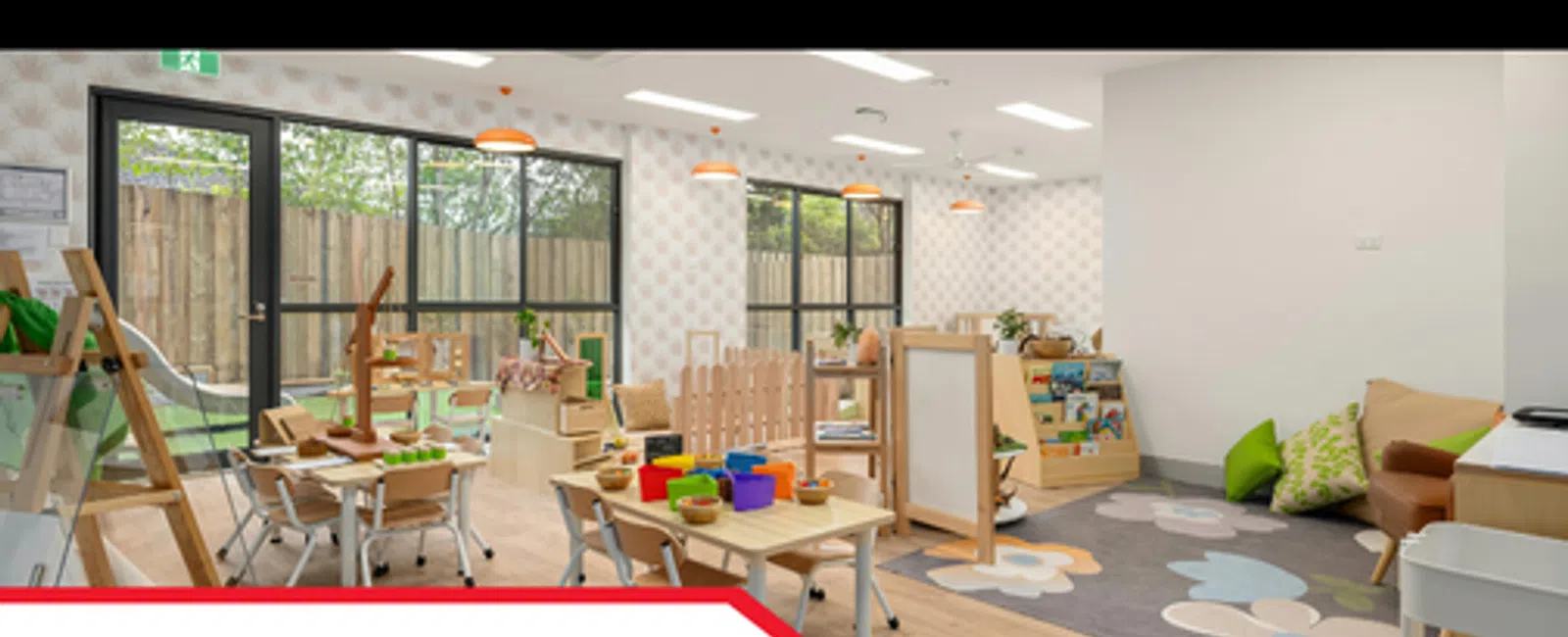
Daycare and childcare facilities require a careful approach to commercial real estate due diligence because the property is intended to serve young children, staff members, parents, and visitors throughout the day. While the fundamental building systems are similar to those found in many other commercial properties, the consequences of deficiencies involving stairs, doors, electrical components, moisture, HVAC systems, walking surfaces, or exterior access can take on additional importance in an environment occupied by children. A detailed daycare building inspection can help buyers and operators understand the observable physical condition of a property before making acquisition, renovation, or occupancy decisions.
The building inspection is only one part of evaluating a childcare property. Childcare facilities can also be subject to licensing requirements, fire and life-safety rules, accessibility obligations, zoning requirements, health regulations, and operational standards that vary according to jurisdiction and facility type. A commercial property inspection should therefore be viewed as a physical-condition assessment rather than an approval to operate a childcare business. Buyers should coordinate building due diligence with appropriate regulatory, licensing, accessibility, environmental, fire-safety, and professional reviews when applicable.
LunsPro Inspection Group provides Commercial Property Inspections and Property Condition Assessments throughout commercial markets in Georgia, North Carolina, and Florida. Whether a transaction involves Atlanta Commercial Inspections, Savannah Commercial Inspections, Charlotte Commercial Inspections, Raleigh Commercial Inspections, Greensboro Commercial Inspections, or Jacksonville Commercial Inspections, understanding the condition of major building systems can help commercial real estate stakeholders plan repairs, estimate capital needs, and determine where specialized evaluation may be appropriate.
Why Childcare Properties Require Thoughtful Due Diligence
A childcare facility is an active-use commercial property.
Children may move frequently between classrooms, restrooms, hallways, play areas, entrances, and outdoor spaces. Staff members need functional building systems to maintain comfortable and practical indoor environments, while parents and guardians regularly enter and leave the property.
As a result, buyers may need to pay particular attention to conditions involving:
- Walking surfaces
- Doors
- Stairs
- Guards and handrails
- Electrical components
- HVAC systems
- Plumbing
- Moisture
- Exterior access
- Drainage
- Fencing
- Parking and drop-off areas
- Building maintenance
These observations do not determine whether the facility satisfies every regulatory requirement. Instead, they help establish the physical condition of the asset as part of Commercial Due Diligence.
A Commercial Inspection Is Different From Childcare Licensing
This distinction is essential.
Information from Childcare.gov - Child Care Licensing and Regulations provides useful context because childcare licensing establishes minimum health and safety requirements that can include sanitation, emergency planning, building safety, child and caregiver health, staff requirements, and ongoing monitoring. Childcare.gov also explains that licensing requirements are established and administered through states and territories, which means requirements can vary depending on location and the type of childcare program.
A daycare building inspection performed as part of a real estate transaction does not determine whether a childcare facility is licensed or whether the future operator will receive regulatory approval.
Buyers should separately verify:
- State licensing requirements
- Local requirements
- Facility classifications
- Capacity restrictions
- Required approvals
- Applicable inspections
- Operational standards
The appropriate childcare licensing agency should be consulted before a buyer assumes that an existing commercial building can legally operate as a daycare.
Roofing Systems
The roof is one of the most important protective systems on any childcare property.
Commercial roofs may include:
- Low-slope membrane roofing
- Asphalt shingles
- Metal roofing
- Modified bitumen systems
- Other commercial roof assemblies
During a commercial property inspection, observable roof conditions may include:
- Damaged materials
- Deteriorated flashing
- Open seams
- Ponding water
- Previous repairs
- Damaged penetrations
- Blocked drainage
- Deteriorated sealants
- Visible evidence of leakage
Roof condition is particularly important because recurring leaks can affect classrooms, offices, hallways, ceilings, insulation, electrical components, and indoor finishes.
A visual inspection cannot determine every concealed roof condition. When extensive deterioration, active leakage, or questionable repairs are observed, further evaluation by a qualified commercial roofing contractor may be appropriate.
Foundations and Structural Components
A commercial property inspection may also include accessible observations of foundations and structural components.
Potential observations can include:
- Cracking
- Settlement indicators
- Deteriorated masonry
- Corrosion
- Damaged framing
- Modified structural components
- Water-related deterioration
Not every crack indicates significant structural movement.
Concrete and masonry can develop cracking for many reasons, including shrinkage, age, settlement, and normal building movement.
However, substantial displacement, widespread cracking, unusual structural modifications, or visible deterioration may justify evaluation by a structural engineer.
For a buyer evaluating a daycare property, understanding structural conditions before renovation is especially useful because future changes to classrooms, doors, restrooms, or circulation areas may affect project planning.
Exterior Walls, Windows, and Doors
Exterior walls form an important part of the building envelope.
Depending on the property, the exterior may include:
- Brick
- Concrete masonry
- Stucco
- Siding
- Metal panels
- Exterior insulation systems
- Other cladding
Inspectors may document:
- Cracking
- Deteriorated joints
- Damaged materials
- Failed sealants
- Corrosion
- Moisture staining
- Open penetrations
Windows and exterior doors should also be considered because these openings can affect weather resistance, building security, occupant movement, and indoor comfort.
Visible window or door conditions may include deteriorated frames, broken components, failed seals, damaged hardware, or evidence of previous moisture intrusion.
Building Drainage and Grading
Exterior water management is an important consideration for childcare facilities.
Poor drainage can affect:
- Foundations
- Walkways
- Landscaping
- Parking surfaces
- Exterior play-adjacent areas
- Building entrances
During an inspection, observable site conditions may include:
- Negative grading
- Standing water
- Soil erosion
- Damaged gutters
- Short or disconnected downspouts
- Clogged drains
- Deteriorated catch basins
A commercial inspection can document visible drainage concerns, but complex stormwater conditions may require additional evaluation by a civil engineer or drainage professional.
HVAC Systems and Childcare Environments
Heating, ventilation, and air-conditioning systems play an important role in commercial childcare properties.
The HVAC system may influence:
- Indoor temperatures
- Humidity
- Air circulation
- Ventilation
- Occupant comfort
Inspection observations may include accessible equipment condition, filters, condensate drainage, thermostats, visible ductwork, corrosion, leaks, and basic operation where appropriate.
The CDC - Infection Prevention Actions for Children and Schools provides useful context for why ventilation deserves attention in facilities occupied by groups of children. CDC identifies proper ventilation as one of several strategies that can help reduce the spread of common infections in school environments and discusses maintaining appropriate outdoor-air ventilation through existing HVAC systems. Although this CDC guidance is directed toward schools rather than specifically serving as a building-inspection standard for daycare properties, it reinforces why ventilation and HVAC condition are relevant when evaluating child-focused facilities.
A standard commercial property inspection does not measure infection risk, certify indoor air quality, or determine whether the HVAC system meets every ventilation-design requirement.
If ventilation capacity or indoor environmental performance is an important concern, an HVAC contractor or mechanical engineer may be needed.
HVAC Condensation and Moisture
Commercial HVAC systems can also become sources of moisture.
Potential conditions include:
- Clogged condensate drains
- Overflowing drain pans
- Damaged condensate piping
- Condensation on ductwork
- Corrosion around equipment
- Water staining beneath mechanical components
Repeated HVAC moisture can damage ceilings, walls, flooring, and other materials.
Inspectors can document visible evidence but may recommend additional HVAC evaluation when the exact cause or extent cannot be determined.
Plumbing Systems and Restrooms
Childcare facilities may have significant plumbing demands.
Depending on the facility, plumbing can serve:
- Children's restrooms
- Adult restrooms
- Sinks
- Handwashing stations
- Food-preparation areas
- Utility sinks
- Break rooms
- Cleaning areas
A commercial plumbing evaluation within a general property inspection may include accessible fixtures, supply piping, drain piping, water heaters, and visible leakage.
Potential observations include:
- Leaks
- Corrosion
- Slow drainage
- Damaged fixtures
- Deteriorated piping
- Moisture damage
- Poorly maintained components
A property inspection does not determine whether fixture counts, fixture heights, or other specialized childcare configurations satisfy licensing requirements unless those items are specifically included under a separate scope.
Electrical Systems
Electrical conditions deserve careful attention in any commercial building.
A general inspection may include accessible:
- Service equipment
- Electrical panels
- Breakers
- Disconnects
- Receptacles
- Lighting
- Visible wiring
- Junction boxes
Potential deficiencies may include:
- Open electrical boxes
- Missing covers
- Damaged receptacles
- Exposed wiring
- Improper-looking modifications
- Corrosion
- Damaged lighting components
Childcare occupancy may make the location and condition of accessible electrical components particularly relevant, but the commercial inspector should remain within the scope of a physical building inspection.
When significant concerns are identified, a licensed electrician may be recommended.
Indoor Environmental Conditions
Indoor environmental conditions should be considered when evaluating daycare and childcare buildings because children may spend substantial portions of the day indoors.
Guidance from the U.S. EPA - Child Care is especially relevant. EPA explains that children can be more vulnerable than adults to certain indoor pollutants because of their size, developmental stage, and behavior. EPA's Healthy Child Care resources are intended to help providers and others identify and reduce potential environmental exposures in childcare facilities.
This does not mean a commercial inspector performs a complete environmental health assessment.
Instead, the inspection may identify visible property conditions that could justify further evaluation, including:
- Moisture intrusion
- Water damage
- Suspected microbial-like growth
- Damaged building materials
- Poorly maintained HVAC components
- Visible pest-related damage
- Significant odors
Environmental testing should be performed separately when needed.
Moisture Intrusion and Water Damage
Moisture deserves particular attention because it can affect multiple building systems.
Potential sources include:
- Roof leaks
- Plumbing leaks
- Window leakage
- Exterior wall penetration
- HVAC condensation
- Poor site drainage
- Foundation moisture
Inspectors may observe:
- Staining
- Damaged drywall
- Deteriorated ceiling tiles
- Peeling finishes
- Efflorescence
- Corrosion
- Dampness
- Odors
Visible staining does not automatically confirm an active leak or mold.
Likewise, an old stain may remain after the original source has been repaired.
The purpose of inspection is to document the available evidence and recommend further investigation when the source or extent is unclear.
Indoor Air Quality Requires Its Own Scope
The U.S. EPA - Indoor Air Quality in Schools provides additional context for child-oriented buildings. EPA resources address ventilation, pollutant sources, moisture and mold, maintenance, temperature, humidity, and other factors associated with indoor environments. EPA identifies excess moisture and mold among factors that can contribute to poor indoor air quality in schools.
These resources reinforce why HVAC maintenance, moisture management, ventilation, and prompt repair of water problems deserve consideration in childcare buildings.
However, a commercial property inspection is not a comprehensive indoor air quality assessment.
Specialized testing may be appropriate when a buyer has concerns involving:
- Mold
- Radon
- Lead
- Asbestos
- Volatile organic compounds
- Other environmental contaminants
Those evaluations should be performed by qualified professionals under the appropriate scope.
Exits and Building Circulation
Childcare facilities may contain multiple rooms and circulation paths that connect classrooms to exits and exterior areas.
A commercial inspection may document accessible conditions involving:
- Exit doors
- Hallways
- Door hardware
- Stairs
- Walking surfaces
- Exterior access
Visible concerns might include damaged doors, deteriorated walking surfaces, obstructed access, or defective building components.
A general inspector may identify conditions warranting attention, but determining whether all exits satisfy occupancy-specific fire or building requirements is a separate code or life-safety function.
Stairs, Guards, and Handrails
Stairs and elevated walking areas can be particularly important in facilities intended for children.
Inspectable conditions can include:
- Loose treads
- Deteriorated steps
- Damaged handrails
- Loose guards
- Missing components
- Corrosion
- Significant movement
The presence of an older configuration does not automatically establish a current code violation.
Building standards and locally adopted requirements change over time.
A commercial property inspector should describe observable physical deficiencies while recommending specialized review when compliance questions are important to the intended occupancy.
Fire and Life-Safety Considerations
Fire and life-safety conditions can take on particular importance in childcare facilities because young children may need adult assistance during an emergency.
A general commercial inspector may note visible conditions involving:
- Exit doors
- Egress routes
- Emergency lighting
- Building components
- Accessible fire-related equipment
- Obvious obstructions
However, a commercial property inspection should not be confused with a formal fire inspection.
A fire marshal or qualified fire-protection professional may evaluate:
- Fire alarms
- Sprinkler systems
- Detection systems
- Fire extinguishers
- Emergency systems
- Occupancy requirements
- Required exit capacity
- Specialized fire-code provisions
Buyers should verify what formal fire reviews are necessary before operation.
Parking and Vehicle Movement
Childcare properties often have periods of concentrated vehicle activity during drop-off and pickup.
A commercial inspection may evaluate physical conditions involving:
- Parking pavement
- Curbs
- Sidewalks
- Drainage
- Potholes
- Settlement
- Damaged surfaces
- Exterior lighting where included
Traffic circulation design, drop-off procedures, and operational vehicle-safety planning generally require separate review.
The building inspection can identify physical site deficiencies but does not establish whether a traffic plan is operationally safe or complies with all regulatory requirements.
Sidewalks and Walking Surfaces
Parents, children, staff, and visitors may frequently use exterior walkways.
Inspectors may document:
- Cracking
- Significant displacement
- Deterioration
- Settlement
- Drainage across walking surfaces
- Damaged curbs
- Loose materials
Not every pavement crack is an immediate safety concern.
The extent, displacement, location, and surrounding conditions should be considered.
Significant trip conditions or deteriorated pathways may warrant repair planning.
Fencing and Exterior Boundaries
Many childcare properties include fenced exterior areas.
A general commercial property inspection may document visible building-site conditions such as:
- Damaged fence sections
- Loose posts
- Corrosion
- Missing components
- Damaged gates
- Deteriorated attachments
Whether a fence complies with childcare licensing requirements for height, openings, gate design, or playground separation is a different question.
Those criteria should be verified through the licensing authority or other applicable regulations.
Playground-Adjacent Areas
A commercial property inspection may include observations of the site around playground areas when those spaces are accessible.
Relevant building and site conditions may involve:
- Drainage
- Walkways
- Fencing
- Adjacent walls
- Exterior doors
- Standing water
- Erosion
However, a normal daycare building inspection should not be represented as a playground safety inspection unless that service is specifically included and performed by an appropriately qualified professional.
Playground equipment, impact-attenuating surfaces, entrapment hazards, equipment spacing, and other specialized playground conditions may require separate evaluation.
Accessibility Considerations
Accessibility is another important component of childcare-property due diligence.
The ADA.gov - Child Care Centers and the ADA explains that privately operated childcare centers generally fall under Title III of the Americans with Disabilities Act, while childcare programs operated by government agencies are generally subject to Title II. ADA guidance also explains that facilities may have accessibility obligations, including requirements affecting existing, altered, and newly constructed facilities.
Potential physical considerations can involve:
- Accessible parking
- Routes to entrances
- Doorways
- Interior circulation
- Restrooms
- Changes in level
However, a general commercial property inspection should not be advertised as a formal ADA accessibility survey.
Accessibility standards can be detailed, and a specialized accessibility consultant, architect, or other qualified professional may be appropriate when a buyer needs a compliance-level assessment.
Existing Childcare Use Does Not Guarantee Future Approval
Buyers sometimes assume that because a property previously operated as a daycare, it can automatically continue operating in the same way.
That assumption can create problems.
Requirements may have changed, licenses may not transfer, the proposed operator may have different capacity needs, or renovation plans may alter the building.
A buyer should verify:
- Current licensing requirements
- Permitted use
- Occupancy limitations
- Fire requirements
- Accessibility obligations
- Facility-specific regulations
with the appropriate authorities before closing or beginning renovations.
Licensing Inspections Are Separate From Building Inspections
Childcare.gov's current Monitoring and Inspections guidance explains that state and territorial childcare licensing personnel conduct recurring onsite inspections of licensed childcare programs and document health and safety violations and corrective actions.
That regulatory monitoring process has a different purpose from a commercial real estate inspection.
A LunsPro commercial property inspection evaluates observable physical property conditions for the buyer or other client.
It does not replace ongoing childcare licensing inspections and should not be interpreted as regulatory approval.
Deferred Maintenance Can Affect Acquisition Costs
A building may be operational while still carrying substantial deferred maintenance.
Potential examples include:
- Aging roofing
- Deteriorated HVAC equipment
- Failed sealants
- Damaged pavement
- Plumbing leaks
- Aging electrical equipment
- Damaged exterior walls
- Poor drainage
- Deteriorated windows or doors
When several of these conditions exist simultaneously, the post-closing investment can be significantly higher than the purchase price alone suggests.
For a childcare buyer planning renovations, this matters because building repairs compete with expenditures for classroom improvements, furnishings, technology, security systems, and operational setup.
Renovation Planning
A property may require modifications before it is suitable for the buyer's planned childcare operation.
Potential renovations might involve:
- Restrooms
- Classrooms
- Interior walls
- Doors
- HVAC
- Electrical systems
- Plumbing
- Exterior access
- Parking
- Accessibility improvements
The existing physical condition helps determine how much work should be incorporated into the renovation budget.
For example, installing new interior finishes before correcting a roof leak or drainage problem can result in repeated damage.
Commercial inspection findings therefore provide a useful baseline before design and renovation work begins.
How a Property Condition Assessment Helps
A Property Condition Assessment can provide a broader view of a childcare property's major building systems.
Depending on scope, it may address:
- Roofing
- Structure
- Exterior walls
- Windows and doors
- HVAC
- Electrical systems
- Plumbing
- Interior areas
- Site improvements
- Drainage
- Parking
- Deferred maintenance
For investors and commercial buyers, this information helps place individual findings within a larger capital-planning framework.
A leaking plumbing fixture may be a small repair.
A deteriorated roof, aging HVAC system, failing parking lot, and significant exterior repairs together may represent a much larger near-term investment.
Understanding Cost to Cure
Inspection findings can help buyers determine which items should receive contractor estimates before closing.
Potential cost-to-cure items may include:
- Roof repairs
- HVAC replacement
- Electrical repairs
- Plumbing corrections
- Drainage improvements
- Exterior repairs
- Door replacement
- Pavement repair
- Accessibility improvements identified through separate review
The commercial inspector does not necessarily provide final repair pricing for every condition.
Instead, findings can help buyers decide where specialized estimates are needed to establish realistic acquisition and renovation budgets.
When a Fire-Safety Professional May Be Needed
Further fire or life-safety evaluation may be appropriate when:
- Fire systems are complex
- Sprinklers are installed
- Alarm systems require certification
- Occupancy changes are planned
- Exit requirements are uncertain
- The licensing authority requires formal documentation
A fire marshal, fire-protection contractor, or fire-protection engineer may provide the appropriate level of review.
When an Engineer May Be Needed
Engineering evaluation may be appropriate when inspectors observe:
- Significant structural movement
- Major foundation cracking
- Damaged structural framing
- Extensive corrosion
- Complex drainage problems
The commercial inspector identifies visible conditions.
An engineer can evaluate structural significance, calculate performance, or design repairs.
When HVAC, Plumbing, or Electrical Specialists May Be Needed
Specialists may also be appropriate when major systems show significant deficiencies.
An HVAC contractor may assess:
- Equipment capacity
- Ventilation
- Mechanical performance
- Condensate problems
A plumber may evaluate:
- Recurring leaks
- Drainage concerns
- Water heaters
- Concealed piping
An electrician may evaluate:
- Damaged equipment
- Improper modifications
- Capacity
- Specialized electrical requirements
These services provide deeper system-specific information than a general commercial inspection.
Environmental Professionals May Also Be Appropriate
Some childcare properties may warrant environmental due diligence.
Potential concerns can involve:
- Mold
- Lead
- Asbestos
- Radon
- Soil or groundwater contamination
- Other environmental hazards
EPA's U.S. EPA - Child Care resources address numerous environmental health topics because young children can be more susceptible to some environmental exposures. The agency's current Healthy Child Care resources also include tools designed to help childcare facilities identify environmental health opportunities and concerns.
A commercial property inspection can flag visible conditions that warrant attention, but environmental sampling or regulatory analysis should be performed separately.
Commercial Childcare Inspections in Georgia
Georgia contains a wide variety of childcare properties, from freestanding daycare centers to facilities converted from other commercial uses.
During Atlanta Commercial Inspections, buyers may encounter properties in rapidly growing suburban markets as well as older buildings that have undergone multiple renovations.
Savannah Commercial Inspections can involve additional attention to roofing, drainage, exterior moisture management, and HVAC conditions because of the area's warm, humid, and rainy climate.
LunsPro Inspection Group helps buyers evaluate these physical property conditions as part of broader commercial acquisition due diligence.
Commercial Childcare Inspections in North Carolina
North Carolina's major commercial markets continue to include substantial development and redevelopment.
During Charlotte Commercial Inspections, daycare properties may include newer suburban facilities, converted commercial buildings, and established centers with significant daily vehicle and pedestrian activity.
Raleigh Commercial Inspections may involve buildings serving rapidly growing residential areas, making renovation plans and future occupancy considerations particularly relevant.
Greensboro Commercial Inspections can include both older facilities and newer commercial properties where maintenance history and existing building condition should be understood before acquisition.
In each case, property inspection findings should be considered alongside separate state and local childcare regulatory requirements.
Commercial Childcare Inspections in Florida
Florida childcare properties face many of the same building-condition issues as facilities elsewhere, along with significant environmental exposure to heat, humidity, heavy rainfall, and long cooling seasons.
During Jacksonville Commercial Inspections, buyers may want particular attention paid to:
- Roofing
- HVAC
- Condensate drainage
- Moisture intrusion
- Exterior sealants
- Site drainage
- Parking surfaces
- Exterior walls
The commercial inspection documents accessible building conditions but does not establish whether the facility satisfies Florida childcare licensing, environmental, fire, accessibility, or operational requirements.
Physical Condition Is Only One Part of Property Suitability
A well-maintained commercial building is not automatically suitable for childcare use.
Likewise, a building with several repair needs is not automatically unsuitable.
Property suitability depends on a combination of:
- Physical condition
- Intended capacity
- Building layout
- Regulatory requirements
- Licensing
- Fire and life safety
- Accessibility
- Renovation feasibility
- Financial considerations
The role of Commercial Due Diligence is to gather enough reliable information for buyers to understand those different issues before committing significant capital.
A daycare building inspection gives commercial buyers an important physical-condition baseline, but childcare properties require a broader due-diligence perspective than the building inspection alone can provide. Roofing, foundations, walls, windows, doors, HVAC, ventilation, electrical systems, plumbing, moisture, stairs, guards, walkways, parking, fencing, and drainage can all influence maintenance needs and future renovation planning. Because young children occupy these facilities, buyers may reasonably place added importance on visible conditions affecting occupant movement, indoor environments, and reliable building operation.
At the same time, a general commercial property inspection has defined boundaries. It does not determine childcare licensing status, certify fire-code compliance, complete an ADA accessibility survey, perform an environmental assessment, approve playground equipment, or evaluate every operational safety procedure. Childcare.gov, EPA, CDC, and ADA guidance all demonstrate that childcare environments involve overlapping building, environmental, accessibility, health, and regulatory considerations that may require separate professional or government review.
For buyers and investors, separating these functions actually makes the due-diligence process more useful. LunsPro Inspection Group can document observable physical property conditions through Commercial Property Inspections and Property Condition Assessments, while specialized professionals can address questions involving structural engineering, fire protection, HVAC design, electrical systems, plumbing, environmental health, accessibility, and licensing. This allows each concern to be evaluated by the appropriate discipline.
The inspection findings can then help commercial real estate stakeholders understand deferred maintenance, identify near-term repairs, request contractor estimates, plan renovations, and estimate future capital needs. A property with aging HVAC equipment, deteriorated roofing, drainage deficiencies, damaged pavement, plumbing concerns, and exterior repairs may require a very different acquisition budget than a building with predominantly routine maintenance needs.
LunsPro Inspection Group provides commercial inspection services throughout Georgia, North Carolina, and Florida, including Atlanta Commercial Inspections, Savannah Commercial Inspections, Charlotte Commercial Inspections, Raleigh Commercial Inspections, Greensboro Commercial Inspections, and Jacksonville Commercial Inspections. For buyers evaluating daycare and childcare real estate, the objective is not simply to determine whether the property looks ready for children today. It is to understand the condition of the building, identify areas requiring additional expertise, and build a clearer picture of what may be required to maintain, renovate, and prepare the asset for its intended use.