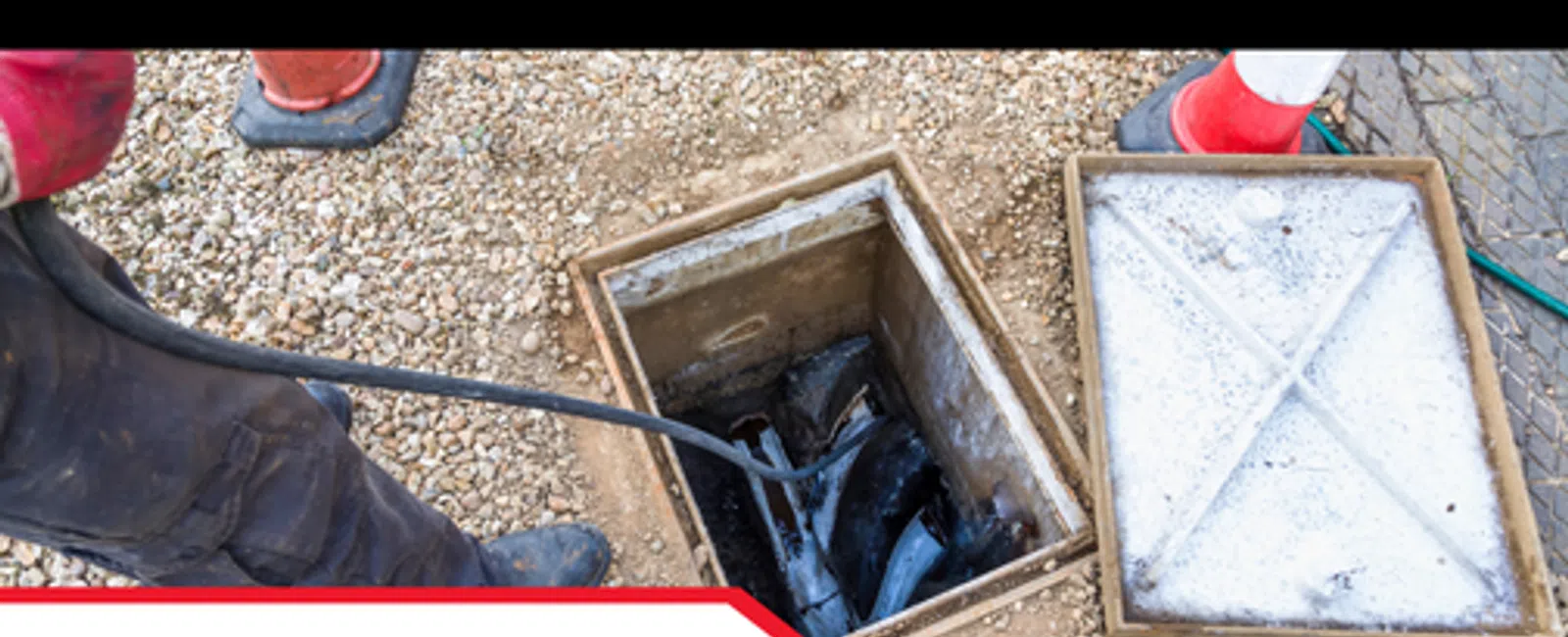
Sewer and drainage systems are easy to overlook during a commercial property acquisition because much of the infrastructure is concealed beneath floors, parking areas, landscaping, and public rights-of-way. Yet problems involving sanitary piping, building drains, stormwater systems, or underground sewer laterals can create expensive repairs and significant disruption after closing. A commercial sewer inspection can help buyers identify visible warning signs and determine whether additional investigation, such as a sewer scope or specialized plumbing evaluation, should be included in the due-diligence process.
Commercial properties also have very different drainage demands depending on their age, size, construction, and use. A small office building may have relatively simple sanitary plumbing, while a restaurant, multifamily property, warehouse, medical office, or heavily occupied commercial facility may place much greater demand on drainage infrastructure. Large roofs, parking lots, loading areas, and other impervious surfaces can also create significant stormwater-management requirements. For that reason, an effective commercial drain inspection should consider both wastewater leaving the building and rainwater moving across the site.
LunsPro Inspection Group performs Commercial Property Inspections, Property Condition Assessments, and relevant Sewer Scope Inspections as part of commercial real estate due diligence in Georgia, North Carolina, and Florida. Whether a buyer is arranging Atlanta Commercial Inspections, Savannah Commercial Inspections, Charlotte Commercial Inspections, Raleigh Commercial Inspections, Greensboro Commercial Inspections, or Jacksonville Commercial Inspections, understanding how the property manages sanitary waste and stormwater can help reveal maintenance concerns, potential repair priorities, and areas that deserve further professional evaluation.
Why Sewer and Drain Conditions Matter During Commercial Due Diligence
A commercial building depends on reliable wastewater removal every day it is occupied.
Restrooms, break rooms, commercial kitchens, floor drains, utility sinks, tenant spaces, and other plumbing fixtures may all connect to the property's sanitary drainage system. When drainage is restricted or damaged, the effects can extend well beyond a single plumbing fixture.
Potential consequences may include:
- Slow drainage
- Recurring backups
- Water or sewage damage
- Tenant complaints
- Business interruption
- Emergency plumbing expenses
- Damage to interior finishes
- Sanitation concerns
- Future capital expenditures
For an investor or commercial property buyer, these issues can affect operating costs and the financial assumptions behind the acquisition.
Information from the U.S. EPA - Sanitary Sewer Overflows (U.S. EPA - Sanitary Sewer Overflows) provides useful context. EPA explains that sanitary sewer systems collect and transport domestic, commercial, and industrial wastewater and that overflows can occur because of conditions such as blockages, line breaks, defects that allow stormwater or groundwater to enter the system, and other operational problems. This reinforces why recurring backups or unexplained drainage problems deserve attention during commercial property due diligence rather than being dismissed automatically as minor maintenance issues. (US EPA)
What Is a Commercial Sanitary Sewer System?
A sanitary sewer system is intended primarily to carry wastewater from buildings to a treatment facility or other approved disposal system.
Within a commercial property, the system may involve:
- Fixture drains
- Branch drain piping
- Main building drains
- Waste stacks
- Vent piping
- Cleanouts
- Building sewer piping
- Sewer laterals
Some components may be visible in mechanical rooms, basements, crawlspaces, utility spaces, or parking structures.
Other sections may be completely concealed inside walls, below slabs, or underground.
That distinction is important during a commercial sewer inspection. A general property inspection can evaluate accessible plumbing and visible evidence of drainage problems, but inspectors cannot determine the physical condition of every underground pipe by observing the building from above.
Sanitary Sewers and Stormwater Drains Are Different
Commercial buyers should understand that sanitary drainage and stormwater drainage serve different purposes.
Sanitary sewer systems generally carry wastewater produced inside the building.
Stormwater drainage systems manage rainfall and runoff from surfaces such as:
- Roofs
- Parking lots
- Sidewalks
- Loading areas
- Drive aisles
- Landscaped areas
Stormwater may be directed to catch basins, storm drains, retention or detention features, swales, municipal systems, or other drainage infrastructure depending on the property.
The distinction matters because connecting or managing these systems improperly can create operational and regulatory concerns.
EPA's NPDES Stormwater Program (U.S. EPA - NPDES Stormwater Program) explains that stormwater runoff flows over land and impervious surfaces such as streets, parking lots, and rooftops rather than soaking into the ground. This is particularly relevant to commercial real estate because larger developed sites can generate substantial runoff during heavy rainfall. (US EPA)
Why Large Commercial Sites Need Careful Stormwater Evaluation
A commercial property may have thousands or even hundreds of thousands of square feet of roof and pavement.
These surfaces reduce the amount of rainfall that can naturally infiltrate into the soil.
Instead, water moves across:
- Roof surfaces
- Parking lots
- Loading areas
- Drive aisles
- Sidewalks
- Other hard surfaces
That runoff must go somewhere.
EPA's National Menu of Best Management Practices for Stormwater (U.S. EPA - Stormwater Management Practices) emphasizes a holistic approach to stormwater management rather than relying on one practice in isolation. For commercial buyers, that principle provides useful context for evaluating roof drains, grading, catch basins, paved surfaces, swales, and other visible site-drainage components as an interconnected system. (US EPA)
Poor stormwater management may contribute to:
- Standing water
- Pavement deterioration
- Erosion
- Foundation moisture
- Landscape damage
- Water entering buildings
- Premature deterioration of exterior materials
A commercial drain inspection therefore extends beyond sinks and toilets.
Property Age Can Affect Sewer Conditions
Older buildings often contain older piping.
Depending on the property's age and construction history, sewer or drainage systems may contain materials that have been in service for decades.
Potential age-related concerns can include:
- Corrosion
- Deterioration
- Joint failures
- Internal buildup
- Previous repairs
- Sections made from different materials
Age alone does not prove that piping has failed.
A well-maintained older system may continue to perform adequately, while newer piping can develop problems because of installation defects, settlement, damage, or inappropriate modifications.
The more useful question during a commercial sewer inspection is whether there are visible symptoms or historical records suggesting that further investigation is warranted.
Building Use Affects Drainage Demand
The plumbing demands of a commercial property depend heavily on how the building is used.
A warehouse with only a few employee restrooms may have relatively modest sanitary demand.
A restaurant may have:
- Multiple sinks
- Restrooms
- Floor drains
- Food-service drainage
- Grease-related plumbing components
A medical facility, hotel, school, childcare property, or multifamily building may have far more plumbing fixtures than a conventional office.
Buyers should therefore consider whether the existing drainage infrastructure has historically served the same type and intensity of occupancy planned after acquisition.
A change of use can sometimes create new plumbing demands even if the building itself has not changed substantially.
Renovations Can Complicate Commercial Drainage Systems
Commercial properties are frequently modified over time.
Tenants move in and out. Restrooms are relocated. Restaurants replace retail spaces. Office layouts change. Warehouses add break rooms or production areas.
Each renovation can potentially alter plumbing.
Inspectors may encounter visible evidence of:
- Added piping
- Abandoned piping
- Patched slabs
- Relocated fixtures
- Mixed piping materials
- Unusual drain configurations
- Previous repairs
Modifications are not automatically defective.
However, a complicated renovation history can justify reviewing permits, construction records, maintenance documentation, or obtaining specialist evaluation when the visible system raises questions.
Maintenance History Provides Valuable Context
Commercial buyers should request available maintenance and repair records whenever possible.
Useful documentation may include:
- Plumbing invoices
- Sewer cleaning records
- Video sewer inspections
- Backup reports
- Pipe repairs
- Drain-clearing history
- Tenant complaints
- Storm-drain maintenance
- Catch-basin cleaning records
A property that has required drain clearing every few months presents a different due-diligence question than a property with one isolated blockage several years ago.
Inspection observations combined with historical records can provide a much more complete picture than either source alone.
What Can Recurring Slow Drains Indicate?
A slow drain does not automatically mean the underground sewer is damaged.
Possible causes can include:
- Local fixture blockage
- Buildup within piping
- Improper venting
- Restricted branch drains
- Main-line obstruction
- Damaged piping
One slow sink may be a localized plumbing problem.
Multiple slow fixtures, particularly when they affect different parts of the building, can provide stronger justification for additional investigation.
Commercial buyers should look for patterns rather than interpreting every drainage symptom as proof of a major sewer failure.
Why Backups Deserve Further Investigation
Recurring wastewater backups are among the more important warning signs in a commercial drainage system.
A backup can result from several conditions, including:
- Blockages
- Damaged sewer piping
- Root intrusion
- Accumulated debris
- Pipe deterioration
- Improper slope
- Capacity-related concerns
- Municipal system problems
EPA identifies blockages and line breaks among possible causes of sanitary sewer overflows, reinforcing why repeated backups deserve investigation. (US EPA)
At the same time, a backup does not automatically establish where the defect is located.
The problem may exist within the building, beneath the property, or within infrastructure outside the buyer's responsibility.
Further evaluation may be necessary to determine the source.
Older Sewer Piping Materials
Commercial properties may contain a range of drain and sewer materials depending on construction age and previous renovations.
Potential materials can include:
- Cast iron
- Clay
- Concrete
- ABS
- PVC
- Other approved piping systems
Each material can develop different types of deterioration.
For example, older metal piping may experience corrosion, while older sectional piping can develop joint problems or displacement.
A general commercial building inspection may identify visible portions of these systems, but underground condition cannot be determined solely from the material's age or type.
Root Intrusion and Underground Sewer Lines
Tree and shrub roots can sometimes enter damaged or vulnerable underground piping.
Root intrusion is more likely where there are openings at joints, cracks, or other defects that provide access to moisture inside the pipe.
Once roots enter a line, they can restrict flow and contribute to recurring blockages.
Root intrusion cannot usually be confirmed simply by looking at landscaping.
A camera-based Sewer Scope Inspection may be needed to observe accessible portions of underground sewer piping.
Buildup and Restricted Drainage
Internal accumulation can also reduce the effective diameter of drainage piping.
Depending on property use, buildup may involve:
- Grease
- Sediment
- Debris
- Mineral deposits
- Other accumulated materials
Some conditions can be corrected through cleaning.
Others may occur in combination with deteriorated piping or improper drainage configurations.
The goal of due diligence is to identify the most appropriate next step rather than assuming every restriction requires pipe replacement.
Visible Signs of Drainage Problems
Although underground piping is concealed, the building may provide visible clues.
An inspector may observe:
- Water staining
- Drain leakage
- Corrosion
- Damaged piping
- Sewer odors
- Slow drainage
- Active backups
- Previous water damage
- Repeated patching
- Moisture near floor drains
These observations can help determine whether additional evaluation is advisable.
A stain beneath a pipe does not necessarily indicate an active leak. Likewise, staining around a floor drain may have resulted from a previous event.
Inspection reports should distinguish between current conditions and evidence of historical moisture whenever possible.
What Does a Commercial Sewer Scope Inspection Do?
A commercial sewer scope inspection uses a specialized camera to observe accessible portions of underground sewer piping.
The camera is typically inserted through an appropriate cleanout or other accessible point.
Depending on access and conditions, the inspection may reveal:
- Root intrusion
- Standing water
- Blockages
- Buildup
- Cracking
- Separated joints
- Deterioration
- Obstructions
- Apparent pipe damage
A sewer scope provides information that cannot be obtained through a conventional visual property inspection.
It can therefore be particularly useful when:
- The property is older
- Sewer problems have been reported
- Backups have occurred
- Mature trees are near sewer routes
- Drainage symptoms are present
- The buyer wants additional underground due diligence
Sewer Scopes Have Limitations Too
A sewer camera is valuable, but it is not unlimited.
Camera access can be restricted by:
- Pipe configuration
- Blockages
- Lack of cleanouts
- Sharp transitions
- Pipe diameter
- Water or debris
- Physical access conditions
A camera image also does not necessarily establish who owns a particular section of pipe or whether municipal infrastructure beyond the property line is functioning properly.
Those questions may require plumbers, sewer contractors, municipal utilities, or other professionals.
Exterior Catch Basins and Storm Drains
Commercial sites frequently use catch basins and storm drains to collect surface runoff.
Inspectors may observe:
- Damaged grates
- Debris accumulation
- Standing water
- Settlement
- Broken surrounding pavement
- Sediment buildup
- Visible deterioration
A catch basin containing some water does not necessarily indicate failure.
The surrounding site and recent weather should be considered.
However, multiple clogged drains, substantial ponding, or visible overflow evidence may indicate that maintenance or further drainage evaluation is appropriate.
Parking Lots Can Reveal Drainage Problems
Pavement is not always perfectly level.
Commercial parking lots are typically designed with slopes that direct water toward appropriate drainage features.
Visible warning signs may include:
- Large areas of ponding
- Erosion at pavement edges
- Repeated asphalt patching
- Settlement around catch basins
- Water directed toward the building
- Damaged curbs or drainage channels
These conditions matter because standing water can accelerate pavement deterioration and may create maintenance or operational problems.
EPA's current stormwater guidance notes that development and increasing paved surfaces can increase stormwater volume, reinforcing why impervious commercial sites require effective runoff management. (US EPA)
Roof Drainage Is Part of the Site System
Commercial roof drainage deserves particular attention because large roofs collect substantial rainfall.
Depending on the roof design, drainage may involve:
- Gutters
- Downspouts
- Internal roof drains
- Scuppers
- Secondary drainage
- Underground piping
An inspector may observe damaged components, ponding, blocked drains, staining, or poor discharge locations.
If downspouts discharge beside the foundation or onto poorly graded pavement, roof runoff may contribute to moisture around the building.
That makes roof drainage part of both the commercial roof inspection and the overall commercial drain inspection.
The Role of Model Plumbing Codes
The International Code Council - I-Codes (International Code Council - I-Codes) provides useful context because ICC develops model codes used for residential and commercial construction, including plumbing-related requirements. These standards demonstrate that sanitary drainage, plumbing, storm drainage, and related building systems are governed by detailed technical provisions during design and construction. (ICC)
However, a LunsPro commercial inspection is not a comprehensive code-compliance inspection.
Existing buildings may have been constructed under older standards, modified under different local requirements, or subject to jurisdiction-specific amendments. Inspectors focus on accessible physical conditions and visible deficiencies rather than certifying compliance with every current code provision.
Operations and Maintenance Matter Over the Life of the Property
The Whole Building Design Guide - Facilities Operations & Maintenance (Whole Building Design Guide - Facilities Operations & Maintenance) provides broader context for viewing commercial buildings as assets whose systems require ongoing operation, inspection, maintenance, and capital planning throughout their useful lives.
That perspective is particularly relevant to sewer and drainage infrastructure.
Commercial piping may function for years while gradual buildup, corrosion, settlement, or deferred maintenance develops. Likewise, catch basins and roof drains may perform well only when they are routinely cleaned and maintained.
A buyer should therefore evaluate drainage conditions as part of the building's overall maintenance history rather than treating plumbing only as a transaction-day concern.
How Drainage Problems Can Affect Tenants
Commercial drainage failures can disrupt tenants quickly.
A backed-up restroom in an office building may reduce usable facilities.
A sewer problem in a restaurant may interrupt operations.
A blocked drain in a retail space may damage inventory or finishes.
In multifamily or multi-tenant properties, a single main-line problem can affect several occupants simultaneously.
For investors, these consequences can translate into:
- Emergency service calls
- Tenant dissatisfaction
- Business interruption
- Cleanup expenses
- Repair costs
- Insurance claims
This is why sewer and drain observations can have implications beyond the cost of replacing a section of pipe.
How Findings Affect Repair Planning
Commercial inspection findings can help buyers separate immediate concerns from longer-term maintenance.
For example:
Immediate investigation may be appropriate when there is an active backup, substantial leakage, visible pipe failure, or persistent drainage obstruction.
Near-term repairs may involve damaged piping, deteriorated drainage components, or catch-basin maintenance.
Longer-term planning may involve aging underground infrastructure or site-drainage improvements.
The inspection report can help buyers determine which contractors or specialists should provide additional opinions and estimates.
Sewer Conditions and Cost to Cure
Understanding potential repair costs before closing can materially change a commercial transaction.
Sewer repairs can range from relatively minor cleaning or localized repair to extensive underground excavation.
Likewise, stormwater improvements can range from clearing a clogged catch basin to reconstructing drainage systems or portions of a parking area.
A Property Condition Assessment can help place these findings within the broader capital picture of the property.
When more detailed pricing is needed, buyers can obtain contractor estimates and incorporate those figures into their cost-to-cure analysis.
Findings Can Inform Purchase Negotiations
Drainage findings may also influence acquisition negotiations.
Depending on the contract and severity of the condition, buyers may use inspection results to:
- Request additional evaluation
- Obtain repair estimates
- Ask the seller to complete repairs
- Reconsider capital reserves
- Negotiate transaction terms
- Reevaluate property suitability
The inspection itself does not determine how the parties should negotiate.
Its role is to provide factual information so stakeholders can make informed decisions.
Commercial Inspections in Georgia
Georgia commercial properties include everything from older urban buildings to large suburban office, retail, warehouse, industrial, and mixed-use sites.
During Atlanta Commercial Inspections, property age, dense development, mature landscaping, extensive pavement, and repeated renovations can all influence sewer and drainage conditions.
Savannah Commercial Inspections may place additional emphasis on site drainage because heavy rainfall and relatively low-lying conditions can make effective stormwater management especially important.
LunsPro Inspection Group provides commercial inspection services throughout its Georgia markets to help buyers understand accessible sewer, plumbing, and site-drainage conditions within the broader property evaluation.
Commercial Inspections in North Carolina
North Carolina's major commercial markets include rapidly developing urban and suburban properties as well as established older buildings.
During Charlotte Commercial Inspections, buyers may encounter large office parks, retail sites, multifamily properties, warehouses, and commercial assets with extensive parking and stormwater infrastructure.
Raleigh Commercial Inspections often involve properties in rapidly growing areas where site improvements, additions, and occupancy changes may have altered original drainage demands.
Greensboro Commercial Inspections can include both newer properties and older commercial buildings where plumbing age and maintenance history deserve careful consideration.
For all three markets, sanitary sewer conditions should be considered alongside surface drainage, roof runoff, and the property's overall maintenance history.
Commercial Inspections in Florida
Florida's heavy rainfall makes drainage an important part of commercial property evaluation.
During Jacksonville Commercial Inspections, buyers should consider:
- Roof drainage
- Parking-lot drainage
- Catch basins
- Grading
- Standing water
- Foundation moisture
- Stormwater systems
These observations are separate from flood-risk determination, hydrology, or civil engineering analysis.
A commercial inspection can identify visible drainage patterns and deficiencies, but specialized engineering may be necessary when a site has significant ponding, complex stormwater systems, recurring flooding, or suspected design problems.
What a General Commercial Inspection Cannot Determine
A standard Commercial Property Inspection has important limitations.
Inspectors generally cannot see:
- Underground sewer piping
- Concealed drain piping
- Buried stormwater piping
- Internal pipe surfaces
- Municipal sewer infrastructure
- Concealed leaks beneath slabs
This is why additional services can be valuable.
A Sewer Scope Inspection may provide visual information about accessible underground sewer piping.
A plumber may evaluate complicated drainage problems.
A civil engineer may assess site-drainage design.
A municipal authority may provide information about public sewer infrastructure.
An environmental professional may evaluate contamination or regulated discharge concerns.
Each service answers a different question.
A Commercial Inspection Is Not a Municipal Sewer Assessment
The building inspector evaluates the commercial property.
Municipal sewer authorities manage public systems.
A problem near a property may sometimes involve infrastructure beyond the owner's line.
Commercial buyers should therefore understand where private responsibility appears to end and municipal responsibility begins.
Property records, utility maps, municipal information, or plumbing professionals may be needed when ownership or responsibility for particular piping is unclear.
A Drainage Inspection Is Not an Engineering Study
Visible ponding or erosion may be documented during a commercial inspection.
However, the inspector does not typically calculate:
- Stormwater runoff volume
- Pipe capacity
- Detention requirements
- Hydraulic performance
- Infiltration rates
- Design-storm performance
Complex or recurring site-drainage problems may require a civil engineer or other qualified drainage professional.
The same distinction applies when a buyer plans major redevelopment that will substantially change the amount of impervious surface.
Environmental Evaluations Serve a Different Purpose
Sanitary sewer and stormwater observations can occasionally raise environmental questions, but a commercial sewer inspection is not an environmental assessment.
Environmental professionals may evaluate:
- Contamination
- Regulated discharges
- Historical site uses
- Soil or groundwater concerns
- Industrial stormwater compliance
EPA's current Stormwater Discharges from Industrial Activities guidance (U.S. EPA - Stormwater Discharges from Industrial Activities) explains that stormwater contacting certain industrial operations can collect pollutants and that specified categories of industrial activity may be subject to NPDES permitting. That information is useful context for some commercial and industrial acquisitions, but determining regulatory compliance falls outside the normal scope of a property-condition inspection. (US EPA)
Buyers Should Evaluate the Entire Drainage Picture
A property's drainage performance should not be reduced to one cleanout, one floor drain, or one catch basin.
A comprehensive view considers:
- Interior plumbing
- Building drains
- Sewer piping
- Sewer history
- Roof drainage
- Site grading
- Pavement
- Catch basins
- Storm drains
- Foundation conditions
- Previous repairs
- Maintenance records
Problems in one area can influence another.
For example, poor site drainage may contribute to foundation moisture, while a blocked building sewer may have no relationship to exterior stormwater conditions at all.
Understanding those distinctions leads to better due diligence.
Sewer and drainage systems may remain largely out of sight during a commercial property transaction, but they can have significant implications for building operation, tenant satisfaction, maintenance costs, and capital planning. Slow drains, backups, visible leaks, aging piping, damaged drains, standing water, erosion, and deteriorated stormwater components can all provide valuable information when interpreted in context. None of these observations automatically establishes that a major sewer failure exists, but recurring or widespread symptoms can justify further investigation before closing.
A thorough commercial sewer inspection should also consider how sanitary wastewater differs from stormwater runoff. Commercial buildings need reliable interior drainage, while large roofs, parking lots, loading areas, and other impervious surfaces require effective exterior water management. EPA guidance on sanitary sewer overflows and stormwater management reinforces why these systems deserve separate but coordinated consideration during Commercial Due Diligence. (US EPA)
When underground sewer condition is an important concern, a commercial sewer scope inspection may provide information that a conventional visual inspection cannot. Camera access can reveal certain blockages, root intrusion, deterioration, standing water, or damaged piping within accessible sections of the line. Even then, specialized plumbers, sewer contractors, engineers, municipalities, or environmental professionals may be necessary depending on the issue identified.
LunsPro Inspection Group provides Commercial Property Inspections, Property Condition Assessments, and relevant Sewer Scope Inspections throughout its commercial markets in Georgia, North Carolina, and Florida. From Atlanta Commercial Inspections and Savannah Commercial Inspections to Charlotte Commercial Inspections, Raleigh Commercial Inspections, Greensboro Commercial Inspections, and Jacksonville Commercial Inspections, the goal is to help buyers understand accessible property conditions and identify where further investigation may be appropriate.
For commercial buyers, the most useful approach is to evaluate sewer and drain systems as part of the property's complete operational and financial picture. Understanding visible deficiencies, maintenance history, underground sewer concerns, exterior stormwater performance, and potential cost to cure can support better budgeting, repair planning, negotiations, and long-term capital decisions before ownership changes hands.