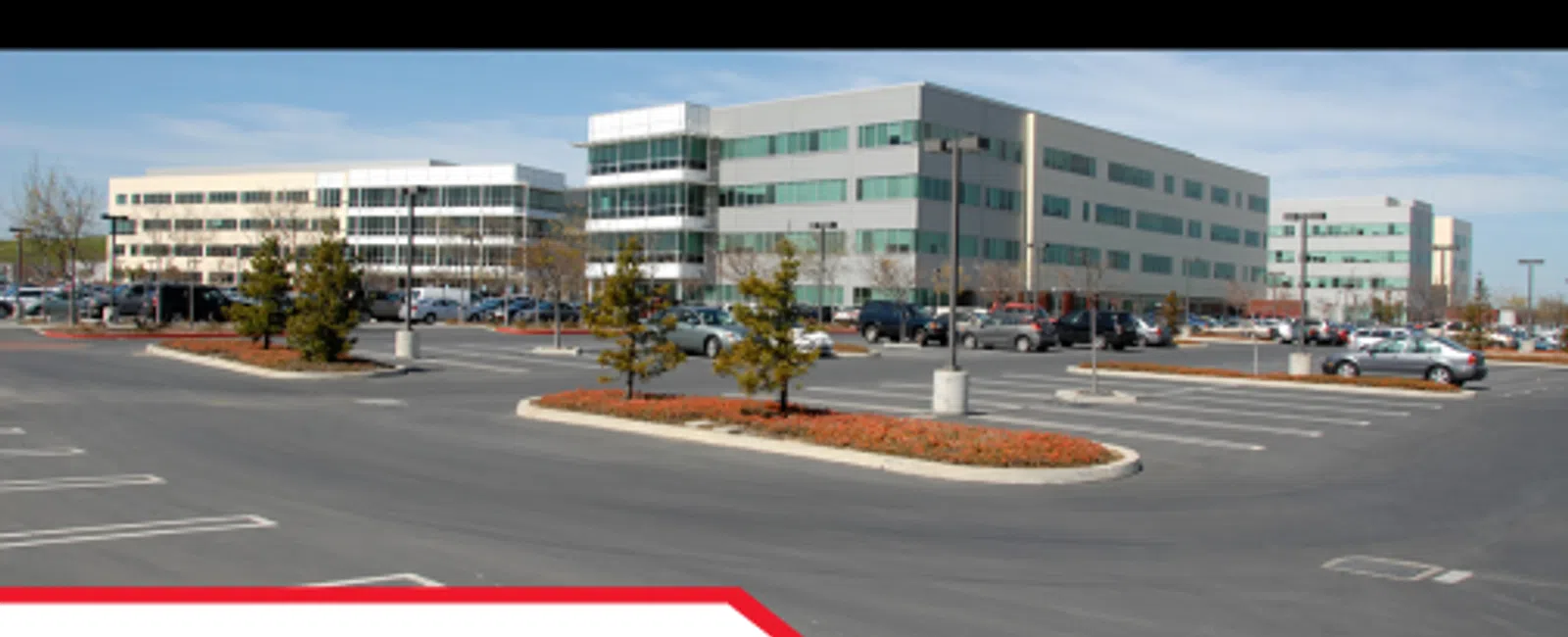
Office parks are more complex than single-building commercial properties because they combine multiple structures, shared infrastructure, extensive parking areas, landscaping, drainage systems, utility networks, and common amenities into one interconnected asset. For investors, property managers, lenders, developers, and owners, this means that maintenance and capital planning must account for conditions across an entire site rather than within one building. A professional office park inspection in the Southeast helps stakeholders evaluate these relationships and identify visible deficiencies that may affect operating costs, tenant satisfaction, leasing performance, and long-term asset value.
High-growth commercial markets throughout Georgia, North Carolina, and Florida continue to include suburban office campuses, medical-office parks, professional-service complexes, flex-office developments, and multi-building corporate properties. These assets may contain buildings constructed at different times, renovated under different ownership groups, or maintained through separate contractor programs. One building may have a recently replaced roof while another is approaching the end of its service life. HVAC equipment may vary significantly in age and condition across the property. Parking, drainage, and landscaping systems may serve several buildings simultaneously. Comprehensive commercial inspections help ownership teams understand these differences before they become unexpected financial obligations.
The Southeast climate adds another layer of maintenance pressure. Prolonged heat, high humidity, heavy rainfall, thunderstorms, wind-driven rain, and long cooling seasons affect roofs, exterior sealants, HVAC systems, pavement, drainage, and other building components. Florida properties may also face tropical weather and coastal corrosion, while Georgia and North Carolina office parks can experience intense rainfall and seasonal temperature changes. These environmental factors make preventive evaluation especially important for owners managing multiple buildings across a single site.
LunsPro Inspection Group provides Commercial Property Inspections, Office Building Commercial Inspections, and other Southeast Commercial Inspections for properties in Georgia, North Carolina, and Florida. A well-planned inspection can support acquisition decisions, ongoing property management, deferred-maintenance planning, lender requirements, and long-term capital strategies for office parks of varying sizes and configurations.
Why Office Parks Require a Property-Wide Inspection Strategy
A single office building can often be evaluated as one relatively self-contained asset. An office park requires a broader perspective.
The site may include:
- Several office buildings
- Shared parking lots
- Private roads
- Sidewalk networks
- Retaining walls
- Landscaped common areas
- Stormwater systems
- Exterior lighting
- Shared utility infrastructure
- Signage
- Mechanical equipment
- Common amenities
These components are often financially and operationally connected.
For example, a drainage problem originating near one building may affect parking areas serving the entire development. A private sewer line may serve multiple structures. Exterior lighting problems may influence tenant safety throughout the park. Pavement deterioration may create capital needs unrelated to the condition of any individual office building.
A professional office park inspection in the Southeast should therefore evaluate both building-specific conditions and shared site infrastructure.
Start With the Individual Office Buildings
Although office parks function as a larger property, each structure should still be evaluated on its own condition and maintenance history.
Individual Office Building Commercial Inspections may include visible observations of:
- Structural components
- Foundations
- Roofing
- Building envelopes
- Windows and doors
- HVAC systems
- Electrical infrastructure
- Plumbing
- Common interiors
- Tenant areas when included
- Mechanical rooms
- Life-safety observations
- Accessibility-related conditions
- Evidence of moisture intrusion
Buildings constructed several years apart may contain different materials, systems, and maintenance needs. Even buildings of the same design can age differently depending on roof exposure, drainage, occupancy, HVAC demand, prior repairs, and tenant use.
For asset managers, documenting these differences helps prevent a common mistake: assuming all buildings in the office park should follow the same capital replacement schedule.
Evaluate the Office Park as a Connected System
Office parks often share infrastructure that cannot be evaluated effectively by looking at individual buildings in isolation.
Shared systems may include:
- Stormwater drainage
- Parking surfaces
- Water service
- Sewer lines
- Fire access
- Site lighting
- Landscaping irrigation
- Sidewalks
- Retaining walls
- Utility corridors
A problem in one of these systems may affect several buildings or tenants at once.
For example, a blocked stormwater feature can contribute to standing water across several parking areas. Poor drainage may undermine pavement, affect landscaping, and direct water toward foundations. A sewer problem may interfere with more than one building if underground lines are shared.
This property-wide perspective is one of the main reasons multi-building inspections require careful planning before the site visit.
Roofing Across Multiple Buildings
Roofing is often one of the largest capital expenses in an office park.
Even when buildings were constructed at the same time, individual roofs may have very different histories because of:
- Different levels of solar exposure
- Previous storm damage
- Repairs
- Rooftop equipment
- Drainage patterns
- Maintenance quality
- Tenant modifications
Commercial roof observations may include:
- Ponding water
- Membrane deterioration
- Damaged flashing
- Failed sealants
- Open seams
- Blocked drains
- Previous patching
- Damaged roof penetrations
- Interior evidence of leakage
Large campuses can also contain substantial total roof area. Drone Inspections may help document large or difficult-to-access surfaces efficiently when appropriate. Aerial images can show broad drainage patterns, visible damage, rooftop equipment, and sections that deserve closer review.
For capital planning, owners should track the installation date and maintenance history of every roof separately rather than grouping the entire property under one replacement assumption.
Building Envelopes and Moisture Management
The building envelope includes exterior walls, windows, doors, sealants, flashing, cladding, and interfaces with the roof.
In a large office park, exterior systems can represent a substantial maintenance obligation simply because of their total surface area.
Inspectors may identify:
- Deteriorated sealants
- Cracked stucco
- Masonry distress
- Damaged siding
- Corrosion
- Window perimeter gaps
- Water staining
- Efflorescence
- Previous moisture repairs
Southeastern humidity and wind-driven rain can make seemingly minor exterior deficiencies more significant.
When visible conditions suggest possible concealed moisture, Infrared Inspections can sometimes help identify thermal anomalies that warrant further investigation. Infrared imaging is a diagnostic aid rather than proof of moisture, so observations should be confirmed through appropriate follow-up methods.
If conditions suggest persistent dampness or suspect microbial growth, Mold Testing may be appropriate depending on the property and observed conditions.
HVAC Systems and Prolonged Southeast Cooling Demand
Office buildings throughout Georgia, North Carolina, and Florida often rely heavily on HVAC systems for much of the year.
An office park may contain dozens of units distributed across multiple buildings. Some properties use central mechanical systems, while others have individual rooftop units serving each tenant suite.
Commercial inspectors may evaluate visible conditions involving:
- Rooftop equipment
- Air handlers
- Condensing units
- Mechanical rooms
- Condensate drainage
- Equipment age
- Corrosion
- Damaged insulation
- Accessible ductwork
- General operating condition
The number and age distribution of systems can have major budgeting implications. A property with numerous HVAC units installed during the same construction phase may face several replacement projects within a relatively short period.
Guidance from the U.S. Department of Energy - Improve Operations & Maintenance explains how effective commercial building operations and maintenance can support equipment reliability, efficiency, safety, and longevity, reinforcing the value of identifying building conditions that may affect the ongoing performance of office properties.
For property managers, the practical takeaway is that inspection findings should be compared with service records, replacement schedules, and tenant responsibilities to create a more complete HVAC maintenance strategy.
Electrical Systems Across an Office Campus
Electrical systems may vary from building to building, particularly when an office park has undergone repeated renovations.
Inspectors may evaluate accessible components such as:
- Main service equipment
- Distribution panels
- Tenant panels
- Exterior electrical equipment
- Electrical rooms
- Emergency lighting
- Exterior lighting
- Visible wiring
- Equipment clearances
Older sections of an office park may contain equipment with limited capacity, while newer buildings may support substantially greater electrical demand.
This becomes especially important when tenants require advanced technology, data infrastructure, medical equipment, or other high-demand systems.
A commercial inspection can identify visible deficiencies, but load studies, capacity calculations, and detailed electrical engineering should be completed by qualified electrical professionals when required.
Plumbing and Sewer Infrastructure
Shared plumbing and underground sewer systems can create additional inspection concerns in office parks.
Visible inspection areas may include:
- Water heaters
- Plumbing fixtures
- Supply piping
- Drainage piping
- Mechanical rooms
- Utility spaces
- Visible leakage
- Corrosion
Older office parks may also contain underground sewer lines that have experienced decades of use, root growth, settlement, or repair.
When appropriate, Sewer Scope Inspections may provide additional information regarding accessible underground lines, especially where recurring backups or known drainage problems exist.
The inspection scope should clarify whether individual building drains, shared mains, or both are included.
Parking Areas Are Major Capital Assets
Parking areas can account for a substantial portion of an office park's physical footprint.
Inspectors may identify:
- Cracking
- Potholes
- Surface deterioration
- Settlement
- Damaged curbs
- Faded striping
- Uneven sidewalks
- Trip hazards
- Drainage problems
- Damaged catch basins
Parking deterioration can affect tenant experience, accessibility, and future capital budgets.
The scale of repair also matters. Resurfacing a small office parking lot is very different from rehabilitating several acres of pavement across a multi-building office park.
For this reason, parking and site infrastructure should receive the same capital-planning attention as roofs and mechanical equipment.
Drainage Can Affect the Entire Development
Heavy rainfall throughout the Southeast makes drainage a critical consideration.
Office parks may rely on:
- Storm drains
- Catch basins
- Swales
- Retention areas
- Culverts
- Surface grading
- Roof drainage
- Underground storm piping
Poor maintenance in one section can affect the entire site.
Standing water may lead to pavement deterioration, erosion, landscaping damage, moisture intrusion, or accessibility concerns.
Savannah and Jacksonville properties may face additional water-management challenges because of coastal environmental conditions, while inland markets such as Atlanta, Charlotte, Raleigh, and Greensboro can still experience intense storms and recurring drainage issues.
Site Conditions and Landscaping Require Long-Term Oversight
Mature office parks often contain extensive landscaping that can influence building and site conditions.
Potential concerns include:
- Tree roots damaging pavement
- Vegetation contacting buildings
- Irrigation directed toward walls
- Soil erosion
- Overgrown drainage features
- Tree limbs near roofs
- Landscape beds trapping water
Older office campuses may look established and attractive while still containing significant site-maintenance needs.
Inspection findings can help property managers coordinate landscaping, pavement, drainage, and building maintenance as related responsibilities rather than separate tasks.
Structural Components and Building Movement
Structural evaluation generally focuses on visible conditions.
Inspectors may observe:
- Foundation cracks
- Wall movement
- Concrete deterioration
- Settlement
- Corrosion
- Framing concerns
- Floor movement
- Retaining wall conditions
Office parks built on sloped sites may also contain retaining walls or terraced areas that deserve additional attention.
A Commercial Property Inspection is not a structural engineering analysis. Significant movement, unusual cracking, or structural distress should be evaluated by a qualified structural engineer when appropriate.
Accessibility Across a Multi-Building Site
Accessibility considerations can be more complicated in an office park because users must move between parking areas, sidewalks, entrances, buildings, and common spaces.
Visible observations may involve:
- Accessible parking
- Routes to entrances
- Curb ramps
- Sidewalk conditions
- Building entrances
- Elevation changes
- Interior common areas
A standard commercial inspection is not an accessibility certification.
If formal compliance evaluation is necessary, owners should consult appropriate specialists.
However, visible accessibility concerns may still create practical maintenance or capital-planning needs, particularly where aging pavement, settlement, or renovations have affected routes through the property.
Common Areas and Shared Amenities
Office parks may include shared amenities such as:
- Conference facilities
- Fitness areas
- Courtyards
- Dining spaces
- Restrooms
- Lobbies
- Mail centers
- Outdoor seating
- Walking paths
These spaces influence tenant satisfaction and leasing appeal.
While some deficiencies may be primarily cosmetic, widespread deterioration can indicate deferred maintenance or future renovation costs.
Shared amenities should therefore be included in the broader property-condition picture.
What a Commercial Inspection Does—and Does Not Do
A commercial inspection provides a visual evaluation of readily accessible property conditions within an agreed scope.
It can help identify visible deficiencies and areas requiring further evaluation, but it should not be confused with:
- Formal code-compliance inspections
- Engineering analyses
- Accessibility certifications
- Fire-system testing
- Environmental site assessments
- Trade-specific diagnostic testing
When the inspection identifies concerns outside its scope, appropriate engineers, contractors, environmental professionals, fire-protection specialists, code consultants, or other qualified experts should be involved.
This distinction allows the inspection to function as a valuable screening and documentation tool without overstating its purpose.
Office Building Design and Performance Considerations
Resources from the Whole Building Design Guide - Office Building Overview discuss office-building design, systems, functionality, and performance considerations, providing useful context for the range of components that may need to be evaluated when inspecting individual office buildings or larger office park developments.
This is especially relevant for multi-building properties because each structure may have different layouts, mechanical designs, tenant loads, and renovation histories.
A property manager evaluating an office park should not assume that identical exterior architecture means identical building-system conditions.
Energy Performance and Building Systems
Office properties often consume substantial energy through HVAC systems, lighting, controls, and occupant equipment.
Information from EPA - ENERGY STAR for Commercial Buildings highlights the importance of commercial building energy performance and building systems, offering useful context for evaluating HVAC equipment, building envelopes, operational efficiency, and other conditions that can affect the long-term performance of office properties.
A commercial inspection is not an energy audit, but physical conditions can influence efficiency.
Examples include:
- Aging HVAC units
- Damaged insulation
- Failed exterior sealants
- Air leakage
- Poorly maintained mechanical equipment
- Deteriorated windows
Inspection findings may help ownership determine where more specialized energy evaluations could be useful.
Property Condition Assessments for Office Parks
A general Commercial Property Inspection may be sufficient for some office park evaluations.
Larger acquisitions or lender-driven transactions may benefit from a Property Condition Assessment (PCA) or ASTM E2018 Property Condition Assessment.
A PCA may include:
- Site observations
- Document review
- Interviews
- Identification of material physical deficiencies
- Immediate repair recommendations
- Capital planning information
For an office park, the value of a PCA is that it can organize conditions across several buildings and site systems into one broader investment perspective.
Cost-to-Cure Assessments Support Capital Planning
Deferred maintenance can become difficult to interpret when findings are spread across multiple buildings.
A Cost-to-Cure Assessment can help translate identified deficiencies into planning-level cost considerations.
Potential projects may include:
- Roof replacement
- HVAC replacement
- Exterior repairs
- Pavement resurfacing
- Drainage improvements
- Electrical corrections
- Plumbing repairs
- Common-area renovation
These estimates help owners prioritize projects and understand whether several large expenditures may occur during the same ownership period.
For transactions involving lenders or multiple investment stakeholders, Investor & Lender Packages may help organize findings for review.
Preventive Maintenance After Acquisition
Inspection findings should not disappear into a closing file after the transaction.
Property managers can use the report to establish:
- Annual roof inspections
- HVAC maintenance schedules
- Exterior sealant programs
- Drainage cleaning
- Pavement monitoring
- Plumbing maintenance
- Electrical reviews
- Moisture monitoring
- Common-area repairs
Resources from BOMA International - Research & Resources provide useful industry context for commercial property management, preventive maintenance, operational performance, and capital planning.
Likewise, GSA - Facilities Management illustrates how organized facilities-management practices support large real estate portfolios containing multiple buildings and shared operational responsibilities.
These principles are highly relevant to office parks because coordinated management becomes increasingly important as the number of buildings and shared systems grows.
High-Growth Southeast Markets and Office Park Conditions
Office development and investment patterns vary throughout the Southeast, but high-growth markets often contain a mix of older campuses, recently developed suburban properties, renovated offices, and mixed-use business districts.
For LunsPro Inspection Group, commercial service-area references are focused on Georgia, North Carolina, and Florida.
Georgia Commercial Inspections
Georgia Commercial Inspections may include office parks in established business districts, suburban growth corridors, and mixed-use developments.
Atlanta Commercial Inspections often involve multi-building office properties with extensive parking, mechanical equipment, tenant modifications, and stormwater infrastructure.
Savannah Commercial Inspections may require additional attention to humidity, corrosion, roof drainage, and moisture-sensitive exterior components.
North Carolina Commercial Inspections
North Carolina Commercial Inspections frequently include office campuses, professional centers, medical office parks, and mixed-use commercial properties.
Charlotte Commercial Inspections may involve rapidly growing suburban office developments with substantial site infrastructure.
Raleigh Commercial Inspections often include technology, healthcare, research, and professional-office properties where mechanical systems and specialized tenant requirements deserve careful attention.
Greensboro Commercial Inspections may include owner-occupied business parks and office properties associated with logistics, healthcare, professional services, and regional commerce.
Florida Commercial Inspections
Florida Commercial Inspections require particular attention to:
- Heat
- Humidity
- Heavy rainfall
- Storm exposure
- HVAC demand
- Moisture intrusion
- Corrosion
Jacksonville Commercial Inspections can involve office parks serving professional services, healthcare, logistics, and regional business markets. Roofing, drainage, exterior sealants, HVAC condensate management, and moisture conditions may deserve particular attention because of local climate exposure.
Building an Office Park Inspection Scope
Before scheduling, stakeholders should define the property carefully.
Important information may include:
- Number of buildings
- Building sizes
- Construction dates
- Roof types
- Occupancy
- Tenant access
- Shared utilities
- Parking area size
- Stormwater systems
- Known deficiencies
- Planned renovations
- Lender requirements
- Due diligence deadlines
The larger and more complex the property, the more important it is to define exactly what will be inspected.
This prevents assumptions and helps ensure the report addresses the client's most important investment and operational concerns.
Using Inspection Findings for Long-Term Asset Management
An office park inspection in the Southeast gives commercial stakeholders a structured way to understand conditions across multiple buildings and shared site systems. Roofs, building envelopes, HVAC equipment, electrical infrastructure, plumbing, drainage, parking lots, structural components, common areas, and landscaping all contribute to the performance of the property. When these systems are evaluated together, owners gain a more useful picture of both current maintenance needs and future capital exposure.
Professional commercial inspections are particularly valuable in growing Southeast markets where high occupancy, redevelopment, heat, humidity, heavy rainfall, storms, and prolonged HVAC demand can accelerate building wear. Identifying deferred maintenance early allows owners and investors to prioritize repairs, improve budgets, coordinate preventive maintenance, and reduce the likelihood of unexpected capital expenses.
LunsPro Inspection Group provides Georgia Commercial Inspections, North Carolina Commercial Inspections, Florida Commercial Inspections, Atlanta Commercial Inspections, Savannah Commercial Inspections, Charlotte Commercial Inspections, Raleigh Commercial Inspections, Greensboro Commercial Inspections, and Jacksonville Commercial Inspections as part of its Southeast Commercial Inspections services. Depending on the needs of the property, additional services such as Property Condition Assessments (PCA), ASTM E2018 Property Condition Assessments, Cost-to-Cure Assessments, Drone Inspections, Infrared Inspections, Sewer Scope Inspections, Mold Testing, and Radon Testing may add useful information when specific building conditions warrant further evaluation.
For office park owners and investors, the most effective inspection strategy is one that looks beyond each building individually. Understanding how structures, utilities, parking, drainage, common areas, and site infrastructure interact provides the foundation for better Commercial Due Diligence, stronger budgeting, and more disciplined long-term asset management across growing Southeast commercial real estate markets.